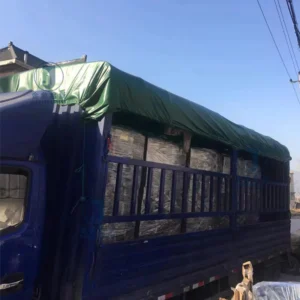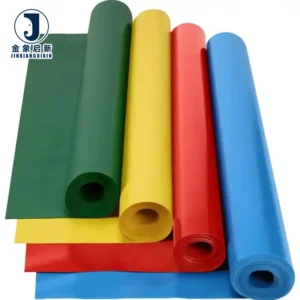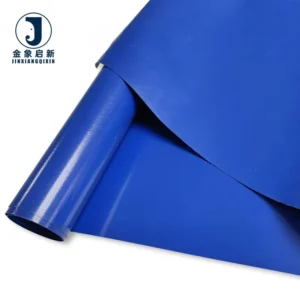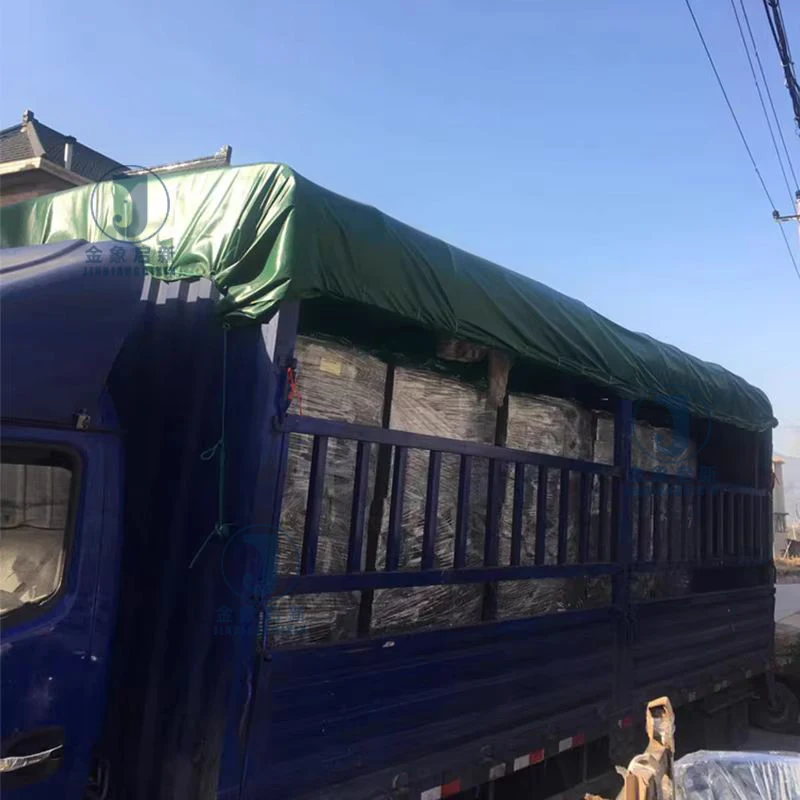
Description
Batch-Controlled Roll Consistency — every PVC coated tarpaulin roll for farm use is produced on dedicated lines with in-process QA, ensuring uniform colour and weight across your entire container load.
Technical Specifications
| Parameter | Value |
|---|---|
| Product Type | PVC Coated Tarpaulin Roll |
| Coating Material | PVC |
| Base Fabric | Warp Knitted |
| Style | Plain |
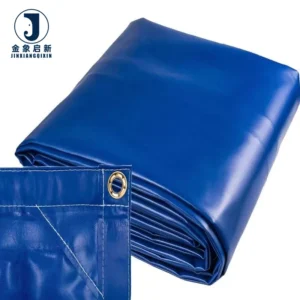
| Waterproof | Yes |
| Anti-Static | Claimed (test basis not stated) |
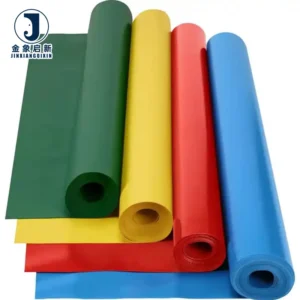
| Color | Customizable |
| Certifications | ISO, CE |
Application Suitability
| Application | Exposure & Requirement |
|---|---|
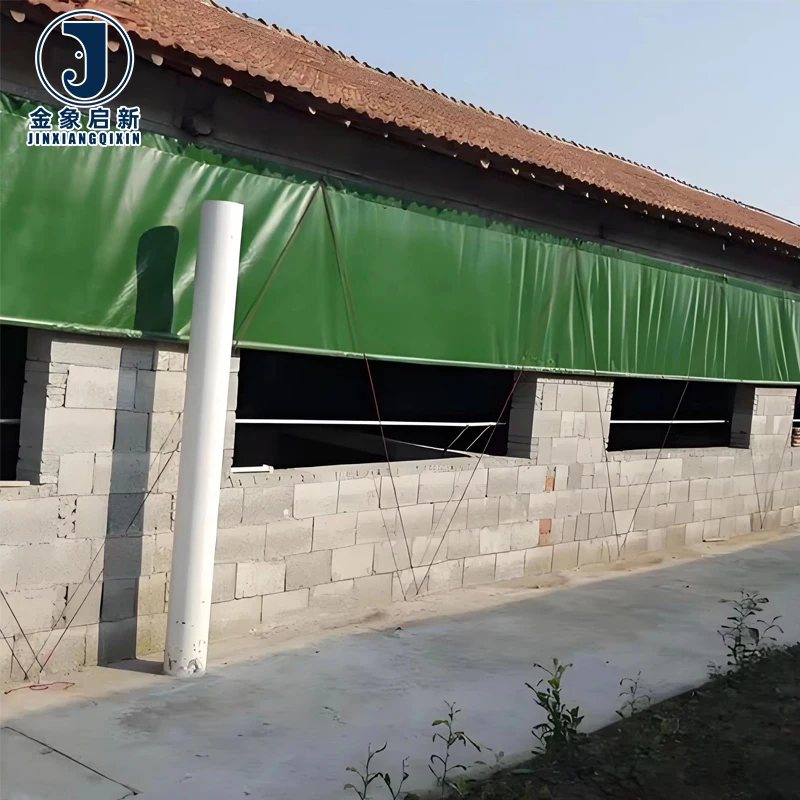
| Poultry and broiler farm side curtains | Continuous moisture, ammonia vapour, daily tensioning and release |
| Pig and sheep shelter covers | Abrasion from frame contact, wind load, seasonal UV exposure |
| Agricultural tent and temporary structure panels | Field assembly stress, weather exposure, repeated relocation |
| Livestock equipment protection sheets | Dust ingress, water splash, mechanical impact from handling |
Why Colour Drift Across Rolls Costs More Than the Fabric Itself
Uniform shade is a production discipline, not a post-coat correction.
When a distributor receives twenty rolls for a poultry farm project and rolls eight through fourteen are visibly lighter than the rest, the entire installation is either rejected on site or patched with mismatched panels. The cost of re-shipping correct rolls often exceeds the original material purchase. We control pigment dosing at the mixing stage and run spectrophotometric checks at every roll change, so the PVC coated tarpaulin roll wholesale order you place arrives in one consistent shade [NEED_CITE: colour measurement standards for coated textile batches per ISO 105-J03].
Sourcing by Volume Without Sacrificing Specification Integrity
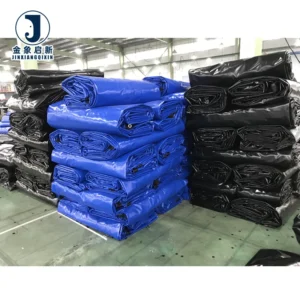
Buying PVC coated tarpaulin roll wholesale for agricultural fabrication demands that every roll in the container meets the same weight, coating thickness, and tensile baseline. Our three full production lines operate under a single QA protocol: base fabric is weighed before coating, coating weight is verified mid-run, and finished rolls are sampled at head, middle, and tail for GSM confirmation. This means a bulk order for poultry farm curtains arrives with documented roll-to-roll consistency, not a mix of production runs pulled from different warehouse batches.
Roll Width and Length Options That Reduce Fabrication Waste
Farm cover fabricators cutting panels for broiler houses or pig shelters work with standardised bay widths. Ordering a PVC coated tarpaulin roll wholesale in a width that matches your panel dimension plus hem allowance eliminates the offcut waste that accumulates across hundreds of linear metres. We supply rolls in custom widths and lengths, and the plain weave style cuts cleanly without fraying, allowing your operators to move straight from unrolling to heat-welding without edge sealing. Batch traceability documentation accompanies every roll, so if a field issue arises you can trace it back to the production run and coating batch.
Warp Knitted Base Fabric and Coating Adhesion
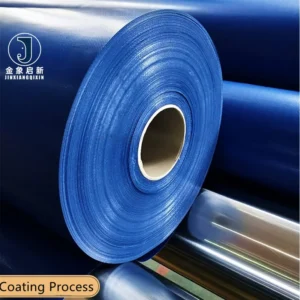
The warp knitted construction provides dimensional stability when the fabric is tensioned across a farm shelter frame. Unlike plain woven base cloths that can bias-stretch under diagonal load, the interlocking loop structure of warp knitting resists distortion, keeping curtain panels flat and wrinkle-free after installation. The PVC coating penetrates the knit structure during the coating process, creating a mechanical bond that resists delamination even when the fabric is repeatedly flexed during daily opening and closing of ventilation panels [NEED_CITE: adhesion test methods for coated fabrics per ISO 2411].
Coating Weight Versus Total GSM: What the Number Actually Tells You
Total GSM alone does not predict how a tarpaulin will perform in a livestock environment. A roll may reach its stated weight through a heavy base fabric with thin coating, or a light base with thick coating — and the two behave differently under farm conditions. Heavy coating resists puncture from frame hardware but may crack at fold lines in cold weather, while a dense base fabric carries the tensile load but depends on adequate coating to block ammonia vapour and moisture. Our specification sheet breaks down base fabric weight and coating weight separately, so you can select the balance that suits your farm cover design rather than guessing from a single GSM figure. Customizable color options are integrated into the coating compound, not surface-applied, ensuring the shade remains intact through abrasion and cleaning.
The Hidden Cost of Undocumented Anti-Static Claims
Anti-static treatment is sometimes listed on quotations without a supporting test report. In dry poultry houses where dust and fine feed particles accumulate on horizontal surfaces, static charge attracts particulate build-up that adds weight to curtains and reduces light transmission. If the anti-static performance is not validated against a recognised standard, the fabric may perform no differently than an untreated roll once installed. We supply anti-static grades with documented test basis on request — confirm the specific standard your market or project requires before committing to volume [NEED_CITE: electrostatic dissipation test methods for industrial textiles per EN 1149].
Why Buyers Who Switched to Batch-Verified Rolls Stop Rejecting Shipments
The most common rejection at the receiving dock is colour variation between rolls that were supposedly produced in the same order. This happens when a supplier combines partial runs from different production dates to fill a container. Our production scheduling holds your order within a single coating campaign, meaning all rolls share the same pigment batch, base fabric lot, and coating line calibration. The pre-shipment inspection record documents colour uniformity roll by roll, so you see the verification before the container is sealed, not after it arrives at your warehouse.
Why Procurement Teams Source Farm-Grade Rolls Here
Dedicated QA at every production stage means base fabric inspection, coating weight verification, and finished roll sampling are recorded — not assumed. The ten-person R&D team develops custom colour matches and sample rolls within days, allowing you to confirm shade and hand-feel before authorising bulk production. Three full production lines provide capacity to consolidate a full container load of PVC tarpaulin roll for agriculture aftermarket supplier orders without splitting across shipment dates. ISO and CE certifications are maintained on file for import compliance in regulated markets. Pre-shipment inspection with one hundred percent roll checking eliminates the dock rejection cycle that disrupts project timelines.
Documentation & Verification
- Material specification sheet listing base fabric type, coating material, and confirmed GSM per roll
- Colour reference document tied to the production batch for shade traceability
- Pre-shipment inspection record covering roll-by-roll weight and visual checks
- Roll packing list with batch identification for container-level traceability
- ISO and CE certificates available for customs and project compliance submission
Fabrication, Handling & Storage
- Heat-weld at temperatures matched to PVC coating thickness to avoid base fabric scorching
- Store rolls upright on pallets to prevent flat-spot deformation of the warp knitted base
- Cut panels with heated blades to seal edges and prevent knit structure unraveling
- Avoid dragging rolls on abrasive surfaces to protect the outer PVC coating layer
- Clean finished covers with neutral pH detergents to preserve waterproof coating integrity
Requesting a Quotation That Matches Your Project
Specify the panel dimensions you fabricate, the farm environment the covers will serve, and the annual roll volume you plan to source. Indicate whether you need custom widths to reduce offcut waste or standard widths are acceptable. If your market requires anti-static or other certified performance, state the applicable standard so we can confirm test basis availability before sampling.
Frequently Asked Questions
Q: What GSM options are available for agricultural and poultry farm use?
A: We supply PVC coated tarpaulin rolls across a range of weight grades suited to farm cover fabrication. The appropriate GSM depends on your frame design, wind load, and expected handling frequency. Request our material specification sheet to review base fabric weight and coating weight breakdowns for each grade, then confirm your selection with a sample roll before committing to bulk.
Q: Can I order custom widths and colours in a single container load?
A: Yes. Custom widths and colours can be consolidated into one container, provided they fall within a single production campaign. This approach maintains batch consistency for colour and weight across all rolls. Share your width requirements and colour references early so we can schedule production and confirm lead time for your specific combination.
Q: How do you ensure colour consistency across multiple rolls in one order?
A: We schedule your full order within one coating campaign using a single pigment batch. Spectrophotometric checks are performed at each roll change, and the pre-shipment inspection record documents shade uniformity across all rolls. This eliminates the visible colour variation that occurs when rolls from different production runs are combined in one shipment.
Q: What certifications and test reports accompany each shipment?
A: ISO and CE certificates are available for import compliance. The shipment includes a material specification sheet, pre-shipment inspection record, and roll packing list with batch traceability. For anti-static or other performance claims, confirm the specific test standard your project requires so we can include the relevant documentation.
Q: What is the lead time and minimum order for custom roll specifications?
A: Lead time depends on the custom width, colour, and volume you specify. Sample rolls are typically developed within days for approval before bulk production begins. Share your target specifications and container volume so we can confirm minimums and scheduling against current production capacity on our coating lines.