Description
Roll-to-Roll Consistency — Every batch of inflatable tent fabric is produced under dedicated QA/QC inspection with retained samples for traceability, ensuring colour and coating weight remain uniform across all rolls in your order.
Technical Specifications
| Parameter | Value |
|---|---|
| Product Type | PVC Coated Tarpaulin for Inflatable Structure |
| Core Material | PVC tarpaulin |
| Waterproof | Fully waterproof coated construction |
| UV Resistance | Available with anti-UV treatment — confirm the grade required for your market |
| Fire Retardancy | Available in flame retardant grades — confirm the grade required for your market |
| Anti-Static | Available with anti-static treatment — confirm surface resistance standard required |
| Tear Resistance | Tear-resistant PVC coated fabric |
| Customization | OEM & ODM: sample customization, pattern printing, material selection, product design |
| Production Lines | 3 full production lines |
| Processing Equipment | 36 sets of professional processing equipment |
| R&D Team | 10 technicians |
| Quality Testing | Air pressure testing for 24 hours to verify inflation integrity and structural stability |
| Certifications | ISO 9001, ISO 14001, ISO 45001, CE |
Application Suitability
| Application | Exposure & Requirement |
|---|---|
| Commercial inflatable tent manufacturing | Repeated inflation and deflation cycles, flex stress at seam lines, outdoor UV and rain exposure |
| Construction site temporary shelters | Wind load, dust and debris impact, extended static inflation over weeks or months |
| Industrial event canopies | Large-span inflation structures, crowd safety compliance, fire-retardant requirements for public venues |
| Outdoor gear production lines | Roll-fed fabrication, weld seam integrity, colour consistency across multiple production runs |
Why Fabric Consistency Matters More Than the Spec Sheet
Batch variation is the hidden cost that only shows up after your production run is underway.
When sourcing inflatable tent fabric roll for manufacturing, the quoted specification means little if the material arriving at your facility differs from roll to roll. Sourcing managers regularly encounter situations where GSM values on the certificate do not match the material on the cutting table, or where colour shifts become visible only after panels are welded side by side on an inflated structure. These inconsistencies force production stops, panel rejection, and warranty claims downstream [NEED_CITE: roll-to-roll variation in coated fabric procurement].
Sourcing Inflatable Tent Fabric by the Roll
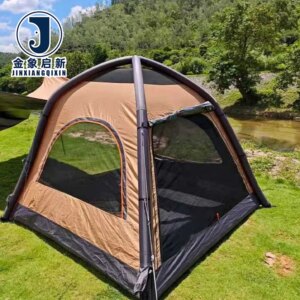
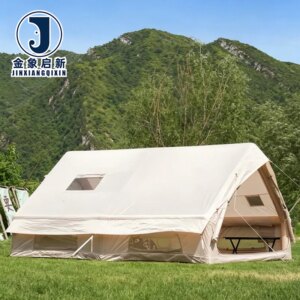
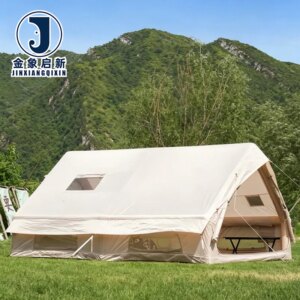
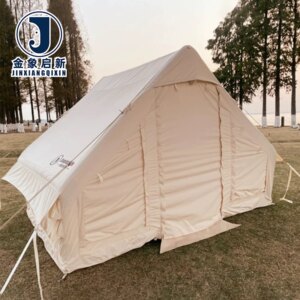
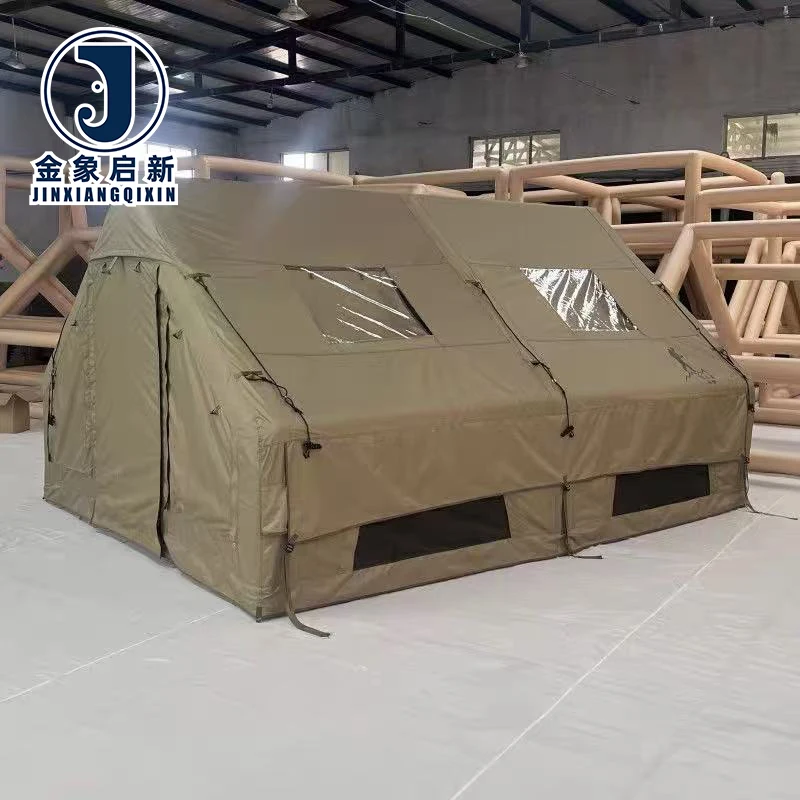
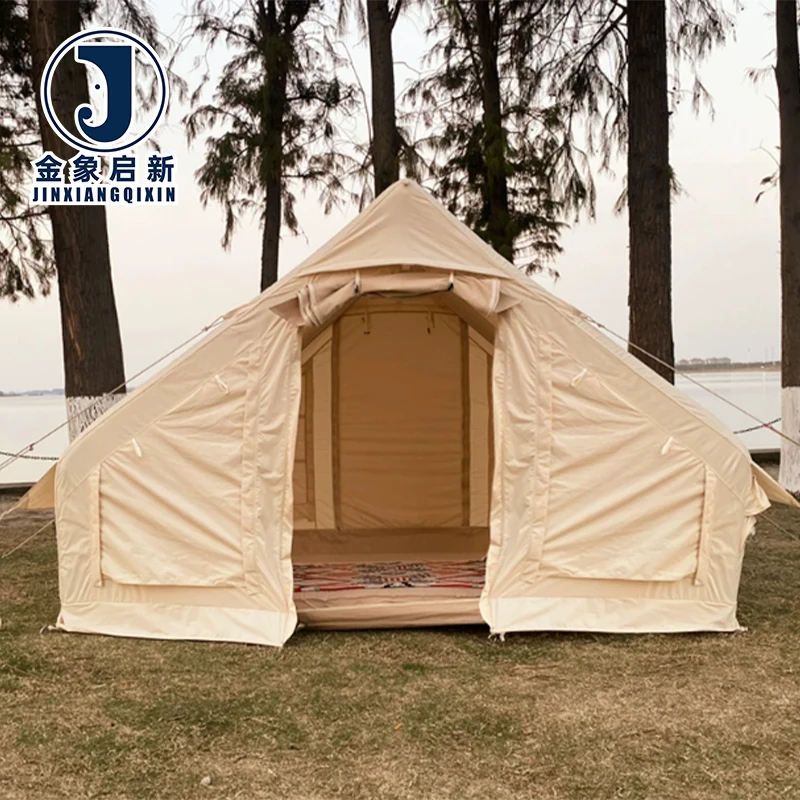
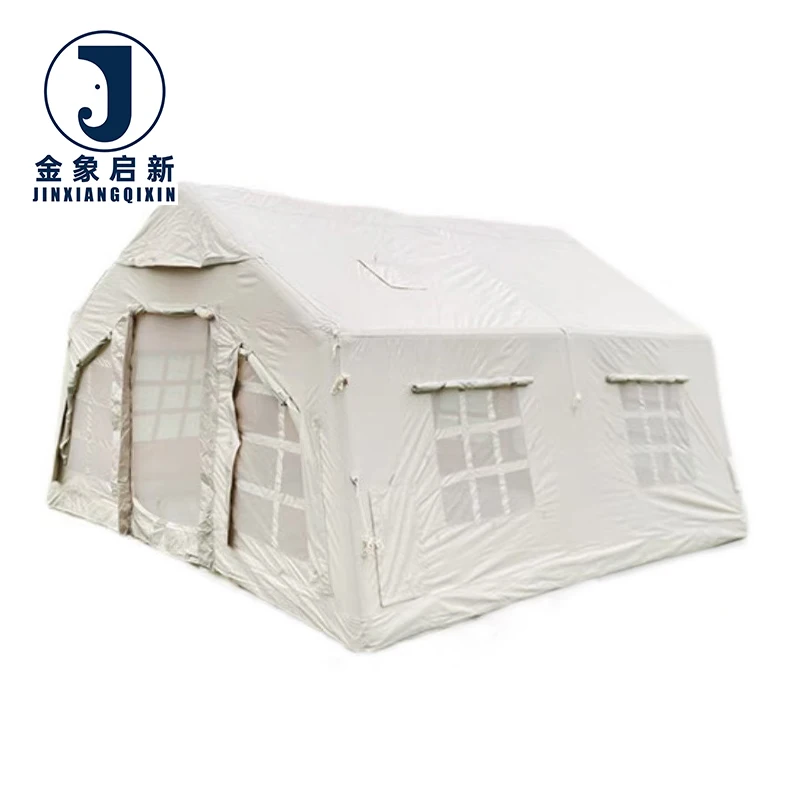
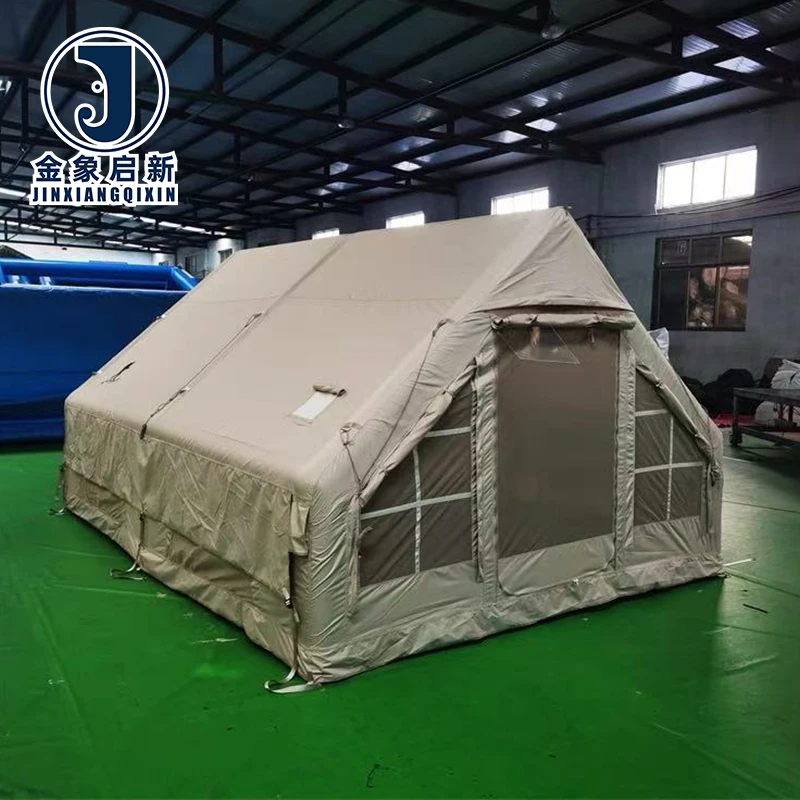
Commercial inflatable tent manufacturers require fabric that feeds through production lines without variation. Our PVC tarpaulin for inflatable structures is supplied as inflatable tent fabric roll stock, allowing equipment makers to cut, weld, and assemble with confidence that each panel matches the last. The material supports high-frequency and hot-air welding, which is critical for maintaining airtight seam integrity in inflatable applications.
Three full production lines operating within a 9,180 square meter facility provide the volume capacity needed for bulk procurement. Whether you are running a continuous production schedule or ordering seasonal batches, the inflatable tent fabric wholesale supply is structured to maintain scheduling reliability without forcing compromises on order size or delivery timing.
How 24-Hour Air Pressure Testing Validates the Fabric
Specifying the right PVC tarpaulin is only half the equation — the material must perform once fabricated into an inflatable structure. Our quality protocol includes 24-hour air pressure testing to verify inflation integrity and structural stability of the finished product [NEED_CITE: air pressure testing standards for inflatable membrane structures]. This testing step identifies weak weld points, coating defects, and permeability issues before the fabric leaves the facility.
For inflatable tent manufacturers, this means the fabric you receive has already been validated under sustained internal pressure. The test mirrors the real operating conditions of commercial inflatable shelters, where the material must hold constant air pressure under temperature fluctuation and external wind load. Fabricators benefit from reduced in-line rejection rates and fewer field failures reported by end users.
Reading Between the Specification Lines
Understanding how PVC tarpaulin properties interact is essential when selecting inflatable tent fabric. Coating weight and base fabric denier work together to determine tensile and tear strength — a heavier coating does not automatically mean a stronger material if the underlying yarn structure is loosely woven. The base fabric construction controls how tears propagate once initiated at a stress point, which in inflatable structures typically occurs at welded seam junctions.
Weldability is directly influenced by the coating formulation and surface finish. A consistent coating layer ensures that heat or high-frequency energy transfers uniformly through the material, creating bonds that match or exceed the fabric strength itself. For inflatable applications where seams carry the structural load during inflation, this balance between coating adhesion and base fabric integrity determines the service life of the finished structure [NEED_CITE: weld seam strength testing methods per ISO 1421 for coated fabrics].
The Cost of Overlooking Colour and Weight Verification
Inflatable tent structures present a unique visibility problem: once inflated and installed, every panel is on display. Colour variation between rolls in the same order becomes immediately apparent to end users, triggering complaints and warranty requests that trace back to your production floor. Similarly, if the coating weight falls below specification, the material becomes more susceptible to puncture and abrasion damage during installation and use [NEED_CITE: coating weight deviation impact on coated fabric service life].
These issues compound when fabricators run multiple rolls through automated cutting and welding equipment calibrated to a specific material thickness. Even minor deviations alter welding parameters, producing weak seams that may pass initial inspection but fail under sustained inflation pressure.
What Certified Production Means for Your Supply Chain
Dedicated QA/QC staff are stationed at every production stage, conducting in-process inspections rather than relying solely on final checks. Each roll of inflatable tent fabric undergoes weight verification and visual inspection before packing. Retained samples from every batch allow traceability — if a question arises months after delivery, the specific production run can be referenced.
The 10-person R&D team handles material selection, pattern printing specifications, and sample development for custom requirements, with samples produced within days for evaluation. ISO 9001, ISO 14001, ISO 45001, and CE certifications underpin the management systems governing production consistency and environmental compliance. Pre-shipment inspection covers every roll, not a statistical sample, ensuring the documentation you receive matches the material in the container.
Documentation & Verification
- Material specification sheet stating GSM, base fabric construction, coating type, and colour reference per roll
- Fire-retardant and anti-static test reports included with shipment documentation where applicable
- Pre-shipment inspection record covering weight verification and visual assessment of every roll
- ISO and CE certificates confirming management system compliance for audit purposes
- Batch retention samples available for traceability by order number after delivery
Fabrication, Handling & Storage
- Set welding temperature and dwell time based on the specific PVC coating thickness before running production
- Store rolls upright on end caps to prevent flat-spot deformation of the PVC coating surface
- Allow material to acclimate to workshop temperature before unrolling to avoid creasing in cold PVC tarpaulin
- Use compatible PVC adhesive or solvent cement for field repairs on inflatable tent fabric panels
- Plan cutting layout to maximize roll width utilization and minimize offcuts on each production run
- Avoid stacking heavy items on stored rolls to prevent permanent compression marks on the coating
Before You Request a Quote
To provide an accurate specification and lead time, share the intended application and the environmental conditions the inflatable structure will face, including expected wind loads and temperature range. Specify the required roll width, colour references, and whether fire-retardant or anti-static treatment is mandated by your local regulations. Indicate your estimated annual volume and whether you need sample rolls for welding parameter calibration before committing to full production quantities.
Frequently Asked Questions
Q: How can I verify the GSM of inflatable tent fabric when it arrives?
A: Request the weight verification record from the pre-shipment inspection included with your documentation. Upon arrival, you can conduct your own sampling by cutting a measured section and weighing it against the stated GSM on the material specification sheet. Retained batch samples are also available for comparison testing by order number.
Q: What fire-retardant grades are available for inflatable tent PVC fabric?
A: Flame retardant treatment is available in multiple grades depending on your target market requirements. Confirm the specific classification standard your local regulations mandate, such as regional building material fire codes, and we will supply the corresponding test report with your shipment documentation.
Q: How is colour consistency maintained across multiple rolls in one order?
A: Every production batch is monitored through dedicated QA/QC inspection, and colour references are verified against approved standards before packing. Retained samples from each batch allow post-delivery comparison. For large orders spanning multiple production runs, colour alignment between runs is confirmed before dispatch.
Q: What is the process for ordering custom widths, colours, or printed patterns?
A: Share your specification requirements including target width, Pantone or RAL colour reference, and any pattern files. The R&D team develops samples within days for your evaluation. Once approved, the custom inflatable tent fabric enters production with the same in-process QA inspection applied to standard grades.