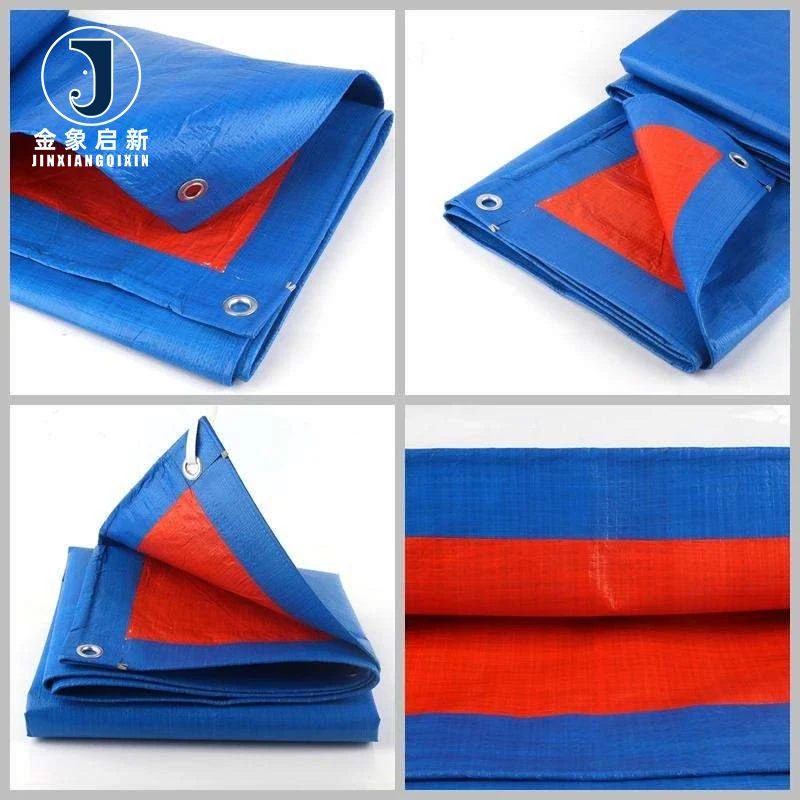
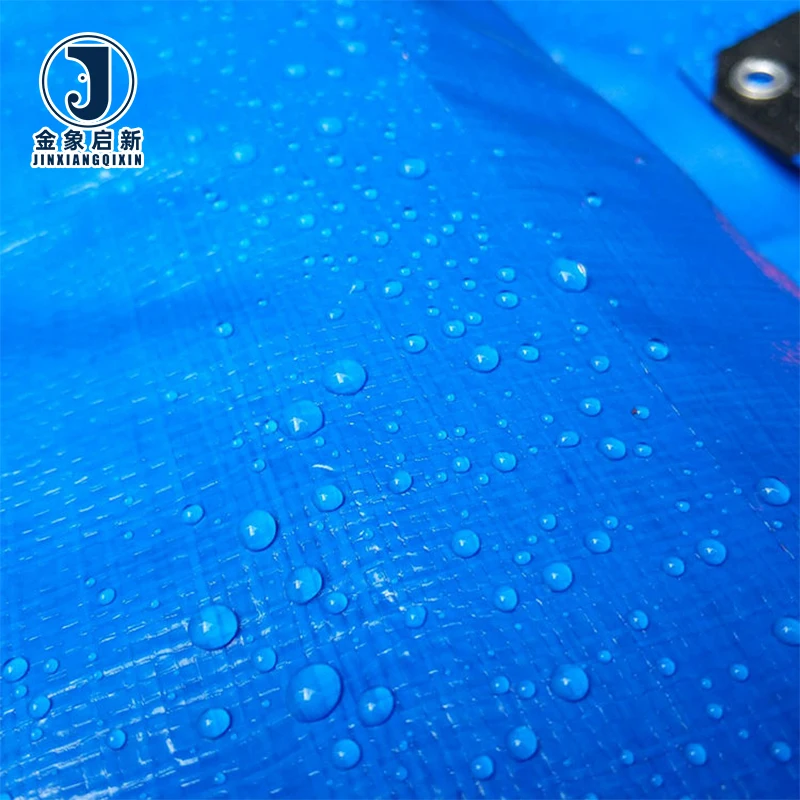
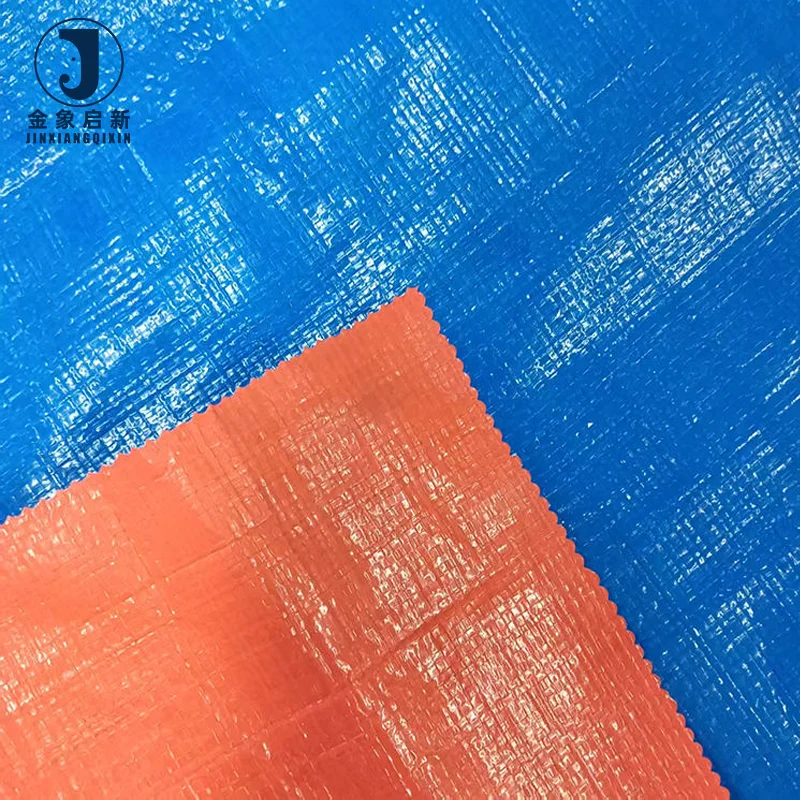
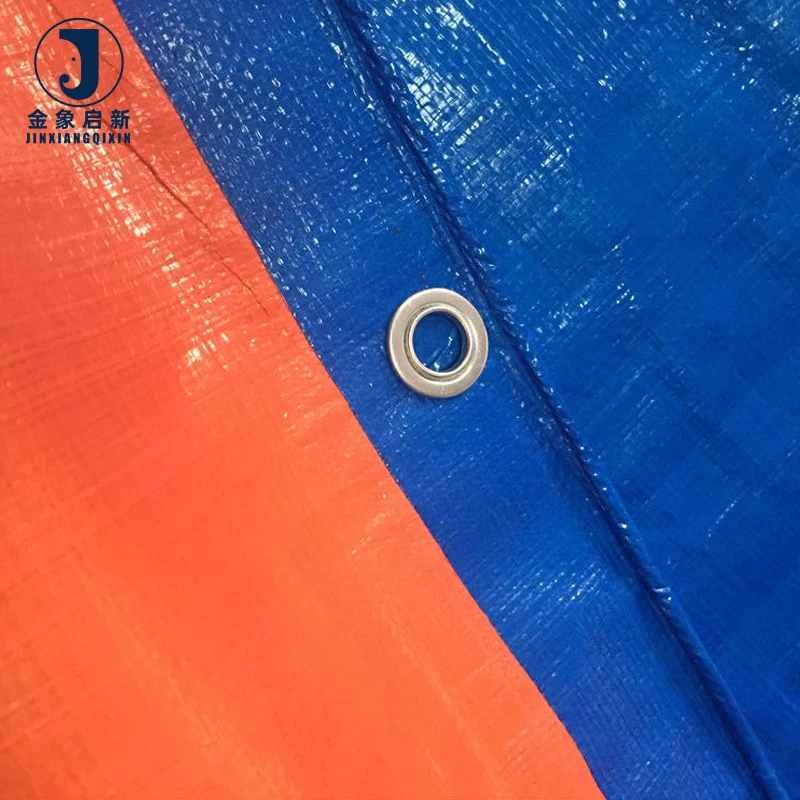
Description
Verified GSM Across Every Roll — coating weight is checked at every production stage so the PE tarpaulin you receive matches the specification on the purchase order, not just the quotation.
Technical Specifications
| Parameter | Value |
|---|---|
| Product Type | PE Tarpaulin |
| Material | HDPE woven fabric with LDPE coat on both sides |
| Mesh Density | 6×6 to 16×16 |
| Weight Range | 50 g/m² to 300 g/m² |
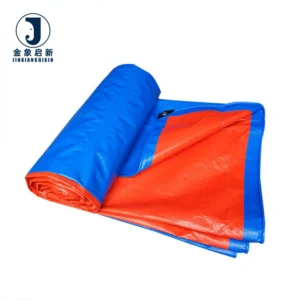
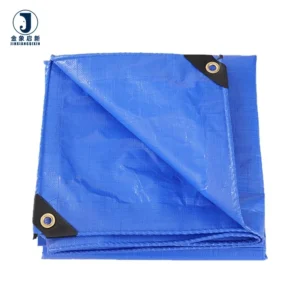
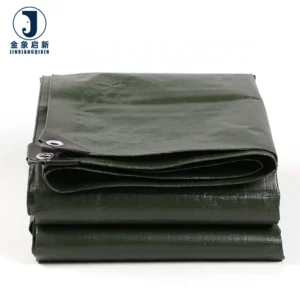
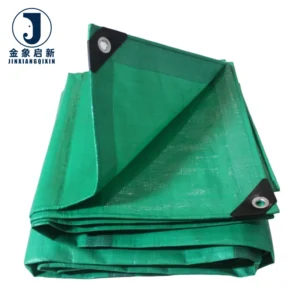
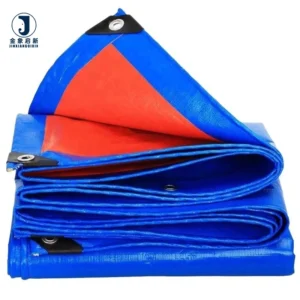
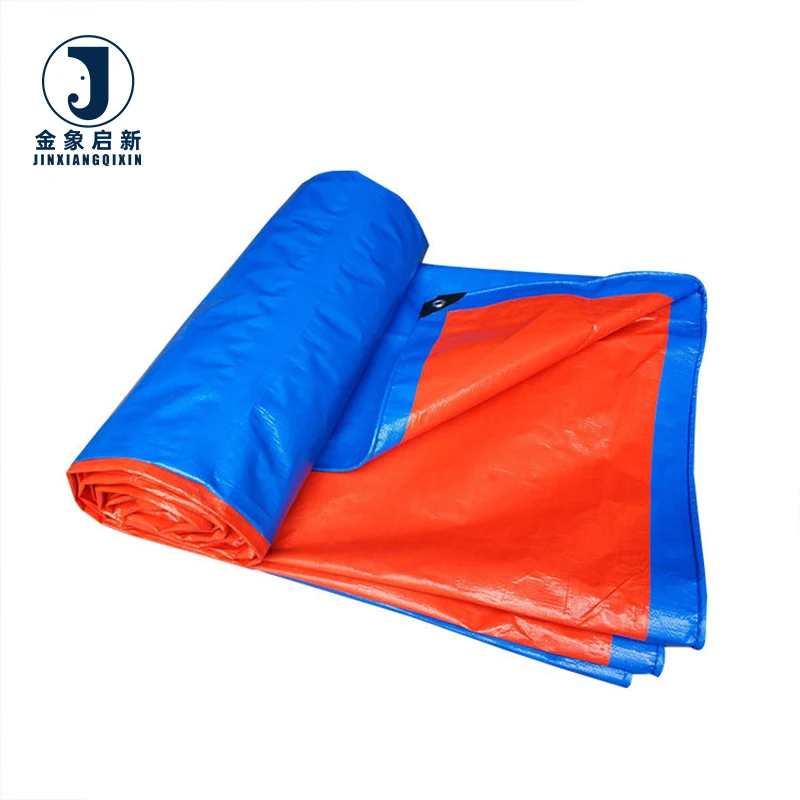
| Colour Options | Blue, Orange, White, Black, Grey, Yellow, Green, Red, or custom colour available |
| Sheet Sizes | 2×3 m, 3×4 m, 3×5 m, 4×5 m, 5×6 m, 6×8 m, 10×10 m, 10×12 m, 12×14 m, or custom cut |
| Roll Length | Up to 100 m per roll or as required |
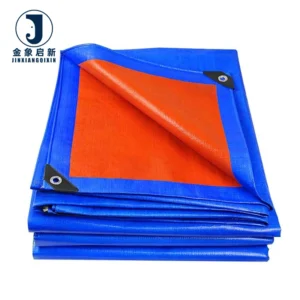
| Edge Finishing | PP rope reinforced hem on all edges |
| Corner Reinforcement | Black plastic triangle at each corner |
| Eyelets | Rustproof aluminum, spaced at 1 m or 1.5 m intervals, or per specification |
| Print Options | Logos or company information, reinforced strip available |
| Special Treatment | Fire resistant / UV protection available as per requirements (grade not stated — confirm the grade required for your market) |
| Standards | ISO, CE |
Application Suitability
| Application | Exposure & Requirement |
|---|---|
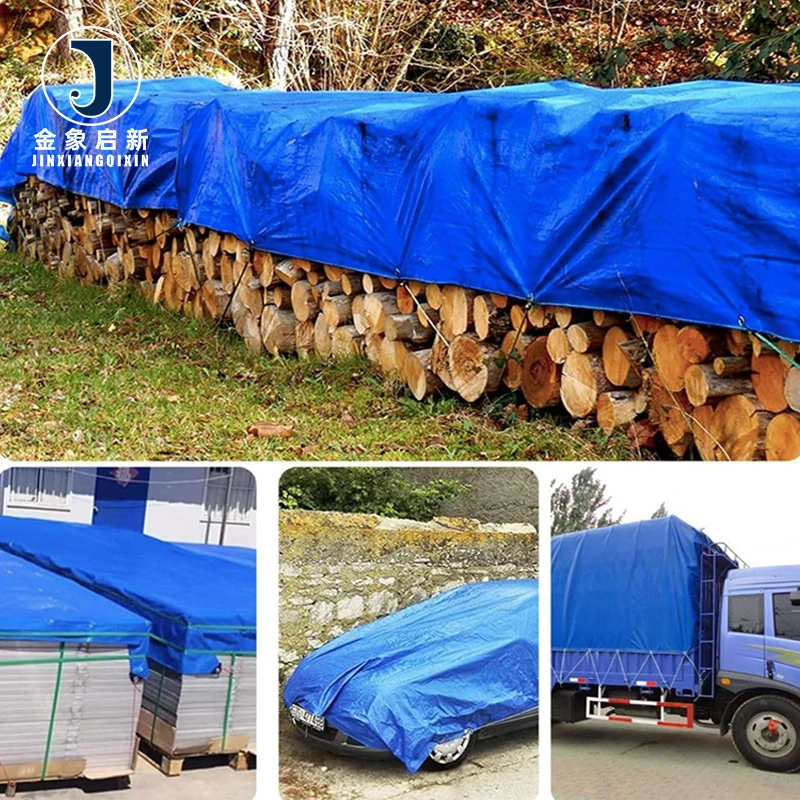
| Construction site covers | Wind-driven rain, dust containment, repeated handling across scaffolding and stockpiles |
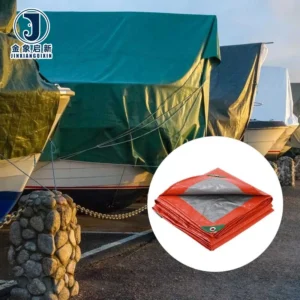
| Truck and trailer load covers | Highway wind loads, tie-down strap abrasion, UV exposure during transit and yard storage |
| Agricultural stock covers | Prolonged sunlight, moisture ingress from condensation, contact with organic acids in feed or grain |
| Pond and reservoir lining | Permanent water contact, soil chemistry, puncture risk from sub-grade irregularities |
| Equipment wraps for export | Salt-laden atmosphere in container shipping, friction between stacked pallets |
| Tarpaulin distributor resale | Batch colour matching for retail display, consistent roll diameter for automated slitting |
When the Quoted GSM Never Shows Up on the Dock
The specification sheet is only meaningful if the mill enforces it at every coating stage — not just at final inspection.
Buyers of wholesale PE tarpaulin bulk shipments regularly report the same pattern: the quotation promises a certain weight, but the rolls that arrive feel lighter, and a quick cut-and-weigh confirms the shortfall. The material performs below expectation, seams fail early, and the distributor is left explaining to their own customers why the cover did not last. [NEED_CITE: common complaints on GSM deviation in imported PE tarpaulin shipments] The gap between quoted and delivered weight is not random — it correlates with production lines that lack in-process coating-weight checks. When GSM is only sampled at the end, entire runs can leave the factory outside tolerance.
Roll-to-Roll Colour Consistency Across Container Loads
Distributors loading a 40HQ with mixed-colour PE tarpaulin roll stock need every roll in a given colour code to read identically when unrolled side by side at the customer’s site. Batch colour variation — a slight shift in blue tone between one roll and the next — becomes instantly visible once installed on adjacent truck bays or stacked across a retail shelf. Our colour-matching protocol locks pigment ratios at the compounding stage and verifies each run against a reference swatch before winding, reducing visible variation within a single container shipment.
Mesh Density and Its Effect on Tensile Balance
The 6×6 through 16×16 mesh range exists because different applications place opposing demands on warp and weft strength. A low-density 6×6 weave delivers lighter weight and better drape for temporary dust sheets and short-term agricultural covers, while a 16×16 construction increases yarn intersection points for higher tensile load in both directions. Selecting the right density means matching the dominant stress — whether it is wind uplift on a large flat cover or concentrated tie-down load at the eyelet row — rather than defaulting to the heaviest mesh available. [NEED_CITE: relationship between HDPE weave density and tensile behaviour in coated PE fabrics]
Why Weight and Density Must Be Read Together
A common mistake in PE tarpaulin procurement is treating GSM as the sole measure of strength. Weight tells you how much coating has been applied, but the base fabric mesh density governs how that weight translates into tensile and tear resistance. A 200 g/m² sheet woven at 6×6 may offer adequate waterproofing yet tear easily along the weft when a corner eyelet is loaded, whereas a 200 g/m² sheet at 14×14 distributes the same load across more yarn intersections. The LDPE double-side coating fills the weave interstices and bonds to the HDPE yarn, so coating adhesion — not just coating thickness — determines whether the film layer stays intact when the fabric flexes. Eyelet pull-out resistance depends on the hem construction: the PP rope inserted into the folded edge and the black plastic corner triangles spread load over multiple weave intersections, preventing the aluminium eyelet from tearing through under strap tension. Understanding these interactions lets buyers specify by performance outcome rather than by a single number on the data sheet.
The Hidden Cost of Underspecifying Your Roll Stock
When a distributor accepts a PE tarpaulin shipment where the coating weight is below the agreed grade, the consequences are rarely visible at first unpacking. The shortfall shows up weeks later when a truck cover splits along the hem after repeated tie-down cycles, or when an agricultural cover degrades under UV exposure faster than the end user expected. [NEED_CITE: field failure patterns linked to GSM shortfall in LDPE coated tarpaulins] Colour inconsistency between rolls in the same order is a different kind of cost — it forces the distributor to sort, segregate, and absorb returns from retail customers who notice mismatched panels. Both problems trace back to insufficient in-process quality checks and a lack of documented batch records linking each roll to its production run.
Why Sourcing PE Tarpaulin Here Reduces Specification Risk
Three full production lines and 36 sets of professional equipment support bulk capacity, meaning a multi-container order of PE tarpaulin roll stock is scheduled on dedicated lines rather than squeezed between unrelated products. The 10-person R&D team handles colour compounding, custom sheet sizing, and print layout, so sample development is completed within days rather than weeks. Dedicated QA/QC inspection occurs at every production stage — coating weight, mesh alignment, edge finishing — with 100% pre-shipment inspection before any container is sealed. Roll packing lists specify the GSM, colour code, and mesh density per roll, giving distributors full traceability from factory floor to end-customer delivery. ISO and CE certified processes ensure documentation is consistent across every shipment, and customs support documents are prepared in advance to avoid clearance delays at destination ports.
Documentation & Verification
- Material specification sheet stating GSM, HDPE base fabric density, and LDPE coating type per roll
- Pre-shipment inspection record confirming 100% QA check before container loading
- Container loading plan with roll count, bale weight, and carton breakdown for 20GP and 40HQ
- Batch colour matching record linking each roll to its pigment compounding run
- ISO and CE certificates included with shipment documentation package
- Certificate of origin and customs support documents prepared per destination market
Fabrication, Handling & Storage
- Heat-seal the LDPE-coated edges using a hot wedge at temperatures suited to the coating thickness to prevent delamination at the hem
- Space rustproof aluminum eyelets at 1 m intervals on heavier grades and 1.5 m on lighter grades to match tie-down strap load
- Store rolls upright on pallets in dry conditions to avoid compression marks on the LDPE surface that may persist after unrolling
- Allow rolls acclimatise to ambient temperature before unrolling in cold weather to prevent cracking of the LDPE coat
- Clean with mild detergent and soft brush; avoid solvents that may degrade the LDPE coating layer on the HDPE weave
- When cutting sheets from roll stock, plan the nesting layout to minimise offcuts around the PP rope hem allowance
What to Include in Your Enquiry
Provide the end-use application and typical exposure conditions — outdoor duration, wind load, contact with chemicals or standing water — so the correct mesh density and GSM grade can be recommended. Specify whether you need roll stock for your own converting line or pre-cut sheets with finished hems and eyelets. If your market requires fire resistant or UV protection treatment, state the local standard or regulation so the appropriate grade is confirmed before production. Include target container volume and preferred packing format — rolls, bales, or cartons — to optimise loading efficiency.
Frequently Asked Questions
Q: How is GSM verified before shipment and on arrival?
A: Coating weight is measured at every production stage on our lines, not just at final inspection. Each roll is logged against its target GSM with a tolerance band. A pre-shipment inspection record accompanies every container, and we recommend buyers perform their own cut-and-weigh check on a sample roll within seven days of receipt to confirm the specification matches the documentation provided.
Q: Can I expect consistent colour across all rolls in one container order?
A: Yes. Pigment ratios are locked at the compounding stage for each colour code, and every production run is verified against a reference swatch before winding. A batch colour record links each roll to its compounding run, so rolls within the same order read consistently when installed side by side — critical for distributors displaying stock or contractors covering adjacent structures.
Q: What roll widths and lengths are available for container loading?
A: Roll lengths are available up to 100 m per roll or cut to your specification. Width options are configured to maximise container loading efficiency — whether you are shipping by roll, bale, or carton. A loading plan is provided at quotation stage showing roll count and weight per 20GP or 40HQ so you can plan freight costs before confirming the order.
Q: What is the minimum order for custom colours, printed branding, or special sizes?
A: Custom colour runs, printed logos, and non-standard sheet sizes are supported with minimums that vary by grade and treatment. The 10-person R&D team develops samples within days of receiving your brief. For printed PE tarpaulin, we provide a layout proof and colour match approval before production begins so the final result matches your brand specification.
Q: How are rolls and bales packed for container transit?
A: Rolls are wound on cores and wrapped for transit protection. Cut sheets are folded and packed in bales or cartons per your preference. Each piece is bagged with a customer label inserted. Loading plans account for roll diameter, bale dimensions, and carton weight to fill the container efficiently — whether you are ordering 17 tons in a 20GP or 28+ tons in a 40HQ.