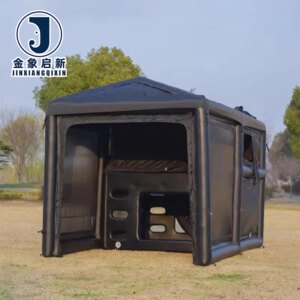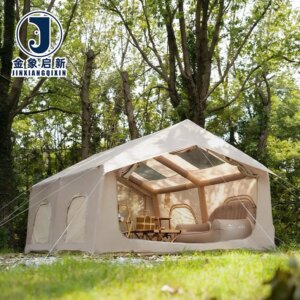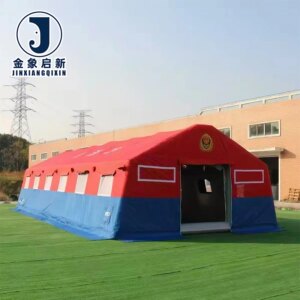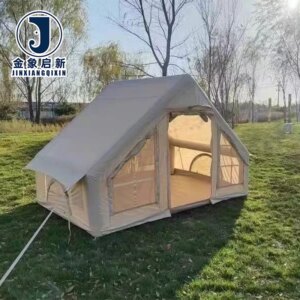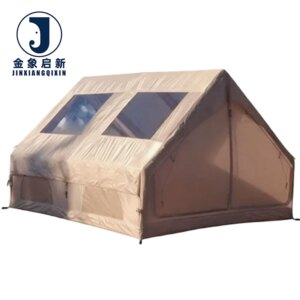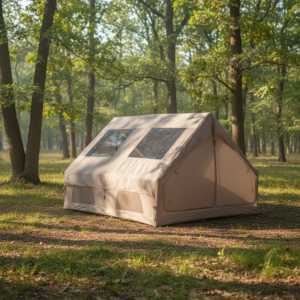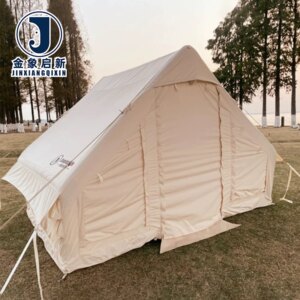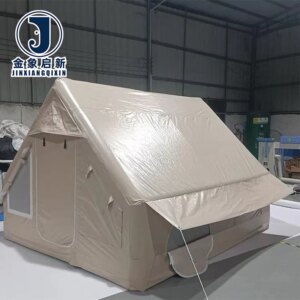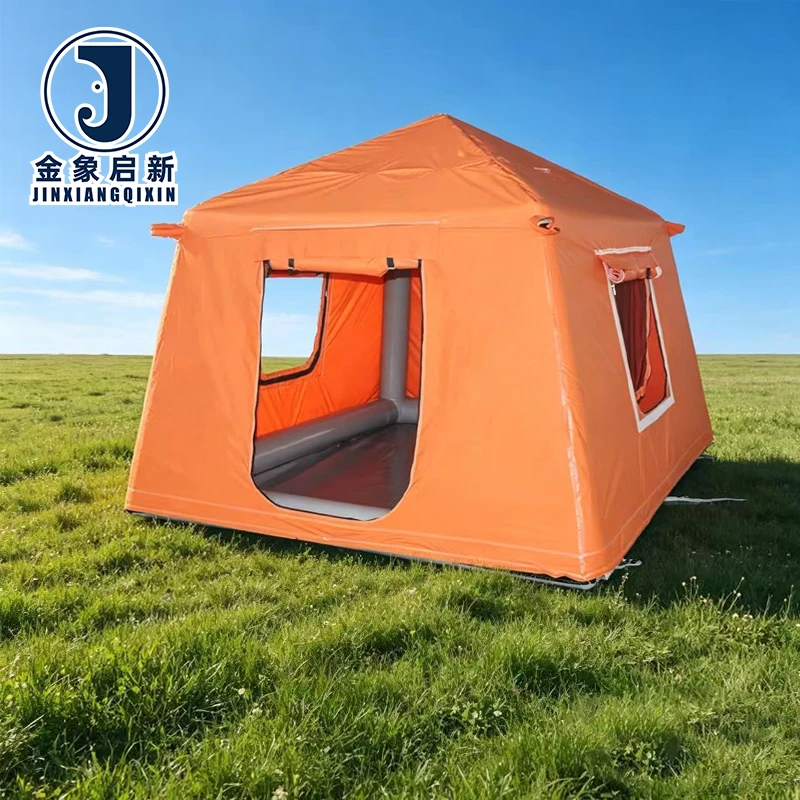
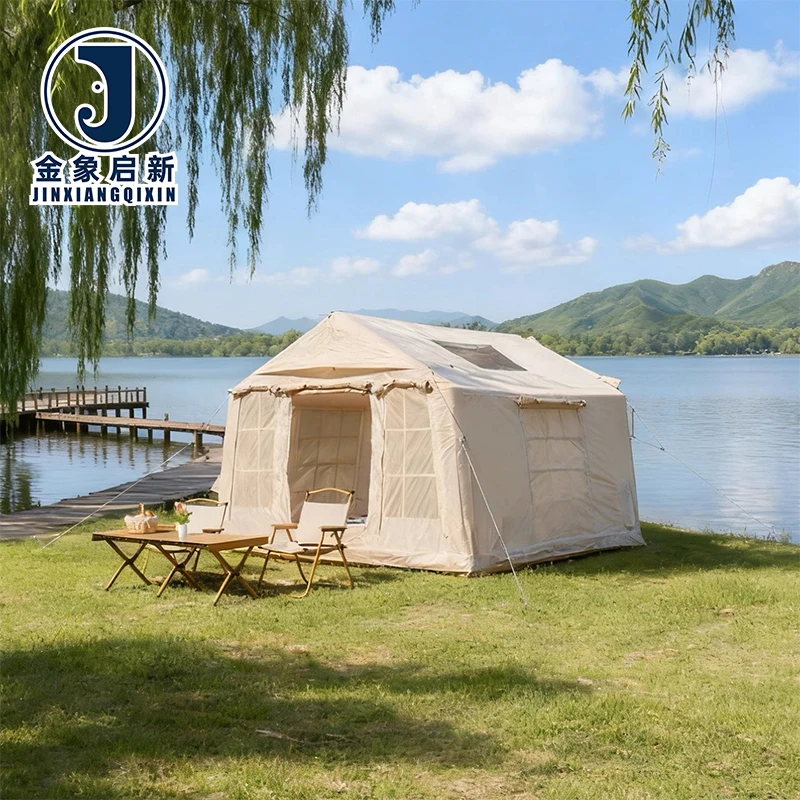
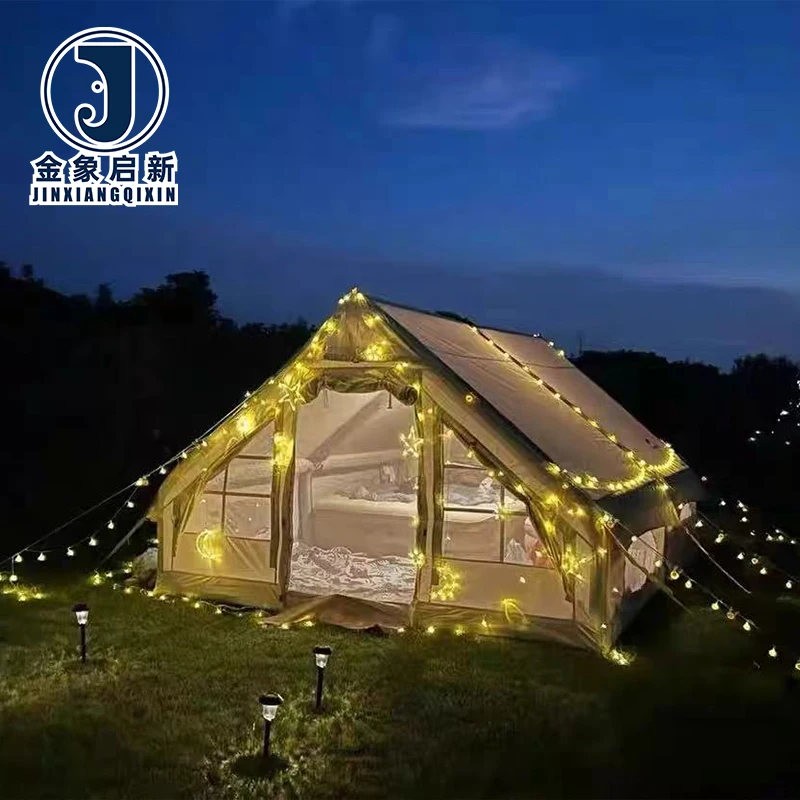
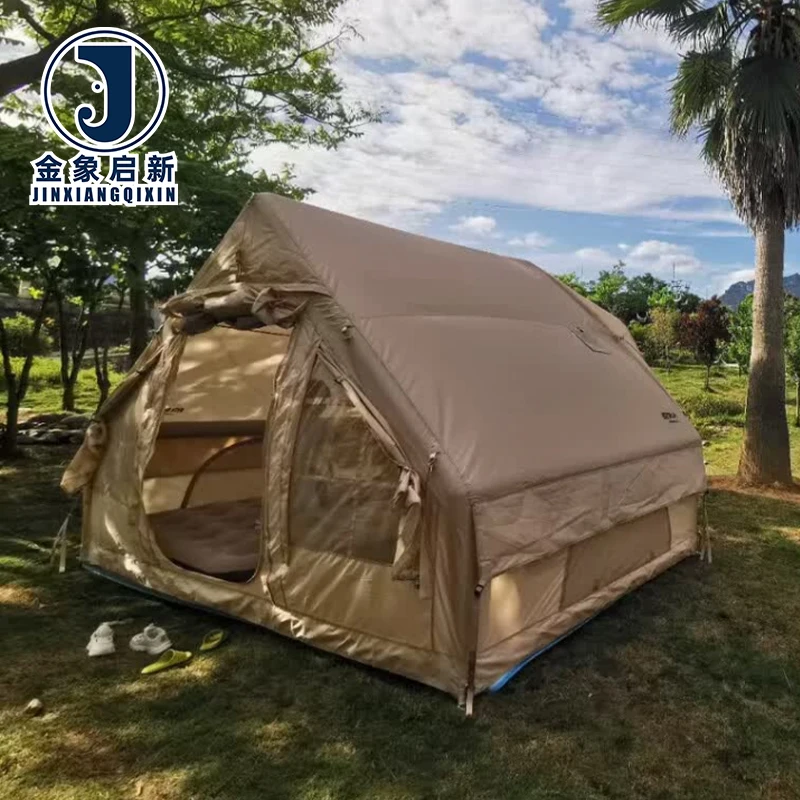
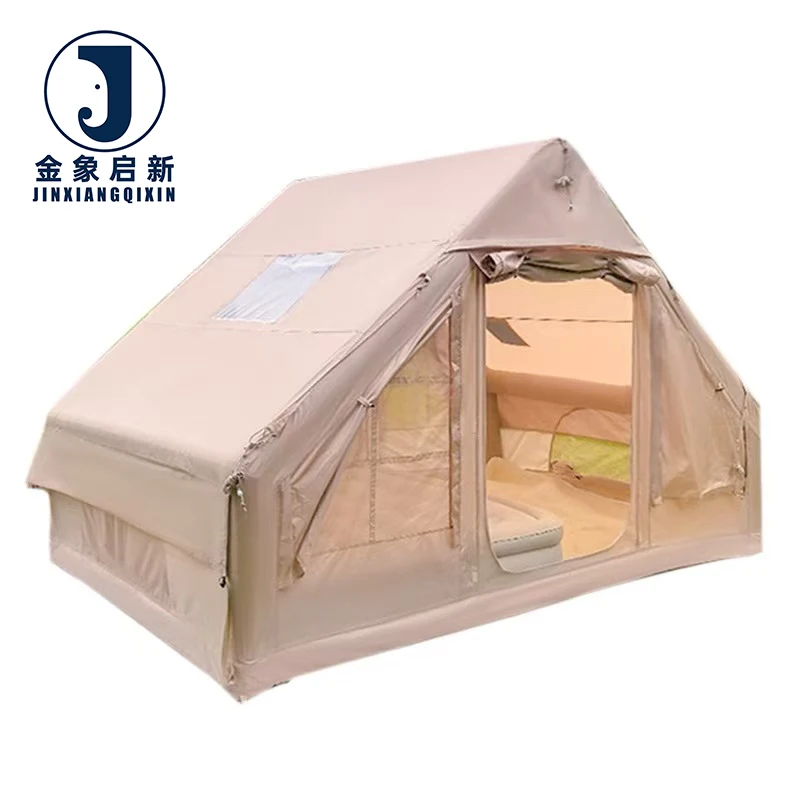
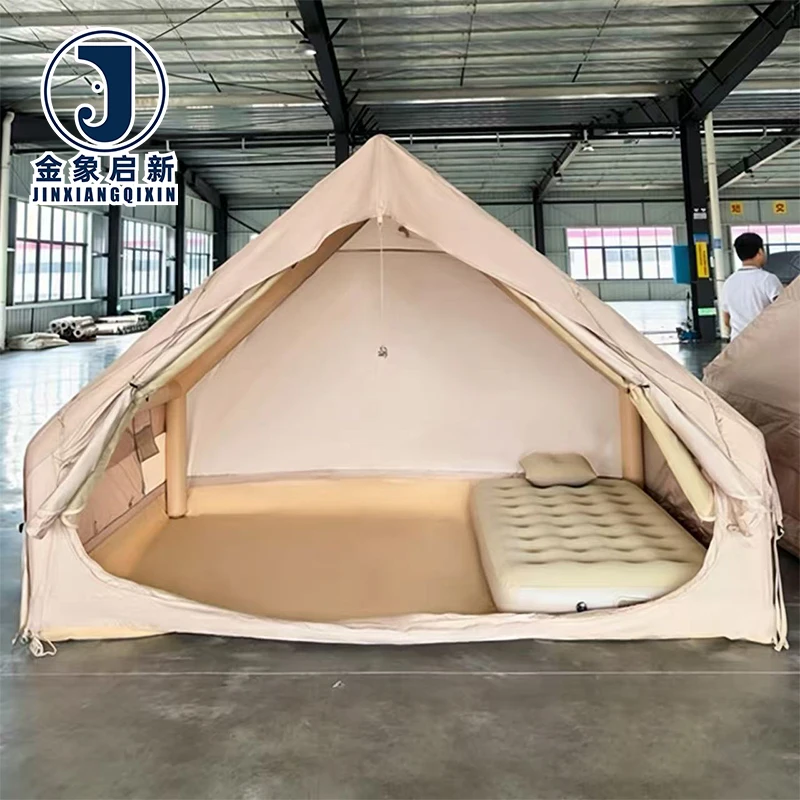
Description
Batch-to-Batch Consistency — 3 full production lines with dedicated QA&QC at every stage and 12-checkpoint inspection keep roll colour, coating weight and dimensional accuracy uniform across your entire inflatable tent fabric order.
Technical Specifications
| Parameter | Value |
|---|---|
| Product Type | Inflatable Tent |
| Core Material | 420D Oxford |
| Key Performance | Quick Automatic Opening, Four-Season Design, Single Layer Construction |
| Capacity | 5-8 Person |
| Waterproof Rating | 3000mm water column (source value — verify against manufacturer catalog) |
| Production Facility | 9,180 m² with 3 full production lines |
| Processing Equipment | 36 sets of professional processing equipment |
| R&D Team | 10 technicians |
| Quality Control | Full-process inspection, 12 critical checkpoints, 48-hour pressure retention testing |
| Standards | ISO9001, ISO14001, ISO45001, CE |
| Customization | OEM & ODM, sample customization, pattern printing |
Application Suitability
| Application | Exposure & Requirement |
|---|---|
| Commercial outdoor events | Rapid deployment, high foot traffic, wind loading on inflatable beams, UV exposure |
| Industrial site temporary shelters | Abrasive ground contact, dust ingress prevention, structural stability in wind |
| Large-scale project base camps | Extended outdoor occupation, temperature fluctuation, repeated inflation cycles |
| Equipment storage | Moisture protection, puncture resistance from stored hardware, long-term standing |
| On-site team accommodation | Weatherproofing across seasons, interior comfort, quick relocation capability |
Why Batch Colour Consistency Matters When Buying Inflatable Tent Fabric by the Roll
Colour drift between rolls becomes immediately visible when two panels are inflated side by side at a trade show or event site.
Tent and inflatable structure manufacturers who buy fabric in volume frequently discover that rolls from the same purchase order carry slight shade differences. Once the panels are welded and installed next to each other, the mismatch stands out to end clients and damages your brand reputation. This is why roll-to-roll colour control must be verified at the coating stage, not just at final packing. An inflatable tent fabric manufacturer with dedicated colour-matching checkpoints can prevent this from reaching your cutting table. [NEED_CITE: colour fastness and batch consistency standards for coated textiles]
How 420D Oxford Supports Inflatable Beam Integrity
The 420-denier Oxford base fabric provides tear resistance at the stress concentrations where inflatable beams bend and flex during pressurisation. When air pressure pushes outward on every seam, the base fabric must resist propagation of small nicks or abrasion marks that develop during transport and field deployment. This denier level balances weight for portability against structural demand for holding air pressure over multi-day events or extended base camp use. Manufacturers sourcing an inflatable tent roll wholesale need fabric that cuts cleanly and heat-welds predictably across an entire production run.
Four-Season Construction for Year-Round Deployment
A four-season design addresses the temperature swings that inflatable structures face between summer events and winter industrial shelters. The coating formulation must remain flexible in cold conditions without becoming brittle, while maintaining dimensional stability when internal air pressure rises with heat. Single layer construction reduces packed weight and transport volume, which matters for mobile operations that relocate shelters between project sites. Each unit undergoes 48-hour pressure retention testing before shipment, confirming that the inflation system and welded seams hold air reliably under sustained load. [NEED_CITE: pressure retention test protocols for inflatable fabric structures]
Reading the 420D Specification Beyond Denier Count
The 420D designation tells you the yarn weight per 9,000 metres of base thread, but the weave density and coating adhesion together determine how the finished inflatable tent fabric actually performs under load. A loosely woven Oxford base may show high air permeability that forces your welding parameters to compensate, slowing production throughput. The coating weight applied to this 420D Oxford affects both the fabric stiffness during cutting and the heat-weld temperature window available on your fabrication line. When specifying an inflatable tent fabric manufacturer supply, request the base fabric weave count alongside the coating specification to confirm the material will behave consistently on your equipment.
The Hidden Cost of Underspecifying Inflatable Tent Roll Stock
Purchasing on price alone often leads to receiving rolls where the coating weight is lighter than quoted, reducing waterproof performance and abrasion resistance at ground contact points. Seams that fail during the pressure retention test at your factory mean the entire welded unit is scrapped, wasting labour and lead time. Colour variation discovered after cutting forces you to sort and match panels manually, increasing waste percentage per roll. When inflatable structures deflate unexpectedly on a commercial event site, the reputational damage extends far beyond the material cost of a single batch. [NEED_CITE: failure analysis methodology for inflatable structure seam integrity]
Why Source Your Inflatable Tent Fabric Here
Three full production lines running 36 sets of professional equipment provide the capacity to fulfil container-load orders of inflatable tent rolls within your project timeline. The 10-technician R&D team develops samples within days when you need custom width, colour or pattern printing verified before committing to bulk. Every roll passes through 12 critical checkpoints during production, with dedicated QA&QC staff inspecting coating adhesion, dimensional accuracy and colour match at each stage. The 48-hour pressure retention test on finished units proves the material holds air under sustained inflation before it leaves the factory. ISO9001, ISO14001, ISO45001 and CE certifications accompany every shipment, supporting your own compliance documentation for international markets.
Documentation & Verification
- Material specification sheet stating 420D Oxford base fabric, coating weight and waterproof rating
- Pre-shipment inspection record covering dimensional accuracy, seam strength and batch colour consistency
- Roll packing list detailing container loading by roll count, weight and cubic volume for logistics planning
- ISO9001, ISO14001, ISO45001 and CE certificates included with each shipment for customs clearance
- 48-hour pressure retention test report confirming inflation system reliability per unit
Fabrication, Handling & Storage
- Heat-weld temperature and dwell time must be calibrated to the specific coating formulation on this 420D Oxford before production starts
- Store rolls vertically on padded racks to prevent flat spots that create visible creases when the inflatable panel is pressurised
- Allow cold-stored rolls to reach ambient temperature before unrolling to avoid coating micro-cracking at the beam bend points
- Use solvent-free cleaners on the coated surface to preserve waterproof integrity across repeated deployment cycles
- Pattern cutting layouts should account for single layer construction to maximise panel yield per roll width
Request a Specification Match for Your Production Line
Share your target roll width, annual volume and any pattern printing or branding requirements so the technical team can prepare matched samples. Specify the compliance standards your end markets require, including any fire classification or waterproof rating thresholds for inflatable structures in commercial use. Confirm whether you need raw roll stock for your own fabrication facility or finished cut-to-size panels with welded seams and valve integration.
Frequently Asked Questions
Q: How is batch colour consistency controlled across rolls in a single order?
A: Dedicated QA&QC staff inspect colour match at multiple checkpoints during coating and winding. Each roll is compared against the approved reference standard under controlled lighting before packing, ensuring panels from different rolls show no visible shade variation when installed side by side.
Q: What roll widths and lengths are available for inflatable tent fabric orders?
A: The production lines support custom roll widths and lengths to match your cutting layout and minimise waste. Provide your panel dimensions and annual volume during the inquiry stage so the technical team can recommend the most efficient roll configuration for your fabrication process.
Q: How does the OEM/ODM sample and pattern printing approval workflow operate?
A: The 10-technician R&D team develops initial samples within days based on your specification. Once you approve the sample for material, colour and print quality, the confirmed reference is locked for bulk production, with each roll checked against it during the 12-checkpoint inspection process.
Q: What is the typical lead time for custom width, colour or printed inflatable tent rolls?
A: Lead times depend on order volume and the complexity of custom specifications such as non-standard widths or multi-colour pattern printing. The sales team provides a confirmed production schedule with your quotation after reviewing your full specification and sample approval requirements.
Q: Why is heat welding preferred over sewing for inflatable tent seam construction?
A: Heat welding creates a continuous bond across the full seam width that holds air pressure without needle puncture paths. The 420D Oxford coating formulation must be matched to your welding equipment parameters to ensure the weld line reaches full strength before the fabric reaches its tear limit under inflation pressure.