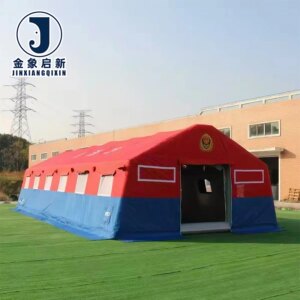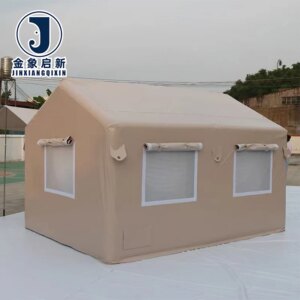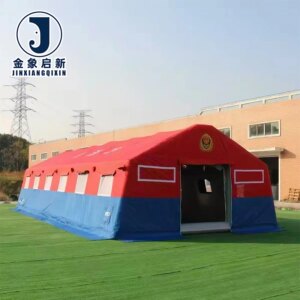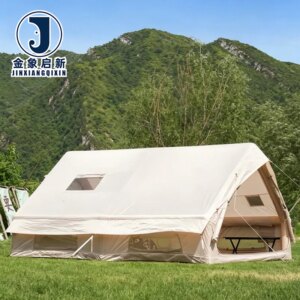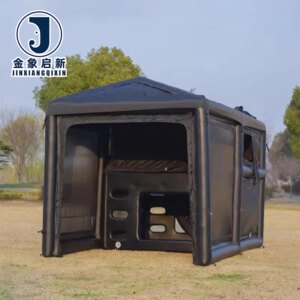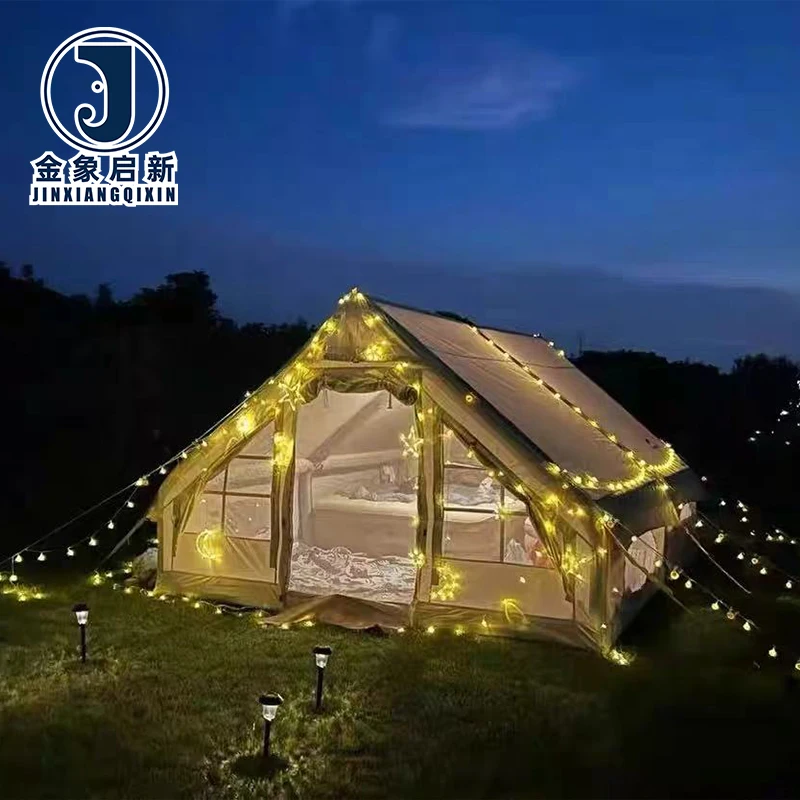
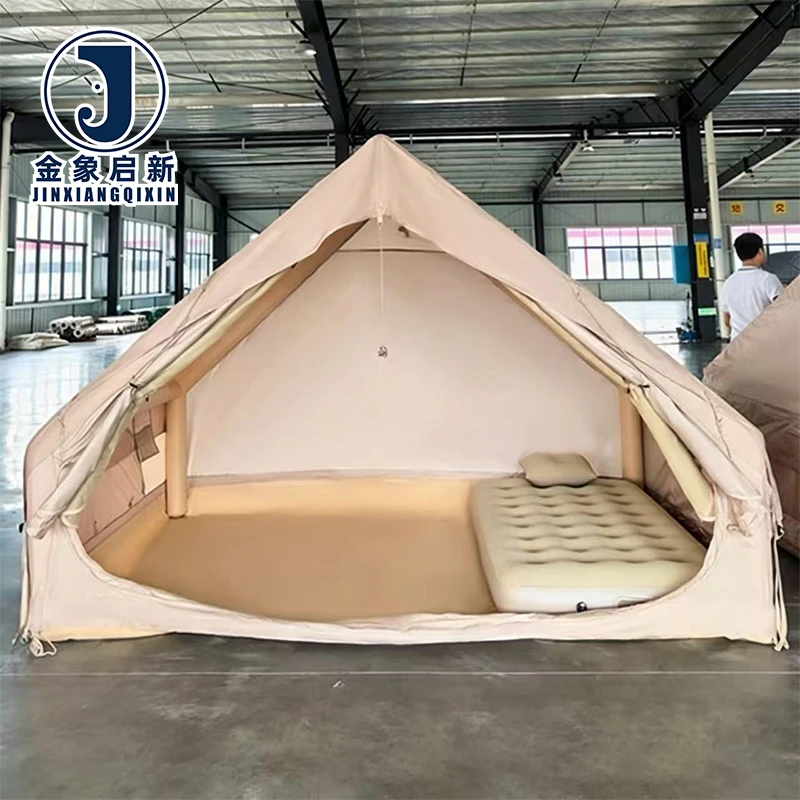
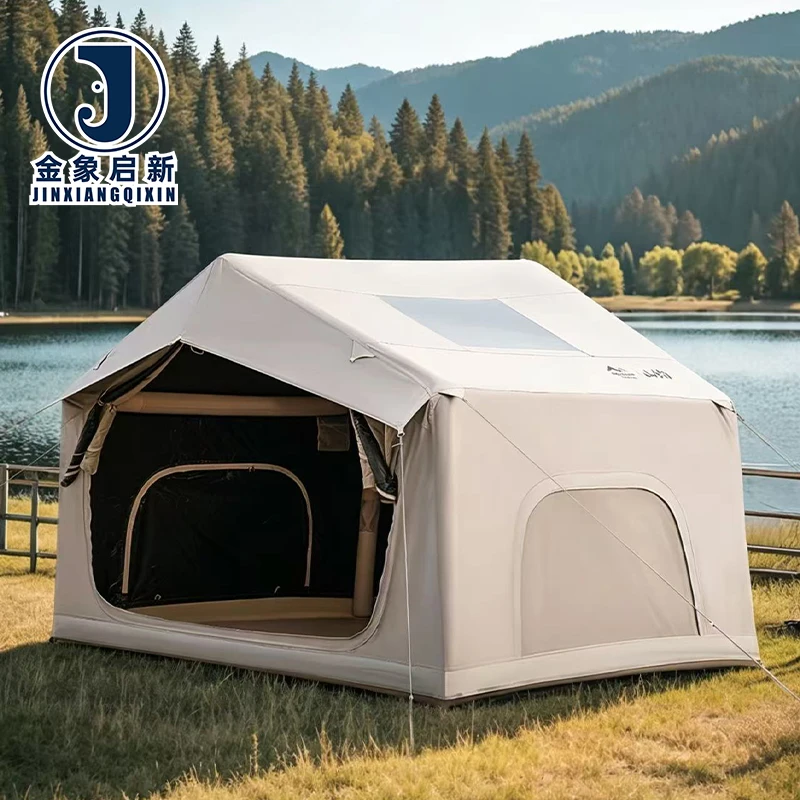
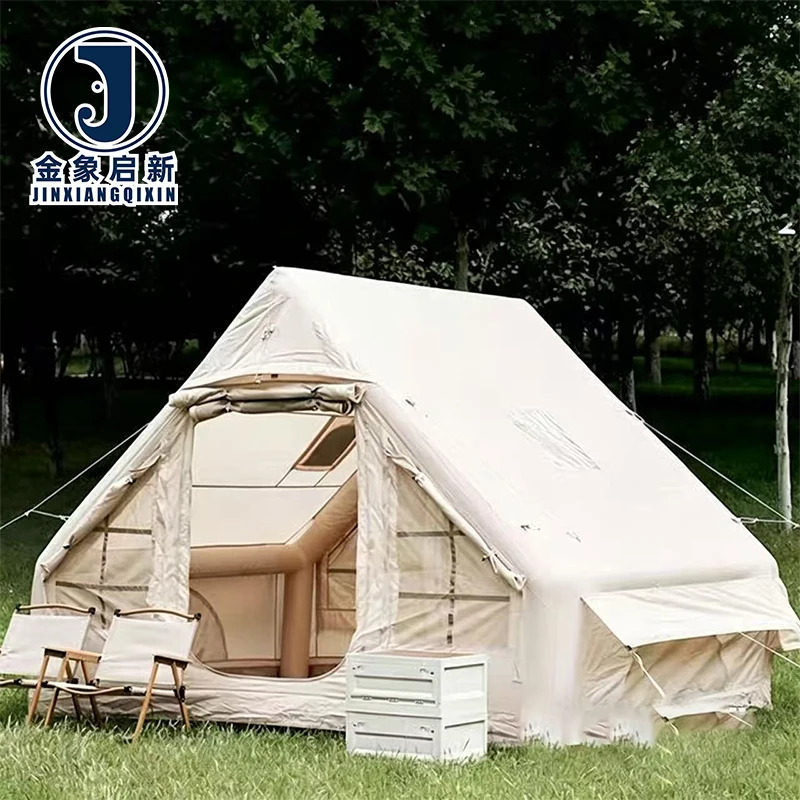
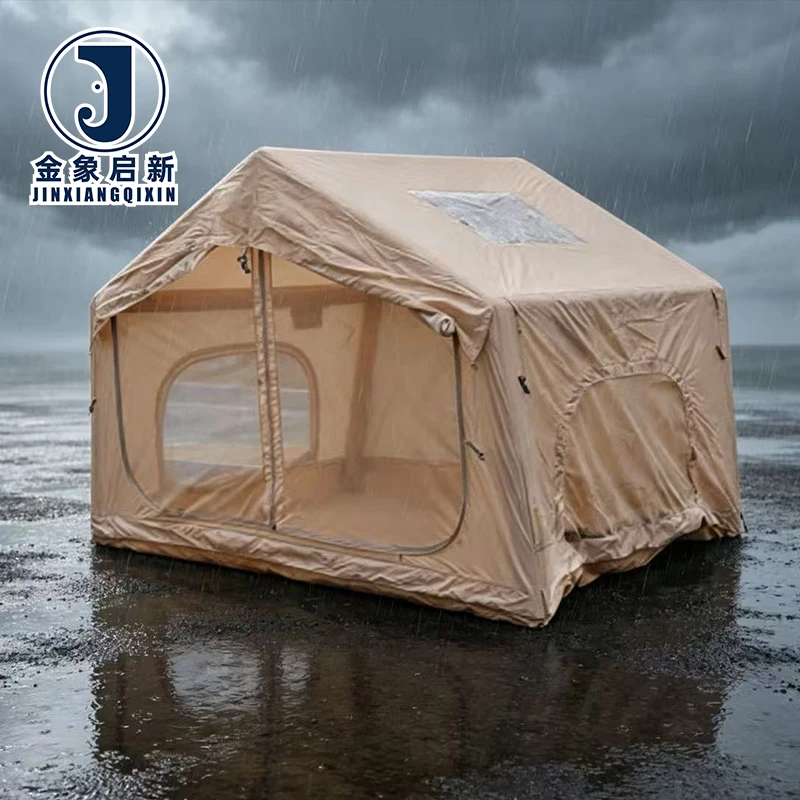

Description
Precision-Roll Consistency — Every inflatable tent fabric roll undergoes dedicated QA/QC at every production stage to ensure batch-to-batch uniformity across your entire order volume.
Technical Specifications
| Parameter | Value |
|---|---|
| Product Type | Inflatable Tent |
| Core Material | PVC Tarpaulin (Knife Coated) |
| Capacity | 4-6 Person |
| Coating Method | Knife coated |
| Key Features | Waterproof, UV-resistant, Tear-resistant, Fire-retardant, Anti-static |
| Construction | Single-layer, inflatable air beam structure |
| Opening Mechanism | Quick automatic opening / air inflation |
| Customization | OEM & ODM (sample customization, pattern printing, size adjustments, material thickness modifications) |
| Standards | ISO 9001, ISO 14001, ISO 45001, CE |
Note: Fire-retardant and anti-static grades available — confirm the specific grade required for your market.
Note: UV-resistant treatment available — confirm test basis required for your application.
Application Suitability
| Application | Exposure & Requirement |
|---|---|
| Temporary site accommodations for construction crews | Prolonged outdoor weather exposure, repeated inflation cycles, ground moisture contact, abrasion from equipment movement |
| Mobile command centers for outdoor events | Rapid deployment frequency, high visibility requirements, wind load stress on inflated beams, UV exposure |
| Emergency response shelters for infrastructure projects | Immediate deployment under adverse conditions, temperature fluctuation, transport abrasion during logistics |
| Equipment storage in remote locations | Standing water contact, dust and debris ingress, UV degradation over extended idle periods |
| Temporary workspace for field operations | Occupant safety requirements, fire-retardant compliance for enclosed spaces, ventilation integration |
Why Roll-to-Roll Colour Variation Wrecks Inflatable Tent Production
Batch inconsistency is the silent cost that tent manufacturers only discover after cutting begins.
When you source inflatable tent fabric by the roll, a colour shift between consecutive rolls in the same purchase order forces fabricators to segregate panels, re-sort cutting layouts, or absorb visible mismatch once the tent is inflated and installed side by side. This problem compounds with order volume — a container load of rolls arriving with even slight shade drift means either accepting a patchwork finish or rejecting partial shipments mid-production. [NEED_CITE: Colour consistency standards for coated technical textiles per ISO 105 series]
Roll Width Selection and Panel Cutting Yield
Inflatable tent manufacturers cutting air beam sleeves and canopy panels from roll stock must match roll width to panel dimensions before committing to volume. A roll width that does not align with the tent’s largest panel dimension generates off-cuts that cannot be repurposed for structural components. Sourcing Inflatable Tent roll stock in widths matched to your cutting patterns reduces material waste and limits the number of welded seams across load-bearing beam sections.
Volume Dispatch and Container Loading Efficiency
Purchasing inflatable tent fabric wholesale means managing container weight limits against roll count. Each roll of knife-coated PVC tarpaulin carries substantial weight relative to its linear metre yield. Loading plans must account for roll diameter, core type, and stacking orientation to prevent compression damage to inner layers during ocean transit. Our production lines support bulk roll output with consistent winding tension so that outer wraps arrive without telescoping or edge crush. [NEED_CITE: Container loading guidelines for heavy coated fabric rolls]
Knife Coating and Air Beam Weld Integrity
The knife coating method deposits a continuous PVC layer onto the base fabric, producing a surface that responds predictably to high-frequency or hot-air welding. For inflatable tent manufacturers, this consistency matters at the air beam seams where the fabric must hold internal pressure across thousands of inflation cycles. A uniform coating weight ensures that weld parameters set on the first roll transfer directly to subsequent rolls without re-calibration. The single-layer construction of this PVC tarpaulin allows fabricators to control wall thickness precisely at beam joints, avoiding the weak points that arise when multiple laminate layers separate under cyclic pressure.
The Hidden Cost of Specifying Without Verification
Specifying inflatable tent fabric on GSM alone without verifying coating adhesion or base fabric denier leads to field failures that appear only after the tent has been inflated and deflated repeatedly. A roll that meets the quoted weight but uses a lighter base scrim with heavier coating filler will crack at fold lines before the coating itself degrades. Fire-retardant treatment claimed without a supporting test report creates compliance risk at the installation site, where inspectors may demand documentation before allowing the structure to be occupied. [NEED_CITE: PVC coated fabric failure modes related to base fabric and coating ratio]
Production Infrastructure Behind Consistent Roll Output
Our three full production lines and 36 sets of professional processing equipment deliver the volume capacity required for wholesale inflatable tent fabric orders without sacrificing coating uniformity. The 10-person R&D team handles material thickness adjustments and pattern printing proofs so that custom specifications are locked before full production begins. Dedicated QA/QC staff conduct in-process checks at every stage — base fabric inspection, coating weight verification, and 24-hour inflation leak testing on finished samples — ensuring that the roll you receive matches the approved specification.
Documentation & Verification
- Material specification sheet stating GSM, base fabric denier, and coating weight per roll batch
- Pre-shipment inspection record with batch numbers and performance verification results
- Roll packing list detailing roll count, net weight, and container loading configuration
- ISO and CE certificates supporting compliance documentation for regulated export markets
- UV and flame-retardant test reports available where applicable to stated grades
Fabrication, Handling & Storage
- Hot-air weld temperature must be calibrated to the knife-coated PVC surface before joining air beam sections
- Store rolls upright on pallets to prevent flat-spotting on the outer coating layer during warehousing
- Unroll and allow fabric to relax before cutting to release winding tension inherent in heavy-grade PVC tarpaulin
- Avoid dragging roll edges across concrete floors to protect the coating surface from scoring and abrasion
- Pattern printing registration marks should be verified against cutting templates before panel separation
Specify Your Inflatable Tent Fabric Requirements
To move forward, provide the target roll width, annual volume requirement, and the fire-retardant or anti-static grade your end market mandates. Confirm whether you require plain rolls for your own cutting line or finished panels with pattern printing applied. Sample development is available to verify colour match and weld compatibility before full production commitment.
Frequently Asked Questions
Q: How do I verify GSM on arrival against the quoted specification?
A: We supply a material specification sheet with each roll batch stating the exact GSM, base fabric, and coating details. Upon receipt, cut a measured sample from the roll end and weigh it on a calibrated scale. Any deviation beyond accepted tolerance should be flagged immediately against the pre-shipment inspection record we provide.
Q: How is roll-to-roll colour consistency controlled within a single order?
A: Dedicated QA/QC staff check colour at every production stage using controlled lighting against the approved reference standard. Rolls from the same batch are grouped for dispatch. If your order spans multiple production runs, we notify you in advance and provide comparison samples before shipping mixed batches.
Q: How do I select roll width to optimize tent panel cutting yield?
A: Provide your largest panel dimensions and nesting layout. We recommend roll widths that minimize off-cuts on structural beam sections. Our R&D team can review your cutting plan and suggest available widths that reduce seam count on pressure-bearing components.
Q: What is the MOQ and lead time for custom width or pattern printing?
A: Minimum order quantities depend on the custom width and colour specified. Standard widths carry lower minimums and shorter lead times. Pattern printing requires a proofing stage for colour matching on PVC tarpaulin before bulk production begins. Contact us with your specific requirements for a detailed quotation.
Q: How does the pattern printing proofing process work?
A: We produce a printed sample on the specified PVC tarpaulin grade for your approval before full-run printing. Colours are matched against your supplied reference under controlled conditions. Adjustments are made to ink density and registration until the proof meets your standard, then production proceeds with that approved setting.