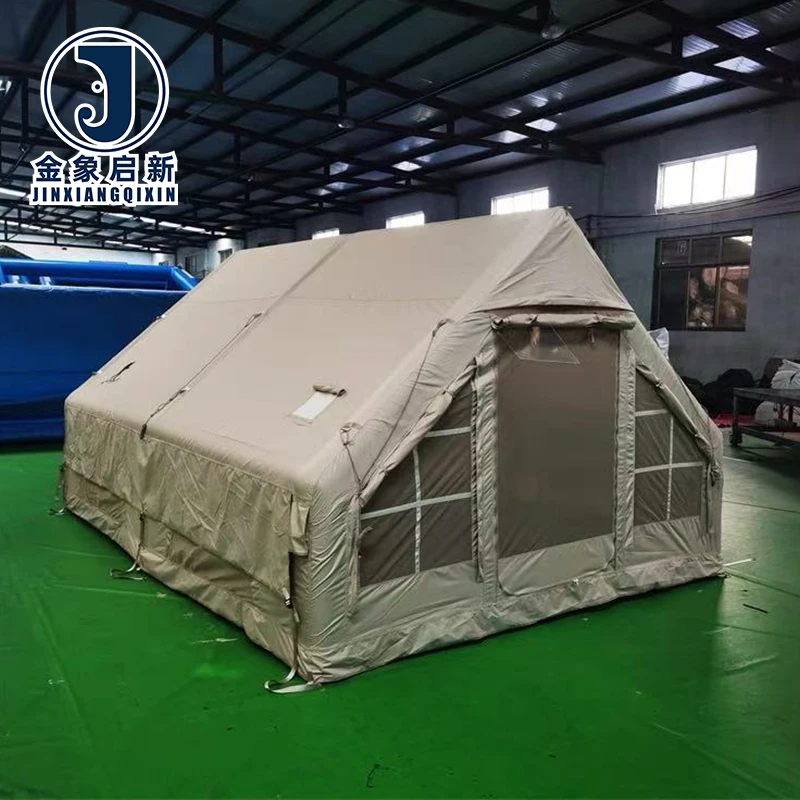
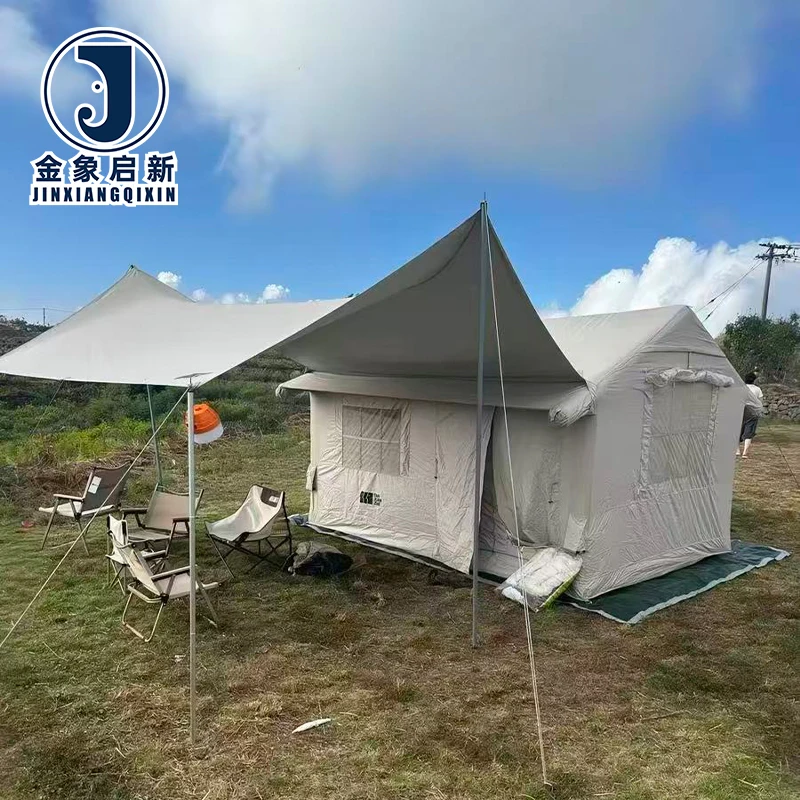
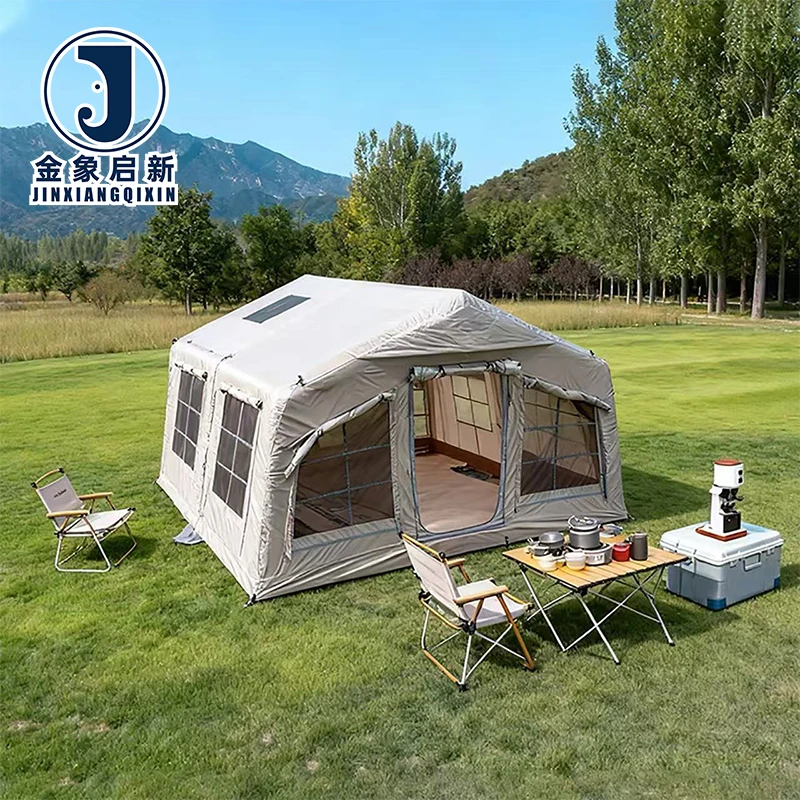
Description
Roll-to-Roll Consistency — dedicated QA/QC at every production stage ensures inflatable tent fabric batches maintain uniform coating weight and colour across the entire order.
Technical Specifications
| Parameter | Value |
|---|---|
| Product Type | Inflatable Tent Fabric |
| Core Material | PVC tarpaulin |
| Waterproof Performance | Fully waterproof coated construction |
| UV Resistance | Available with UV-resistant treatment (test basis not stated in source) |
| Tear Resistance | Tear-resistant PVC coated structure |
| Fire Retardancy | Available in flame retardant grades (grade not stated in source) |
| Anti-Static | Available with anti-static treatment (surface resistance or standard not confirmed) |
| Customization | OEM & ODM with pattern printing, material selection, and product design |
| Quality Inspection | Full-process QA/QC with 24-hour air pressure testing for inflation integrity |
| Standards | ISO9001, ISO14001, ISO45001, CE |
Application Suitability
| Application | Exposure & Requirement |
|---|---|
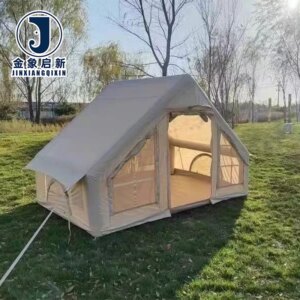
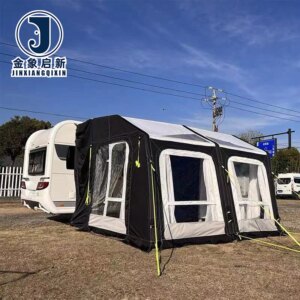
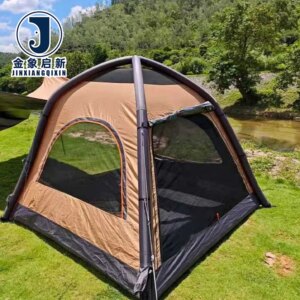
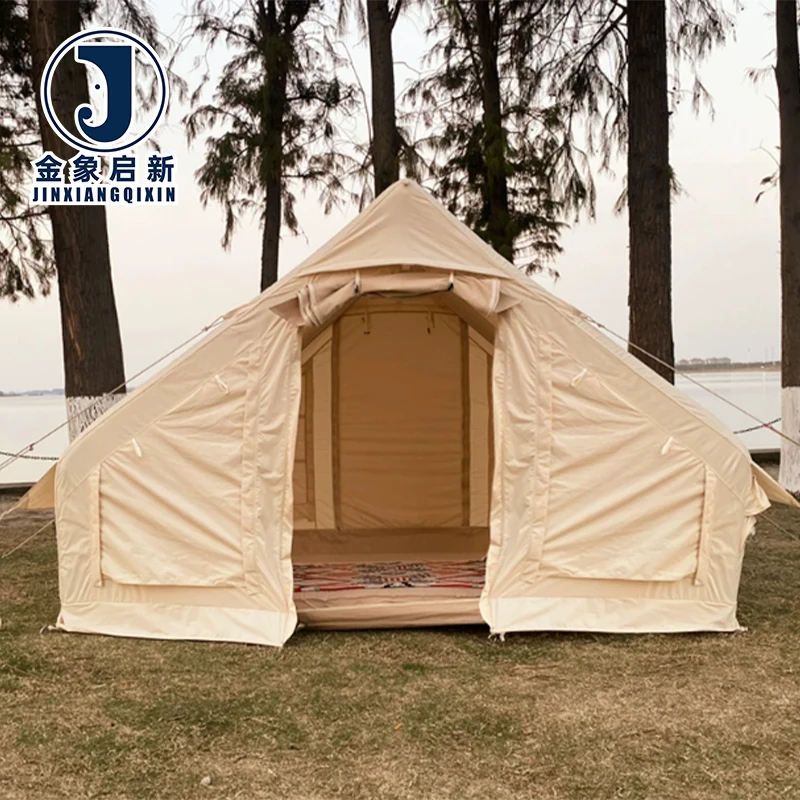
| Commercial-grade inflatable camping tents | Prolonged outdoor weather exposure, repeated inflation and deflation cycles, UV radiation |
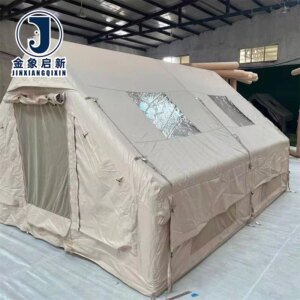
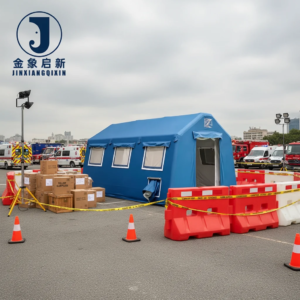
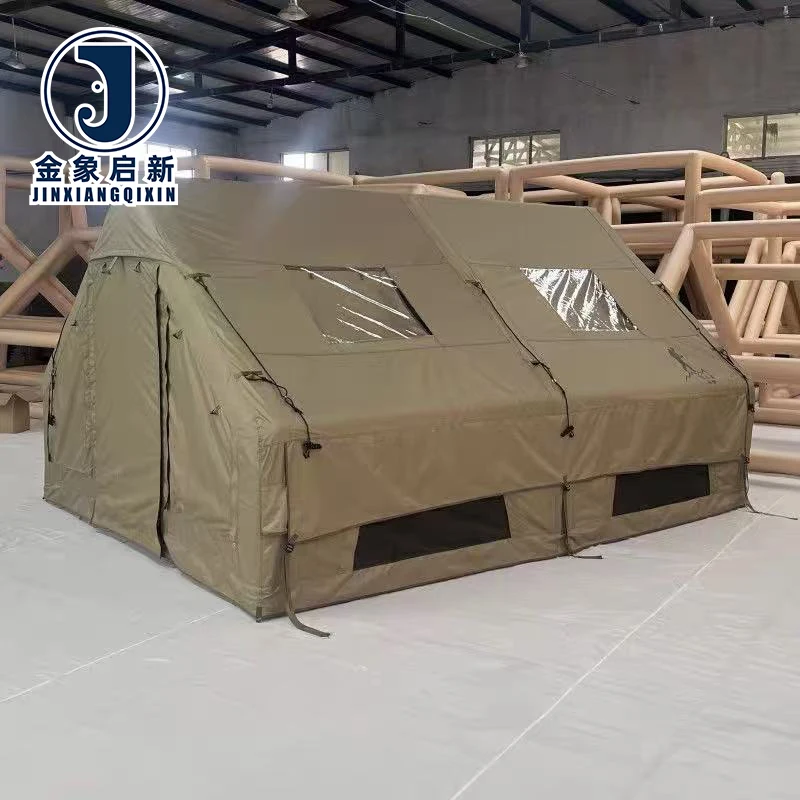
| Construction site temporary shelters | Wind loading, abrasive site conditions, certified fire-retardant compliance |
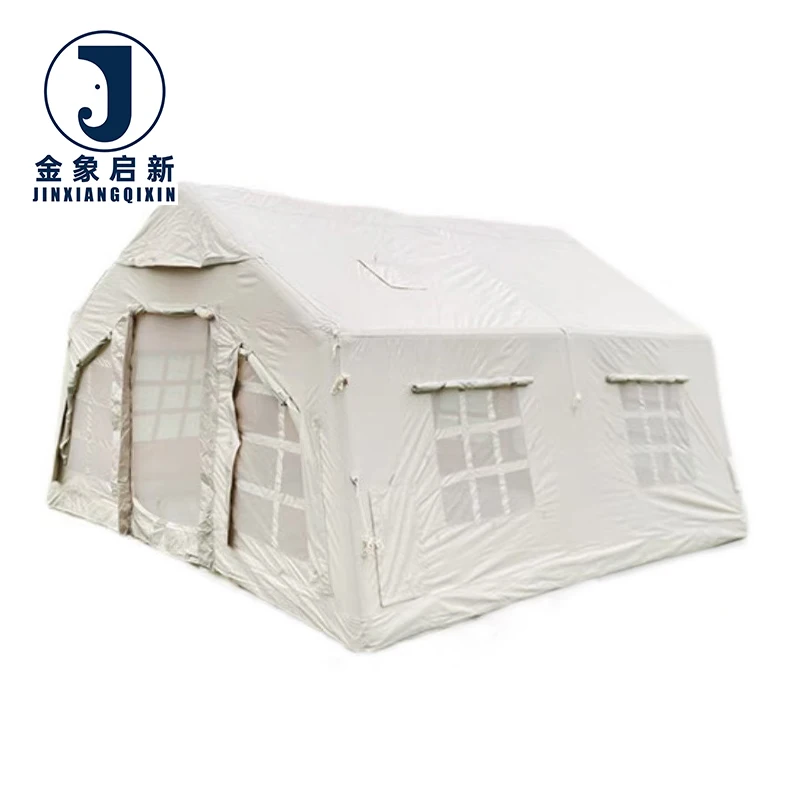
| Industrial event canopies | Large-span structural stress, crowd safety flame-retardant requirements, seasonal deployment |
| Inflatable structure fabric for regional resale | Consistent batch quality across rolls, container-load volume, reliable documentation for import |
Why Batch Consistency Matters More Than Quoted GSM for Inflatable Tent Fabric
Stated GSM means nothing if the coating weight drifts between rolls in the same shipment.
When inflatable tent fabric wholesale orders arrive with uneven coating distribution, the consequences show up on the production floor. Some rolls weld cleanly while others blister at the same temperature setting. Panels cut from different rolls display visible shade variation once assembled side by side. Procurement teams approve a specification based on a sample roll, only to find the bulk delivery does not behave the same way under heat welding or inflation stress [NEED_CITE: tensile and tear test methods for coated fabrics per ISO 1421].
Maintaining Uniform Coating Weight Across Bulk Roll Stock
Producing Inflatable Tent Material bulk orders with stable properties requires control at every coating stage. The PVC compound viscosity, knife gap setting, and oven temperature profile must remain constant throughout the run. Our three full production lines and 36 sets of professional processing equipment allow us to dedicate specific lines to large-volume inflatable tent fabric orders, reducing changeover variables that cause batch drift.
Colour Matching and Surface Finish Consistency
Colour variation between rolls is one of the most visible defects once panels are joined on the production floor. Each batch is checked against the approved colour reference before packing. For orders requiring pattern printing or custom branding, registration accuracy is verified across the full roll length to prevent misalignment during fabrication [NEED_CITE: colour fastness and coating adhesion standards for PVC tarpaulin].
Reading the Specification Sheet Beyond the GSM Number
The stated GSM of a PVC tarpaulin roll is the combined weight of base fabric and coating, but it does not reveal how that weight is distributed. A roll with a heavy coating on a light base fabric will have different tear propagation behaviour than one with a lighter coating on a denser weave. The base fabric denier and warp-weft density determine how the material resists tearing once a puncture occurs. Coating adhesion strength, measured by peel testing, affects whether the PVC layer delaminates at welded seams under inflation pressure. Available fire-retardant grades and anti-static treatments should be confirmed against the compliance standards required in the destination market before production begins.
The Hidden Costs of Specifying on Price Per Kilogram Alone
Choosing Inflatable Tent Fabric wholesale supply based solely on unit cost often leads to downstream losses. Rolls arriving lighter than quoted GSM force manufacturers to order supplementary material, disrupting production schedules. Flame-retardant treatment claimed without a supporting test report results in failed site inspections and rejected installations. Welded seams that fail before the fabric does typically trace back to inconsistent coating adhesion across the batch, not the welding equipment [NEED_CITE: DIN 4102 fire classification for building materials].
Why Manufacturers Source Inflatable Tent Material Bulk Orders Here
Nearly 30 years focused on coated fabric production provides deep process control over coating weight and adhesion for inflatable tent applications. Three full production lines support bulk volume capacity with reliable on-time delivery for large-scale commercial orders. A 10-person R&D team handles material selection, custom pattern printing, and sample development specific to inflatable structure requirements. Dedicated QA/QC staff inspect every production stage, including 24-hour air pressure testing for inflation integrity verification. Custom widths, colours, and roll lengths are available with standard lead times for large-volume orders.
Documentation & Verification
- Material specification sheet confirming GSM, base fabric construction, and coating type per roll batch
- Pre-shipment inspection record with batch-specific tensile and waterproof test results
- Fire-retardant and anti-static test reports matching the grade specified on the purchase order
- Roll packing list with container loading details by roll count and weight for logistics planning
- Certificate of origin and customs documentation support for international import clearance
Fabrication, Handling & Storage
- Adjust heat welder temperature and dwell time to match the specific PVC coating weight of each roll batch
- Allow rolls to acclimatise to workshop temperature before unrolling to prevent creasing in the coating layer
- Store rolls upright on pallets to prevent flat spots and permanent deformation of the PVC surface
- Use compatible PVC solvent cement for field repairs on inflatable tent seams and puncture points
- Plan cutting layouts to minimise cross-grain panels that reduce tear resistance under inflation load
- Avoid dragging rolls across concrete floors to prevent abrasion damage to the outer coating surface
How to Specify Your Inflatable Tent Fabric Requirement
Provide the intended application, target market compliance requirements, and annual volume estimate so we can recommend the appropriate base fabric and coating specification. Specify whether you need roll stock only or finished cut panels, along with any pattern printing or custom colour requirements. Requesting a sample roll for your own welding and inflation testing before bulk confirmation helps avoid production surprises.
Frequently Asked Questions
Q: How is GSM verified on arrival and what is the re-inspection process for roll stock orders?
A: Each roll is weighed and measured before dispatch, with results recorded in the pre-shipment inspection report. Buyers can verify GSM upon arrival by cutting a measured sample from the roll edge and calculating weight per square metre. We recommend checking multiple rolls across the shipment to confirm batch consistency matches the specification sheet provided.
Q: What fire-retardant grades and anti-static certifications are available for inflatable tent fabric?
A: Fire-retardant and anti-static treatments are available in various grades suited to different market requirements. The specific grade and corresponding test standard must be confirmed at the inquiry stage so that production and documentation align with your destination market’s compliance regulations. Test reports are issued per batch upon request.
Q: How is colour consistency maintained across multiple rolls in a single bulk order?
A: All rolls within a bulk order are produced in a continuous run where possible, with colour checked against the approved reference at multiple stages. Pre-shipment inspection includes a side-by-side visual comparison of panels cut from different rolls. Any roll showing deviation outside the agreed tolerance is replaced before container loading.
Q: What custom width, length, and roll weight options are available for bulk orders?
A: Rolls can be produced in custom widths and lengths to match your cutting layout and reduce fabrication waste. Minimum order quantities apply to custom specifications, particularly for non-standard colours or pattern printing. Provide your target roll dimensions and annual volume so we can confirm feasibility and standard lead times.
Q: How are rolls packed and loaded for container shipping to prevent surface damage?
A: Each roll is wrapped in protective packaging and loaded according to a container plan that accounts for roll diameter and weight distribution. The roll packing list details the loading sequence and position of each roll, allowing you to verify shipment integrity upon arrival and plan unloading accordingly.