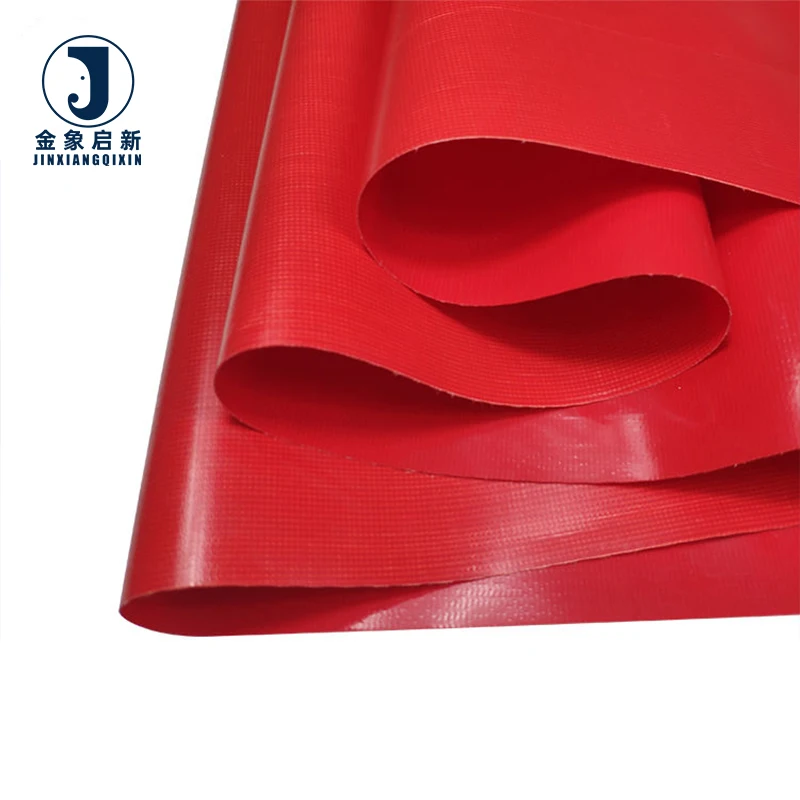
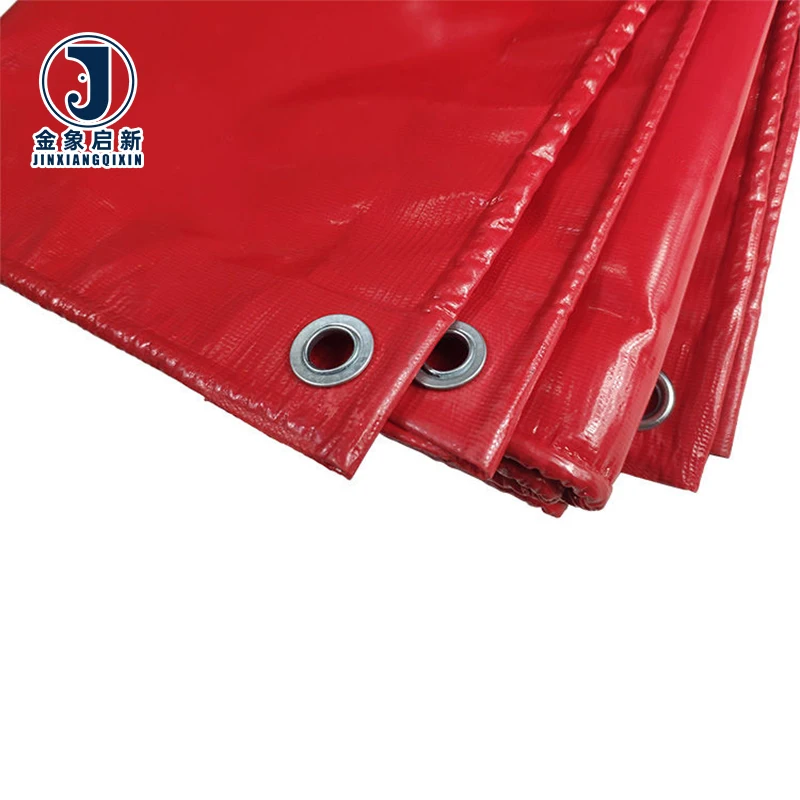
Description
Specification Consistency Across Roll Stock — every roll is weighed and inspected against the stated GSM before dispatch, ensuring wholesale buyers receive the exact grade ordered with full documentation.
Technical Specifications
| Parameter | Value |
|---|---|
| Product Type | PVC Coated Tarpaulin |
| Coating Material | PVC double-sided coating on polyester base fabric |
| Weight (GSM) | 350 / 400 / 420 / 500 / 600 / 650 / 750 / 900 — eight-grade ladder available, confirm grade required |
| Base Fabric Denier | 500D×840D (350–420 GSM) / 500D×1000D (500 GSM) / 1000D×1000D (600 GSM) / 1000D×1300D (650 GSM) / 1300D×1300D (750 GSM) / 1000D×2000D (900 GSM) |
| Mesh Count | 30×19 (350–500 GSM) / 20×20 (600–750 GSM) / 30×15 (900 GSM) |
| Total Thickness | 0.29 mm (400 GSM) / 0.32 mm (420 GSM) / 0.38 mm (500 GSM) / 0.44 mm (600 GSM) / 0.46 mm (650 GSM) / 0.55 mm (750 GSM) / 0.65 mm (900 GSM) |
| Tensile Strength Warp | 1650 N (350 GSM) / 1800 N (400 GSM) / 1850 N (420 GSM) / 2050 N (500 GSM) / 2500 N (600 GSM) / 2550 N (650 GSM) / 2750 N (750 GSM) / 3900 N (900 GSM) — test basis not stated in source |
| Tensile Strength Weft | 1600 N (350 GSM) / 1700 N (400 GSM) / 1750 N (420 GSM) / 1900 N (500 GSM) / 2200 N (600 GSM) / 2250 N (650 GSM) / 2850 N (750 GSM) / 3500 N (900 GSM) — test basis not stated in source |
| Welding & Joining | High frequency hot melt / hot air / sewing |
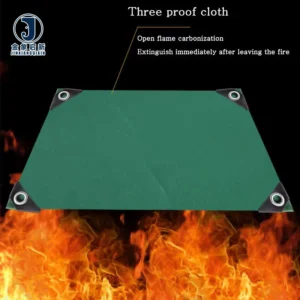
| Flame Retardant | Available in flame retardant grades — confirm the grade required for your market |
| UV Treatment | Anti-UV treated — test basis not stated in source, confirm standard required |
| Anti-Mildew | Claimed — confirm test standard required |
| Key Features | Waterproof, heavy metal free, flexible, heavy duty, tensile, self clean |
| Printing Option | Printable, customized branding available |
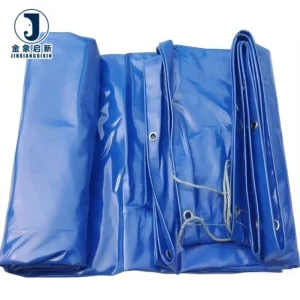
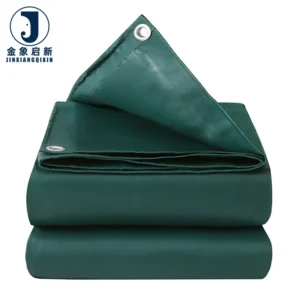
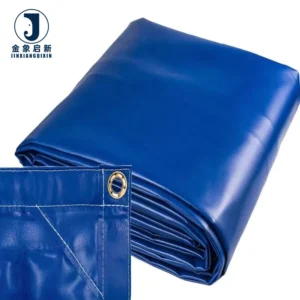
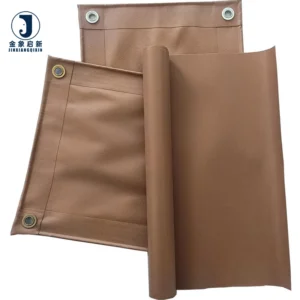
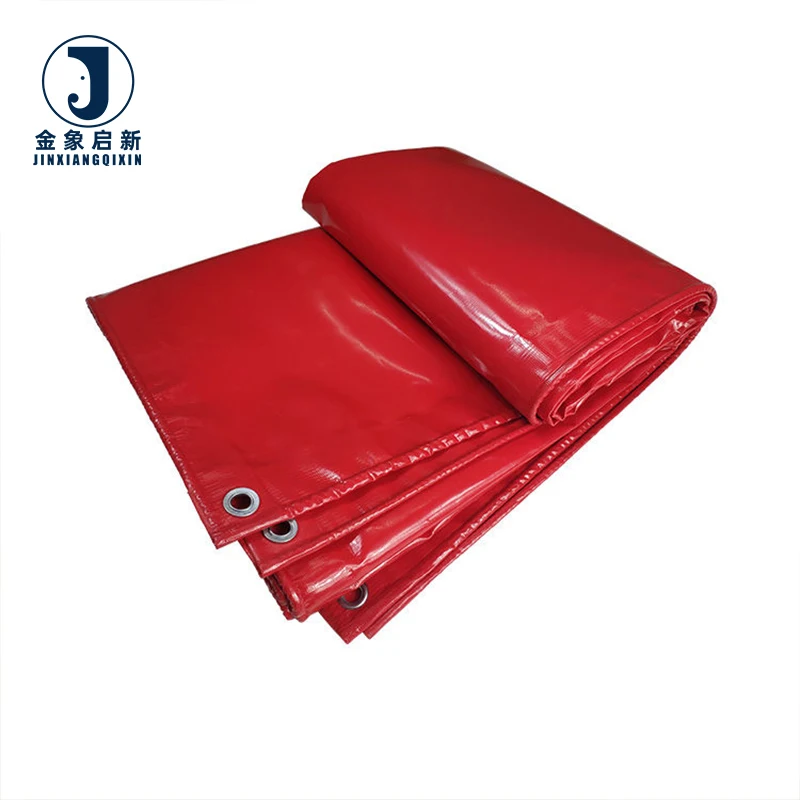
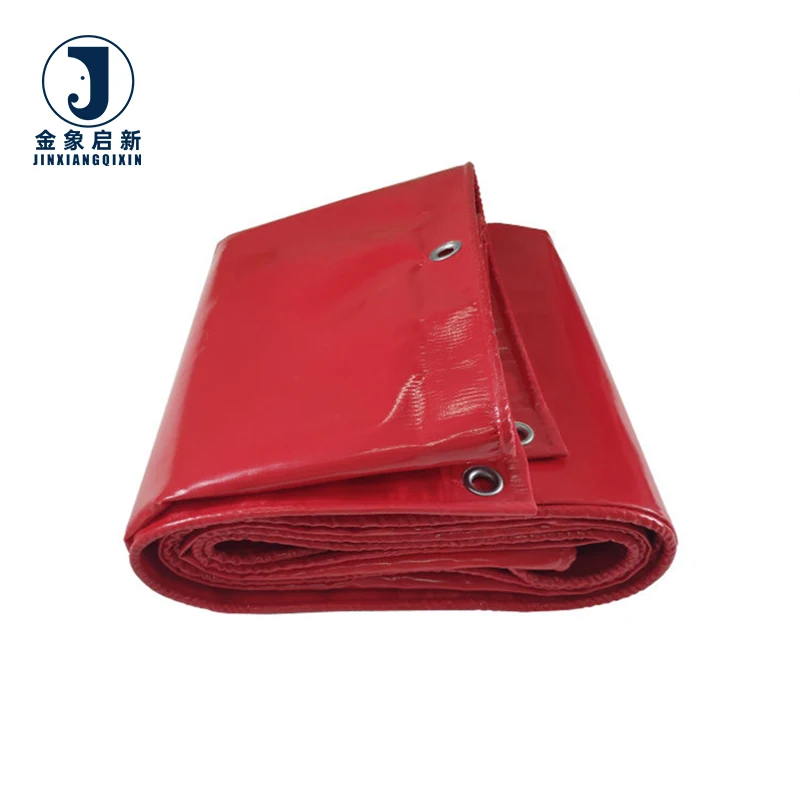
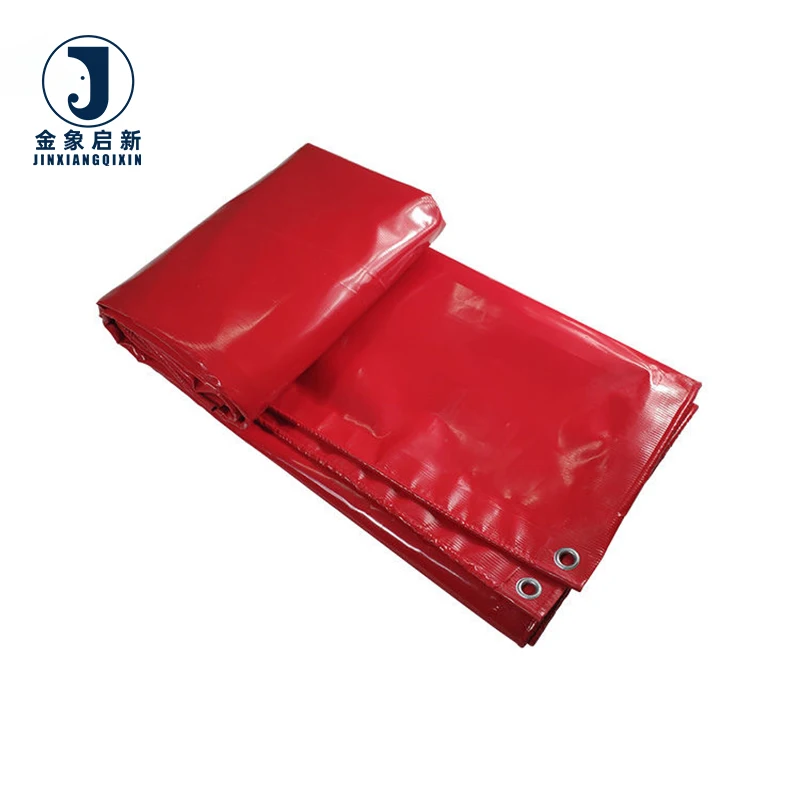
| Edge & Hem Finishing | 3 cm enlarged aluminum alloy buttonhole, 5 mm thick rope without splicing, reinforced corners, high temperature heat sealed seamless edge wrapping |
| Roll Packing | Polyester bag |
| Certifications | ISO, CE |
Application Suitability
| Application | Exposure & Requirement |
|---|---|
| Tarpaulin distributor regional resale | Multiple GSM grades stocked for diverse end-user demand, batch consistency across repeat roll orders |
| Truck and trailer side curtain fabric | Constant flexing at load points, road abrasion, UV exposure, high-frequency welding required |
| Tent and awning manufacturing | Roll-to-roll colour matching, printable surface for branding, clean edge finishing for fabrication |
| Inflatable structure production | Air-holding coated surface, high-frequency weld integrity, puncture resistance during assembly |
| Agricultural stock cover and pond lining | Permanent moisture contact, soil chemistry exposure, UV degradation from continuous outdoor use |
| Pallet and equipment wrapping | Forklift contact abrasion, stacking load compression, warehouse humidity |
Why GSM Alone Does Not Determine How Long the Roll Will Last
GSM tells you how much material is there, but the base fabric denier and weave density determine whether that material holds together under real load.
When a distributor receives a container of PVC coated tarpaulin rolls, the first check is usually weight per square metre. But two rolls can share the same GSM and fail in completely different ways. A 650 GSM grade built on a 1000D×1300D base fabric with a 20×20 mesh will resist tear propagation far better than a 650 GSM grade on a lighter weave with more coating filler. The coating adds mass, but it does not stop a tear from running once the base yarn gives way. [NEED_CITE: tensile and tear test methods for coated fabrics per ISO 1421]
For wholesale buyers purchasing by the container, this distinction matters at the point of resale. Your end customers blame the fabric when a truck cover splits along a flex line, not the coating weight. Specifying the base denier alongside the GSM on your purchase order is the only way to lock in predictable performance across every roll in a batch.
Eight Weight Grades from One Production Source
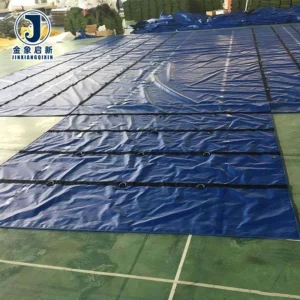
Stocking multiple PVC coated tarpaulin roll grades from a single manufacturer removes the variable that causes the most downstream complaints: inconsistency between suppliers. The range spans 350 to 900 GSM, covering light-duty pallet wraps through to heavy-duty side curtain and structural membrane fabric. Because each grade uses a matched base fabric denier — from 500D×840D at the light end to 1000D×2000D at the top — you can predict the tensile behaviour of each grade without needing to re-test every incoming shipment.
Roll-to-Roll Consistency Is the Real Wholesale Metric
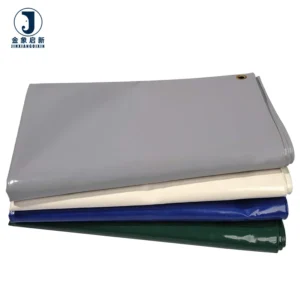
Container-load buyers care about what happens when a customer unrolls two pieces side by side. Colour drift between rolls in the same batch is one of the most visible failures in the tarpaulin trade, and it is the reason distributors switch suppliers mid-contract. Maintaining colour and coating weight uniformity across a production run requires process control at the coating head and dye lot management upstream. Each roll is checked against the batch reference before packing, which is what allows importers to sell from the same container without field complaints about shade variation. [NEED_CITE: coating weight uniformity standards in PVC tarpaulin production]
Reading the Specification Sheet Like a Fabricator
The numbers on a PVC coated tarpaulin data sheet only become useful when you understand what they mean at the fabrication bench. Tensile strength in Newtons, measured warp and weft, tells you how the fabric behaves when pulled — but it says nothing about tear propagation, which depends on the base fabric mesh count and yarn denier. A 900 GSM grade with 30×15 mesh and 1000D×2000D yarn will resist a nick turning into a full-width tear far better than a grade with higher mesh count but lighter yarn. Coating thickness — ranging from 0.29 mm at 400 GSM to 0.65 mm at 900 GSM — governs how the material handles during heat welding: thinner coatings weld faster but tolerate less parameter error, while heavier coatings need more energy input but forgive minor temperature drift. Understanding these relationships lets you specify the roll that fits your fabrication line rather than guessing from GSM alone.
What Happens When the Wrong Grade Ships to Your Market
Specifying by GSM alone leaves room for the manufacturer to fill weight with coating instead of base yarn. The roll arrives at the right weight, but when a fabricator welds a truck side curtain and the vehicle hits the road, the flex point concentrates stress on yarn that was never heavy enough to carry the load. Welds fail before the fabric does — or the fabric splits along a line the welder never touched. In other cases, a distributor stocks a lighter grade for agricultural covers that the local market expects to last through multiple seasons, and the material degrades under UV exposure far sooner than the customer anticipated. [NEED_CITE: weld line failure analysis in coated fabric applications] These are not defects in the manufacturing sense; they are specification mismatches that only surface after the container has been unpacked and sold.
Why Importers Consolidate Their Roll Purchasing Here
The production facility runs three full lines with 36 sets of professional coating and finishing equipment, which is what allows eight distinct GSM grades to ship from the same source without cross-contamination between batches. A 10-person R&D team handles material selection and sample development, so if your market needs a custom width or colour that falls outside the standard range, samples are produced for approval before the bulk run begins. Quality control is applied at every stage — coating weight, base fabric adhesion, edge finishing — with 100% roll-by-roll inspection before any container is loaded. Documentation is built for cross-border trade: every shipment carries a material specification sheet, packing list with roll count and weight, certificate of origin, and pre-shipment inspection records.
Documentation & Verification
- Material specification sheet listing exact GSM, base denier and coating type per roll grade
- Pre-shipment inspection record with roll-by-roll weight verification before container loading
- Roll packing list with roll count, net and gross weight, and container loading plan
- Certificate of origin and customs documentation for cross-border wholesale shipments
- Test reports for anti-UV and flame retardant grades where applicable to destination market
Fabrication, Handling & Storage
- Heat-sealed edge wrapping at 3 cm prevents fraying during unrolling and cutting on the fabrication floor
- High frequency hot melt welding suits the 500 GSM and above grades for structural truck curtain seams
- Store rolls horizontally on pallets to avoid permanent creasing across the polyester base fabric
- Allow rolls to acclimatise before unrolling in cold conditions to prevent coating surface cracking
- Clean printed branding surfaces with mild detergent only to preserve the self-clean coating layer
Preparing Your Roll Stock Inquiry
To receive an accurate quotation for PVC coated tarpaulin roll wholesale, specify the GSM grade or range your market requires, the target container volume, and whether you need standard widths or a custom dimension. If your end users demand a particular flame retardant or anti-UV standard for their region, include that reference in your initial inquiry so the correct treatment grade is selected. Indicate whether you require printed branding, specific eyelet spacing, or plain rolls for your own fabrication line.
Frequently Asked Questions
Q: How is GSM verified on each roll before shipment?
A: Every roll is individually weighed and measured before packing. The inspection record compares the actual weight per square metre against the stated GSM on the material specification sheet. Rolls that fall outside the agreed tolerance are pulled from the batch and replaced before the container is sealed, so the material arriving at your warehouse matches the grade you ordered.
Q: What is the minimum order quantity per GSM grade and per container?
A: Minimum order quantities depend on the GSM grade and whether the width is standard or custom. Standard width rolls in common grades such as 500 or 650 GSM typically ship in full container loads. For less common grades or custom widths, a dedicated production run is scheduled once the minimum is reached. Confirm your grade and width requirements for an exact MOQ.
Q: How is batch colour consistency maintained across multiple rolls in one order?
A: All rolls in a single production run are coated from the same dye lot and monitored at the coating head for shade uniformity. Before packing, rolls are compared against the batch colour reference under controlled lighting. Any roll showing visible deviation from the reference standard is removed, ensuring your customers see consistent colour when two pieces are installed side by side.
Q: What custom widths and roll lengths are available for wholesale orders?
A: Custom widths and roll lengths are available across the full GSM range. The R&D team develops a sample in the requested width for your approval before the bulk run is scheduled. Lead time and minimum order requirements for custom dimensions are confirmed at the quotation stage, along with the container loading plan based on the adjusted roll dimensions.
Q: How are rolls packed and loaded to prevent transit damage?
A: Each roll is wrapped in a polyester bag and loaded according to a container loading plan that accounts for roll diameter, weight and stacking pressure. Rolls are secured to prevent shifting during ocean freight, and the packing list details the exact position and count so you can verify the shipment on arrival without opening every bundle.