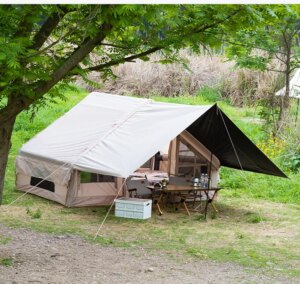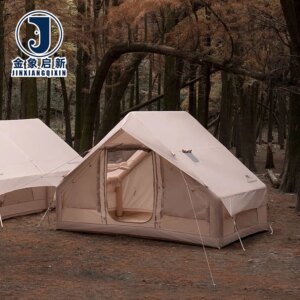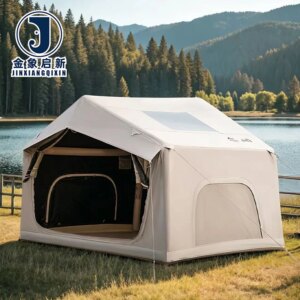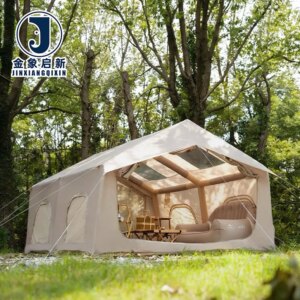
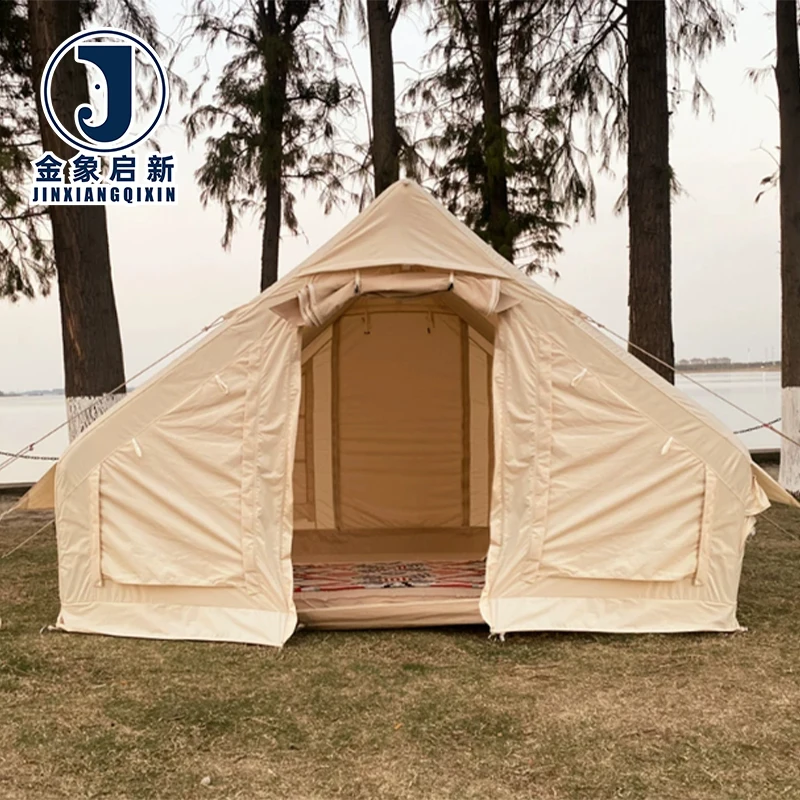
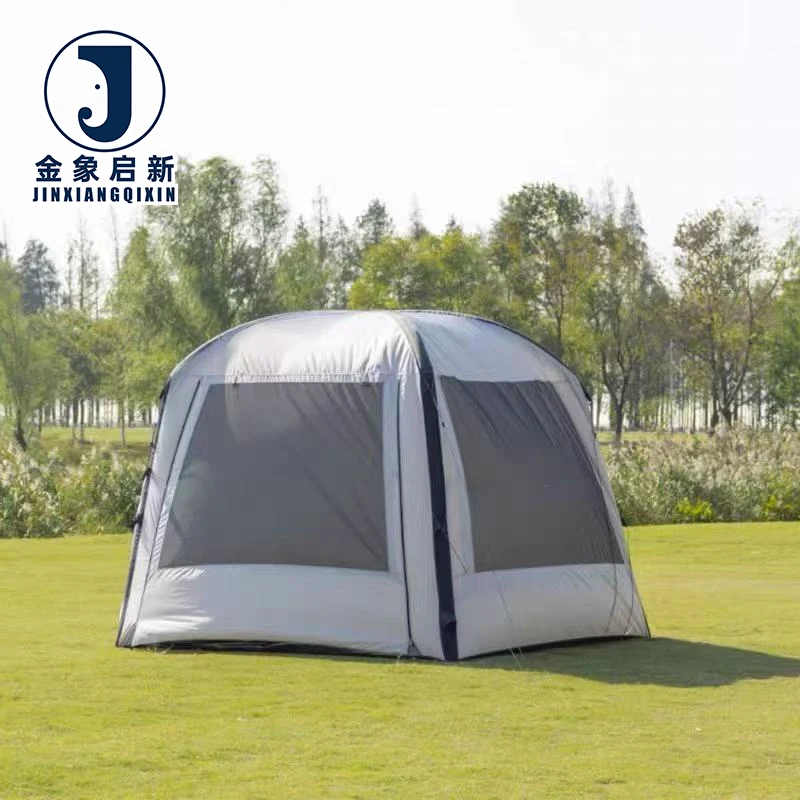
Description
Coated Fabric Process Control — Every roll of PVC knife-coated fabric is weighed and measured against the agreed specification before leaving the facility, ensuring the material you receive matches the material you approved.
Technical Specifications
| Parameter | Value |
|---|---|
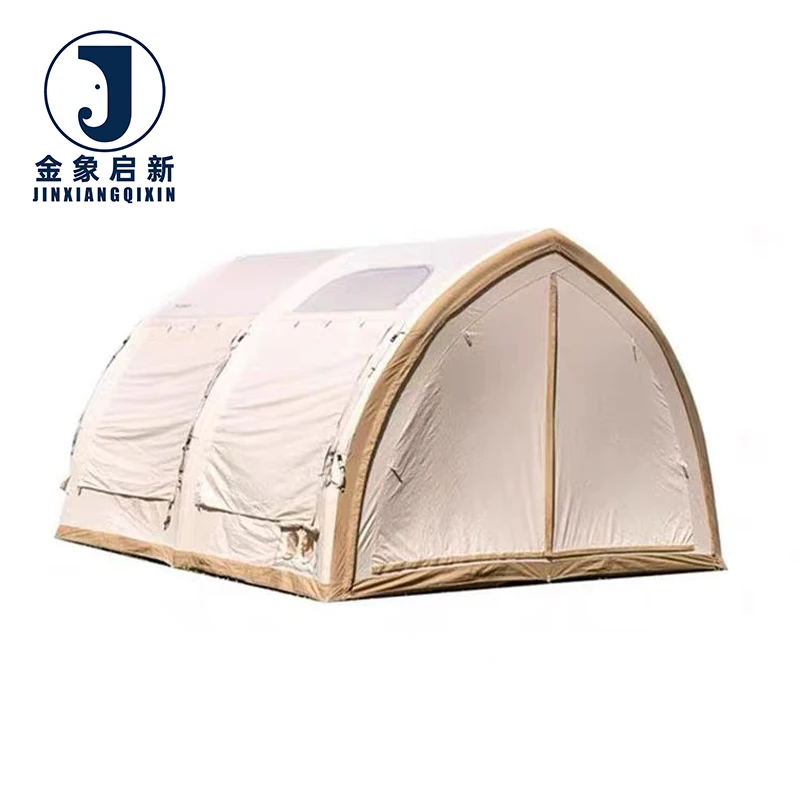
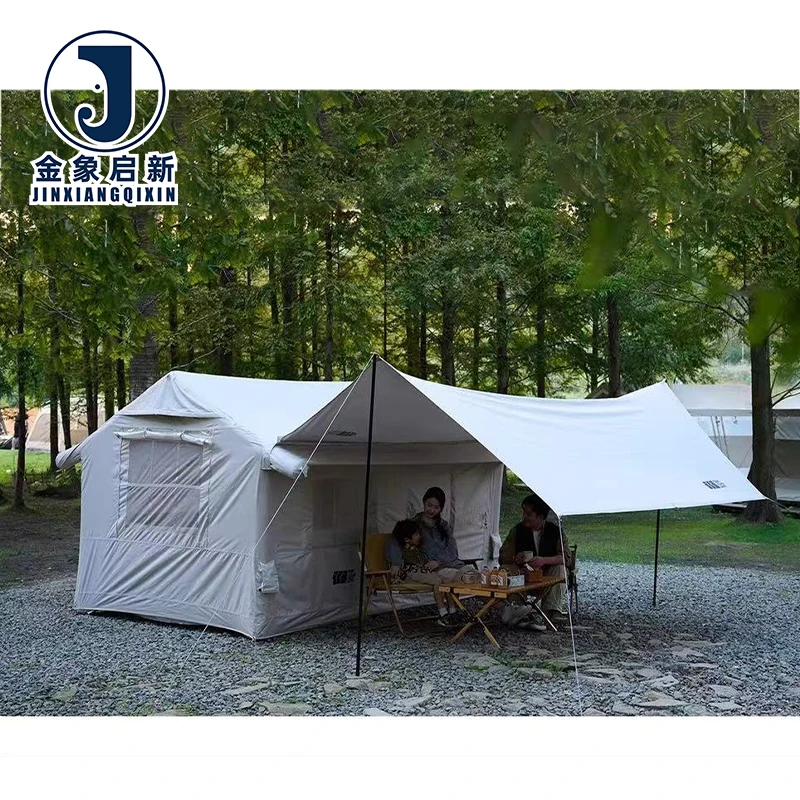
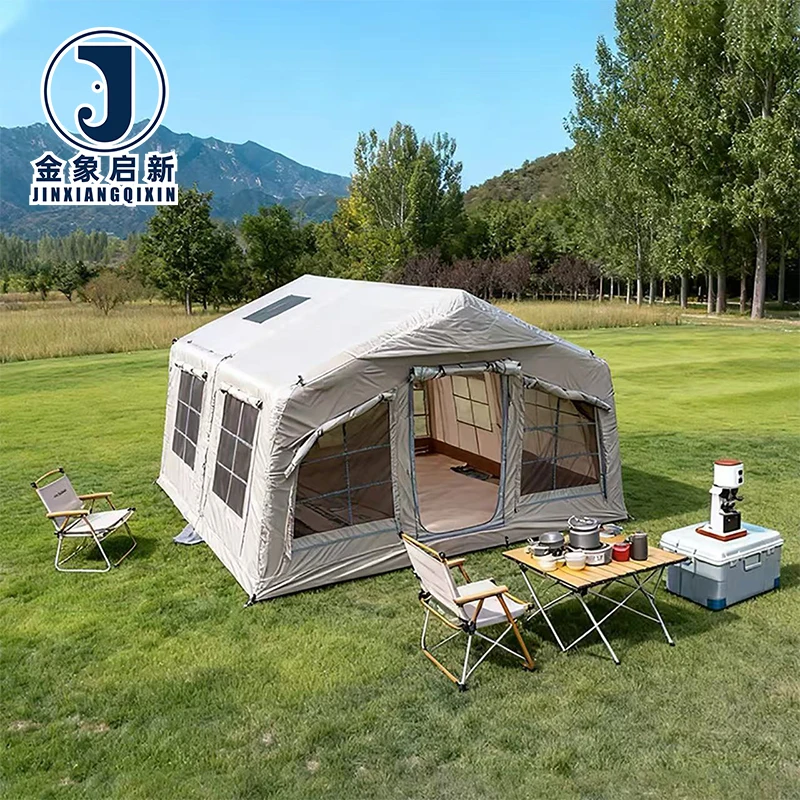
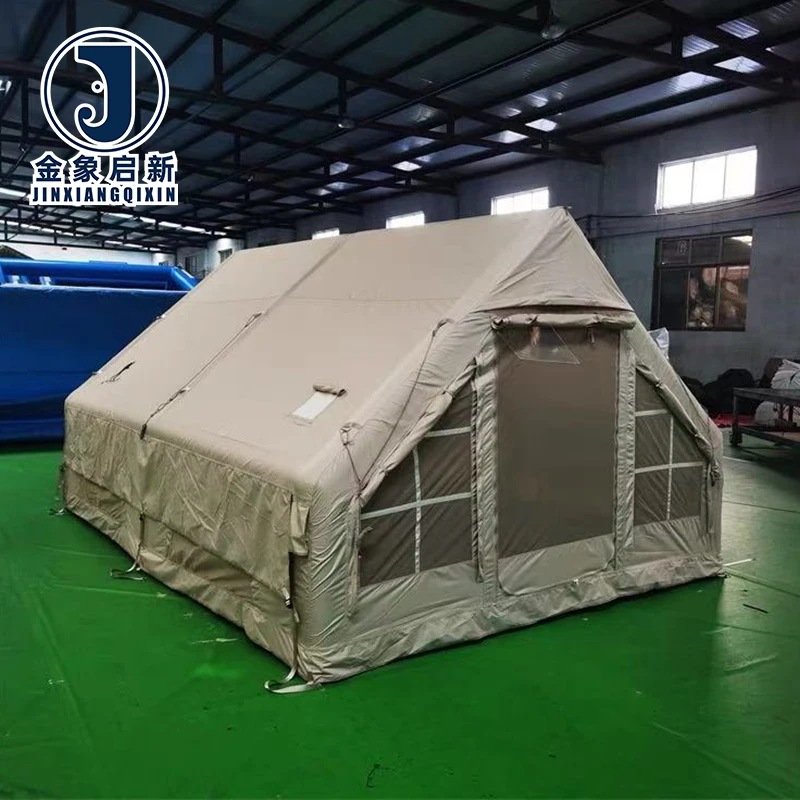
| Product Type | PVC Inflatable Tent |
| Core Material | PVC tarpaulin (PVC knife-coated fabric) |
| Key Performance Features | Waterproof, UV-resistant, tear-resistant, fire-retardant, anti-static |
| Product Form | Inflatable structure with automatic opening mechanism |
| Construction | Single layer, extended type design |
| UV Treatment | Test basis not stated in source — confirm grade required for your market |
| Flame Retardant | Grade not stated in source — available in flame retardant grades, confirm the grade required for your market |
| Anti-Static | Surface resistance or standard not confirmed — verify against site safety compliance |
| Tear Resistance | High (standard not stated in source) |
| Certifications | ISO 9001, ISO 14001, ISO 45001, CE |
Application Suitability
| Application | Exposure & Requirement |
|---|---|
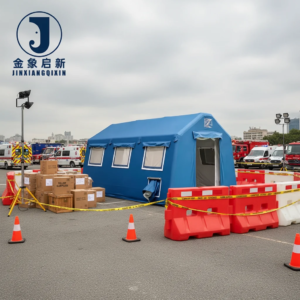
| Temporary site command centers | Continuous human occupancy, rapid setup in adverse weather, four-season temperature swings |
| Equipment storage shelters during disaster recovery | Prolonged outdoor UV and moisture exposure, protection of sensitive assets, wind loading |
| Mobile maintenance workshops | Interior workspace environment, fire safety compliance, repeated inflation and deflation cycles |
| Emergency logistics hubs | High foot traffic, ground abrasion, heavy equipment proximity |
| Inflatable structure manufacturers | Roll-to-roll consistency, reliable welding behaviour, custom sizing and membrane engineering |
Why Material Certification Gaps Derail Emergency Procurement Timelines
When an emergency deployment plan depends on a PVC Inflatable Tent aftermarket supplier delivering compliant fabric, missing or unverifiable fire-retardant and anti-static documentation can halt site approval entirely. Procurement teams frequently discover after delivery that the test certificates do not match the batch received.
Request validated test reports matched to your order batch before production begins.
Industrial emergency sites — particularly aviation, mining, and disaster-response zones — require documented proof of flame retardancy and anti-static performance to pass site safety audits. When suppliers provide generic certificates or test reports from a different production run, compliance officers reject the shipment at inspection. [NEED_CITE: fire safety documentation requirements for temporary industrial structures]. This creates a cycle of reordering, delayed deployment, and wasted response time precisely when speed matters most. The PVC inflatable tent fabric must arrive with documentation that traces directly from the material batch through to the finished structure.
Knife-Coated Construction and Structural Integrity Under Field Conditions
The PVC knife-coated fabric used in this inflatable tent product line delivers consistent coating adhesion across the base substrate, which directly affects how the material behaves during welding and inflation. Unlike laminated alternatives where the coating layer can delaminate under repeated stress, knife-coated construction bonds the PVC compound into the weave structure. For inflatable tent manufacturers sourcing material by specification, this translates to predictable seam behaviour during fabrication and reliable air-holding performance once deployed.
Rapid Deployment Mechanics for Time-Critical Emergency Operations
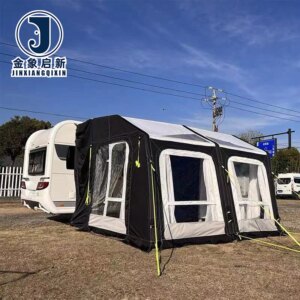
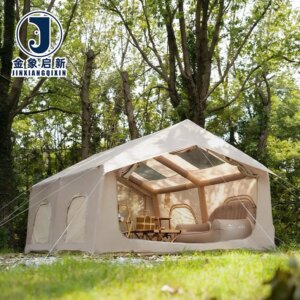
The automatic opening mechanism integrated into this PVC inflatable tent design addresses a core challenge in disaster-response logistics: getting shelter operational with minimal personnel and no heavy equipment. When a temporary command center needs to be functional within hours of arrival on site, the inflation and structural erection sequence must be straightforward. This single-layer, extended-type design supports rapid deployment while maintaining the enclosed workspace that emergency operations demand. The PVC inflatable tent aftermarket supplier capability here covers both the fabric engineering and the structural integration required for field-ready units.
How Base Fabric Density and Coating Weight Interact in Inflatable Applications
For inflatable structures, the relationship between base fabric denier, weave density, and coating weight determines how the membrane handles internal air pressure and external wind loads. A higher denier base yarn provides tensile strength along the warp and weft, while the coating weight contributes to tear propagation resistance and surface durability. [NEED_CITE: tensile and tear test methods for coated fabrics per ISO 1421]. The knife-coating process ensures uniform PVC penetration into the weave, reducing the risk of pinholes that would compromise air retention over extended deployment periods. Selecting the correct combination of base fabric and coating specification requires matching the material to the expected inflation pressure, structure size, and environmental exposure — a PVC Inflatable Tent Fabric manufacturer should guide this selection based on your deployment parameters rather than defaulting to a single stock grade.
The Real Cost of Ordering Inflatable Fabric Without Batch Traceability
A common failure scenario in bulk inflatable tent procurement involves receiving rolls with visible colour variation when installed side by side in a multi-unit deployment. This inconsistency often traces back to insufficient dye-lot control or mixing production batches within a single order. [NEED_CITE: colour consistency standards across coated fabric production batches]. Beyond aesthetics, batch mixing can indicate variation in coating weight and treatment application — meaning some sections of the deployed structure may carry different levels of fire-retardant or anti-static protection than others. For emergency logistics hubs or field command centers where every section must meet the same safety threshold, this gap is unacceptable. Pre-shipment inspection records with per-roll verification address this risk before the material leaves the factory.
Why Procurement Teams Specify This Supplier for Inflatable Membrane Projects
Three full production lines and 36 sets of professional processing equipment provide the capacity to handle bulk inflatable tent fabric orders with consistent lead times, even during peak emergency-procurement cycles.
The 10-technician R&D team handles material selection, pattern printing, custom sizing, and automatic opening mechanism integration — supporting full OEM and ODM workflows from sample development through production.
Dedicated QA and QC staff operate at every production stage, with 100 percent inspection before dispatch, ensuring that the PVC inflatable tent fabric you approve in sample form is the same material that arrives on site.
Sample development is completed within days for custom requirements, allowing procurement teams to validate material performance, colour, and welding behaviour before committing to full-scale manufacturing.
Nearly three decades of focused coated fabric production provide the process knowledge to specify the right material grade for each inflatable application, from lightweight temporary shelters to heavy-duty industrial membrane structures.
Documentation & Verification
- Material specification sheet stating base fabric denier, PVC knife-coating method, and treatment grades per roll
- Fire-retardant and anti-static test reports matched to production batch — confirm required grade before order
- Pre-shipment inspection record with per-roll weight verification against stated specification before dispatch
- ISO 9001, ISO 14001, ISO 45001, and CE certificates for cross-border procurement compliance
- Certificate of origin and customs documentation supporting international inflatable tent fabric shipment
Fabrication, Handling & Storage
- Heat-weld seams using temperature settings validated for the PVC knife-coated surface to prevent coating burn-through
- Store rolls horizontally in climate-controlled conditions to avoid permanent creasing in the single-layer membrane
- Use compatible PVC-based repair patches for field maintenance of inflated tent surfaces after deployment
- Avoid dragging finished inflatable panels across abrasive ground during site erection to protect the coating layer
- Clean surfaces with neutral pH agents to preserve fire-retardant and anti-static treatment integrity
Planning Your Inflatable Tent Fabric Specification
To receive an accurate material recommendation and sample, share your target deployment environment including expected temperature range, wind exposure, and duration of continuous inflation. Specify the fire-retardant grade and anti-static standard your site or market requires so that test documentation is prepared in advance. Indicate whether you need roll stock for your own fabrication line or finished inflatable structures with the automatic opening mechanism integrated, along with your required sizing, colour, and any pattern printing or branding requirements.
Frequently Asked Questions
Q: How is flame retardant grade verified and what fire safety documentation is provided?
A: Fire-retardant grades are available across the PVC inflatable tent range — confirm the specific grade required for your market or site compliance standard before production. Test reports matched to the production batch are supplied with each shipment, documenting the exact material specification and treatment applied to your order.
Q: How do you control batch-to-batch colour and material consistency across inflatable tent orders?
A: Every roll undergoes inspection against the approved sample for colour, coating weight, and surface finish. Pre-shipment inspection records document per-roll verification so that large deployments of multiple inflatable tent units maintain uniform appearance and consistent fire-retardant and anti-static performance across the entire order.
Q: What customization options are available for sizing, printing, and automatic opening mechanism?
A: The PVC Inflatable Tent Fabric manufacturer supports full OEM and ODM customization including custom sizing, pattern printing, and automatic opening mechanism integration. The R&D team develops samples within days, allowing you to validate material selection, weld behaviour, and structural design before full-scale production begins.
Q: What pre-shipment inspection and quality documentation accompanies each shipment?
A: Each PVC inflatable tent order ships with a material specification sheet, batch-matched test reports for applicable treatments, a pre-shipment inspection record with 100 percent inspection results, roll packing list, certificate of origin, and ISO and CE certification documentation supporting customs clearance and regulatory approval.
Q: How is the PVC knife-coated fabric tested for tear resistance and long-term outdoor exposure?
A: The knife-coated construction provides high tear resistance suited to industrial handling and harsh environmental conditions. UV treatment is available in multiple grades — confirm the test standard required for your deployment region so that verified performance data is included with your material documentation.