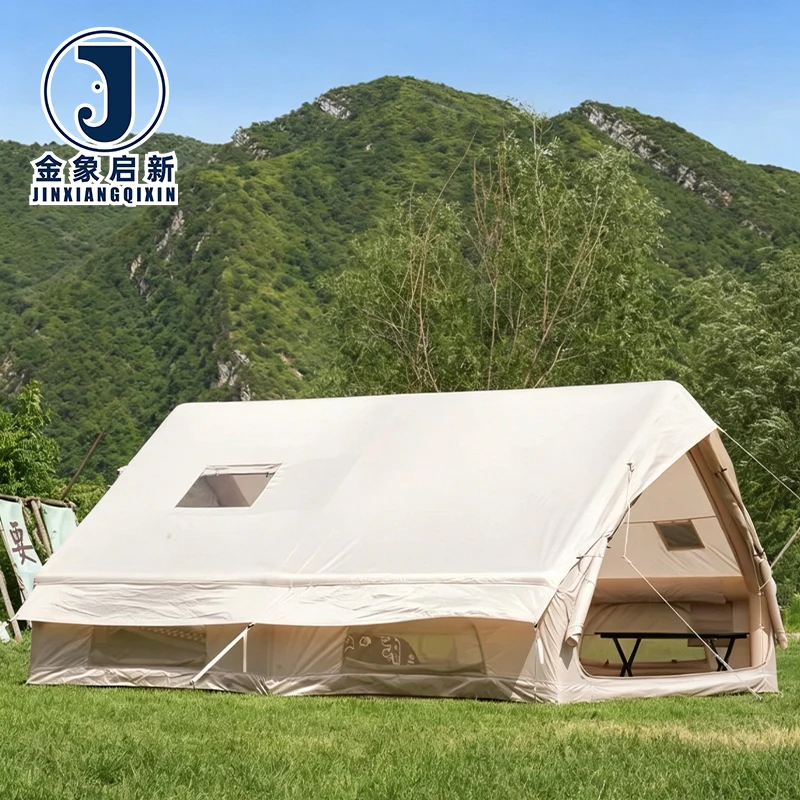
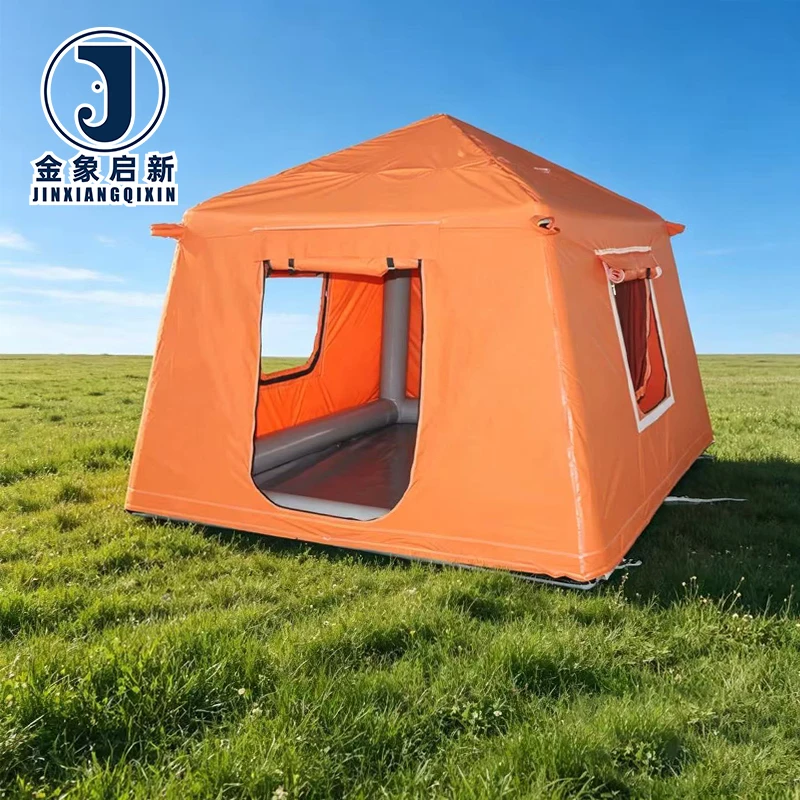
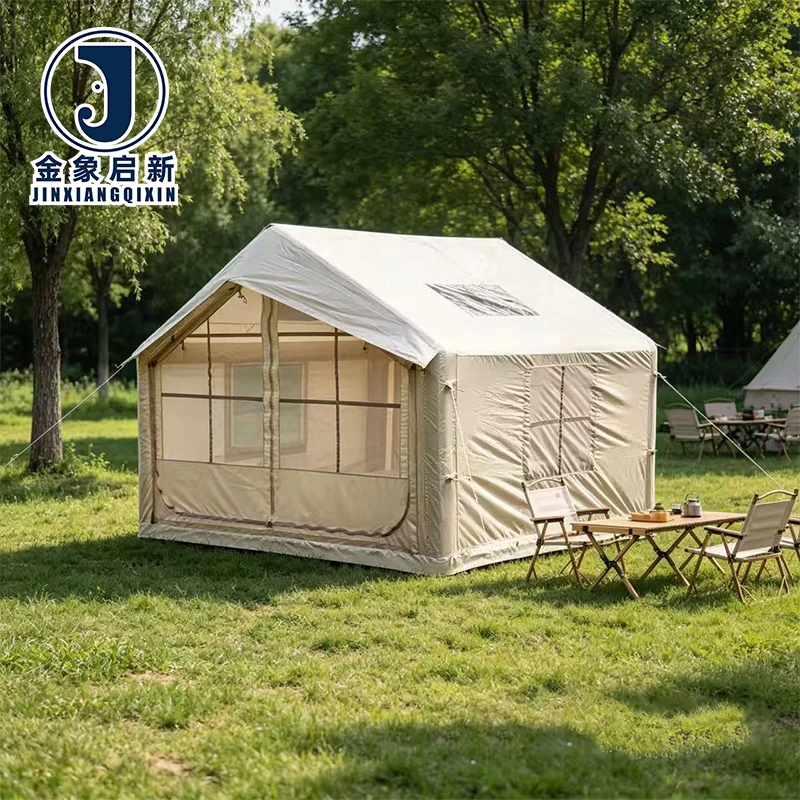
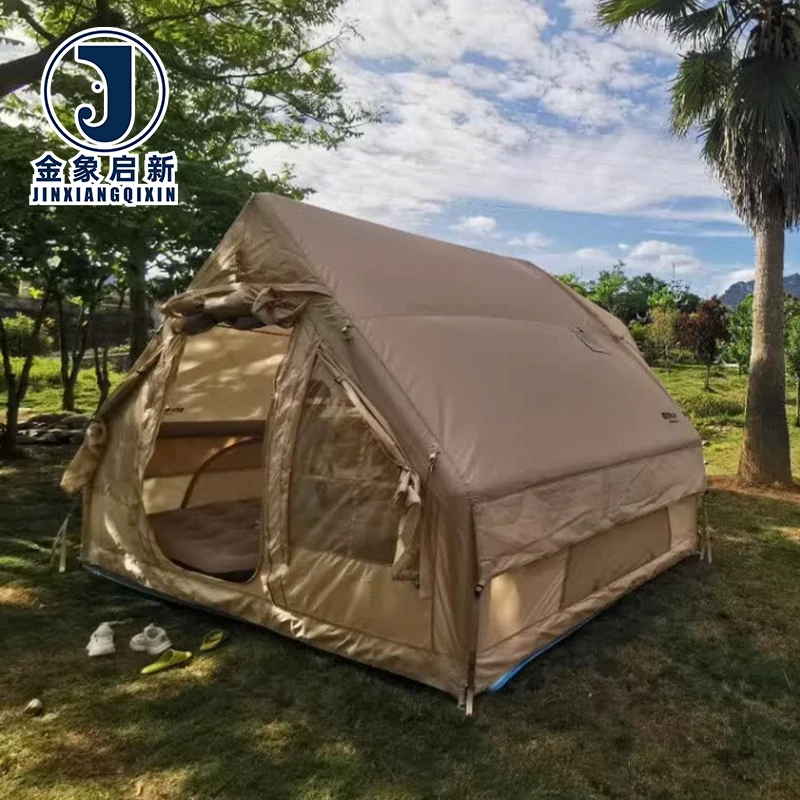
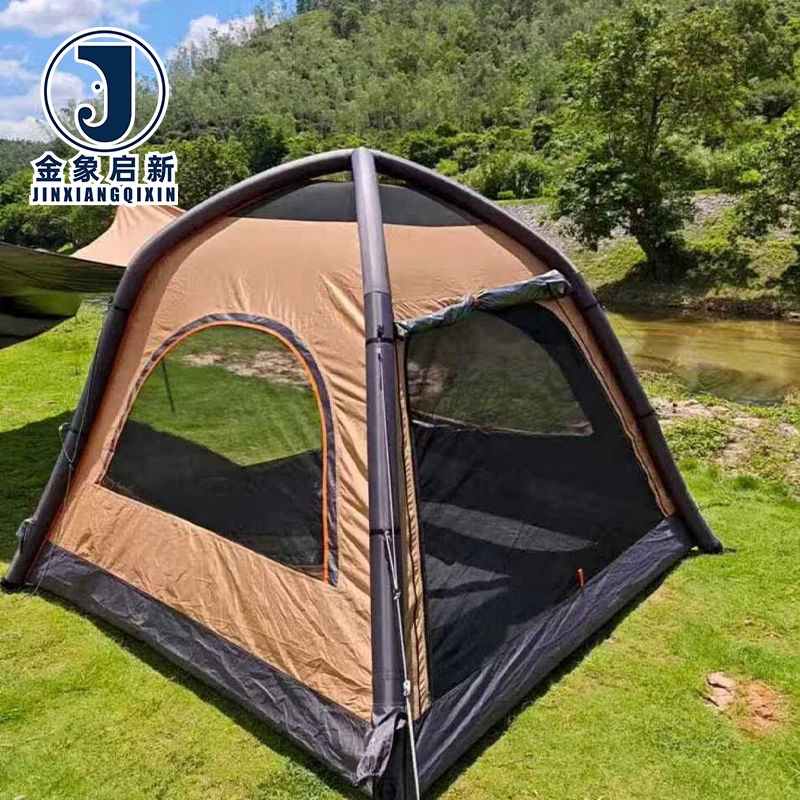
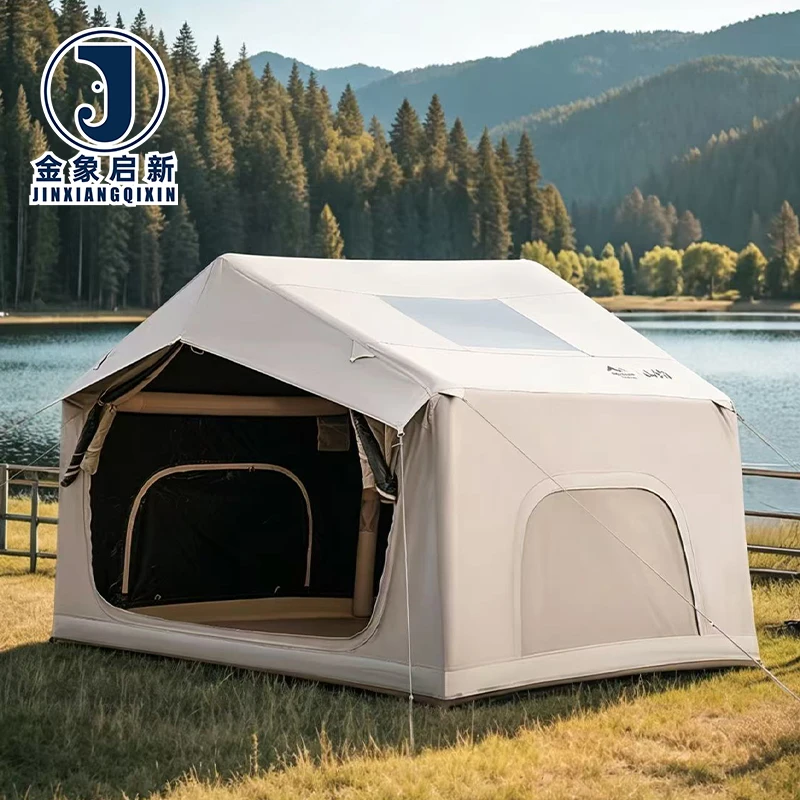
Description
Production Consistency at Scale — Batch-to-batch colour and weight verification on every roll of PVC inflatable tent fabric, supported by full in-process QA across three dedicated coating lines.
Technical Specifications
| Parameter | Value |
|---|---|
| Product Type | Inflatable Tent |
| Core Material | PVC Tarpaulin |
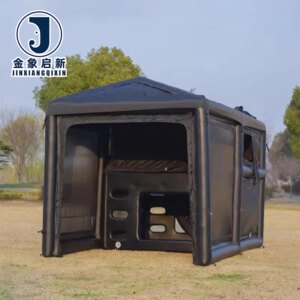
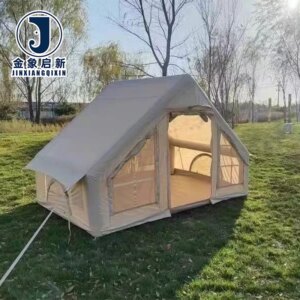
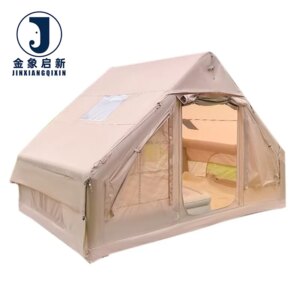
| Product Forms | 2-3 Person, Four-Season, Single Layer Construction |
| Waterproof Performance | Fully waterproof coated construction |
| UV Resistance | UV-resistant treatment applied (test basis not stated in source) |
| Tear Resistance | Tear-resistant PVC base fabric |
| Setup Mechanism | Quick automatic opening via inflation |
| Customization | OEM & ODM, sample customization, pattern printing |
| Quality Standards | ISO9001, ISO14001, ISO45001, CE |
Application Suitability
| Application | Exposure & Requirement |
|---|---|
| Temporary event shelters | Repeated inflation/deflation cycles, crowd proximity, surface abrasion during ground contact |
| Mobile field operations | Rapid deployment demand, varied terrain, exposure to wind loading on inflated structure |
| Industrial site accommodations | Continuous occupancy, internal climate control, long-term UV exposure |
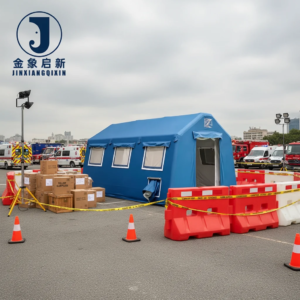
| Emergency response command posts | Immediate setup requirement, all-weather sealing, frequent relocation |
| Logistics staging structures | High-traffic entry points, equipment movement abrasion, multi-site rotation |
Why Colour Drift Across Rolls Wrecks a Tent Production Run
Batch-consistent colour and GSM output is what separates a clean install from a visible patchwork.
When sourcing PVC inflatable tent fabric in bulk for manufacturing or resale, the most frequent complaint surfaces after production: two rolls from the same purchase order, cut and welded into adjacent tent panels, show a perceptible colour shift once assembled. The material is technically within tolerance, but the human eye catches the variation immediately. This is not a cosmetic issue for the end user — it signals inconsistent coating weight and raises doubts about whether other properties like UV resistance or tensile strength also drifted between batches [NEED_CITE: roll-to-roll colour consistency standards in coated fabric procurement]. Wholesale buyers and tent fabricators absorbing this risk across container-scale orders need supplier-side process controls that catch variation before dispatch, not after the material has been cut and welded into finished product.
Roll-Stock Supply Built for Volume Tent Manufacturers
Sourcing PVC Inflatable Tent wholesale means managing the gap between a sample-approved specification and what actually arrives in the container. Our production workflow addresses this directly: each roll undergoes coating weight verification and visual inspection at multiple stages before it reaches the packing line. The three full production lines and 36 sets of processing equipment allow us to fulfil container-scale PVC Inflatable Tent bulk roll stock orders while maintaining the colour and thickness uniformity that tent manufacturers require for cutting nested patterns without panel-to-panel variation.
Controlling the Variables That Matter in Bulk Orders
Tent fabricators purchasing Inflatable Camping Tent bulk roll stock need predictability above all else. Coating adhesion must remain stable so heat-welded seams hold through repeated inflation cycles. Base fabric denier and weave density must stay constant so tear propagation behaviour does not shift from roll to roll. Our in-house R&D team of 10 technicians monitors these variables through every production run, and our dedicated QA/QC staff conduct 100% pre-shipment inspection covering seam integrity checks, dimensional verification, and colour matching against the approved reference [NEED_CITE: quality inspection protocols for coated technical textiles].
How PVC Coating Weight and Base Fabric Interact in Inflatable Structures
The performance of an inflatable tent membrane depends on the relationship between the PVC coating weight and the base fabric’s denier and weave density. A heavier coating improves waterproof sealing and abrasion resistance at ground contact points, but adds mass that the inflation system must support. The base fabric’s warp and weft density determines how the material resists tear propagation — critical at the stress points where air beams bend and flex during wind loading. Coating method also matters: knife-over-roll coating produces a smoother surface suited to pattern printing and branding, while calendaring can yield a more uniform thickness across the full width. Understanding these interactions helps buyers specify material that matches the structural demands of their inflatable tent design rather than over- or under-specifying on weight alone.
What Happens When Material Specs Are Taken on Faith
Purchasing PVC inflatable tent fabric without verifying the supplier’s process controls leads to predictable failures. Coating weight that falls below the quoted GSM results in membranes that puncture during the first season of deployment. Flame-retardant treatment claimed without supporting test documentation causes failed site inspections on commercial and industrial projects where fire compliance is mandatory. Heat-welded seams that fail before the fabric itself tears indicate a mismatch between welding parameters and actual coating composition — a problem that only surfaces once the tent is inflated and under stress [NEED_CITE: weld failure analysis in PVC coated fabric structures]. Each of these outcomes traces back to the same root cause: material supplied without stage-by-stage verification against the agreed specification.
Why Manufacturers Source Inflatable Tent Fabric Here
Deep coating process control built over nearly 30 years of PVC fabric production ensures that coating weight and adhesion remain stable across every roll in your order. Three full production lines running simultaneously provide the capacity to deliver container-volume PVC Inflatable Tent wholesale orders on schedule without splitting production across mismatched equipment. A dedicated 10-technician R&D team handles custom colour matching, pattern printing, and sample development so that bulk production mirrors the approved sample exactly. Full QA and QC coverage at every production stage, with 100% pre-shipment inspection, catches colour drift and weight deviation before material leaves the facility. Rapid sample turnaround lets you verify material properties, weld behaviour, and colour accuracy before committing to a full production run.
Documentation & Verification
- Material specification sheet confirming GSM, base fabric denier, and coating weight for every roll shipped
- UV resistance and flame-retardant test reports provided where applicable to the specified grade
- Pre-shipment inspection record documenting colour consistency, dimensional accuracy, and seam integrity
- Roll packing list detailing roll count, individual roll weight, and container loading configuration
- Certificate of origin and customs documentation included with each international shipment
Fabrication, Handling & Storage
- Heat welding parameters should be calibrated to the specific PVC coating weight before full production runs begin
- Store rolls upright on pallets in a dry, shaded area to prevent surface creasing and coating adhesion loss
- Allow cold-transported rolls to reach ambient temperature before unrolling to avoid coating cracking at low flexibility
- Use compatible PVC adhesive for field repairs, matching the coating chemistry for proper bond strength
- Plan cutting layouts to maximise yield from each roll width and minimise welded seam count in finished panels
- Clean printed surfaces with non-solvent cleaners to preserve pattern integrity over repeated deployment cycles
Specifying Your Inflatable Tent Fabric Order
To provide an accurate specification recommendation, share your target tent dimensions, expected deployment environment, and any fire safety or compliance requirements for your market. Let us know the roll width and colour requirements, whether you need OEM pattern printing, and your estimated annual volume. We will develop a sample for your approval before any bulk production begins.
Frequently Asked Questions
Q: How is roll-to-roll colour consistency controlled across a bulk inflatable tent order?
A: Every roll passes through in-process colour checks at multiple coating stages, with final verification against the approved reference during 100% pre-shipment inspection. Our QA team flags and isolates any roll showing perceptible deviation before it enters the packing line, ensuring uniform colour across your entire PVC Inflatable Tent wholesale order.
Q: What is the minimum order quantity for custom width, colour, or printed pattern on inflatable tent fabric?
A: Minimums vary by specification. Custom widths and colours typically require container-scale quantities to maintain batch consistency on the coating line. OEM pattern printing runs have separate minimums based on print setup. Request a quotation with your specific requirements for an accurate minimum and lead time.
Q: How is GSM verified on arrival and what documentation supports the quoted weight?
A: Each shipment includes a material specification sheet stating the exact GSM, base fabric details, and coating weight for every roll. Our pre-shipment inspection record documents weight verification results. Buyers can cross-check these figures upon receipt using standard coated fabric weighing methods [NEED_CITE: GSM verification methods for coated technical fabrics].
Q: What container loading options are available for roll-stock inflatable tent material?
A: Rolls are packed according to a loading plan that accounts for roll diameter, weight, and container dimensions. The roll packing list included with each shipment details the count, weight distribution, and loading sequence. We configure loading to maximise container utilisation while protecting roll surfaces from transit damage.
Q: How does the sample approval process work before committing to a full production run?
A: Submit your application requirements, target specifications, and colour or print references. Our R&D team develops a sample within days for your evaluation. Once you approve the sample for weight, colour, weld behaviour, and surface finish, bulk production proceeds to match the approved reference exactly.