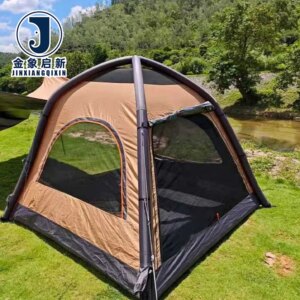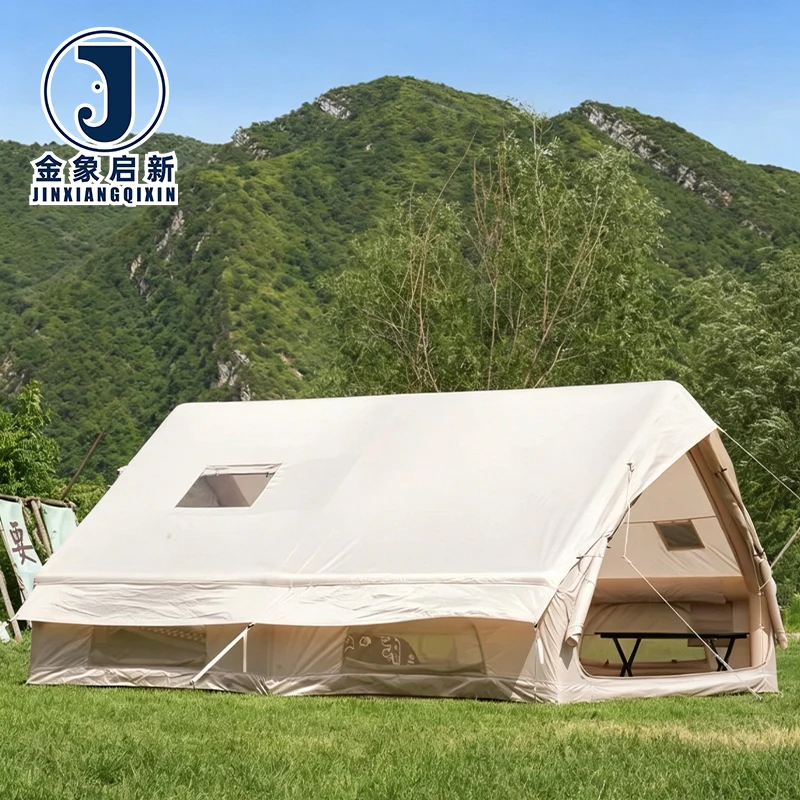
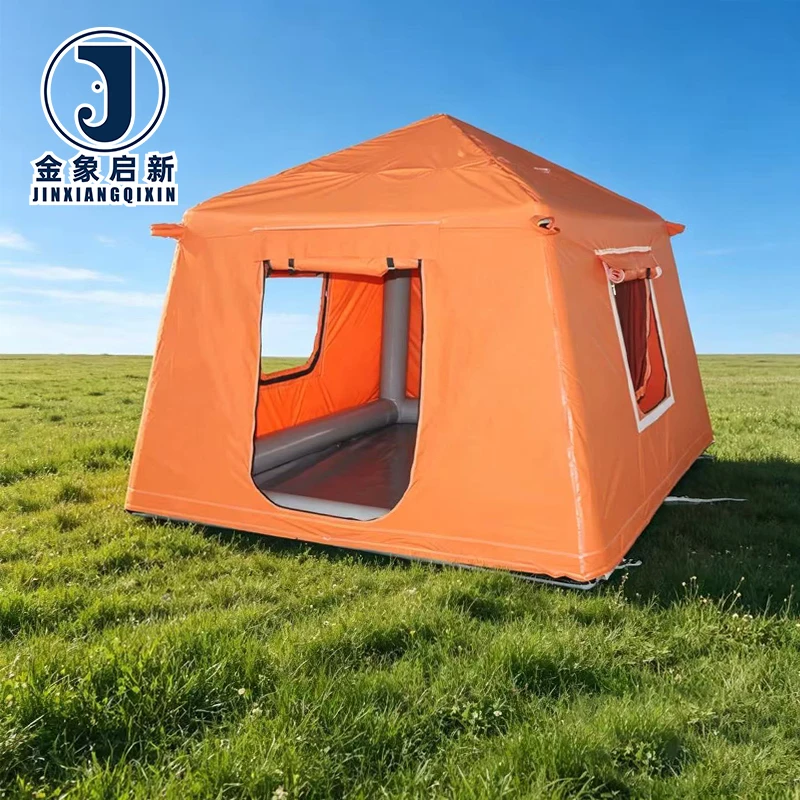
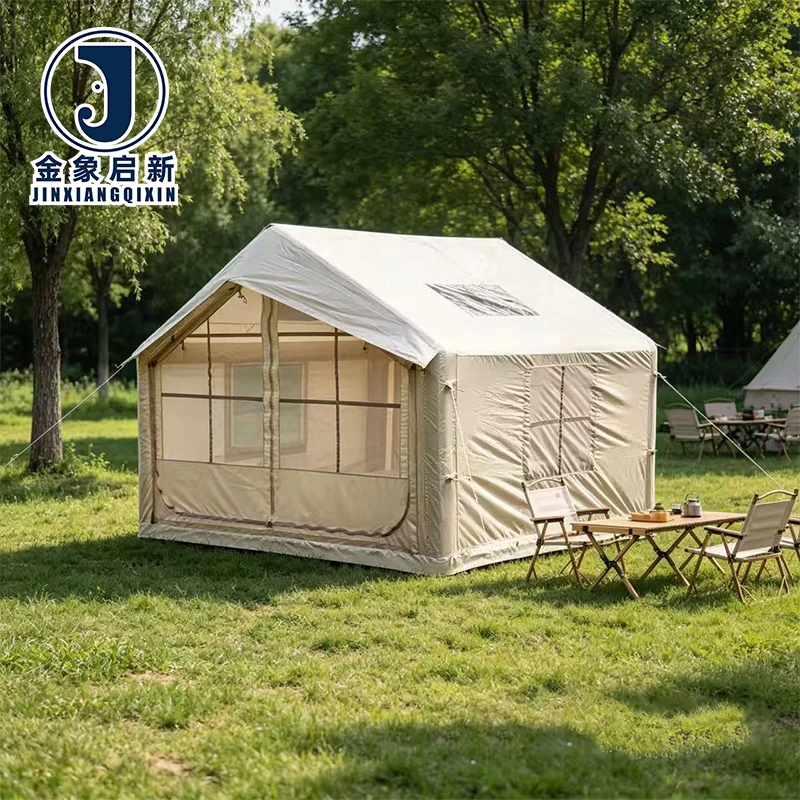
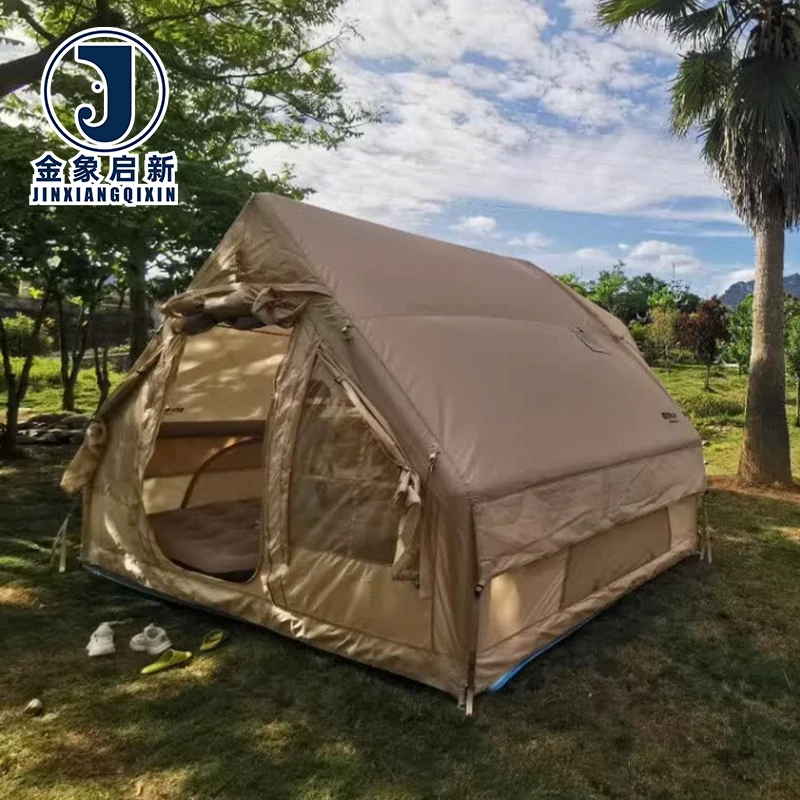
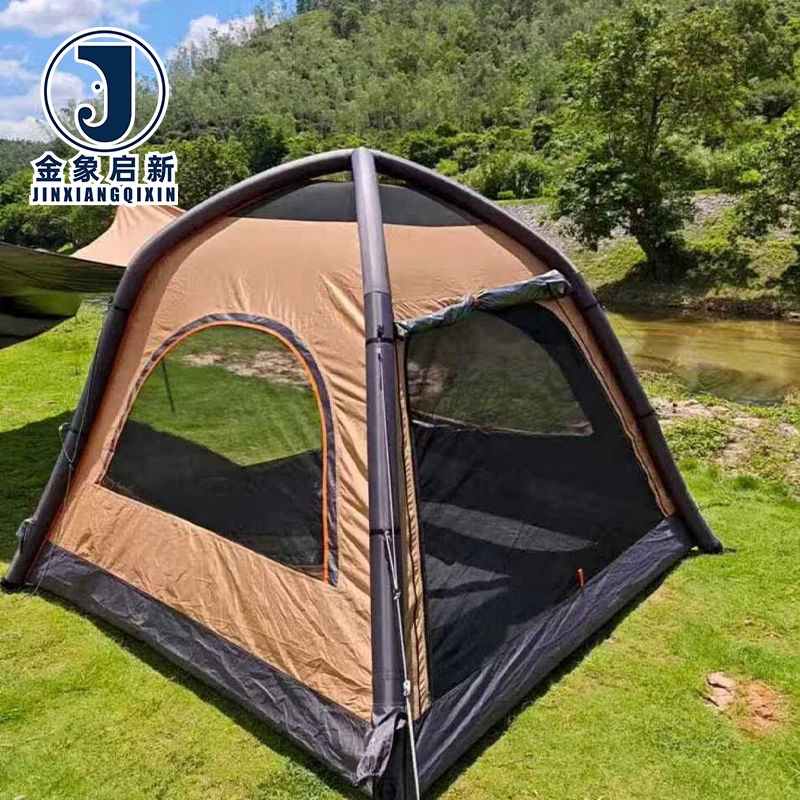
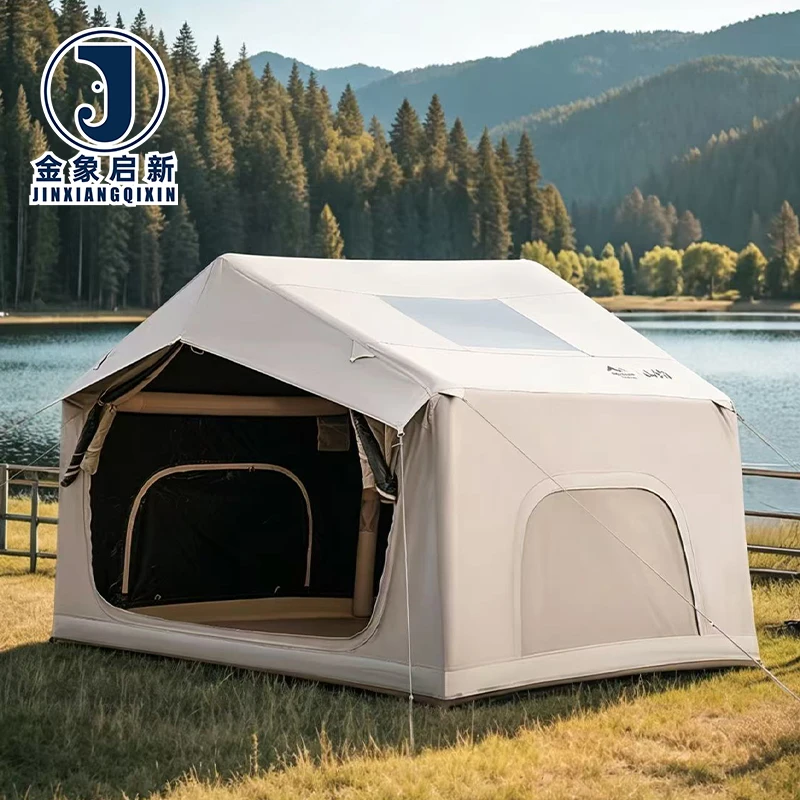
Description
Production Line Capacity — 3 full production lines and 36 sets of processing equipment maintain batch-to-batch consistency for bulk PVC Inflatable Tent Fabric roll orders.
Technical Specifications
| Parameter | Value |
|---|---|
| Product Type | Inflatable Tent Fabric |
| Core Material | PVC Tarpaulin |
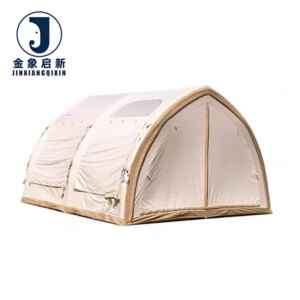
| Product Forms | 2-3 Person, Four-Season, Single Layer Construction |
| Waterproof | Fully waterproof coated construction |
| UV Resistance | UV-resistant treatment applied (test basis available on request) |
| Tear Resistance | Tear-resistant PVC coated fabric |
| Flame Retardant Grade | Grade not stated in source — confirm the grade required for your market |
| Anti-Static | Not confirmed in source — available upon specification |
| Customization | OEM & ODM, sample customization, pattern printing |
| Quality Control | Full-process inspection with dedicated QA & QC staff |
| Certifications | ISO9001, ISO14001, ISO45001, CE |
| R&D Team | 10 technicians |
Application Suitability
| Application | Exposure & Requirement |
|---|---|
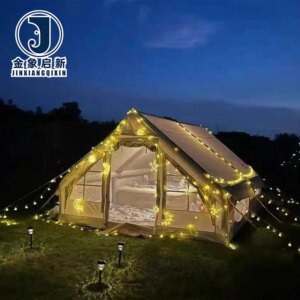
| Commercial inflatable camping tent manufacturing | Repeated inflation and deflation cycles, flex stress at tube seams, outdoor weather exposure |
| Temporary event and festival shelters | Rapid deployment and teardown, UV exposure over multi-day events, crowd contact and abrasion |
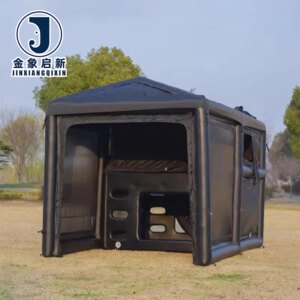
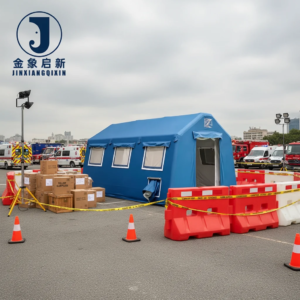
| Emergency response command posts | All-season deployment, wind load on inflated structure, waterproof integrity under sustained rain |
| Industrial site accommodation structures | Extended outdoor standing, temperature fluctuation, worker traffic and equipment proximity |
| Mobile field operations shelters | Transport and repeated redeployment, quick automatic opening requirement, variable terrain contact |
Why Roll-to-Roll Colour Consistency Matters for Inflatable Tent Panels
Visible colour variation between panels cut from different rolls compromises the finished product before it leaves the factory floor.
When tent manufacturers source PVC Inflatable Tent Fabric roll stock from suppliers without systematic batch control, panels cut from separate rolls can show noticeable shade differences once assembled side by side. This is not a minor aesthetic issue — commercial buyers reject entire shipments when the finished tent looks patchwork under daylight. The cost of re-cutting from a single matched batch, combined with wasted material and delayed delivery, erodes margins on what should be a straightforward production run. [NEED_CITE: colour measurement standards for coated textiles per ISO 105 series]
How Coated Fabric Consistency Protects Your Production Schedule
Inflatable tent manufacturers cutting panels from PVC Inflatable Tent Fabric roll stock need every roll in a shipment to behave identically on the hot-air welder and the cutting table. Coating weight variation between rolls changes how the material responds to heat, leading to inconsistent weld strength along tube seams. Our production process controls coating application across each run so that thermal behaviour remains stable from the first roll to the last in your order.
Pattern Printing and Custom Colour Matching Across Batches
OEM buyers specifying branded colourways or printed patterns need assurance that repeat orders will match earlier production. Our 10-technician R&D team develops colour references and print samples before bulk coating begins, locking in the formulation for the entire order. Pattern printing is applied in-line, so registration and ink density remain stable across the full roll count. This approach eliminates the situation where a second batch of PVC Inflatable Tent Fabric roll material arrives weeks later and no longer matches the tents already in your warehouse. [NEED_CITE: colour fastness testing methods for PVC coated fabrics]
Reading the Specification Sheet Beyond the GSM Number
GSM tells you the total weight per square metre of the coated fabric, but it does not isolate how that weight is distributed between the base fabric and the PVC coating layers. A roll with a lighter base fabric and heavier coating may hit the same GSM as one with a denser woven substrate, yet the two will perform very differently when inflatable tubes are inflated and flexed repeatedly. The base fabric denier and weave density govern tensile and tear resistance, while the coating thickness determines waterproof integrity and weld behaviour. When reviewing a material specification sheet, examine the base fabric construction alongside the stated GSM to understand how the material will hold up at the seam lines where inflation pressure concentrates stress. Surface finish — glossy or matte — affects both cleaning ease in the field and the adhesion of printed graphics or branding applied after fabrication.
What Happens When Weld Parameters Are Not Matched to the Coating
Inflatable tent tubes rely on welded seams to hold air pressure, and the weld line is often the first point of failure when the coating formulation varies between rolls. A coating that is slightly softer than expected will over-melt under standard hot-air temperature, producing a thin weld that cracks when the tube flexes. A harder coating may not bond fully, leaving a seam that peels apart under inflation pressure. These failures typically appear after the tent has been deployed and pressurized, making field repair difficult and damaging the manufacturer’s reputation. Matching weld temperature and speed to the specific coating on each roll batch prevents these seam failures and keeps warranty claims off your desk. [NEED_CITE: hot-air welding parameters for PVC coated tarpaulin fabrics]
Why Tent Manufacturers Source Roll Stock From This Facility
Dedicated QA and QC staff inspect every roll before it leaves the production line, checking coating adhesion, surface quality, and colour match against the batch reference — this catches variation before it reaches your cutting table. Three full production lines running 36 sets of professional processing equipment give the capacity to fulfil container-volume orders within a single production window, keeping all rolls in one matched batch. The 10-person R&D team handles custom colour development, pattern printing setup, and sample fabrication, so you confirm the material before committing to the full order. ISO9001, ISO14001, ISO45001 and CE certifications are maintained across the facility and documented in every shipment package. OEM and ODM sample customization is completed within days, letting you validate weld behaviour and panel drape on your own equipment before bulk production begins.
Documentation & Verification
- Material specification sheet stating GSM, base fabric denier, and coating type for each roll batch
- Pre-shipment inspection record confirming 100% roll-by-roll quality check before dispatch
- Roll packing list with container loading details by roll count and gross weight
- ISO9001, ISO14001, ISO45001 and CE certificates included with every shipment
- UV-resistant treatment test report available upon request for your market compliance needs
Fabrication, Handling & Storage
- Set hot-air welder temperature to match the PVC coating formulation confirmed on your sample roll
- Store rolls upright on pallets to prevent flat-spot creasing that shows through on inflated tube panels
- Allow cold-stored rolls to reach workshop temperature before unrolling to avoid coating micro-cracking
- Use a sharp rotary blade on the coated surface to prevent base fabric fraying at panel cut edges
- Protect printed pattern areas with release paper during heat welding to avoid ink transfer onto weld bars
- Plan panel nesting layout to maximise yield from each roll width and reduce waste at tube seam margins
Starting Your Inflatable Tent Fabric Inquiry
Share the inflation pressure your tube design operates at, the climate range the tents will be deployed in, and any fire classification your end market requires. Specify the roll width and length that fits your cutting table, along with annual volume so we can plan batch scheduling. If you need custom colour or pattern printing, provide Pantone references or artwork files so our R&D team can prepare a coated sample for your approval before production.
Frequently Asked Questions
Q: How is roll-to-roll colour consistency maintained across a large order?
A: Each production batch uses a locked coating formulation and pigment ratio established during sample approval. QA staff check every roll against the approved colour reference under standard lighting before packing. Rolls for a single order are produced within one continuous run wherever possible, and any roll falling outside the accepted tolerance is pulled before shipment.
Q: What roll widths and lengths are available for inflatable tent panel cutting?
A: Standard widths are produced to suit common tent panel layouts, and custom widths can be coated to your specification. Roll length is set to your cutting table requirements, balancing transport efficiency against the number of splice points on your production floor. Provide your panel dimensions and we will recommend the most material-efficient roll format.
Q: What is the minimum order for custom colour or pattern printing?
A: Custom colour and OEM pattern printing orders have a minimum tied to one full production run, ensuring all rolls come from a single matched batch. Lead time depends on sample approval speed and current line scheduling. Submit your colour reference or print artwork early so the sample phase does not delay the bulk production window.
Q: How should the fabric be welded for inflatable tube construction?
A: Hot-air welding is the standard method, with temperature and speed set to the specific PVC coating on your roll batch. We recommend running test welds on sample material to dial in your machine settings before cutting production panels. Weld strength should be tested by peel and inflation check on a prototype tube section.
Q: How are rolls protected during ocean freight?
A: Each roll is wrapped and packed to prevent surface abrasion and moisture ingress during transit. A detailed container loading plan is prepared showing roll count, orientation, and weight distribution. The packing list accompanies the shipment so you can verify roll quantities against your order immediately on arrival.