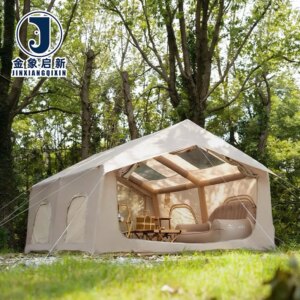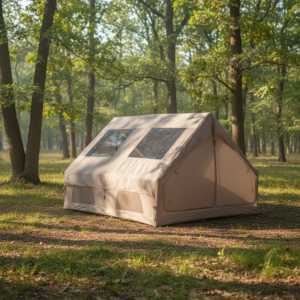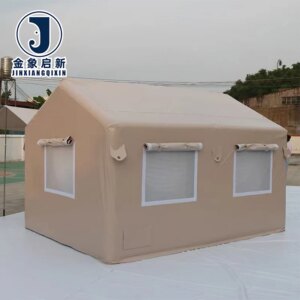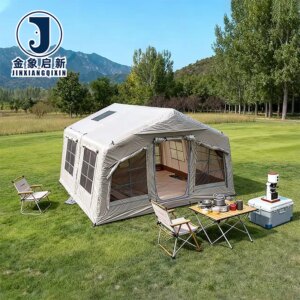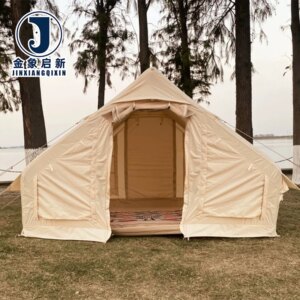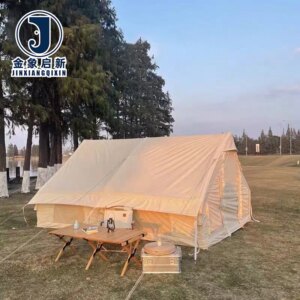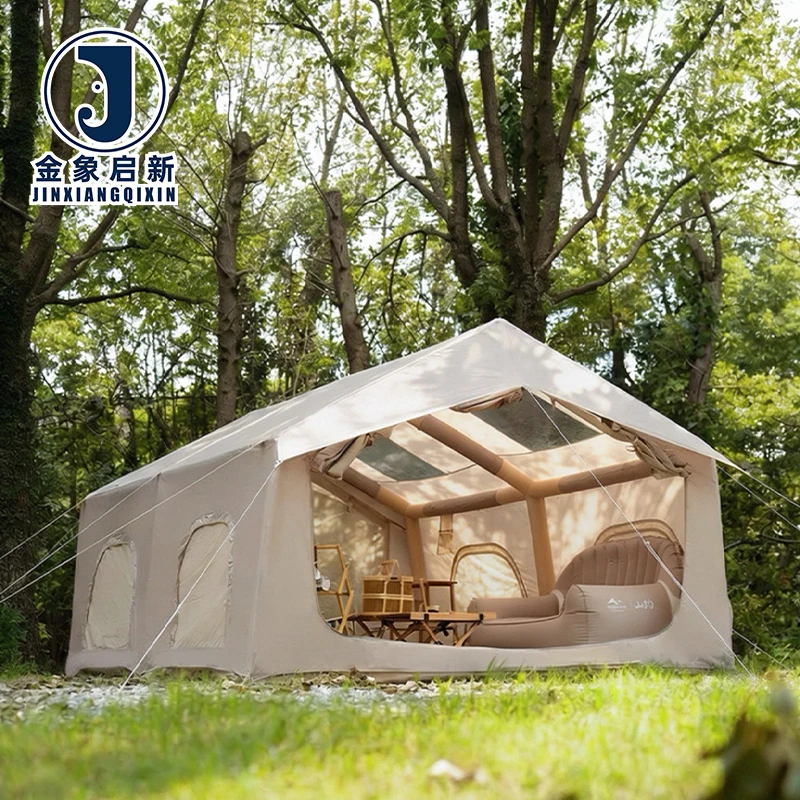
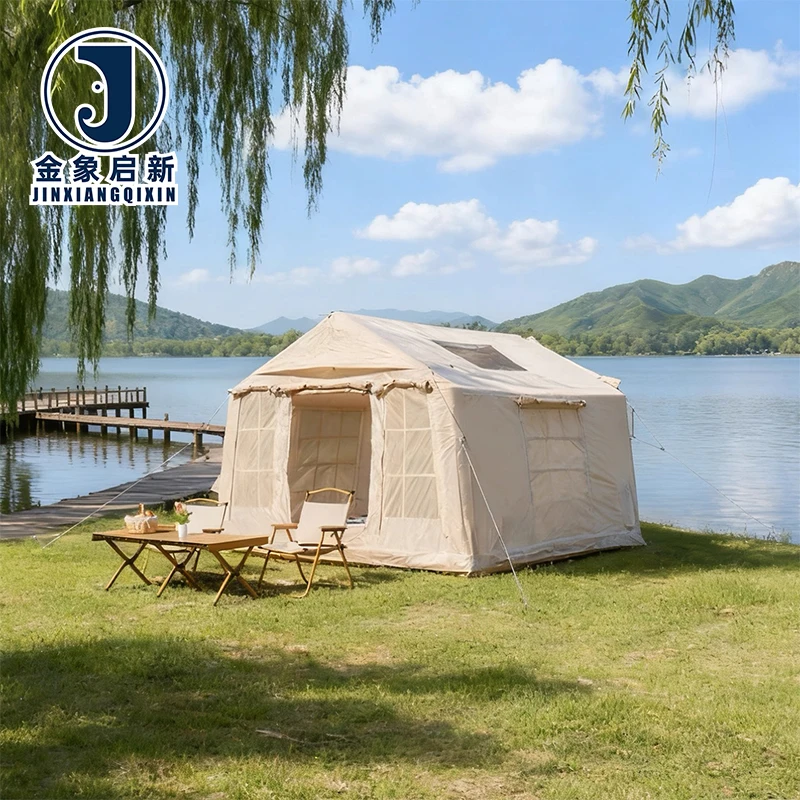
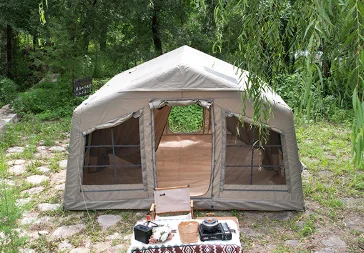
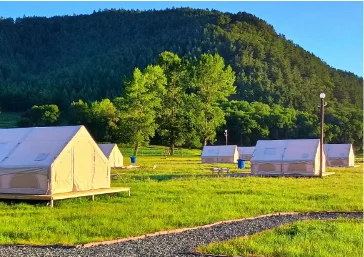
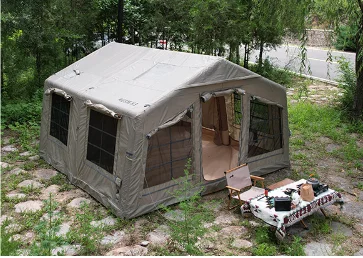
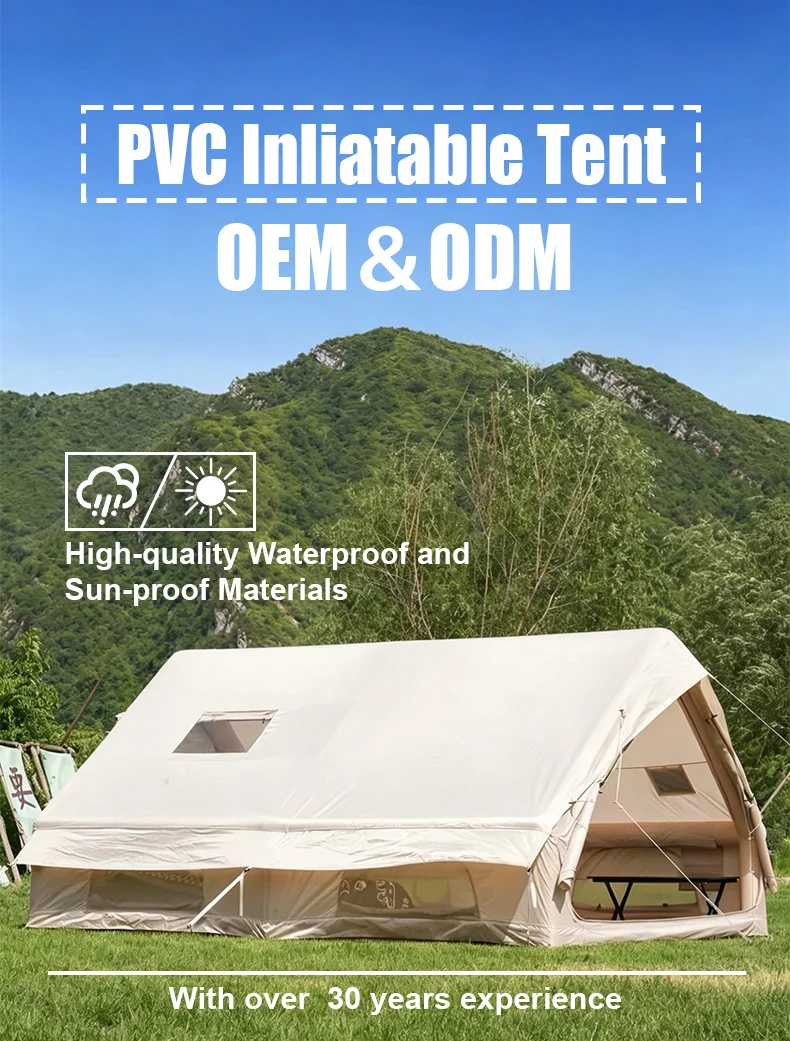
Description
Batch-to-Batch Consistency — our controlled coating process and dedicated QA/QC protocol ensure roll-to-roll uniformity across your entire inflatable tent fabric order.
Technical Specifications
| Parameter | Value |
|---|---|
| Product Type | Inflatable Tent |
| Core Material | PVC Tarpaulin (PVC knife-coated fabric) |
| Waterproof Rating | ≥8000mm H₂O |
| Tear Strength | ≥300N |
| Key Features | Waterproof, UV-resistant, Tear-resistant, Fire-retardant, Anti-static |
| Product Form | Inflatable structure with quick automatic opening |
| Design Type | Extended type |
| Season Rating | Four-season construction |
| Dimensional Tolerance | ±2% |
| Customization Service | OEM & ODM (sample customization, pattern printing, size adjustment, color customization, specialized access points, ventilation systems) |
| Certifications | ISO9001, ISO14001, ISO45001, CE |
Application Suitability
| Application | Exposure & Requirement |
|---|---|
| Temporary site housing for construction crews | Prolonged outdoor weather exposure, repeated inflation and deflation cycles, abrasion from site debris, UV radiation |
| Emergency equipment storage during infrastructure projects | Constant load-bearing stress on seams, moisture ingress prevention, rapid deployment under time pressure |
| Mobile shelter solutions for disaster response operations | Extreme temperature variation, high humidity, need for quick automatic opening without heavy equipment, transport durability |
| Industrial emergency preparedness | Fire-retardant and anti-static compliance requirements, storage longevity without material degradation |
Why Colour Varies Between Rolls and What It Costs You
Roll-to-roll colour inconsistency is a coating formulation and curing temperature problem, not a dye problem.
When you order multiple rolls of PVC inflatable tent fabric for a single container load, the expectation is that every roll produces an identical tone once fabricated and installed side by side. In practice, slight variations in pigment dispersion, oven zone temperature across the coating line, or batch-to-batch resin viscosity can shift the final colour enough to become visible after fabrication. [NEED_CITE: coating consistency standards for PVC calendered and knife-coated fabrics]. For inflatable tent manufacturers running serial production, a colour mismatch between rolls means either accepting a visual defect in the finished product or scrapping partial batches — both outcomes erode margins and delay shipment schedules.
Controlling Colour and Weight Across a Container Load
Maintaining consistency in inflatable tent fabric roll or wholesale orders requires process discipline at the coating stage. Our production lines use closed-loop pigment metering and zone-controlled oven curing so that each roll receives the same coating weight and thermal profile. This matters because inflatable tent structures are assembled from panels cut across multiple rolls, and even a minor shade shift becomes obvious once the panels are welded together and inflated under full internal pressure.
What Batch Consistency Means for Serial Production
When a tent manufacturer commits to a container order, the fabric must behave identically on the welding table from the first roll to the last. Consistent GSM and coating adhesion mean that heat-seal temperature and dwell time settings established on roll one remain valid through roll twenty. This eliminates the trial-and-error recalibration that causes production downtime and weld failures. [NEED_CITE: thermal welding parameters for PVC coated polyester fabrics]. Wholesale buyers stocking inflatable tent fabric for regional resale also benefit — their downstream customers receive material that performs predictably across every order they place.
Understanding the Specification Sheet Beyond the Headline Numbers
The waterproof rating of ≥8000mm H₂O indicates the hydrostatic head the coated fabric can withstand before water penetrates — a critical threshold for inflatable shelters deployed in sustained rainfall or standing water environments. Tear strength at ≥300N reflects the force required to propagate a tear once the fabric is nicked, which directly affects how the material handles contact with sharp ground surfaces and debris during emergency deployment. The PVC knife-coated construction method bonds the coating directly into the base fabric weave rather than laminating a film on top, producing higher peel strength at the weld line — the point where most inflatable structure failures originate. Flame retardant and anti-static grades are available, but the specific classification must be confirmed against your market’s regulatory framework before production begins. Dimensional tolerance at ±2% defines the maximum deviation in panel size after cutting and inflation, ensuring that access points, ventilation openings, and structural seams align correctly in the assembled shelter.
The Hidden Cost of Specifying on Price Per Roll Alone
A fabric roll that arrives lighter than the quoted GSM saves money on the invoice but fails earlier in the field. For inflatable tent applications, insufficient coating weight reduces the air-holding integrity of the welded seams and accelerates UV degradation of the exposed surface. Similarly, accepting flame retardant claims without a test report tied to a recognized standard means the shelter may fail a site safety inspection after deployment — a problem that surfaces only when the structure is already erected and occupied. [NEED_CITE: flame retardant classification standards for temporary structures and tents]. Buyers who skip pre-shipment weight verification and batch-specific test documentation often discover these gaps only after the container has cleared customs and the material is on the fabrication table.
Why Volume Buyers Source This Fabric Here
Nearly thirty years of coated fabric production means the coating formulation and line parameters for inflatable tent material have been refined across thousands of production runs, not developed from scratch for your order. Three full production lines and thirty-six sets of processing equipment give us the capacity to fill container orders without splitting production across outsourced facilities where consistency control is lost. A ten-person R&D team develops custom samples — including pattern printing, colour matching, and size adjustment — within days so you can validate the material before committing to full-scale production. Dedicated QA and QC staff inspect every roll at each production stage, with 24-hour pressure retention testing on inflatable structures before shipment. The result is inflatable tent fabric that arrives matching the specification sheet you approved, roll after roll.
Documentation & Verification
- Material specification sheet stating GSM, base fabric construction, coating type, and colour reference per roll
- Batch-specific quality inspection report confirming waterproof rating and tear strength values
- Pre-shipment inspection record with photographic evidence of roll condition and labelling
- Roll packing list detailing weight, dimensions, and roll count for container loading verification
- Certificate of origin and customs documentation prepared for international trade compliance
- Test reports for flame retardant and anti-static grades provided when specific classifications are ordered
Fabrication, Handling & Storage
- Set heat-seal temperature and dwell time based on the PVC knife-coated fabric thickness to ensure full coating fusion at the weld line
- Reinforce all inflation valve and access point openings with additional fabric layers to distribute stress across the knife-coated surface
- Store rolls vertically on pallets in a dry, shaded environment to prevent permanent creasing of the PVC coating
- Allow cold-stored rolls to acclimatize to workshop temperature before unrolling to avoid coating micro-cracking
- Use PVC-compatible adhesive for field repairs on the knife-coated surface rather than general-purpose solvents
- Plan panel cutting layout to minimize off-cuts and ensure weld seams fall along low-stress zones of the inflated structure
Specifying Your Inflatable Tent Fabric Order
Provide the target GSM range, required roll width, and annual volume so we can match the production line and pricing tier to your procurement plan. Specify the flame retardant or anti-static classification your market requires — generic claims without a standard reference cannot be verified at customs or on site. Confirm whether you need stock colour rolls or custom colour and pattern printing with sample approval before the full container enters production.
Frequently Asked Questions
Q: How is roll-to-roll colour consistency controlled across bulk orders?
A: Each production run uses closed-loop pigment metering and zone-controlled oven curing on our coating lines. QA staff compare colour readings against the approved reference standard at multiple points during the run. Any roll falling outside tolerance is segregated before packing, ensuring that every roll in your container produces a uniform tone when fabricated side by side.
Q: What GSM grades are available and how to verify weight on arrival?
A: We produce inflatable tent fabric across a range of GSM grades suited to different structural and durability requirements. Each roll ships with a specification sheet stating the exact GSM. Buyers can verify weight on arrival by cutting a measured sample from the roll end and weighing it against the documented value before releasing the batch to production.
Q: How to specify custom width and roll length for container loading optimization?
A: Provide your container type and target roll count so we can calculate the optimal roll width and length for maximum load utilization. Custom widths are produced on our coating lines to your specification. Sample rolls are available to confirm dimensions and handling characteristics before the full container order enters production.
Q: What documentation accompanies each shipment for customs and compliance?
A: Every dispatch includes a material specification sheet per roll, pre-shipment inspection record, roll packing list with weight and dimensions, and certificate of origin. When flame retardant or anti-static grades are specified, the corresponding test reports are included. All documents are formatted to support customs clearance and compliance audits in your destination market.
Q: How does sample development work before committing to a full container order?
A: Submit your GSM, colour, width, and treatment requirements to our R&D team. Samples are developed within days and shipped for your evaluation. Once you approve the sample for coating weight, colour match, and weld performance, full-scale production begins using the identical formulation and line parameters established during sampling.