Description
Batch-Matched Roll Stock — Every roll of PVC inflatable tent fabric is inspected against the order’s GSM, colour reference, and coating weight before leaving the production line, ensuring container-load consistency for tent manufacturers.
Technical Specifications
| Parameter | Value |
|---|---|
| Product Type | Inflatable Tent |
| Core Material | PVC tarpaulin |
| Key Features | Waterproof, UV-resistant, tear-resistant, fire-retardant, anti-static |
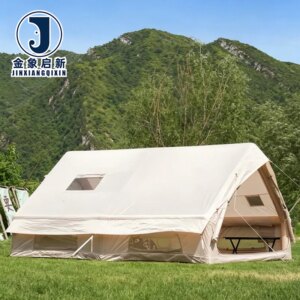
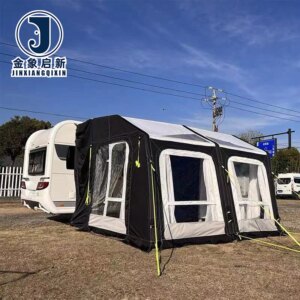
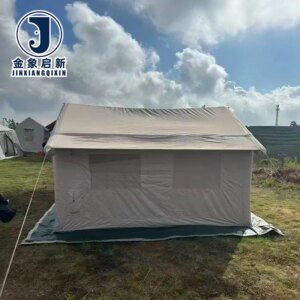
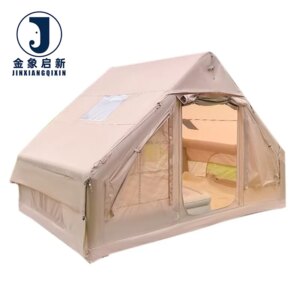
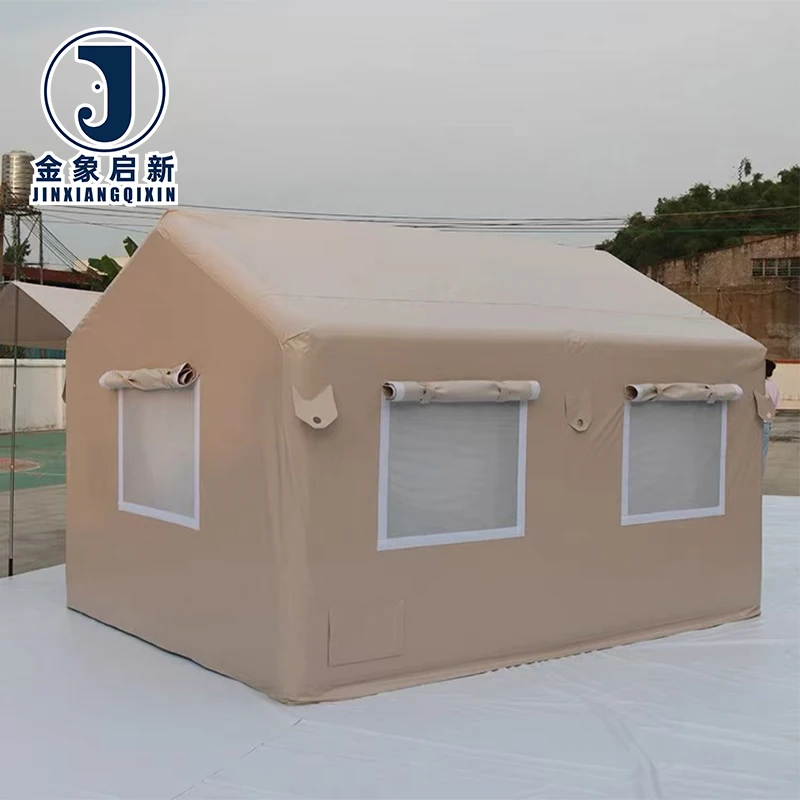
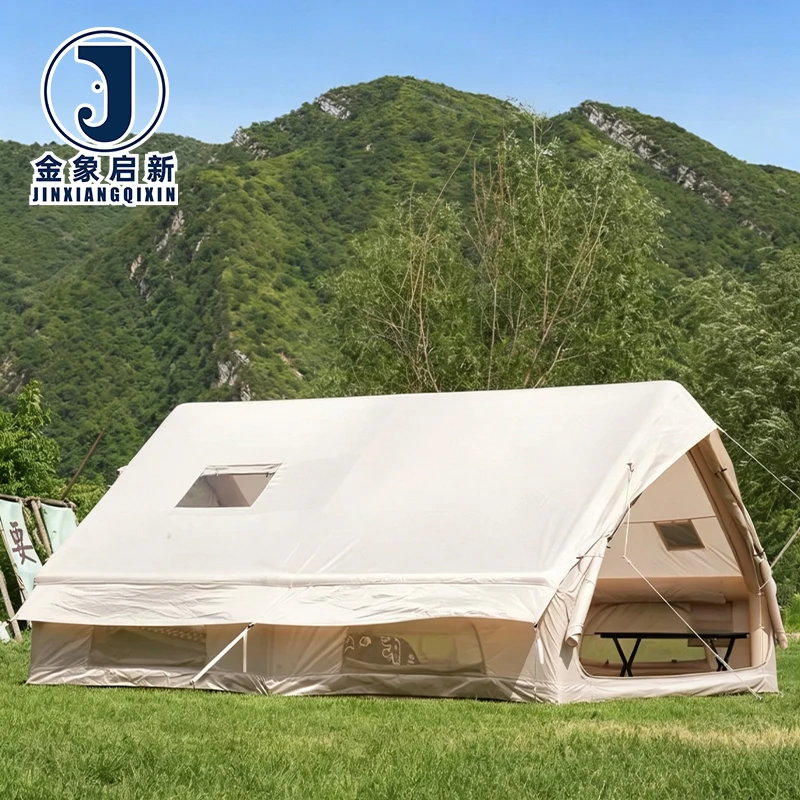
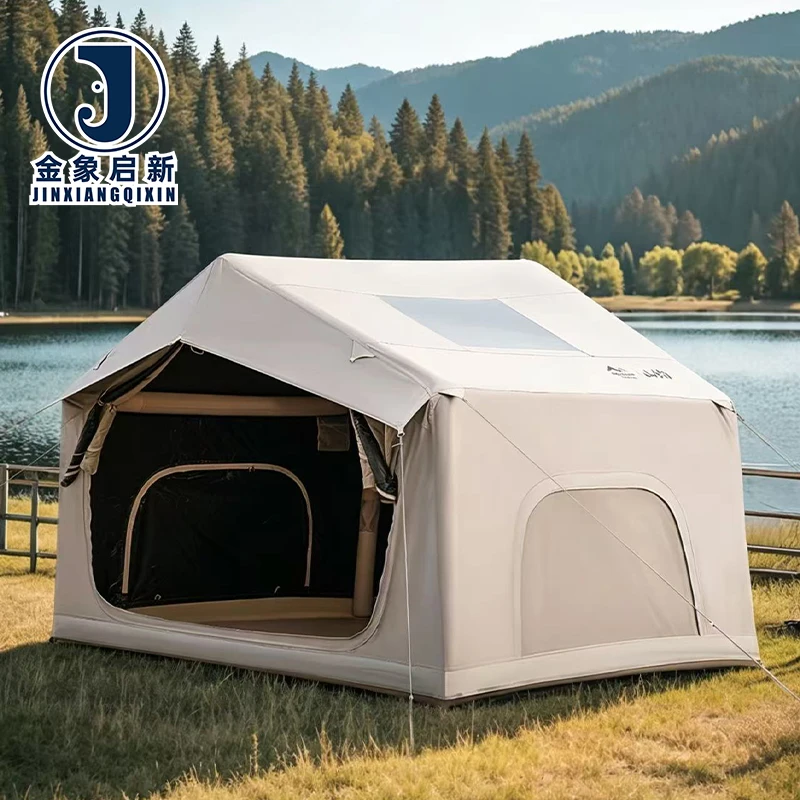
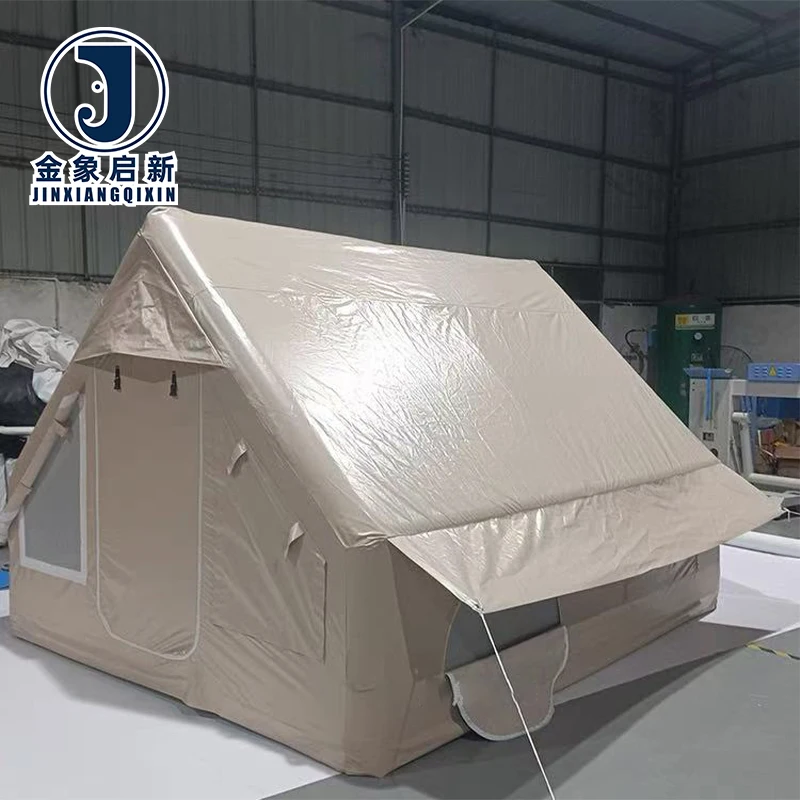
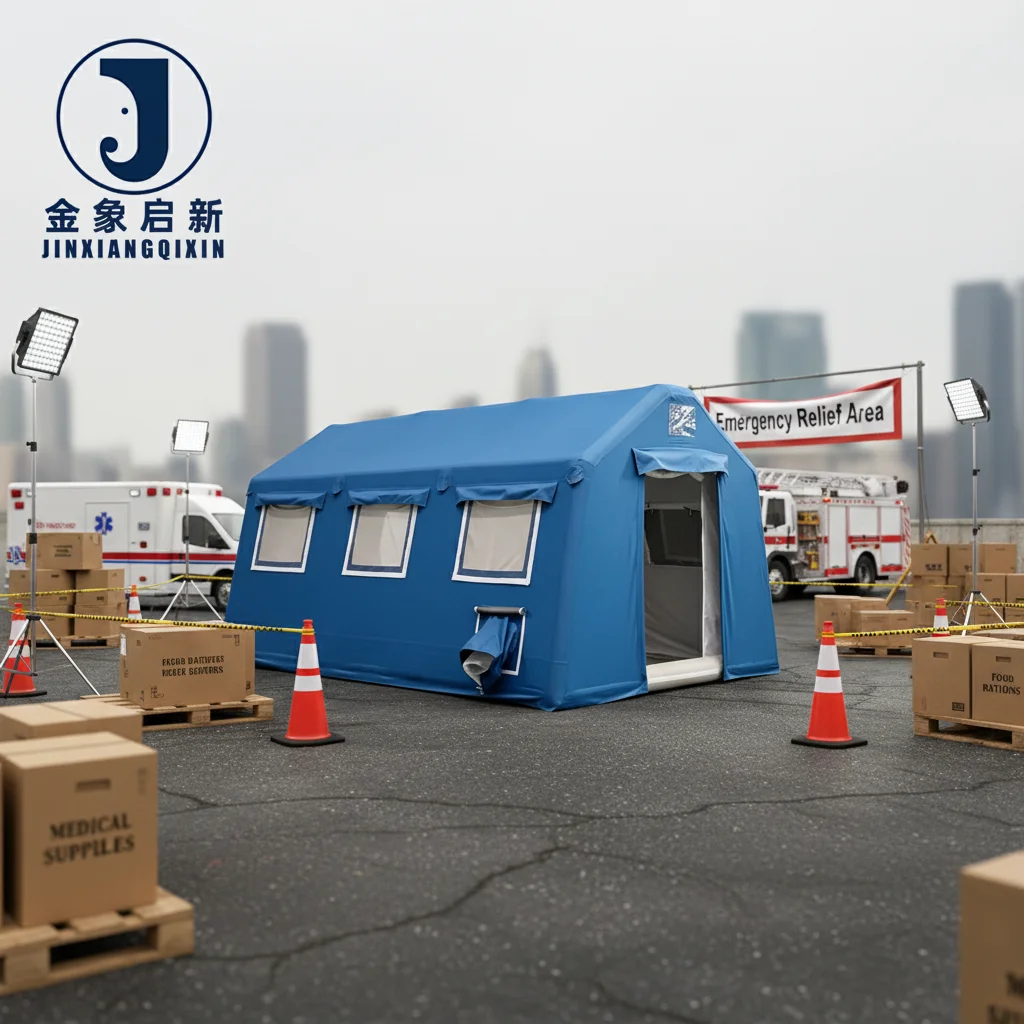
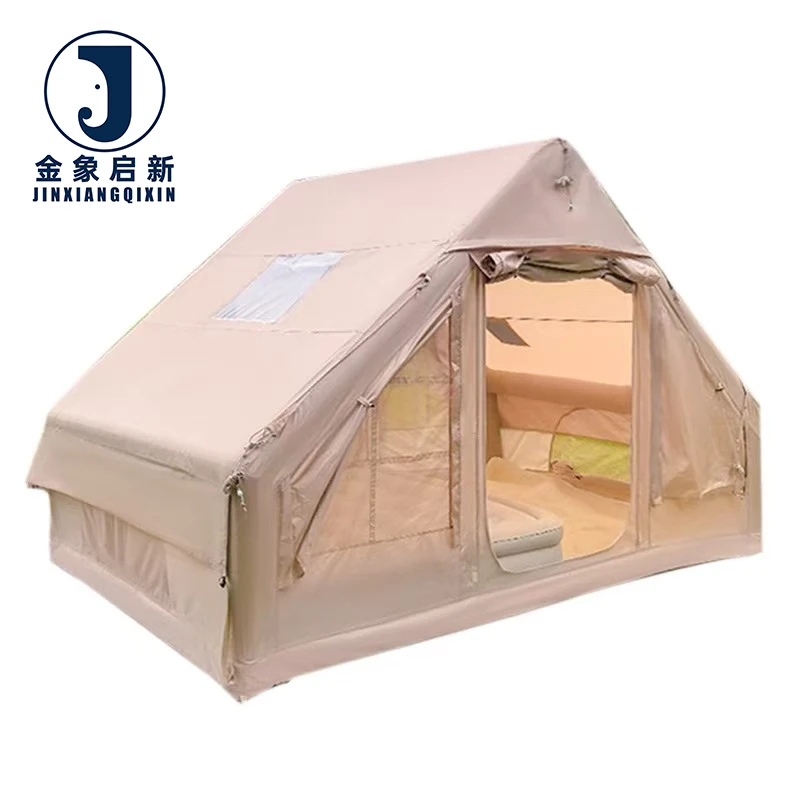
| Product Forms | 3-4 Person Quick Automatic Opening Four-Season Waterproof Outdoor Air Tent |
| Customization Service | OEM & ODM, sample customization, pattern printing |
| Production Facility Area | 9180 square meters |
| Production Lines | 3 full production lines |
| Processing Equipment | 36 sets of professional processing equipment |
| R&D Team Scale | 10 technicians |
| Certifications | ISO9001, ISO14001, ISO45001, CE |
Application Suitability
| Application | Exposure & Requirement |
|---|---|
| Commercial camping gear manufacturing | Repeated inflation cycles, outdoor UV exposure, abrasion from ground contact, batch colour uniformity across production runs |
| Outdoor equipment OEM air-beam tent structures | Airtight seam integrity under internal pressure, flex fatigue at beam joints, waterproof performance in sustained rain |
| Tent and inflatable structure distributors | Container-load volume consistency, roll-to-roll GSM verification, documentation for import compliance |
| Industrial shelter systems and mobile workspaces | Fire-retardant compliance on temporary sites, wind-load tension on membrane panels, rapid deployment and pack-down cycles |
What Roll-to-Roll Consistency Really Costs When It Fails
Colour shift between rolls in the same shipment is the most visible — and most expensive — defect a tent manufacturer can receive.
When a commercial outdoor equipment maker cuts panels from six rolls to build a single inflatable tent, even a slight hue variation between adjacent panels becomes immediately obvious once the structure is inflated on a showroom floor or a campsite. The entire unit may need rework or rejection. [NEED_CITE: colour tolerance standards for coated fabrics in multi-panel assembly]. For buyers sourcing PVC inflatable tent fabric wholesale, this is not a cosmetic complaint — it is a production-line stoppage that delays shipment to retail partners and erodes margin. The problem compounds when orders span multiple containers dispatched weeks apart, because batch-to-batch drift in pigment dosing or coating temperature can push the second shipment outside the acceptable delta-E window of the first.
How Coating Weight Control Prevents Downstream Failures
The PVC coating applied to the base fabric must be uniform across the full width and entire length of every roll. Thinner spots in the coating create weak points where water can penetrate under hydrostatic pressure, and where heat-welded seams may not achieve full adhesion. Our three dedicated production lines maintain continuous coating weight monitoring, and the 100% pre-shipment inspection verifies that each roll of PVC inflatable tent fabric meets the stated specification before it is packed. This level of control is what separates a roll that welds cleanly at the seam from one that delaminates after the first inflation cycle.
Why Base Fabric Density Matters More Than GSM Alone
Buyers often specify GSM as the single benchmark for material quality, but the base fabric’s denier and weave density determine how the material behaves under tension. A PVC inflatable tent fabric wholesale order with a high GSM achieved through heavy coating on a loosely woven base will tear more easily at the beam anchor points than a lighter-coated fabric on a tightly woven substrate. [NEED_CITE: relationship between base fabric weave density and tear propagation in PVC-coated textiles]. Our R&D team evaluates the denier count, warp and weft density, and coating adhesion together when recommending a material grade, so the finished inflatable tent structure can withstand the internal air-beam pressure without risk of seam or panel failure.
Understanding the Specification Sheet Beyond the Headline Numbers
A specification sheet that lists only a single GSM figure leaves critical performance questions unanswered. The base fabric denier dictates how the material resists puncture when the inflated structure contacts rough ground or sharp debris. The coating method — whether knife-over-roll, dip, or calender — influences peel strength at welded seams, which directly affects whether the air-beam channels hold pressure over extended use. Surface finish, glossy or matte, determines how well printed branding adheres and how the fabric cleans after a season of outdoor deployment. Fire-retardant grades are available — confirm the grade required for your target market, because regulations differ between commercial campground installations and event-venue temporary structures. The PVC inflatable tent fabric specification should always pair GSM with base fabric construction and coating weight so that the buyer can predict real-world behaviour, not just compare a single number on a quotation.
The Hidden Cost of Specifying on Price Per Kilogram Alone
When purchasing decisions rest solely on the lowest per-kilogram quote, the material arriving at the factory floor often carries a lighter coating than the sample that won the contract. Panels cut from underweight rolls may pass initial visual inspection but fail during inflation testing when the air-beam channels cannot hold pressure at the heat-welded seams. [NEED_CITE: coating weight variance and its effect on heat-weld peel strength in PVC tarpaulins]. For tent manufacturers running production at scale, the cost of re-cutting, re-welding, and re-testing rejected units far exceeds the per-roll savings that justified the switch in supplier.
Why Manufacturers Source Their Inflatable Fabric Here
Three full production lines operating with 36 sets of professional processing equipment provide the capacity to fulfil container-load orders of PVC inflatable tent fabric wholesale without splitting production across subcontractors. The 10-person R&D team develops custom samples within days, matching colour, coating weight, and surface finish to the buyer’s specification before full production begins. Dedicated QA and QC staff inspect every roll at each production stage, not only at final packing, which catches coating irregularities and colour drift before they reach the shipping container. ISO9001, ISO14001, ISO45001, and CE certifications govern the production process, providing documented traceability that importers need for customs and compliance audits. OEM and ODM capabilities, including pattern printing and sample customization, allow brand owners to differentiate their inflatable tent products without managing a separate printing subcontractor.
Documentation & Verification
- Material specification sheet stating GSM, base fabric denier, coating weight, and colour reference per roll
- Pre-shipment inspection record with roll-by-roll weight and visual verification
- Roll packing list detailing roll count, net weight, and container loading plan
- Test reports for UV and fire-retardant grades referenced to purchase order number
- ISO9001, ISO14001, ISO45001, and CE certificates included with shipping documentation
- Certificate of origin and customs support documentation for destination-country import clearance
Fabrication, Handling & Storage
- Heat-weld air-beam channels at temperatures matched to the PVC coating thickness to ensure full seam adhesion without base-fabric scorch
- Store rolls upright on pallets in a dry, shaded warehouse to prevent flat-spot deformation of the coated surface
- Use sharp rotary blades when cutting panels to avoid fraying the base fabric weave at seam allowance edges
- Clean printed branding with mild, non-solvent detergents to preserve pattern sharpness and coating integrity
- Allow cold-stored rolls to acclimatise to workshop temperature before unrolling to prevent coating crack at low-temperature flex points
What We Need to Quote Your Roll-Stock Order Accurately
Provide the target GSM range, base fabric preference, and required surface finish so we can recommend the most suitable PVC inflatable tent fabric grade. Confirm the fire-retardant or anti-static standard your destination market requires, along with annual volume and roll width, so we can structure pricing tiers and production scheduling. If you need custom colour matching or pattern printing, share the Pantone or RAL reference and we will develop a sample roll for your approval before committing to full production.
Frequently Asked Questions
Q: How do you ensure GSM consistency from the sample roll to the bulk shipment?
A: Each production run is monitored at the coating stage, and the dedicated QA team verifies roll weight against the stated GSM during the 100% pre-shipment inspection. Rolls that fall outside tolerance are held before packing. The inspection record accompanies the shipment, giving buyers documented proof of weight consistency across every roll in the container.
Q: Can you match colour across multiple rolls in one order and across repeat orders?
A: Yes. Colour is controlled through pigment dosing calibration at the mixing stage, and each roll is visually inspected against the order’s colour reference standard before dispatch. For repeat orders, we retain the production colour formula and reference swatch to minimise batch-to-batch drift, ensuring panels from different shipments align when assembled side by side.
Q: What roll widths and lengths are available, and how do you optimise container loading?
A: Rolls are supplied in widths and lengths configured to your cutting layout and container capacity. Our packing team plans the roll count and pallet arrangement to maximise container utilisation while protecting roll surfaces during transit. Share your panel dimensions and annual volume so we can recommend the most efficient roll configuration.
Q: Are UV-resistant and fire-retardant test reports provided with each order?
A: Test reports for UV-resistant and fire-retardant grades are issued per purchase order when those treatments are specified. Reports reference the specific production batch and test standard applied. Buyers should confirm the fire-retardant grade required for their market before ordering, as regulatory requirements vary by region and application.
Q: What is the process for custom pattern printing and sample approval?
A: Share your artwork, colour references, and repeat dimensions. The R&D team produces a printed sample on the specified PVC inflatable tent fabric grade for your review. Once the sample is approved, full production proceeds using the confirmed print parameters, ensuring brand consistency across the entire order volume.