Description
Batch Uniformity — Every roll of Anti-Static Printable PVC Coated Tarpaulin is verified against stated GSM and colour reference before dispatch, ensuring consistency across your container load.
Technical Specifications
| Parameter | Value |
|---|---|
| Product Type | PVC Coated Tarpaulin |
| Base Fabric | 100% high toughness polyester yarn |
| Coating Material | PVC |
| Coating Method | Lamination and hot melt coating |
| Available Weight Range | 400–1500 g/m² (multiple grades) |
| Total Thickness Range | 0.35–1.5 mm |
| Base Fabric Denier Range | 500D–2000D |
| Tensile Strength (Warp) | 1500–3000 N/5cm |
| Tensile Strength (Weft) | 1200–2800 N/5cm |
| Cold Crack Resistance | -30°C |
| Waterproof | Yes |
| Mold Proof | Yes |
| Anti-Static | Available (surface resistance standard to be confirmed) |
| Flame Retardant | Available in flame retardant grades — confirm the grade required for your market |
| Printing Option | Printable surface |
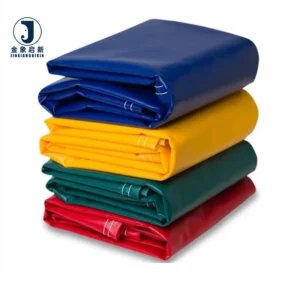
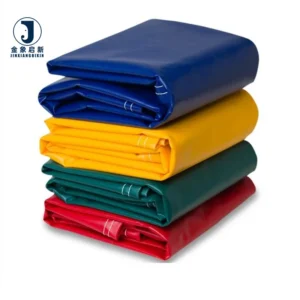
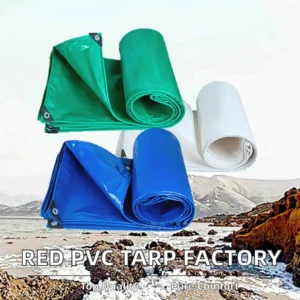
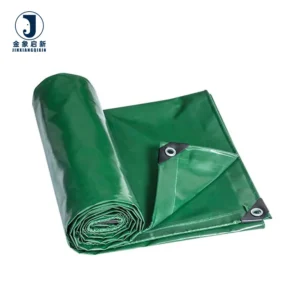
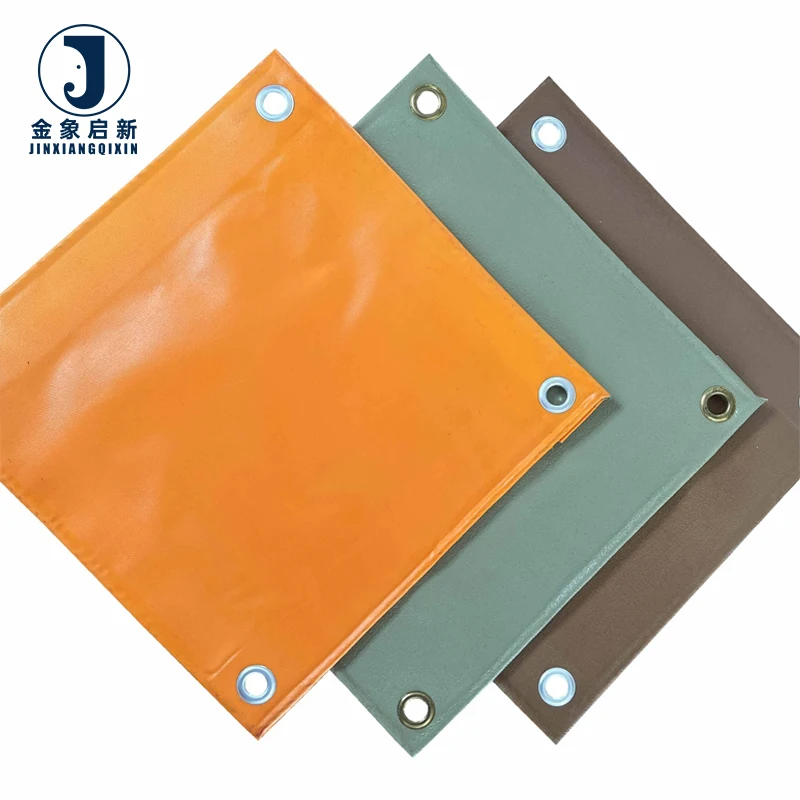
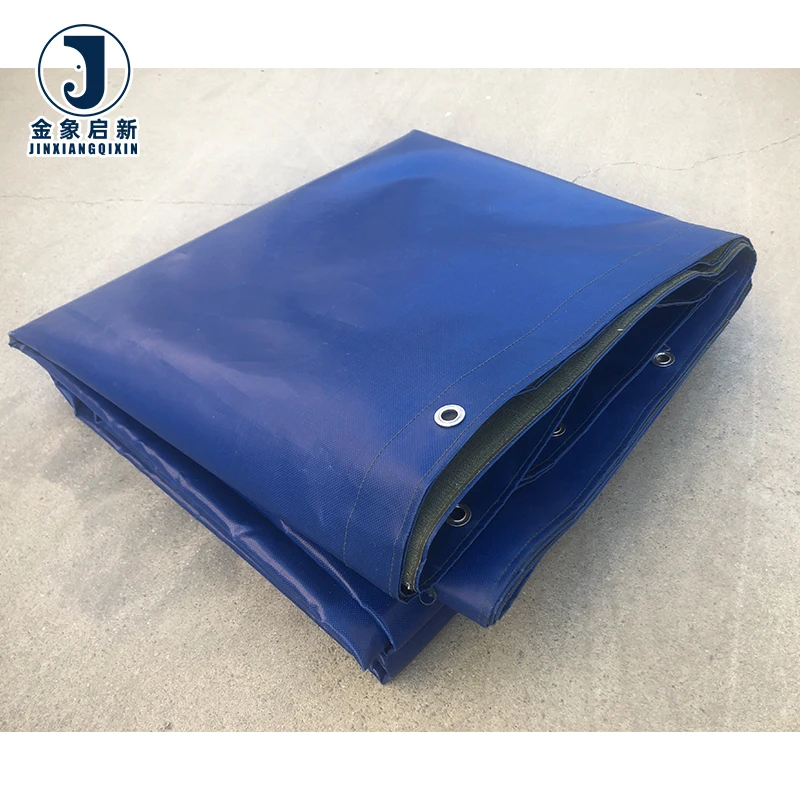
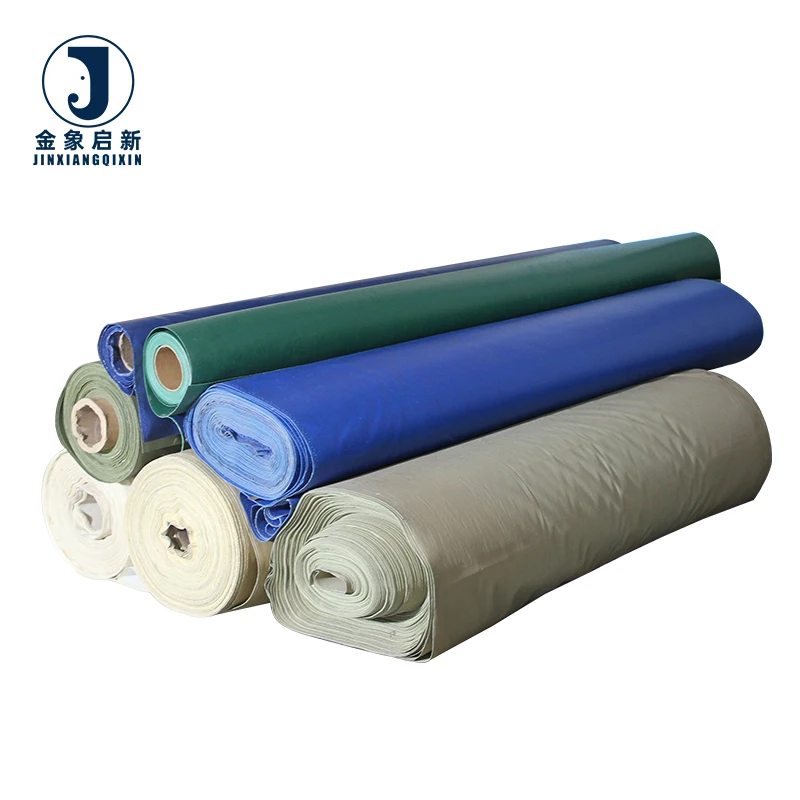
| Available Colors | Blue, Blue/Orange, Green, Grey, Black, Clear, Grey/Green, Orange, or custom |
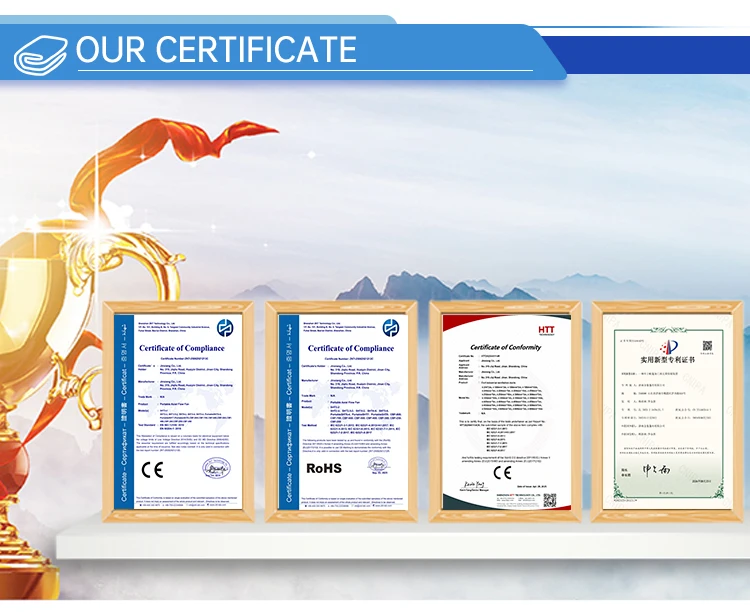
| Certifications | ISO, CE |
Application Suitability
| Application | Exposure & Requirement |
|---|---|
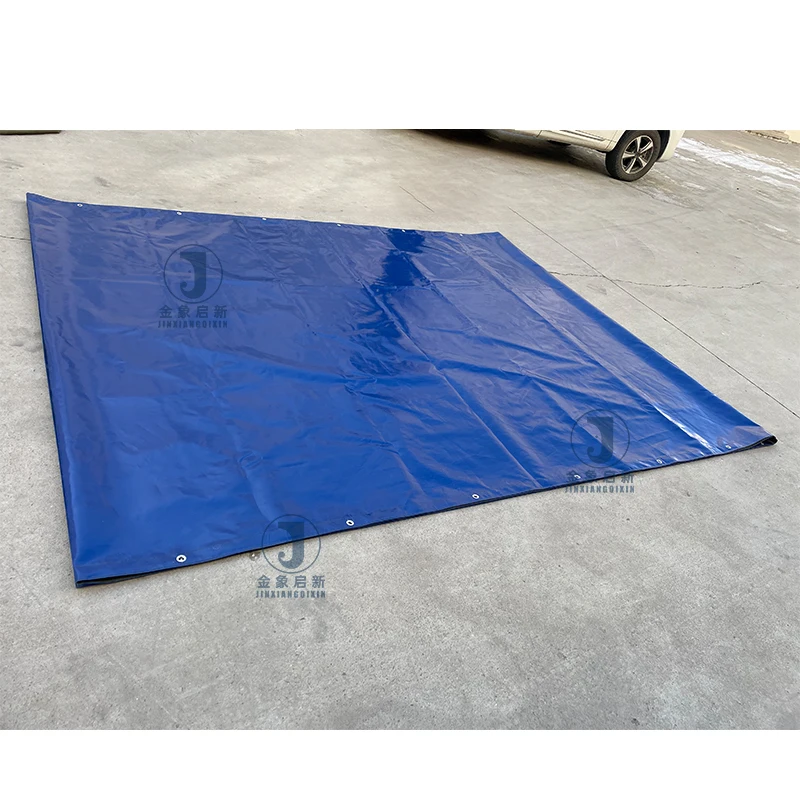
| Exhibition booth and event backdrop | Indoor or temporary outdoor use, high-visibility printing, anti-static surface for dust control |
| Truck tarpaulin roll stock | Road abrasion, flexing at load points, weather exposure, tie-down tension |
| Tent and awning fabrication | Repeated folding and unfolding, UV exposure, seam welding during fabrication |
| Inflatable and membrane structure | Internal air pressure stress, welded seam integrity, long-term tension |
| Industrial pipe canopy | Outdoor weathering, chemical-adjacent environment, wide-width coverage |
| Tensioned structural fabric | Sustained biaxial load, wind uplift, fixture-point stress |
Why GSM Without Context Misleads Roll Buyers
Weight alone never tells the full story of how a PVC coated tarpaulin roll will perform on the warehouse floor or the trailer bed.
When sourcing PVC Coated Tarpaulin wholesale, buyers often compare quotations on GSM alone, assuming heavier means stronger. In practice, a lighter roll built on a high-denier polyester base can outperform a heavier roll padded with excess coating that adds weight without adding tensile contribution. The coating-to-yarn ratio, the weaving density, and the adhesion method all shift how the fabric behaves under load. Rolls that arrive lighter than the quoted GSM compound the problem — you pay for material that is not on the truck [NEED_CITE: tensile and tear test methods for coated fabrics per ISO 1421].
How Coating Adhesion Affects Roll Performance in Fabrication
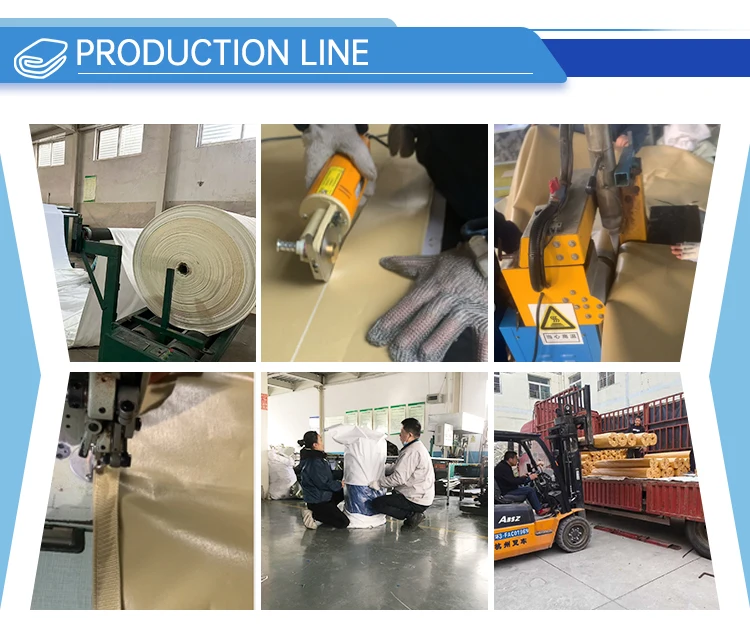
The lamination and hot melt coating process used on this PVC Coated Tarpaulin bonds the PVC layers to the polyester base under heat and pressure, producing adhesion strength that holds through welding and flexing. When fabricators heat-weld seams on exhibition backdrops or truck side curtains, poor adhesion causes the coating to delaminate before the weld line cools. Hot melt coating reduces this risk by creating a molecular bond between yarn and PVC rather than a mechanical grip, which matters when the finished product faces repeated tension cycles.
Colour Consistency Across a Container Load
For distributors stocking PVC Coated Tarpaulin rolls by the container, colour drift between production batches creates visible mismatches once the end user installs two rolls side by side. In-process QA control at the coating stage monitors pigment dosing and mixing time per batch. Each roll is checked against the colour reference before packing. This matters most for exhibition fabric and printed backdrop applications, where the customer expects a uniform visual field across every panel [NEED_CITE: colour fastness testing standards for coated textiles].
Reading the Specification Sheet Beyond Weight
Three parameters interact to determine real-world performance. First, the base fabric denier — ranging from 500D to 2000D — governs tear propagation resistance; a higher denier yarn absorbs more energy before a puncture grows into a split. Second, the coating method influences peel strength: hot melt coating ac*ng weld integrity during fabrication. Third, the total thickness, spanning 0.35 mm to 1.5 mm across the available grades, correlates with puncture resistance but also affects roll weight per linear metre and therefore shipping cost per usable square metre. Buyers evaluating PVC coated tarpaulin roll stock should request the specification sheet that breaks down base fabric weight versus coating weight, because the ratio determines how the material handles on the fabrication table.
The Hidden Cost of Skipping Pre-Shipment Verification
Rolls that ship without per-roll GSM verification create downstream failures that surface weeks after delivery. A distributor receives a container, distributes to retail customers, and the first complaint arrives when a truck cover tears at the hem within a season. By then, tracing which roll came from which production batch is nearly impossible. Similarly, anti-static or flame retardant treatment claimed without a matching test report leaves the end user exposed during a site audit or safety inspection. These are not material defects — they are documentation gaps that turn into warranty disputes [NEED_CITE: pre-shipment inspection practices for coated fabric exports].
Why Sourcing Roll Stock Here Reduces Procurement Risk
Three full production lines with 36 sets of professional equipment allow bulk orders to run on dedicated coating lines, so your rolls are not queued behind small-batch jobs that shift machine settings between runs. The 10-person R&D team develops custom colour and anti-static samples within days, letting you approve the exact formulation before production starts. Every roll undergoes inspection at each production stage, with 100% verification before packing — this is not sampling but a full count. Near 30 years of coated fabric production means the coating formulation and machine calibration for each GSM grade are established baselines, not trial runs. The documentation package ships with the container, not weeks later by email.
Documentation & Verification
- Material specification sheet stating exact GSM, base fabric denier, and coating weight for each roll grade in your order
- Pre-shipment inspection record with roll-by-roll GSM verification against the quoted value
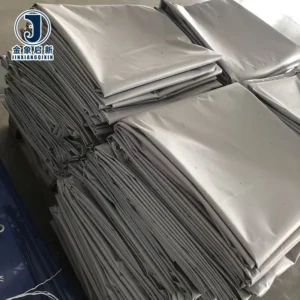
- Roll packing list detailing roll count, individual weight, and container loading plan
- Anti-static and flame retardant test reports matched to the specific production batch where applicable
- Certificate of origin and full customs documentation for international shipment clearance
Fabrication, Handling & Storage
- Heat-weld at temperatures suited to the hot melt coating bond — test weld settings on a scrap piece from the same roll grade first
- Store rolls upright on pallets in a dry warehouse to prevent flat-spot deformation on the coating surface
- When fabricating wide-width panels, plan cut layout to minimise off-cuts and reduce the number of welded seams
- Use compatible PVC adhesive for field repairs on tears, matching the coating chemistry for bond integrity
- Avoid dragging rolls on unprotected concrete floors during warehouse handling to prevent surface abrasion on the printable side
Before You Request a Quote
To match the correct roll grade to your requirements, specify the target GSM range, the end-use application, and whether the fabric will be printed or left plain. Confirm your market’s fire safety classification so the correct flame retardant grade can be quoted. If custom width or colour is needed, provide the exact dimension and a Pantone or RAL reference. Indicate whether you need full container loads of a single grade or mixed-grade consolidation.
Frequently Asked Questions
Q: How is GSM verified on each roll before shipment?
A: Every roll is weighed and measured individually during the pre-shipment inspection. The verified GSM is recorded on the inspection report that accompanies your container. Rolls falling outside the stated tolerance are held back and replaced before dispatch, so the material arriving at your warehouse matches the specification you approved.
Q: How do you control colour consistency across rolls in the same bulk order?
A: Pigment batching is controlled per production run, and each roll is visually compared against the approved colour reference under standardised lighting during inspection. For large orders split across multiple runs, the same master batch formulation is used throughout, and cross-run comparison is performed before packing into the same container.
Q: What custom widths and roll lengths are available, and what are the minimums?
A: Custom widths and roll lengths can be produced on request. Minimums depend on the specific grade and colour combination, as dedicated machine setup is required. Provide your target dimensions and annual volume so the production team can confirm the most efficient run configuration and lead time for your PVC coated tarpaulin roll order.
Q: How are rolls packed for container loading to prevent transit damage?
A: Each roll is wrapped in protective film and loaded according to a packing plan that accounts for roll diameter and weight distribution. The packing list included in the shipment details roll count, position, and weight per roll, enabling efficient unloading and immediate inventory reconciliation at your receiving dock.
Q: What is the lead time for bulk roll orders with custom colour or anti-static treatment?
A: Lead time depends on order volume and the complexity of the customisation. Standard stock grades typically ship within a standard production window, while custom colour matching or anti-static formulation requires additional time for sample approval before the production run begins. Confirm timing at the quotation stage based on your specific requirements.