
Description
Coated Fabric Process Control — Deep expertise in PVC coating weight and adhesion ensures the Aircraft PCA Air Duct fire retardant certified maintains consistent layer integrity across every production run, verified by stage-by-stage QA before dispatch.
Technical Specifications
| Parameter | Value |
|---|---|
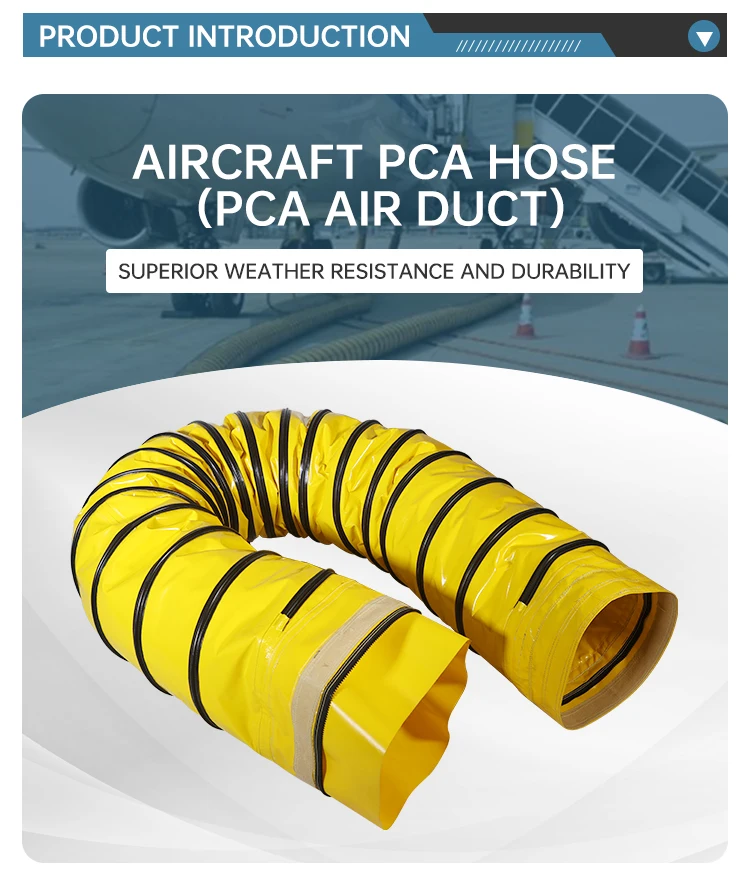
| Product Type | Air Conditioning Hose |
| Diameter | 12 Inch |
| Coating Material | PVC |
| Base Fabric | Fabric-reinforced layer |
| Insulation Layer | Aluminum foil bubble film |
| Temperature Range | -30°C to 150°C |
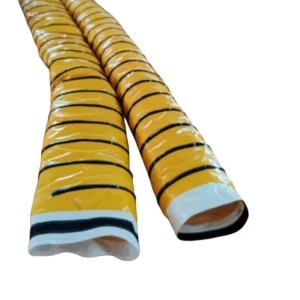
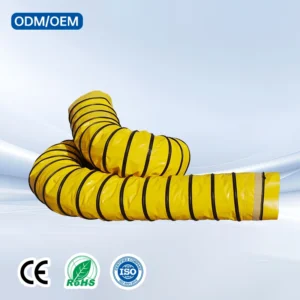
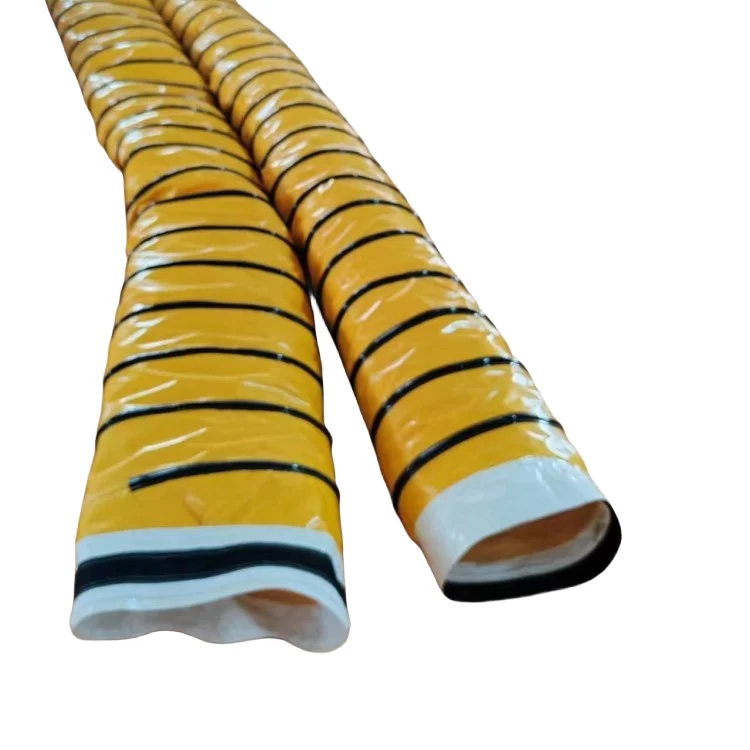
| Outer Layer Color | Yellow-black alternating (high visibility) |
| Connection Method | Zipper, Velcro |
| Mildew Resistance | Yes |
| Waterproof | Yes |
| Flame Retardant | Available in flame retardant grades — confirm the grade required for your market |
| Anti-Static | Available in anti-static grades — confirm the standard required for your apron compliance |
Application Suitability
| Application | Exposure & Requirement |
|---|---|
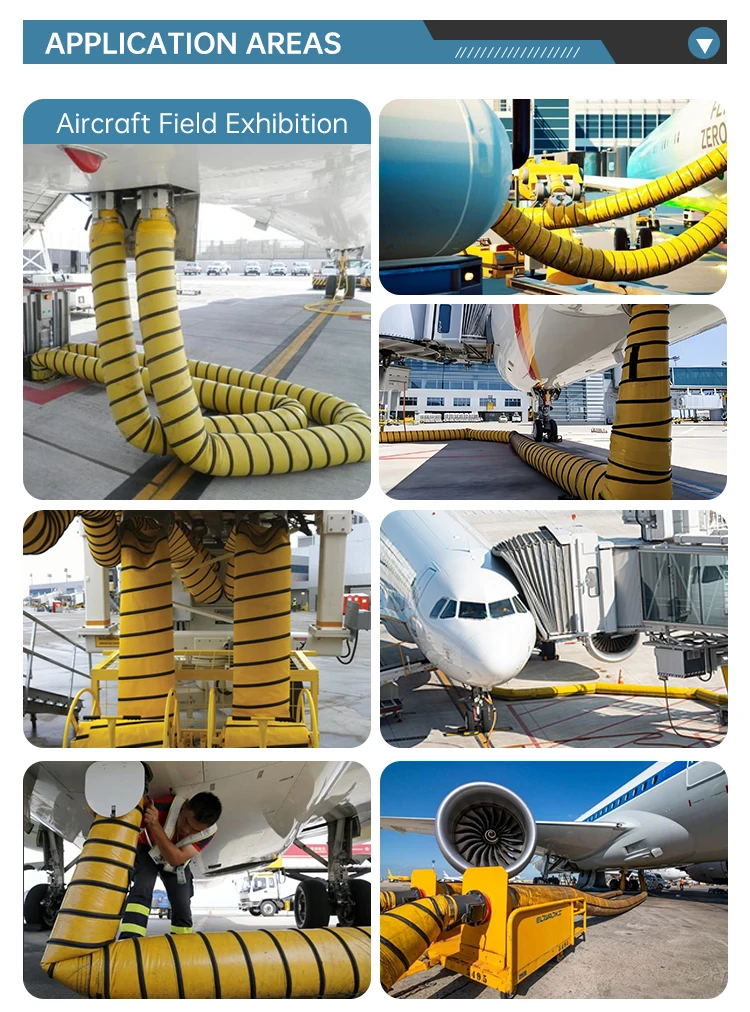
| Airport apron ground support equipment | Continuous UV, jet fuel mist, ground vehicle abrasion, rapid temperature cycling from PCA unit output |
| Pre-conditioned air delivery to aircraft cabin | Flex during deployment and retraction, zipper/Velcro connection cycling, compression during storage |
| Aviation maintenance hangar climate control | Extended static deployment, dust and chemical exposure from maintenance activities, overhead suspension load |
| Military and charter flight ground support | Extreme ambient temperature swings, rough terrain handling, rapid setup and teardown between sorties |
Why Certification Documentation Matters More Than the Word "Certified"
A duct labeled fire retardant without a test report is a liability on the apron, not an asset.
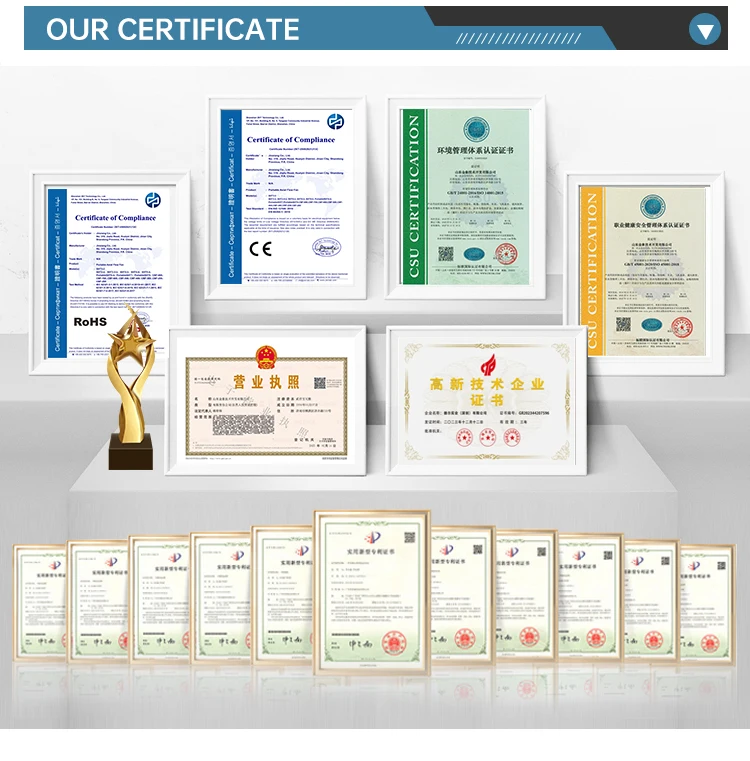
Ground handling teams specify Aircraft PCA Air Duct fire retardant certified for compliance audits, yet the certificate often arrives as a generic PDF covering a product family rather than the specific hose diameter and coating weight you received. Airport safety officers check for FAR 25.853 or UL 94 equivalence, and a missing grade reference means the duct fails inspection before it ever sees a fuselage connection. I have watched procurement teams accept "flame retardant" at face value, only to discover during a ramp audit that the test basis did not match the jurisdiction’s requirement [NEED_CITE: FAR 25.853 vertical burn test criteria for aircraft cabin and ground support materials].
Insulation Architecture and Temperature Transfer Control
The aluminum foil bubble film layer sits between the PVC-coated outer shell and the airflow path, creating a thermal break that manages the full -30°C to 150°C operating window. Without this mid-layer, the outer fabric would conduct heat or cold directly to ground crew handling the duct during connection, and the PCA unit’s energy output would degrade before reaching the aircraft cabin intake. The bubble film structure also adds compressive recovery, so the duct regains its round cross-section after being stepped on or driven over by light apron vehicles.
Connection Integrity Under Repeated Deployment Cycles
Zipper and Velcro joints handle the interface between PCA unit outlet and aircraft cabin inlet, where the Aircraft PCA Air Duct fire retardant certified must seal against positive pressure without leakage. Each turnaround involves crew pulling, aligning, and locking these connections in under a minute, often with gloved hands and limited visibility under the fuselage. The fabric-reinforced base layer anchors the zipper tape stitching, preventing the join from peeling away from the duct body during the hundreds of connection cycles the hose endures across a season.
Reading the Specification Sheet Beyond Diameter
Diameter alone tells you whether the hose fits the PCA unit flange, but the coating material and base fabric construction determine whether it survives apron conditions. PVC coating provides chemical resistance against de-icing fluid and jet fuel splash that would degrade polyurethane alternatives over repeated exposure. The fabric-reinforced base layer carries the mechanical load — tensile stress from dragging the duct across concrete, puncture risk from dropped tools, and the flex fatigue at the connection point where the hose bends sharply upward to meet the aircraft inlet [NEED_CITE: ISO 1421 tensile and tear test methods for coated fabrics]. Temperature range ratings confirm the insulation layer maintains adhesion to both the foil film and the outer PVC shell without delamination at either extreme.
The Cost of Skipping the Test Report Verification Step
Procurement teams that accept a duct based on catalog claims without requesting the batch-specific test report face three failure modes. First, fire safety officers reject the hose during a scheduled ramp audit, grounding the PCA unit until a compliant replacement arrives — aircraft turnaround times extend, and passengers sit in uncooled cabins. Second, anti-static non-compliance surfaces only when static discharge damages sensitive avionics during connection, triggering an incident investigation that traces back to the ground equipment supplier. Third, insulation delamination appears after a season of temperature cycling, leaving the outer shell intact but the thermal performance degraded so the PCA unit runs continuously without reaching cabin setpoint [NEED_CITE: aviation ground support equipment compliance audit procedures].
How Process Control Translates to Delivery Reliability
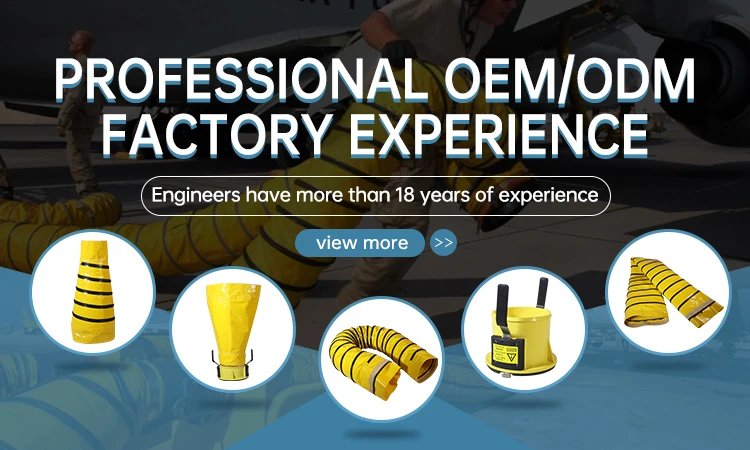
Three full production lines and 36 sets of professional equipment mean the Aircraft PCA Air Duct fire retardant certified is manufactured on dedicated capacity, not squeezed into gaps between unrelated product runs. The 10-person R&D team handles diameter customization, insulation layer specification, and connection method engineering in-house, so sample development does not depend on external subcontractors. A 100% pre-shipment inspection covers seam integrity at every zipper and Velcro attachment point, dimensional accuracy on the 12-inch diameter, and visual consistency of the yellow-black high-visibility coloring. ISO and CE certification frameworks govern the production documentation, and each roll receives a packing list that references the material specification sheet.
Documentation & Verification
- Material specification sheet confirming PVC coating, aluminum foil bubble film insulation, and 12-inch diameter
- Fire retardant grade test report matched to the specific hose batch, not a generic product family certificate
- Anti-static surface resistance measurement documented per the aviation standard applicable to your airport jurisdiction
- Pre-shipment inspection record covering zipper function, Velcro adhesion strength, and seam integrity at connection points
- Temperature cycling test record confirming insulation layer adhesion across the stated -30°C to 150°C range
Fabrication, Handling & Storage
- Heat-weld the PVC-coated outer shell at manufacturer-recommended temperature to avoid melting through the aluminum foil insulation layer
- Store rolled ducts horizontally on padded racks to prevent permanent creasing of the fabric-reinforced base layer
- Clean outer surface with mild detergent only — solvents degrade the PVC coating and compromise mildew resistance
- Inspect zipper teeth and Velcro hooks after each deployment cycle for embedded apron debris that compromises seal integrity
- Deploy and retract with two-person handling to avoid dragging the yellow-black outer shell across abrasive concrete
What to Include in Your Inquiry
Specify the aircraft models your ground support team services, as fuselage inlet height and PCA unit placement determine whether the standard 12-inch diameter and default length meet your reach requirements. State the fire retardant grade and anti-static standard your airport jurisdiction mandates so the correct test documentation accompanies shipment. Indicate whether you require logo or pattern customization on the outer shell, noting that branding runs require a minimum quantity threshold.
Frequently Asked Questions
Q: What fire-retardant standard does this PCA duct meet, and is the test report included with shipment?
A: The duct is available in flame retardant grades, but the specific standard depends on your market requirement. Request the test report before placing your order to confirm the grade matches your airport’s compliance framework — whether FAR 25.853, UL 94, or a regional equivalent. The report is issued per batch, not as a generic catalog document.
Q: Is anti-static certification available for airport apron compliance requirements?
A: Anti-static grades are available, and surface resistance measurements can be documented per the aviation standard your jurisdiction requires. Confirm the specific resistance range your airport safety officer will check during audits, as thresholds vary between civil aviation authorities and military installations.
Q: Can the duct diameter and length be customized for specific aircraft models or PCA unit fittings?
A: The R&D team develops custom diameter and length samples based on your fuselage inlet specifications and PCA unit outlet dimensions. Custom runs require minimum quantity thresholds, and sample approval precedes full production to verify fitment and airflow delivery under your apron conditions.
Q: How are seams constructed, and what is the failure point under flex?
A: Seams join the PVC-coated outer shell using heat welding or stitching with sealed tape, depending on the specification. The connection point where zipper and Velcro attach to the duct body experiences the highest flex cycles during deployment, so pre-shipment inspection prioritizes seam integrity at these stress concentration zones.