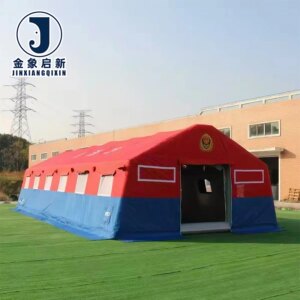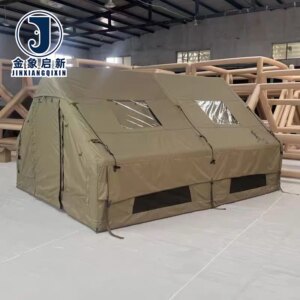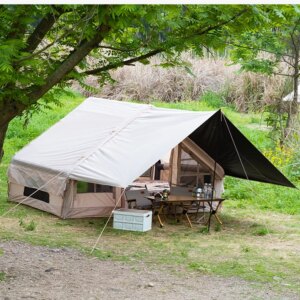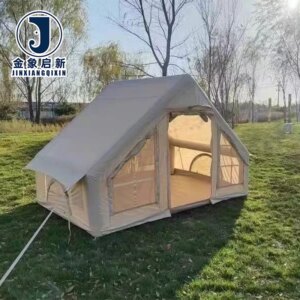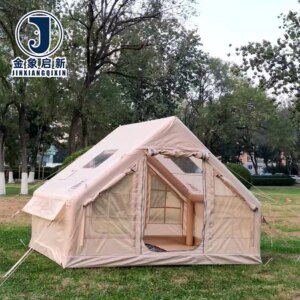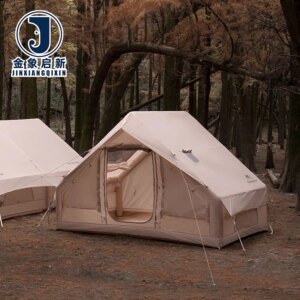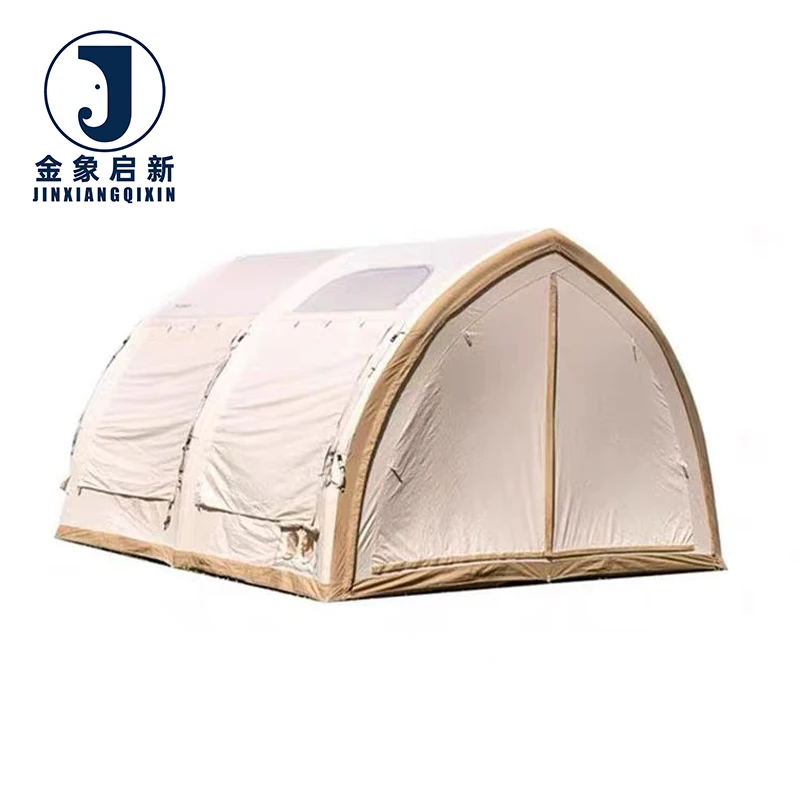
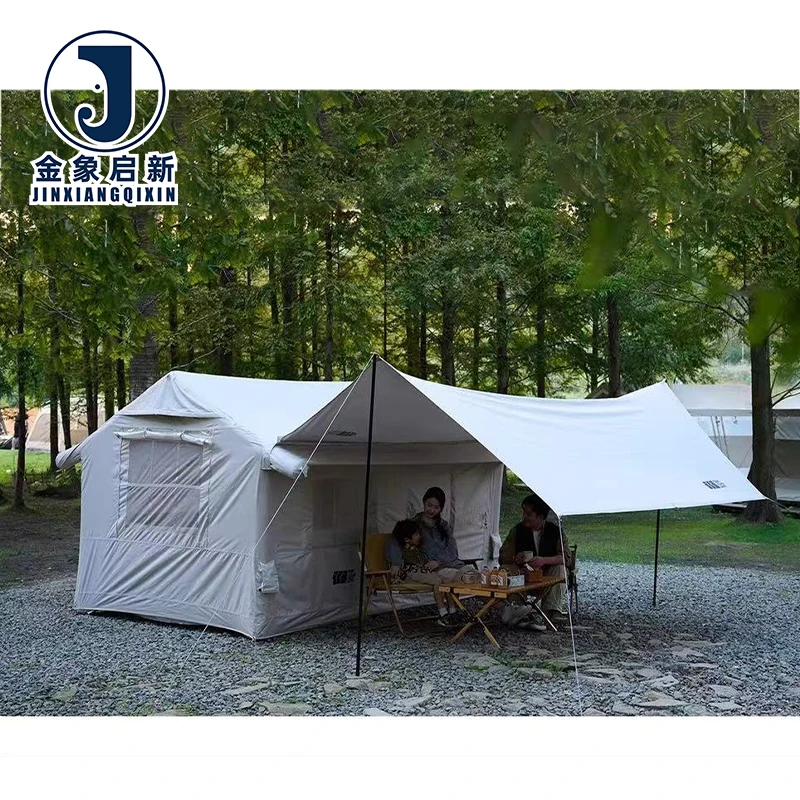
Description
Bulk Roll Consistency — Every roll of knife-coated PVC fabric passes through a dedicated QA checkpoint before leaving the facility, eliminating batch-to-batch weight and colour variation across emergency procurement orders.
Technical Specifications
| Parameter | Value |
|---|---|
| Product Type | Inflatable Tent |
| Core Material | PVC tarpaulin (knife-coated fabric) |
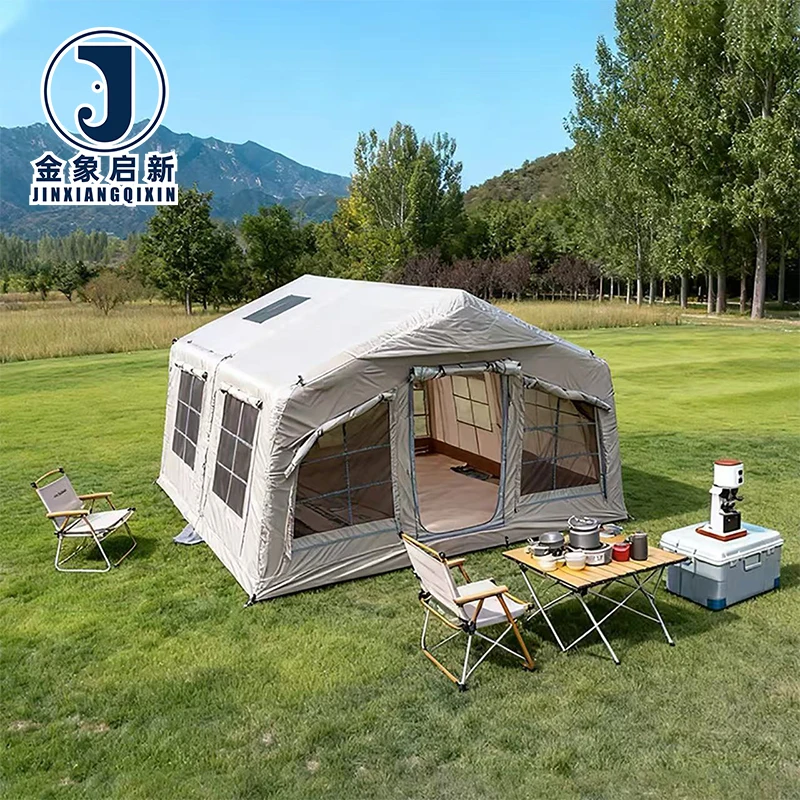
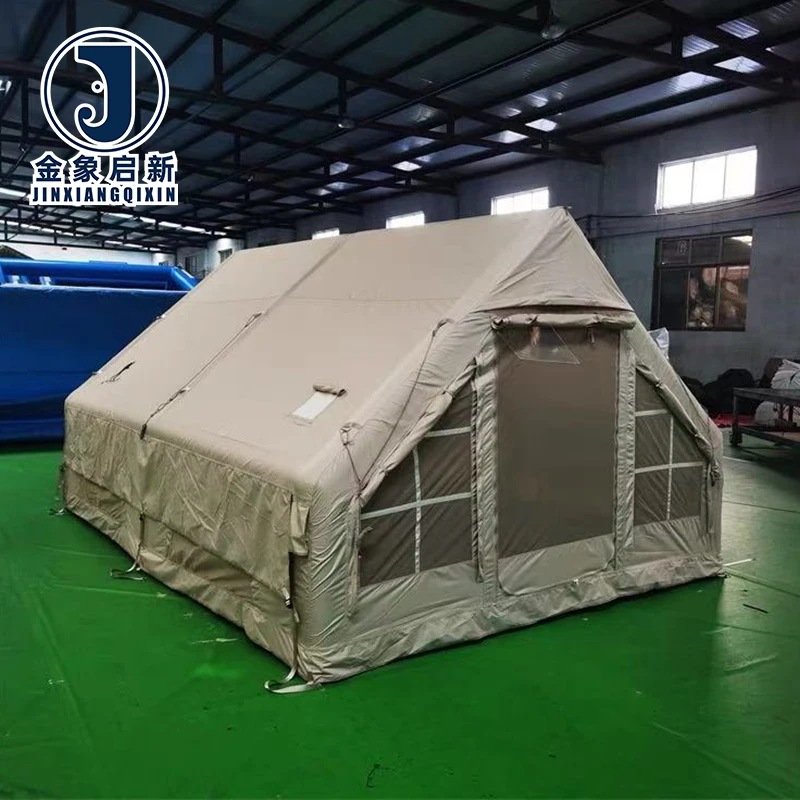
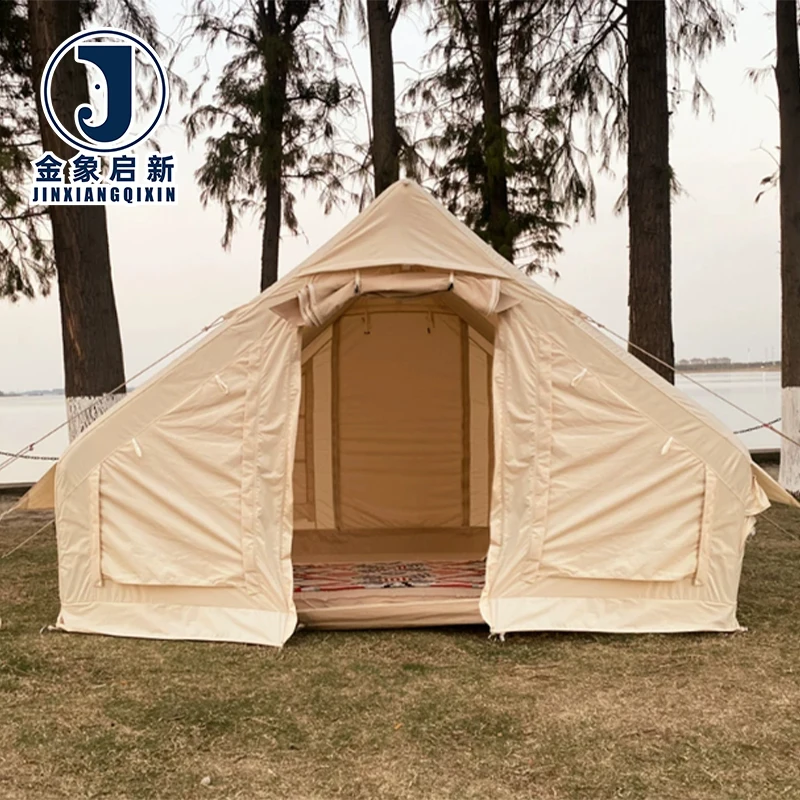
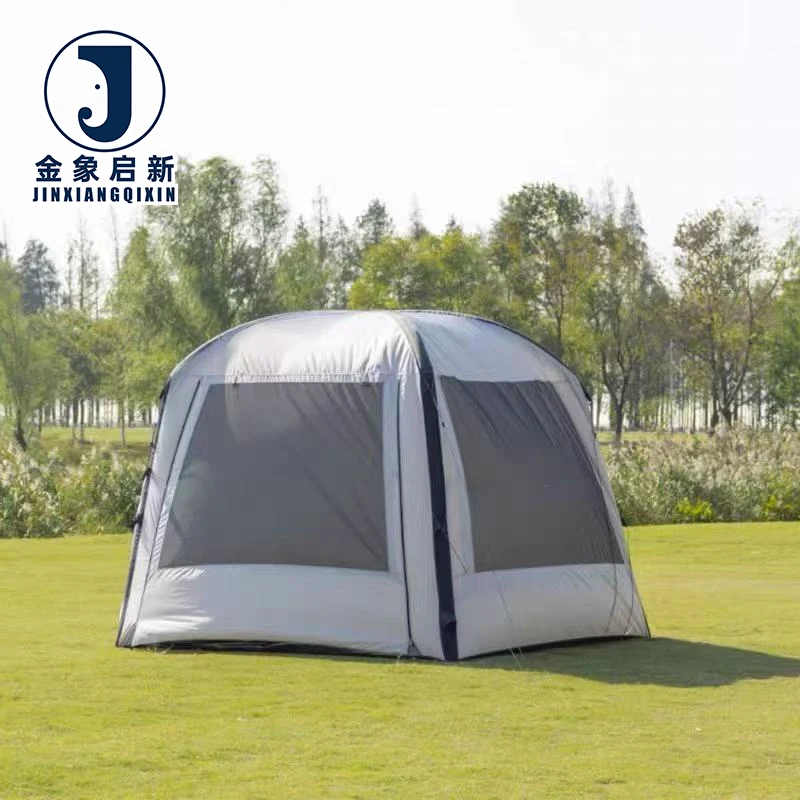
| Product Form | Inflatable structure with automatic opening mechanism |
| Construction | Single layer, extended type design |
| Waterproofing | Fully waterproof coated construction |
| Flame Retardant | Available in fire-retardant grades — confirm the grade required for your market |
| UV Treatment | UV-resistant formulation available — test basis to be confirmed per batch |
| Anti-Static | Anti-static treatment available — surface resistance or standard to be confirmed |
| Key Performance | Waterproof, tear-resistant |
| Customization | OEM & ODM (sample, pattern printing, material selection, product design) |
| Quality Control | Full-process inspection with dedicated QA & QC; inflation pressure testing, seam strength verification |
| Production Capacity | 3 full production lines, 36 sets of professional processing equipment |
| Certifications | ISO 9001, ISO 14001, ISO 45001, CE |
Application Suitability
| Application | Exposure & Requirement |
|---|---|
| Temporary site command centers | Rapid deployment, wind loading, repeated inflation cycles, all-weather exposure |
| Equipment storage shelters during disaster recovery | UV exposure, precipitation, abrasion from stored machinery and tools |
| Mobile maintenance workshops | Chemical splash, oil contact, frequent relocation and re-inflation |
| Emergency logistics hubs | High foot traffic, forklift proximity, ground moisture and debris |
| Four-season disaster relief operations | Temperature fluctuation, snow load, sustained high-wind conditions |
| Remote or disaster-affected area deployment | Limited infrastructure, rough terrain handling, rapid assembly without heavy equipment |
What "Fire-Retardant" Means When No Grade Travels with the Shipment
A fire-retardant claim without a documented grade leaves buyers exposed at the point of site inspection and regulatory sign-off.
Procurement teams issuing tenders for disaster relief shelters often specify flame-retardant fabric on paper, only to discover the delivered goods carry no test certificate matching the receiving country’s building or textile code. [NEED_CITE: fire classification standards for temporary structures vary by jurisdiction] When inspectors ask for documentation, the absence of a grade-specific test report can halt deployment entirely — even when the material itself performs adequately in the field. The cost of a stalled relief operation extends far beyond the fabric.
This is why PVC inflatable tent wholesale buyers increasingly require the test report to arrive with the shipment, not weeks after. Specifying the grade upfront and verifying it against the destination market’s code prevents costly resubmissions and rejected loads.
Roll-to-Roll Consistency Across Large Emergency Orders
When a government agency or NGO issues a tender for several hundred inflatable shelter units, the expectation is that every tent performs and looks identical in the field. Batch variation in PVC knife-coated fabric — subtle shifts in coating weight, colour tone, or surface gloss — becomes immediately visible when units are deployed side by side at a relief camp. Our production process addresses this through dedicated QA and QC checkpoints at every stage, from base fabric intake to final roll packing, ensuring that PVC inflatable tent wholesale orders maintain uniform material properties from the first unit to the last.
Automatic Opening and the Demand on Fabric Integrity
The automatic opening mechanism of these inflatable tents places sudden, concentrated stress on the fabric at valve points and structural seams during inflation. A knife-coated PVC construction delivers the tear resistance needed to absorb these peak loads without propagating damage. For wholesale buyers, this means the material must sustain repeated inflation and deflation cycles — common in four-season disaster relief rotations — without seam delamination or coating crack. [NEED_CITE: tensile and tear test methods for coated fabrics per ISO 1421]
How Coating Method and Base Fabric Interact
The knife-coating process applies a controlled layer of PVC compound directly onto the woven base fabric, producing a bond that resists delamination under flex and inflation pressure. Unlike dip-coated or laminated alternatives, knife coating allows precise control over the applied weight on each side of the fabric, which directly influences tear propagation resistance and weldability at seam junctions. For inflatable structures, the coating must remain pliable enough to fold for transport yet retain sufficient adhesion to prevent separation at heat-welded seams during inflation — a balance determined by the coating formulation and the denier of the base yarns working together rather than by coating weight alone.
The Hidden Cost of Inconsistent Batch Supply
When rolls arriving in a single container show variation in colour or stiffness, the downstream effect on a large shelter deployment is immediate and expensive. Tents cut from different rolls exhibit visible tone differences once erected in proximity, undermining the professional appearance of an entire relief camp. More critically, inconsistent coating weight between batches can lead to uneven inflation behaviour — some units holding pressure while adjacent ones sag, requiring field crews to troubleshoot rather than deploy. [NEED_CITE: common causes of coated fabric performance variation across production batches] This is the failure mode that dedicated pre-shipment inspection is designed to catch before the container is sealed.
Why Sourcing PVC Inflatable Tents from This Facility Works
Three full production lines and 36 sets of processing equipment provide the throughput needed to fulfil high-volume wholesale orders within demanding emergency timelines. A 10-technician R&D team handles material selection, custom sizing, and pattern printing, with samples developed within days rather than weeks. Full-process quality inspection with dedicated QA and QC staff means every roll and finished unit is verified before dispatch — not spot-checked after production is complete. CE and ISO certified production ensures the documentation package supports customs clearance and regulatory compliance at the destination port. OEM and ODM capability allows buyers to specify colour, print, and sizing without being locked into generic stock configurations.
Documentation & Verification
- Material specification sheet detailing base fabric type, coating method, and performance parameters per batch
- Pre-shipment inspection record with inflation pressure test results and seam strength verification data
- Roll packing list with batch codes enabling traceability from container back to production date
- Certificate of origin and customs documentation package supporting cross-border wholesale shipment
- Fire-retardant and anti-static test reports matched to the specific grade and standard requested
Fabrication, Handling & Storage
- Heat-weld seams using parameters matched to knife-coated PVC to prevent coating delamination at inflation stress points
- Store rolls horizontally on pallets to avoid permanent creasing that weakens the coated surface
- Inflate test units at ambient temperature to verify seam integrity before field deployment
- Use PVC-compatible cleaners only to avoid chemical degradation of the coated fabric surface
- Patch field damage with matching knife-coated PVC material and solvent-based adhesive for lasting repair
Requesting a Quote That Matches Your Project
Provide your target market’s fire safety and compliance requirements so the correct flame-retardant or anti-static grade can be selected from the outset. Specify the number of units, any custom sizing or printed branding, and whether you need finished inflatable tents or fabric rolls for your own fabrication line. Confirming the deployment environment — climate, ground conditions, expected inflation frequency — allows us to recommend the appropriate material configuration and prepare accurate samples before production begins.
Frequently Asked Questions
Q: How is batch-to-batch colour and material consistency guaranteed across large wholesale orders?
A: Every production run passes through dedicated QA and QC checkpoints, from base fabric intake through coating to final packing. Pre-shipment inspection records document coating weight and visual consistency for each batch, and roll packing lists carry batch codes that allow traceability back to the specific production run.
Q: What documentation accompanies each shipment for customs clearance and compliance verification?
A: Shipments include a material specification sheet, certificate of origin, ISO and CE certificates, pre-shipment inspection records, and a roll packing list. Fire-retardant or anti-static test reports are provided when those treatments are specified, matched to the grade and standard requested by the buyer.
Q: How are roll stock and finished tent units packed and loaded for container transport?
A: Rolls are packed horizontally on pallets with protective wrapping to prevent creasing and edge damage. Finished inflatable tent units are folded and packed according to a container loading plan that optimizes space by unit count and weight. The packing list details unit quantities and batch references for receiving inspection.
Q: What is the minimum order quantity for custom sizing, colour, or printed branding on inflatable tents?
A: Minimum quantities vary depending on the customization scope — custom colour runs, pattern printing, and non-standard sizing each have different thresholds. Buyers are encouraged to submit their specifications early so samples can be developed within days and production minimums confirmed before order commitment.
Q: How can buyers verify flame-retardant and anti-static claims upon receipt of goods?
A: Each batch carries a test report specifying the grade and test standard applied. Buyers can cross-reference the report with the material specification sheet and conduct independent laboratory verification on receipt. We recommend specifying the exact standard required for the destination market at the inquiry stage to ensure alignment.