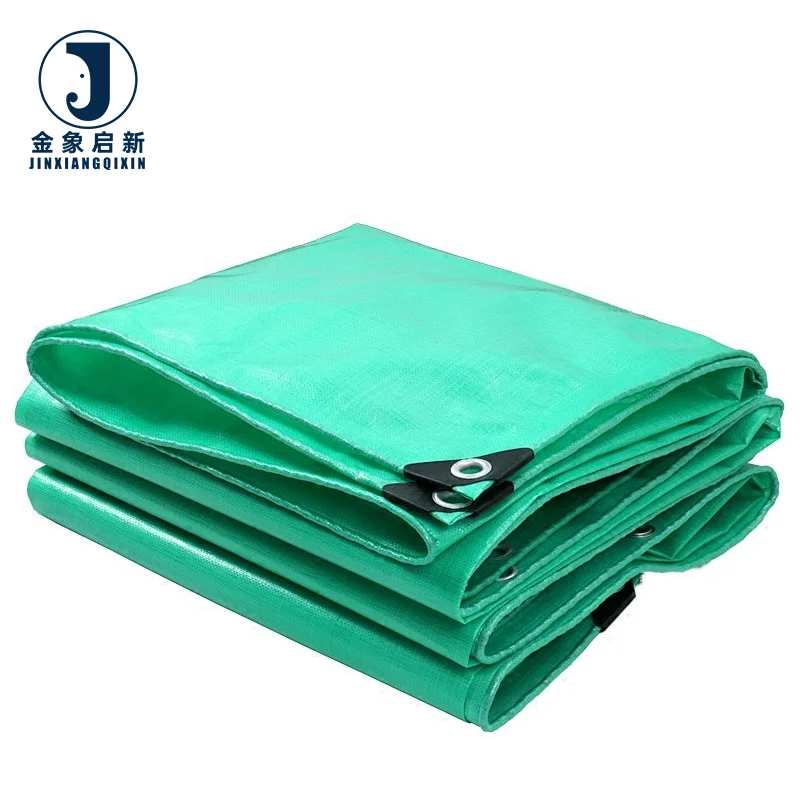
Description
Roll-to-Roll Consistency — HDPE woven, LDPE laminated PE tarpaulin supplied in full-container volumes with documented GSM verification and batch colour control for wholesale distributors.
Technical Specifications
| Parameter | Value |
|---|---|
| Product Type | PE Tarpaulin |
| Base Fabric | HDPE woven |
| Coating Method | Laminated (LDPE on both sides) |
| Coating Material | LDPE |
| Weight Range | 50 g/m² to 220 g/m² |
| Thickness | 0.2–0.4 mm (8–16 mil) |
| Weave Density (6×6 / 6×7) | 50 g/m² – 60 g/m² |
| Weave Density (7×7 / 7×8) | 60 g/m² – 80 g/m² |
| Weave Density (8×8 / 9×9) | 80 g/m² – 90 g/m² |
| Weave Density (8×10) | 90 g/m² – 100 g/m² |
| Weave Density (10×10) | 100 g/m² – 120 g/m² |
| Weave Density (12×12) | 120 g/m² – 150 g/m² |
| Weave Density (14×14) | 150 g/m² – 250 g/m² |
| Weave Density (14×16) | 250 g/m² – 300 g/m² (confirm availability per grade) |
| Roll Widths | 6 ft, 8 ft, 10 ft, 12 ft / 2 m, 4 m, 6 m |
| Roll Length | 100 yards, 100 meters, or custom |
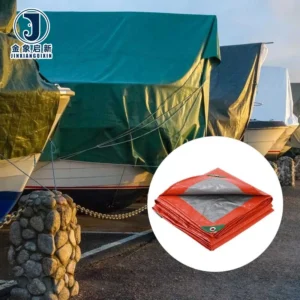
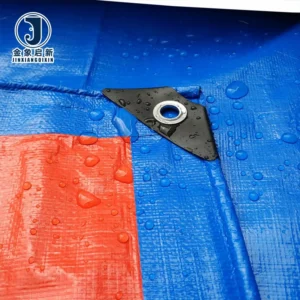
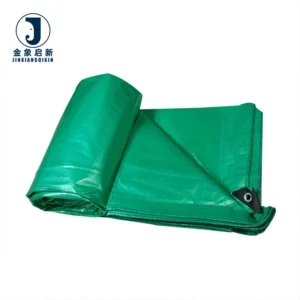
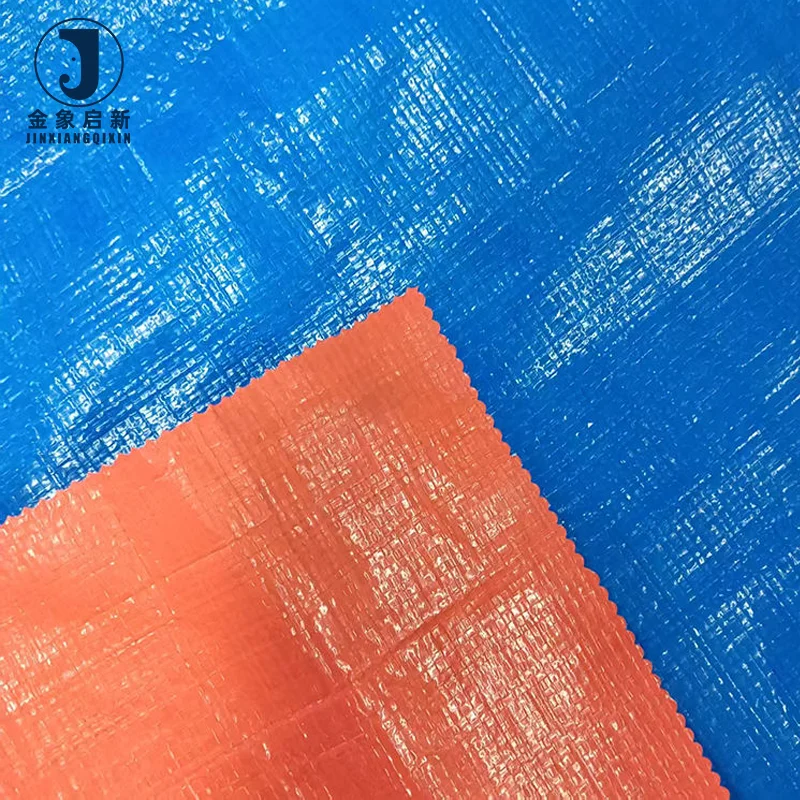
| Colour Options | Blue, Blue/Orange, Green, Grey, Black, Clear, Grey/Green, Orange, or custom |
| UV Treatment | Available (test basis not stated) |
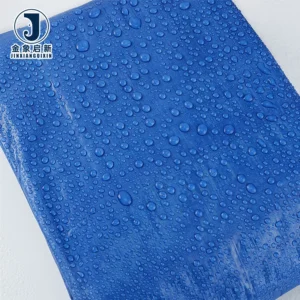
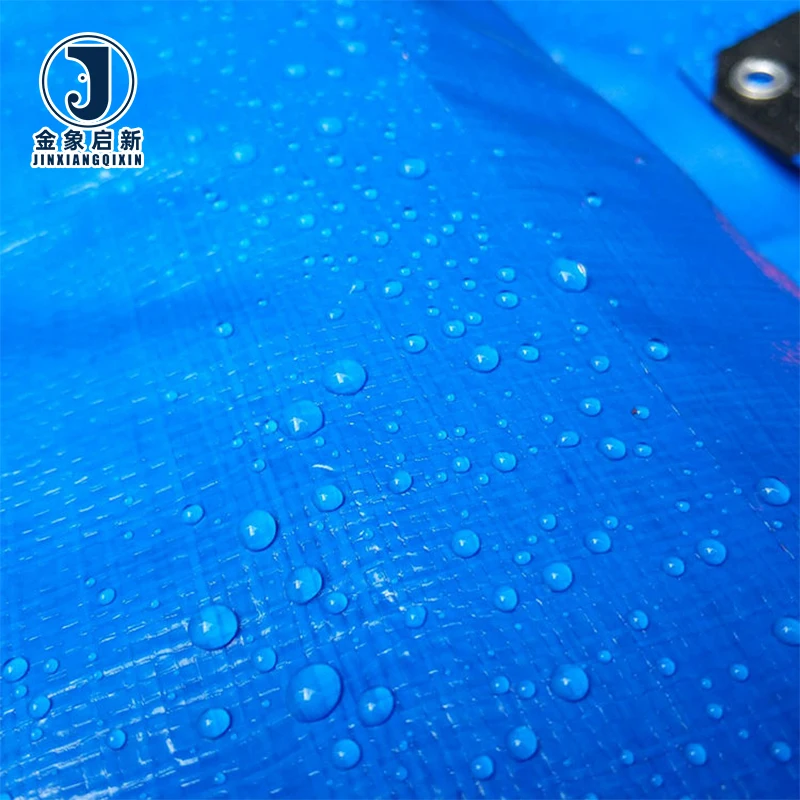
| Key Features | Waterproof, tear resistant, mildew proof, anti-aging, washable |
Application Suitability
| Application | Exposure & Requirement |
|---|---|
| Tarpaulin distribution & import | Full-container restocking of multiple GSM grades with uniform colour and weight across rolls |
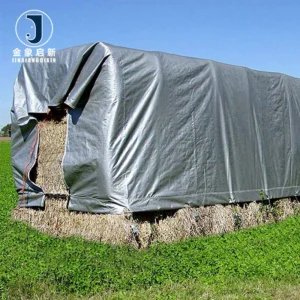
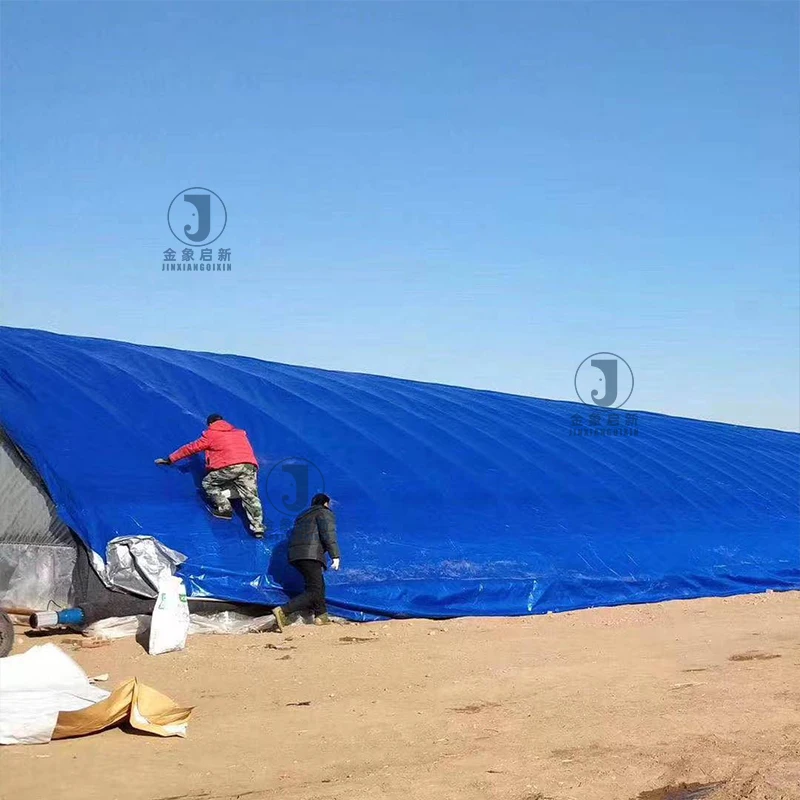
| Agricultural crop and hay covers | Continuous sun and rain exposure, need for lightweight to mid-weight waterproof protection |
| Construction site material covers | Abrasion from scaffolding, wind load, dust and moisture ingress prevention |
| Truck and container covers | Road vibration, flexing at tie-down points, weather exposure during transit |
| Tent and awning fabrication | Cutting and heat-seaming by roll, consistent thickness for predictable weld parameters |
Why Batch Consistency Matters More Than Quoted GSM for PE Tarpaulin Roll Stock
A roll that matches the quoted GSM but shifts colour halfway through the container is still a failed shipment.
Distributors buying PE tarpaulin roll stock wholesale regularly face a quiet problem: rolls from the same purchase order look different once unrolled side by side on a retail shelf or a job site. The weight may be within tolerance, yet the visual mismatch forces buyers to sort, re-batch, or discount entire lots. This is rarely a dye-lot error alone — it traces back to uncontrolled LDPE lamination batches where pigment dispersion varies between production runs [NEED_CITE: colour consistency standards in laminated PE fabrics]. When a wholesale buyer commits to a 20-foot or 40-foot container load, even a slight hue drift between the first and last roll can trigger returns from downstream customers who expect uniform appearance across their inventory.
Stocking the Full GSM Band for Regional Resale
PE tarpaulin roll stock wholesale buyers need more than a single grade. Regional markets demand everything from lightweight 50 g/m² sheets for temporary garden covers to heavy 14×14 weave rolls at 150 g/m² and above for industrial truck wraps. Maintaining a full catalogue of weave densities — from 6×6 through 14×14 — lets importers consolidate mixed-grade orders into a single container. This reduces per-ton freight cost and simplifies customs documentation, because every roll in the load carries the same origin paperwork and test references.
Planning Container Loads by Roll Count and Tonnage
A 20-foot general-purpose container accommodates up to 17 tons of PE tarpaulin loaded by roll, while a 40-foot high-cube holds up to 28 tons when packed by bale. These figures directly shape order planning for wholesale buyers who think in cost-per-ton landed. Roll packing on hard paper tubes, wrapped in matching tarpaulin sheet, keeps the inner fabric clean during ocean transit [NEED_CITE: standard ocean freight packing for woven PE rolls]. Knowing the exact tonnage per packing method — roll, bale, or carton — lets a buyer model margins before the proforma invoice arrives.
How Weave Density and Lamination Weight Interact
GSM in PE tarpaulin is the sum of two things: the HDPE woven base fabric and the LDPE laminated on each side. A 6×6 weave at 50 g/m² uses a lighter, more open base with thinner lamination, producing a flexible sheet suited to short-term covers. A 12×12 weave at 120 g/m² packs more tapes per inch, giving the base fabric higher tear and tensile figures before any coating is applied. The LDPE lamination then seals the weave, adding waterproof performance and surface smoothness. Buyers specifying by application — not just by weight — get better results when they understand which part of the GSM comes from weave and which from lamination. Thicker lamination improves water resistance but adds stiffness, which matters when the roll will be cut and seamed into finished tarps with galvanized eyelets.
The Cost of Overlooking Roll Width Tolerances
A common loss in wholesale PE tarpaulin orders shows up not in the fabric itself but in the cutting yield. If a downstream customer needs 4-metre finished sheets and the roll was supplied at a nominal 4 m width with negative tolerance, every cut falls short. Across a container of several hundred rolls, that margin adds up to significant wasted material and extra labour for seaming panels together. Specifying width tolerance before production — and verifying it on the pre-shipment inspection record — prevents this hidden cost from eroding the wholesale margin.
What Happens When Colour Matching Is Left to Chance
When an importer receives a container where three rolls are noticeably greener than the rest, the downstream options are limited. Retail customers reject mismatched stock. Construction contractors refuse to install covers that look patchy on a visible roofline. The cost of sorting, repacking, or writing off affected rolls is rarely covered by the original quotation discount [NEED_CITE: financial impact of batch colour variance in PE tarpaulin imports]. This is why documenting the colour reference per production batch — not just per order — and holding a pre-shipment roll inspection is essential for any PE tarpaulin bulk purchase.
Why Buying by the Roll Here Reduces Supply Risk
Three full production lines and 36 sets of professional equipment support the volume that wholesale PE tarpaulin orders demand, with reliable on-time dispatch across container loads. A 10-person R&D team handles custom width, colour matching, and brand printing requests, developing samples within days so buyers can approve before committing to a full container. Dedicated QA/QC at every production stage means each roll is checked against the stated GSM and colour reference before it is wrapped and loaded. Pre-shipment inspection records accompany every dispatch, giving buyers a verifiable document trail rather than a verbal assurance. Nearly 30 years of focused coated-fabric production provides the process control needed to hold lamination weight and weave density within tolerance across large batch runs.
Documentation & Verification
- Material specification sheet stating exact GSM per SKU and weave density tier
- Pre-shipment inspection record confirming roll weight and colour against quotation
- Roll packing list with batch reference for traceability across the container load
- Certificate of origin and customs support documents included with each dispatch
- ISO and CE certificates provided as part of the standard documentation package
- UV treatment test report supplied for applicable grades upon confirmation
Fabrication, Handling & Storage
- Heat-seam temperature should match the LDPE lamination layer, not the HDPE base, to avoid delamination on 0.2–0.4 mm sheets.
- Store rolls upright on hard paper tubes to prevent flat-spot creases that show through lamination after unrolling.
- Galvanized eyelets on finished tarps should be set through the PP-rope reinforced hem to spread tie-down loads evenly.
- Cut rolls in a single pass where possible to maintain edge integrity across 6 m widths without mid-panel joins.
- Clean LDPE-laminated surfaces with mild detergent; solvents can soften the lamination and reduce waterproof performance.
- Allow cold-stored rolls to reach ambient temperature before unrolling to prevent cracking in the LDPE coating layer.
What to Include in Your Inquiry
Tell us the target GSM or weave density tier, the roll width and length that fit your cutting lines or retail packaging, and the colour reference or custom shade you need. If your downstream market requires UV-treated grades, state the test standard your customers expect so we can match or confirm availability. For mixed-container orders, list all grades and colours with quantities per SKU so we can plan the load and provide a detailed packing plan with the quotation.
Frequently Asked Questions
Q: How is GSM verified before shipment and how can buyers recheck on arrival?
A: Each roll is weighed and measured during pre-shipment inspection, with results recorded against the stated GSM on the inspection report. Buyers can recheck by cutting a known-area sample from the roll edge, weighing it on a calibrated scale, and comparing the result to the specification sheet included in the documentation package.
Q: What controls are in place to ensure colour consistency across rolls in a bulk order?
A: LDPE lamination batches are mixed under controlled pigment ratios, and each production run is referenced to a documented colour standard. Pre-shipment inspection includes a visual comparison of rolls from the beginning, middle, and end of the run to confirm uniformity before the container is sealed.
Q: Which roll width and length combinations optimise container loading?
A: Standard 2 m, 4 m, and 6 m widths at 100-yard or 100-metre lengths are designed to maximise tonnage per container. Roll packing yields up to 17 tons in a 20-foot container, while bale packing of finished sheets can reach 28 tons in a 40-foot high-cube, reducing per-unit freight cost.
Q: Can different GSM grades and colours be mixed in one container?
A: Yes, mixed-grade and mixed-colour orders are supported within a single container. Each SKU is documented separately on the roll packing list and material specification sheet, so buyers can track inventory by weave density and colour reference upon arrival.
Q: What are the minimums for custom width, colour, or printed branding?
A: Custom widths, colours, and brand printing are available on bulk orders, with minimums depending on the specific grade and lamination setup required. Submit your target specification and annual volume, and a sample will be developed within days for approval before full production begins.