Description
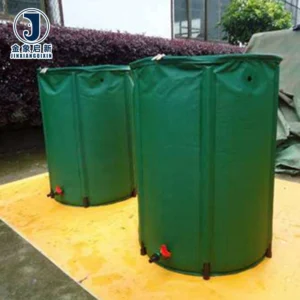
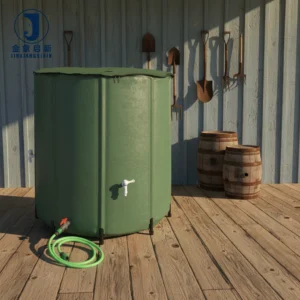
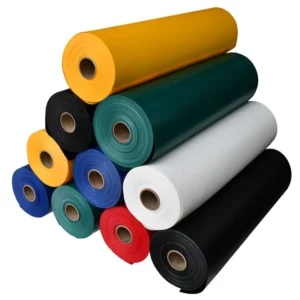
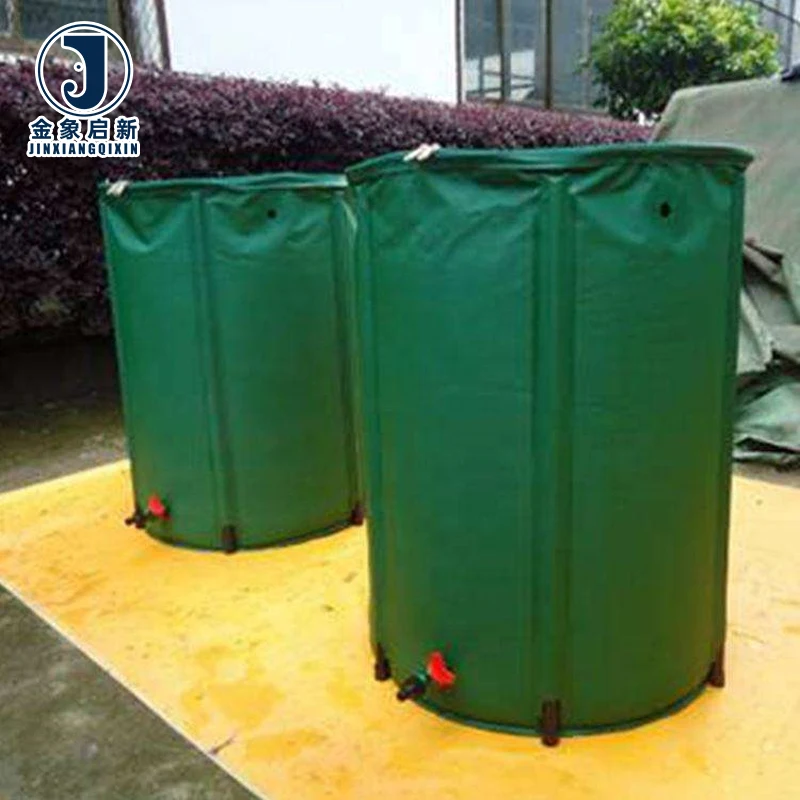
Batch-Controlled PVC Coating — Every roll of PVC mesh cloth used in our collapsible rain barrels passes dedicated QA inspection at each coating stage, ensuring consistent colour, weight and treatment across container-load shipments.
Technical Specifications
| Parameter | Value |
|---|---|
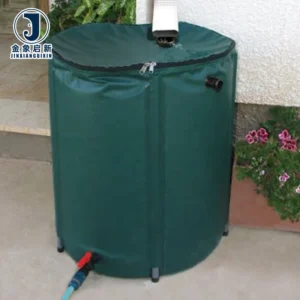
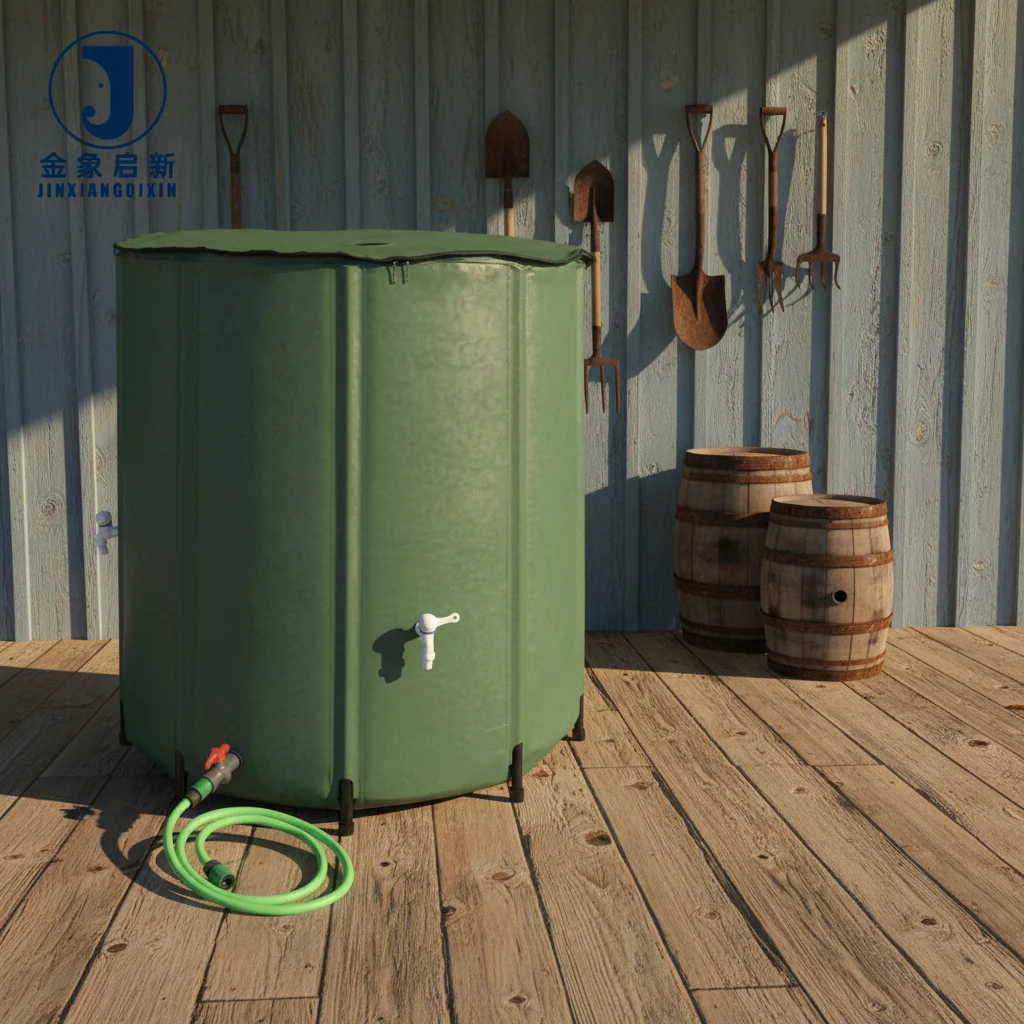
| Product Type | Collapsible PVC Tarpaulin Rain Barrel |
| Capacity Options | 200L / 380L / 500L / 750L |
| Base Fabric Denier | 500D / 1000D |
| Coating Material | PVC |
| Support Structure | PVC Support Rod |
| Waterproof | Yes |
| Anti-UV Treatment | Available — confirm the grade required for your market |
| Flame Retardant | Available — confirm the grade required for your market |
| Anti-Static | Available — confirm the standard required for your market |
| Anti-Mildew | Yes |
| Abrasion-Resistant | Yes |
| Tear-Resistant | Yes |
| Shrink-Resistant | Yes |
| Anti-Bacteria | Yes |
Application Suitability
| Application | Exposure & Requirement |
|---|---|
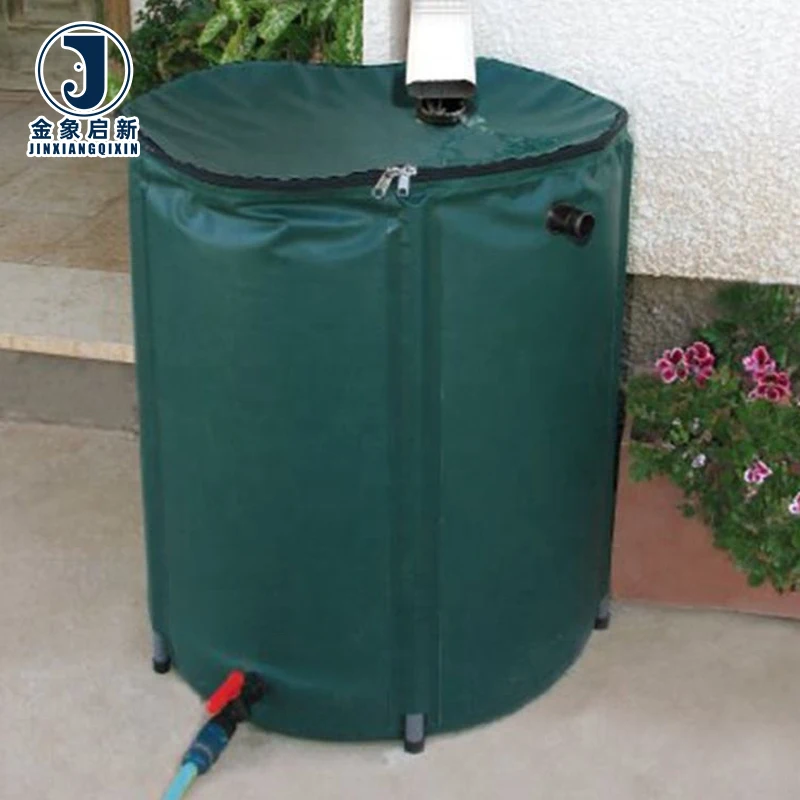
| Garden rainwater collection | Permanent outdoor exposure, UV and mildew resistance, potable-adjacent contact |
| Agricultural and aquaculture water storage | Continuous water contact, microbial growth prevention, puncture resistance |
| Industrial water containment on construction sites | Abrasion from site debris, chemical exposure, fire safety compliance |
| Sustainable water recycling programs | Long-term weathering, batch consistency across multiple installation points |
Why Roll-to-Roll Colour Drift Wrecks a Container of Collapsible PVC Rain Barrels
Consistent colour across every barrel in a bulk order depends on coating-stage QA, not just the base PVC resin.
Sourcing collapsible PVC tarpaulin rain barrels from a general trader often means accepting whatever roll stock is available at the time of production. When those barrels are lined up in a retail warehouse or installed side by side at an agricultural site, even slight hue variation between batches becomes immediately visible. The problem is not the PVC itself — it is the lack of controlled pigment dosing and curing temperature across the coating run [NEED_CITE: colour consistency testing methods for PVC coated textiles per ISO 105 series]. Buyers who order a full container of collapsible PVC rain barrel wholesale units expect uniform appearance without needing to sort and segregate upon arrival.
Container-Load Consistency for Distributors and Importers
When you are stocking collapsible PVC rain barrels for retail or institutional buyers, every barrel in the shipment must match. Our roll stock is produced under continuous coating-line monitoring, which controls pigment concentration and oven temperature throughout the run. This means the collapsible PVC tarpaulin rain barrel units cut from successive rolls carry the same colour depth and surface finish. For a distributor loading a mixed-capacity container, that consistency eliminates the need for manual sorting before forwarding to downstream customers.
Volume Efficiency Through Foldable Design
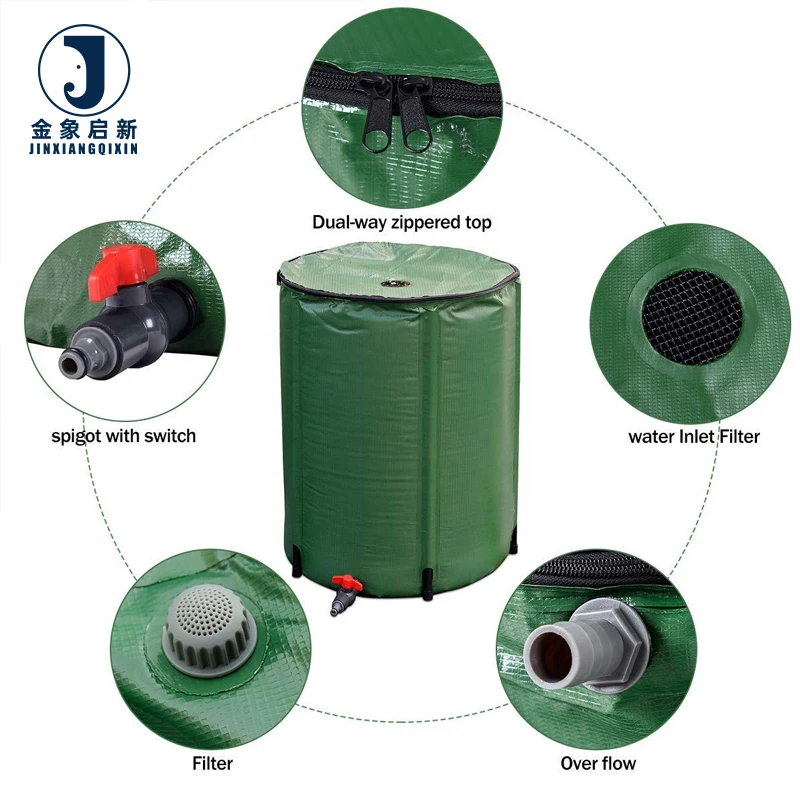
The collapsible structure with PVC support rods allows each unit to ship flat-packed, significantly reducing the cubic volume per container. Buyers importing collapsible PVC rain barrel wholesale volumes benefit from higher unit counts per TEU compared to rigid-moulded alternatives. The foldable design also reduces warehouse footprint for distributors holding buffer stock ahead of seasonal demand peaks [NEED_CITE: volumetric efficiency comparison between collapsible and rigid water storage tanks].
How Base Fabric Denier and PVC Coating Weight Interact
The 500D and 1000D PVC mesh cloth options serve different duty cycles. Denier determines the tensile load each yarn carries, while the PVC coating weight fills the weave interstices and provides waterproof integrity. A higher denier base fabric offers greater tear propagation resistance, but without adequate coating adhesion the layers can delaminate under flex stress. Coating applied by controlled knife-over-roll or calender methods ensures uniform penetration into the mesh structure, which directly influences heat-seal strength at the barrel seams and the overall puncture resistance when the unit is filled to capacity. The interplay between yarn count, weave density and coating thickness is what determines whether a rain barrel withstands repeated filling and emptying cycles without seam failure.
The Hidden Cost of Underspecified Fabric in Rain Barrels
A rain barrel that looks correct on the quotation but arrives with lighter-than-agreed coating weight will show its weakness at the heat-welded seams first. The base fabric may hold, but the coating bond fails where the barrel flexes during filling and emptying, leading to leaks that appear weeks after installation. Anti-mildew and anti-bacteria treatments claimed without supporting test documentation may degrade during the first season of outdoor exposure, leaving the stored water contaminated and the interior surface discoloured. Batch-to-batch GSM variation across a container load means some barrels meet the specification while others fall short — a problem that only surfaces when end users file warranty claims [NEED_CITE: common failure modes in PVC coated water containment products].
Why Sourcing Finished Barrels and Roll Stock from One Line Matters
Our three full production lines and 36 sets of professional equipment handle both finished collapsible rain barrel units and raw PVC mesh cloth roll stock from the same coating facility. This means the fabric quality you approve on a sample is the same fabric that runs through barrel assembly. The 10-person R&D team develops custom capacity specifications and treatment combinations, producing samples within days so you can verify weld strength, colour match and dimensional accuracy before committing to a production run. Dedicated QA inspection at every stage — from base fabric intake through coating, cutting, welding and final packing — ensures the pre-shipment inspection record reflects what is actually in the container. We handle mixed-capacity container loading plans with roll packing lists that document unit count, weight and cubic volume for each SKU.
Documentation & Verification
- Material specification sheet stating base fabric denier and PVC coating weight for each barrel capacity model
- UV and flame retardant test reports supplied where applicable to the confirmed grade
- Pre-shipment inspection record with 100% unit check covering colour, dimensions and weld integrity
- Container loading plan detailing unit count, gross weight and cubic volume per capacity SKU
- Certificate of origin and customs documentation prepared for destination market requirements
Fabrication, Handling & Storage
- Heat-weld seams on the PVC mesh cloth barrel body using temperature and dwell time matched to the confirmed coating weight
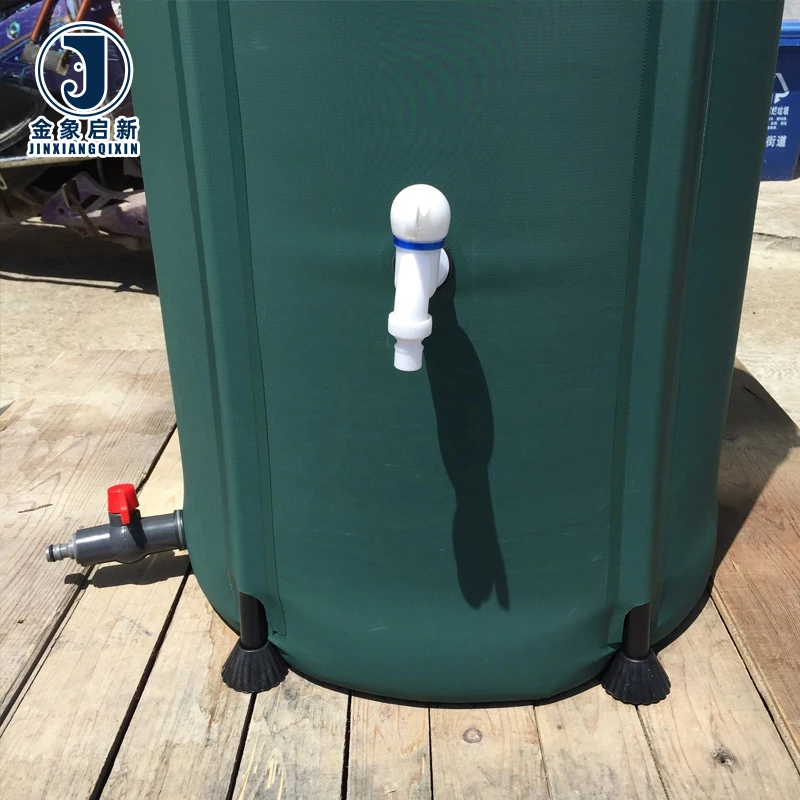
- PVC support rod pockets reinforced with additional weld passes at load-bearing stress points
- Store folded barrel units in dry, shaded conditions to prevent surface mildew before retail packaging
- Avoid compressing packed barrels under heavy pallet loads to prevent permanent crease marks on the PVC coating
- Clean interior surfaces with mild non-solvent detergent to preserve anti-bacteria and anti-mildew treatment integrity
- Field repairs on minor punctures using compatible PVC adhesive patches matched to the barrel coating grade
What to Include in Your Inquiry
Provide your target capacities, annual volume and destination market so we can confirm the appropriate denier, treatment grades and container loading configuration. Specify whether you require finished collapsible rain barrel units or PVC mesh cloth roll stock for your own fabrication line, along with any colour or custom print requirements. If your end users operate under specific fire safety or environmental regulations, state the required certification standard so we can match the treatment specification accordingly.
Frequently Asked Questions
Q: What GSM and denier options are available for the rain barrel fabric?
A: We supply PVC mesh cloth in 500D and 1000D base fabric grades for collapsible rain barrel production. The specific coating weight varies by capacity model and duty cycle requirement. We provide a material specification sheet stating the exact GSM and denier for each unit, verified during pre-shipment inspection before dispatch.
Q: Can I order mixed capacities in one container?
A: Yes, mixed-capacity orders across 200L, 380L, 500L and 750L units are supported. We prepare a container loading plan detailing unit count, weight and volume per SKU. The foldable design with PVC support rods maximises unit density per TEU for efficient wholesale shipment.
Q: How is colour consistency maintained across bulk orders?
A: Colour consistency is controlled through dedicated QA monitoring at each coating stage, including pigment dosing and curing temperature. Every roll used in your order is checked against the approved reference before cutting and assembly. This eliminates visible hue variation when barrels from the same container are displayed or installed together.
Q: Are flame retardant and anti-UV test reports included with shipment?
A: These treatments are available in various grades depending on market requirements. Confirm the specific standard your destination market requires, and we will apply the matching treatment and include the corresponding test report with your shipment documentation.
Q: What documentation supports customs clearance at destination?
A: Each shipment includes a certificate of origin, commercial invoice, packing list and material specification sheet. Additional test reports for UV, flame retardant or anti-static treatments are provided where applicable. Our documentation team prepares all paperwork to match the import requirements of your destination market.