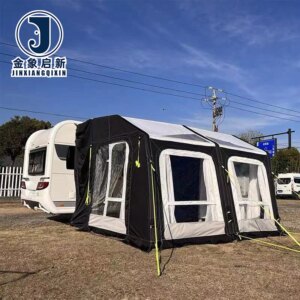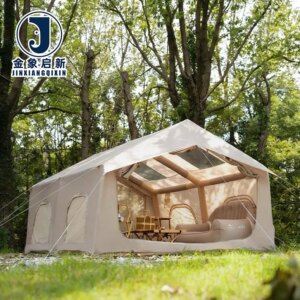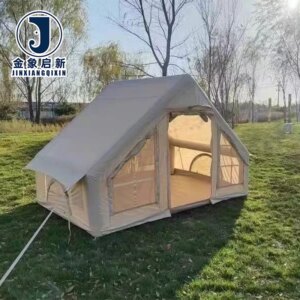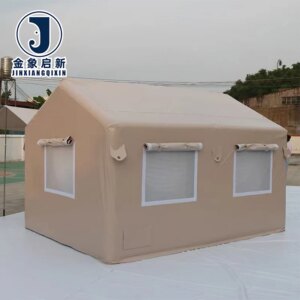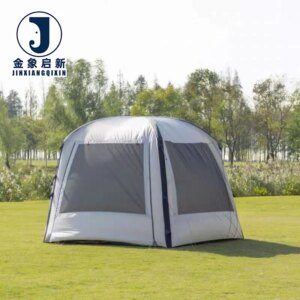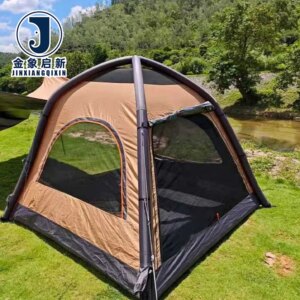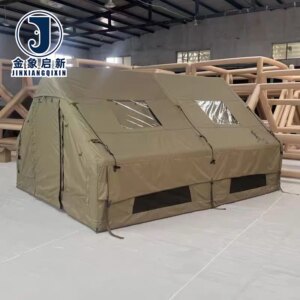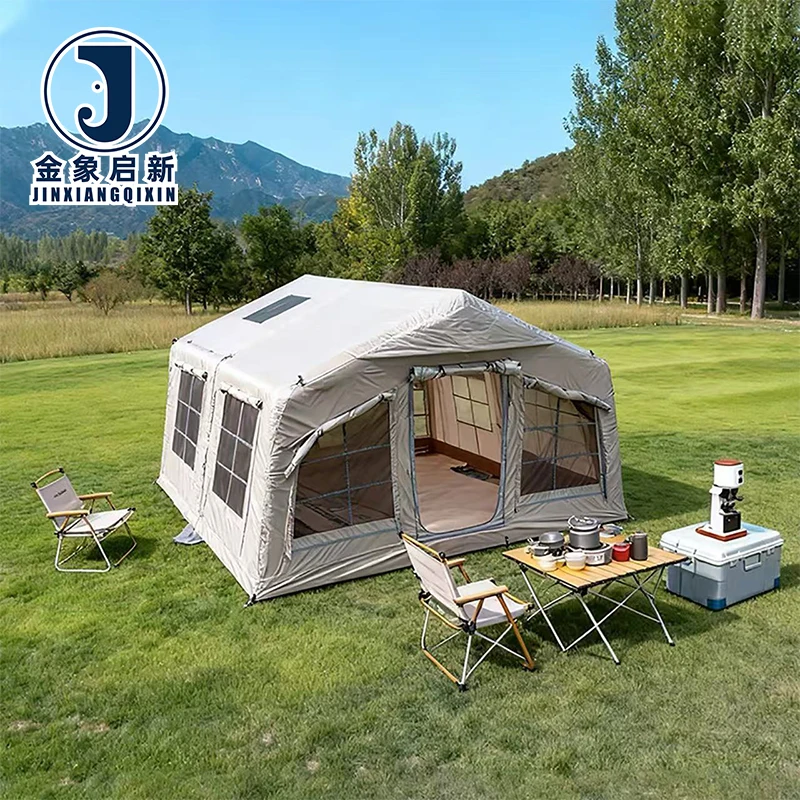
Description
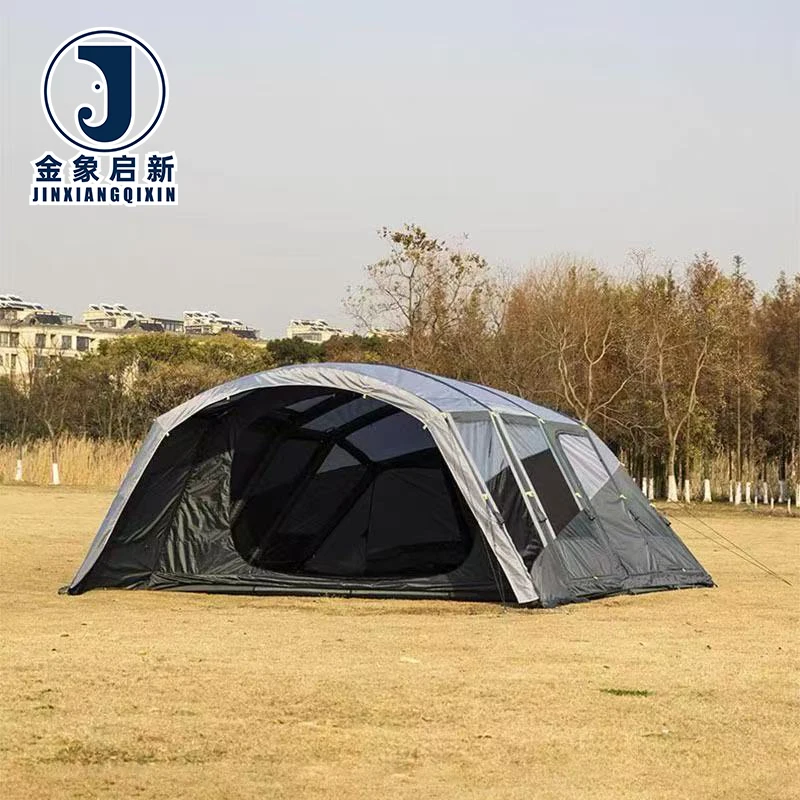
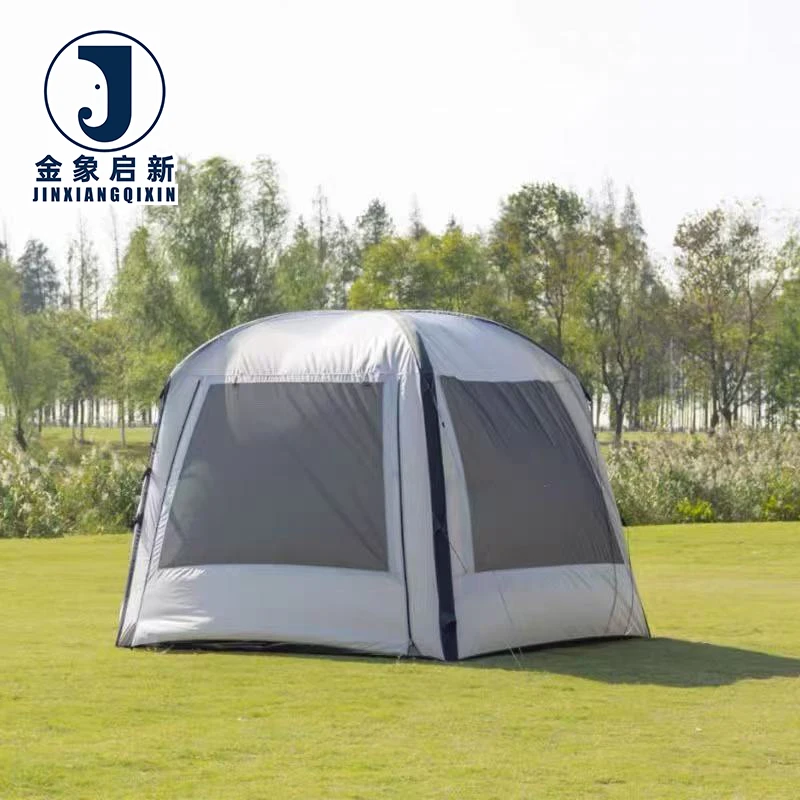
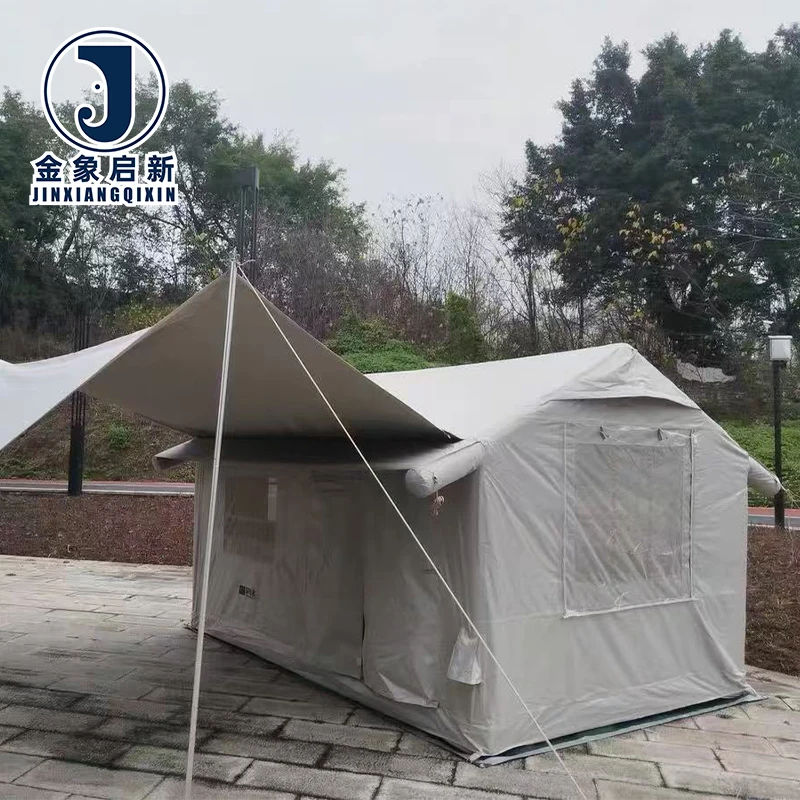
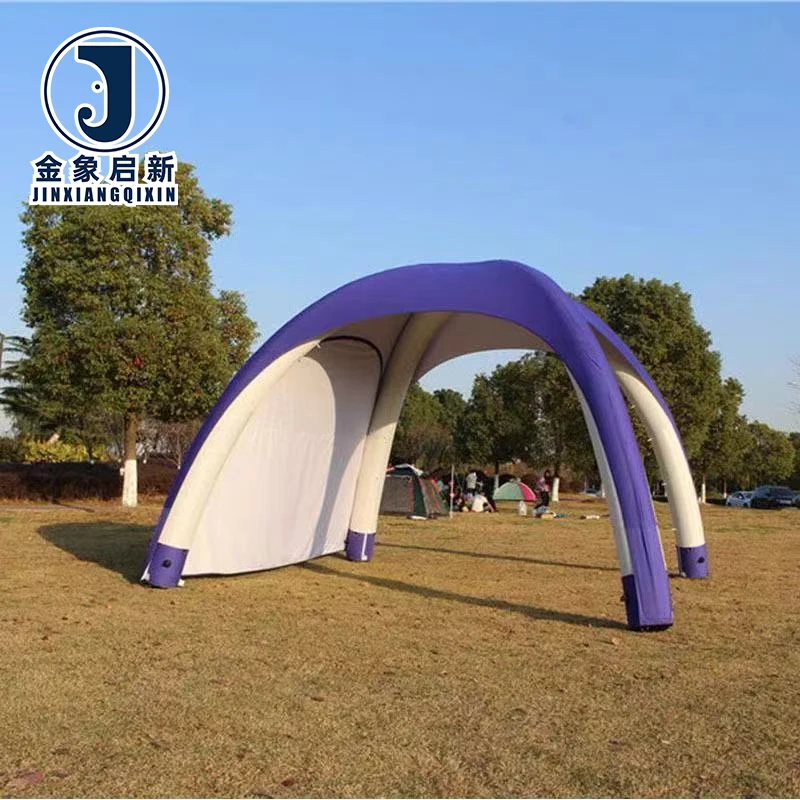
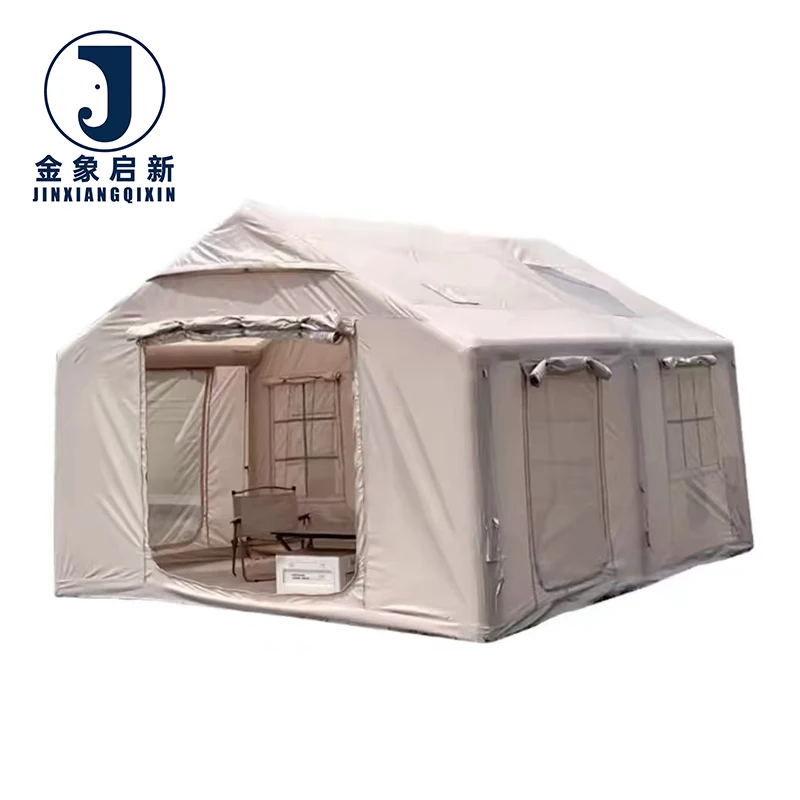
Roll-to-Roll Consistency — Batch colour matching verified across every roll before dispatch, eliminating visible variation when inflatable tent panels are joined side by side in production.
Technical Specifications
| Parameter | Value |
|---|---|
| Product Type | Inflatable Tent |
| Core Material | PVC tarpaulin |
| Waterproof | Fully coated construction |
| UV Resistance | Available in UV-resistant grades — confirm the grade required for your market |
| Fire Retardancy | Available in fire-retardant grades — confirm the grade required for your market |
| Anti-Static | Available in anti-static grades — confirm the standard required for your site |
| Tear Resistance | Tear-resistant coated fabric |
| Customization | OEM & ODM, sample customization, pattern printing |
| Production Lines | 3 full production lines |
| Processing Equipment | 36 sets of professional processing equipment |
| R&D Team | 10 technicians |
| Quality System | Full-process inspection with dedicated QA & QC staff |
| Standards | ISO9001, ISO14001, ISO45001, CE |
Application Suitability
| Application | Exposure & Requirement |
|---|---|
| Commercial glamping resorts | Year-round weather exposure, guest-facing aesthetics, fire compliance for accommodation structures |
| Event and festival organisers | Rapid deployment, repeated inflation cycles, transport abrasion between venues |
| Tourism resort operators | UV and moisture exposure in open-air hospitality settings, consistent visual branding across units |
| Temporary on-site facilities | Variable climate conditions, functional shelter requirements, quick assembly timelines |
Why Inflatable Tent Fabric Fails Before the Structure Does
Sourcing inflatable tent fabric that holds air-tight seams and consistent colour across an entire production run is the real procurement challenge — not the base material cost.
When an inflatable tent deflates unexpectedly or shows colour banding across panels, the fault almost always traces back to the fabric supply chain rather than the design. Welded seams that part under inflation pressure, batch-to-batch shade differences visible once the tent is erected, and coatings that delaminate after a single season all point to inadequate process control at the coating stage. Manufacturers who have experienced these failures understand that the cheapest roll stock often becomes the most expensive line item once rework and warranty claims are factored in. [NEED_CITE: coated fabric seam failure modes under cyclic inflation pressure]
Seam Integrity Starts with Coating Adhesion
The air-holding performance of any inflatable structure depends on how well the PVC coating bonds to the base fabric, particularly at welded joints where flex concentrates. When coating adhesion is uneven, the heat-activated weld creates a weak plane that splits under repeated inflation cycles. Our coating process controls weight and adhesion across the full web width, giving fabricators a predictable weld window and seams that match or exceed the base fabric strength. This consistency is what makes inflatable tent fabric reliable over hundreds of inflation cycles rather than failing at the first stress point.
Colour Matching Across the Entire Production Run
A commercial glamping operator ordering multiple inflatable tents expects every unit to look identical once deployed across the site. Even slight shade variation between rolls becomes obvious when panels are joined during fabrication or when tents are positioned adjacent to each other. We verify roll-to-roll colour consistency as part of pre-shipment inspection, so the fabric you receive produces uniform results across the full order. [NEED_CITE: colour measurement and tolerance standards for coated fabrics]
Reading the Specification Sheet Beyond GSM
Buyers often fixate on grams per square metre as the single measure of fabric quality, but GSM alone tells only part of the story. The base fabric denier and weave density determine how loads distribute through the material, while the coating method — whether knife-over-roll, dip, or calender — affects peel strength and how the fabric responds to heat welding. A lighter PVC tarpaulin with a tight weave and strong coating adhesion can outperform a heavier one with poor bond strength at the seams. Understanding these relationships helps procurement teams evaluate inflatable tent fabric on actual performance rather than a single number. [NEED_CITE: tensile and tear test methods for coated fabrics per ISO 1421]
The Cost of Getting the Specification Wrong
When fabric arrives lighter than quoted, the inflatable tent manufacturer may not discover the shortfall until seams fail during pressure testing or units collapse in the field. Fire-retardant grades without supporting documentation delay project handover when site inspectors demand certification. Colour inconsistency across rolls forces fabricators to reject material or accept visible mismatching, both of which carry commercial consequences far beyond the original fabric cost. These failures share a common root: insufficient verification before the fabric leaves the coating line. [NEED_CITE: fire classification requirements for temporary accommodation structures]
Why Manufacturers Source Their Inflatable Tent Fabric Here
Nearly 30 years of focused PVC coating experience means process parameters are built from long-term production data, not trial and error. Three full production lines and 36 sets of processing equipment give us the capacity to fulfil bulk roll orders without compromising coating consistency. A dedicated 10-person R&D team handles material selection, pattern printing layout, and sample development for custom inflatable tent projects within days rather than weeks. Full-process QA and QC inspection at every production stage, with 100% pre-shipment checks, catches coating weight deviations and colour drift before material is dispatched. Every order ships with complete documentation including material specification sheets, applicable test reports, and batch traceability records.
Documentation & Verification
- Material specification sheet confirming GSM, base fabric construction, coating type, and colour reference for each roll
- UV and flame-retardant test reports supplied with each batch where applicable grades are specified
- Pre-shipment inspection record documenting roll count, weight verification, and visual quality check
- Certificate of origin and customs documentation included to support international shipment clearance
- Roll packing list with batch identifiers for traceability from production through delivery
Fabrication, Handling & Storage
- Set heat-welding temperature and dwell time based on the PVC coating thickness to achieve full seam fusion without scorching the base fabric
- Store rolls horizontally on a flat rack to prevent permanent creasing in the PVC coating layer
- Avoid folding inflatable tent fabric at sharp angles during transport, as hardened creases become weak points under inflation pressure
- Use mild detergent for field cleaning to preserve the coating surface and any applied fire-retardant or anti-static treatment
- Allow fabric to acclimatise before unrolling in cold conditions, as PVC tarpaulin becomes less pliable at low temperatures and may crack if forced
What We Need to Move Your Enquiry Forward
Provide your target fabric width, required roll length or cut size, and the performance treatments needed for your end market — particularly fire-retardant and anti-static grades if your deployment region mandates certification. If pattern printing or custom colour matching is part of the specification, share your reference files so our R&D team can prepare samples for your approval before bulk production.
Frequently Asked Questions
Q: What GSM and coating options are available for inflatable tent fabric?
A: We supply PVC tarpaulin in a range of weight grades suited to inflatable and membrane structures. Each order ships with a material specification sheet confirming the exact GSM, base fabric denier, and coating type. Rather than quoting a single figure, we recommend the appropriate weight based on your tent size, inflation pressure, and expected deployment conditions. Samples are available for your engineering team to evaluate before commitment.
Q: Can you supply fire-retardant and anti-static certified fabric with test reports?
A: Fire-retardant and anti-static treatments are available — confirm the specific grade and standard required for your market, and we will match the formulation accordingly. Test reports accompany each batch where these grades are specified, documenting performance against the agreed standard. This documentation supports site compliance inspections and project handover requirements for commercial glamping and event deployments.
Q: How do you ensure colour consistency across multiple rolls in one order?
A: Colour matching is verified during pre-shipment inspection, comparing every roll in the order against the approved reference. Rolls showing visible shade deviation are pulled before packing. This process prevents the situation where colour banding appears once inflatable tent panels are joined during fabrication, protecting your production schedule and the visual quality of the finished structure.
Q: What custom widths, lengths, and print options are available, and what is the lead time?
A: Custom width and length are available based on your cutting layout and inflation panel dimensions, with pattern printing handled in-house. Sample development for custom specifications is typically completed within days, allowing your team to validate material performance and print quality before bulk production proceeds. Lead times vary by order volume and specification complexity.
Q: Do you provide samples for seam weld testing before we place a bulk order?
A: Yes. We supply samples cut from production-grade PVC tarpaulin so your fabrication team can run heat-weld trials, test peel strength at the seam, and confirm inflation performance under pressure. This step ensures the welding parameters are optimised for the specific coating before bulk fabric is committed to your production line.