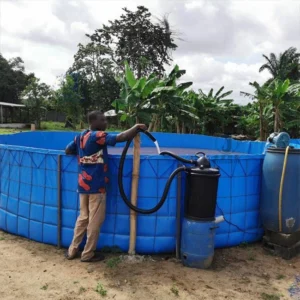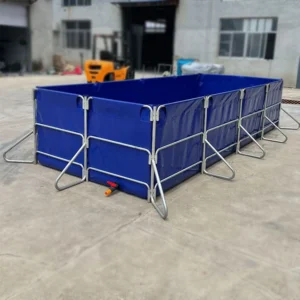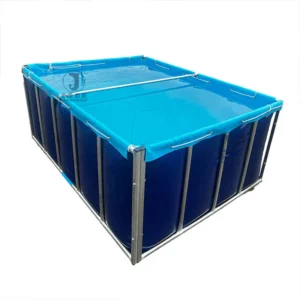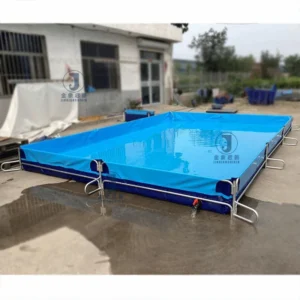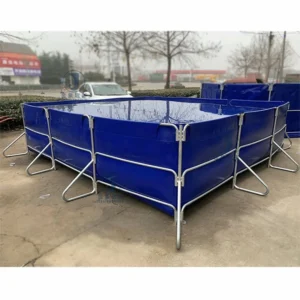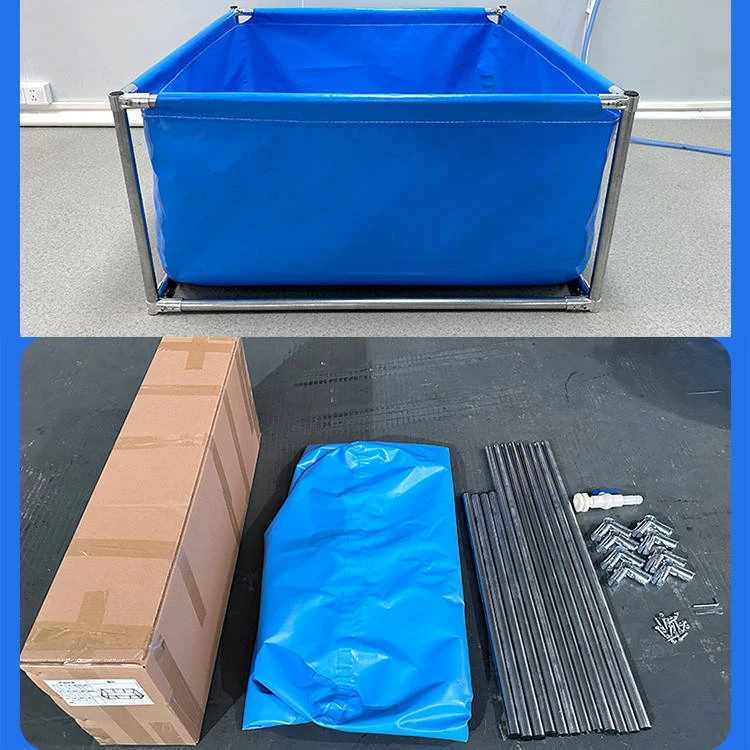
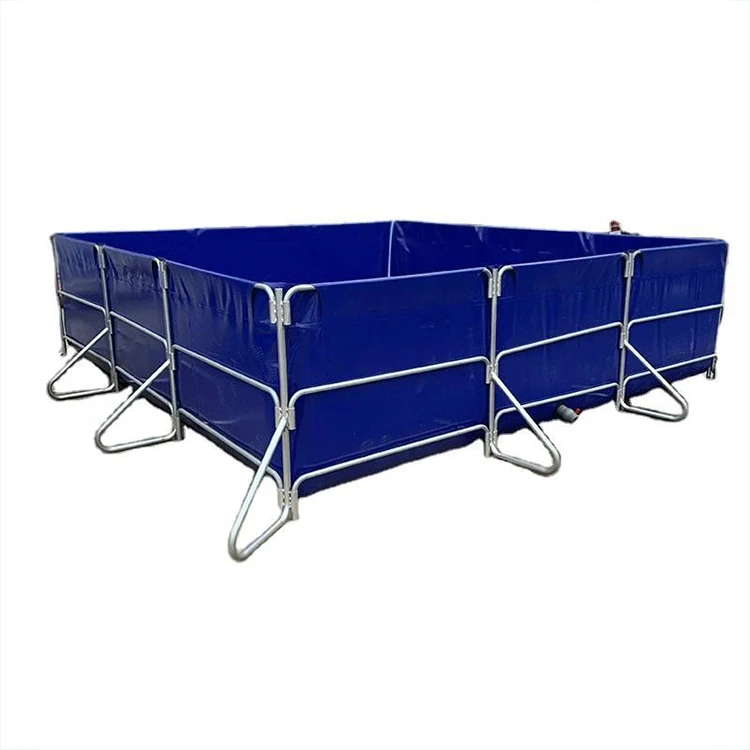
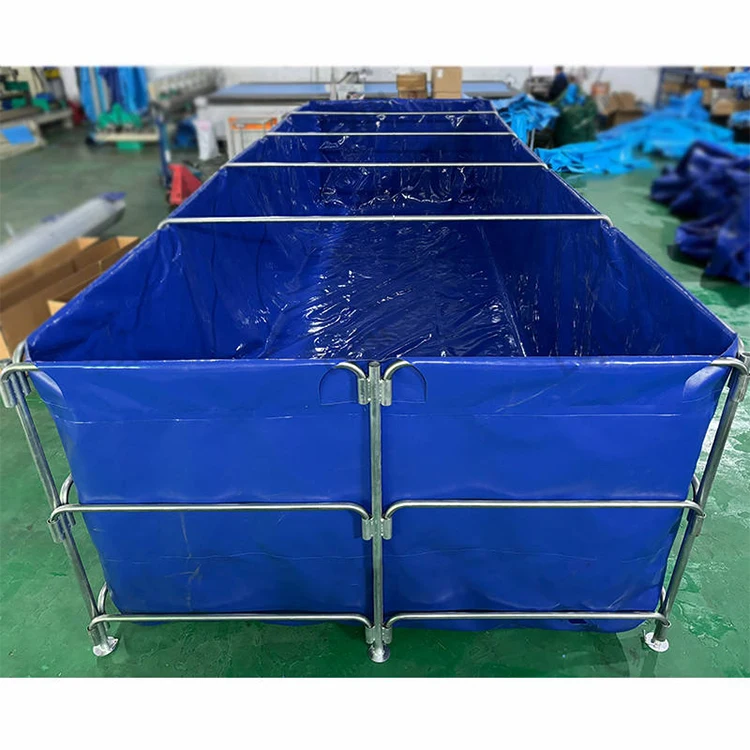
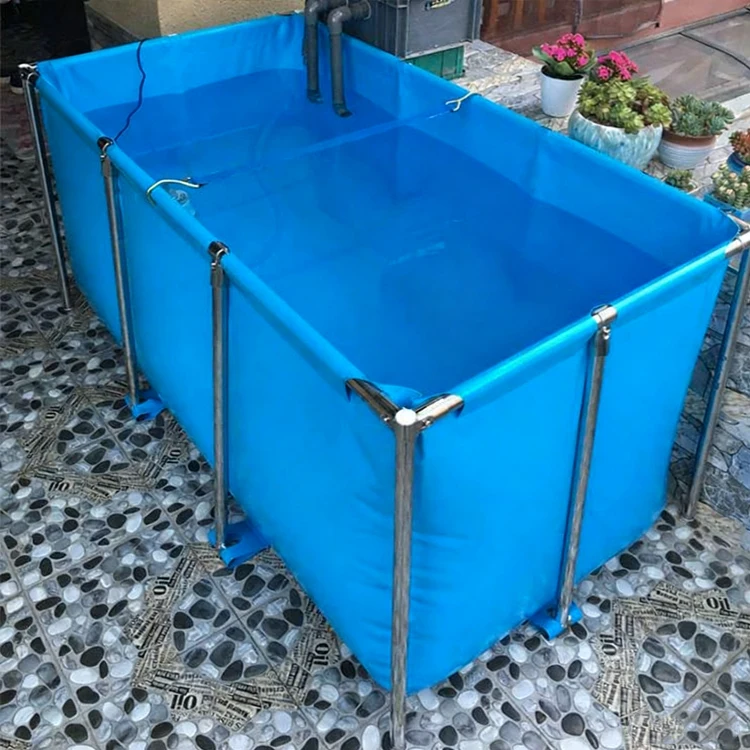
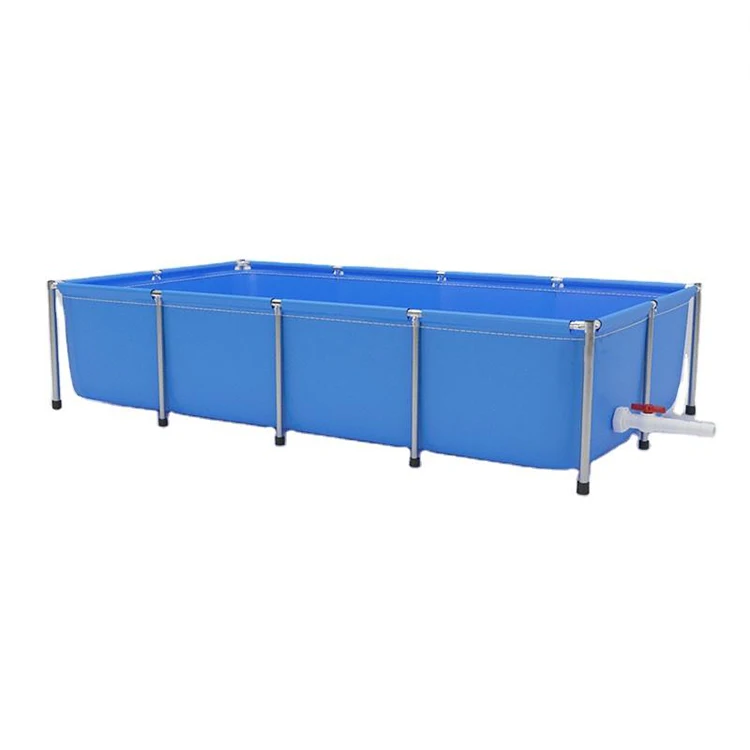
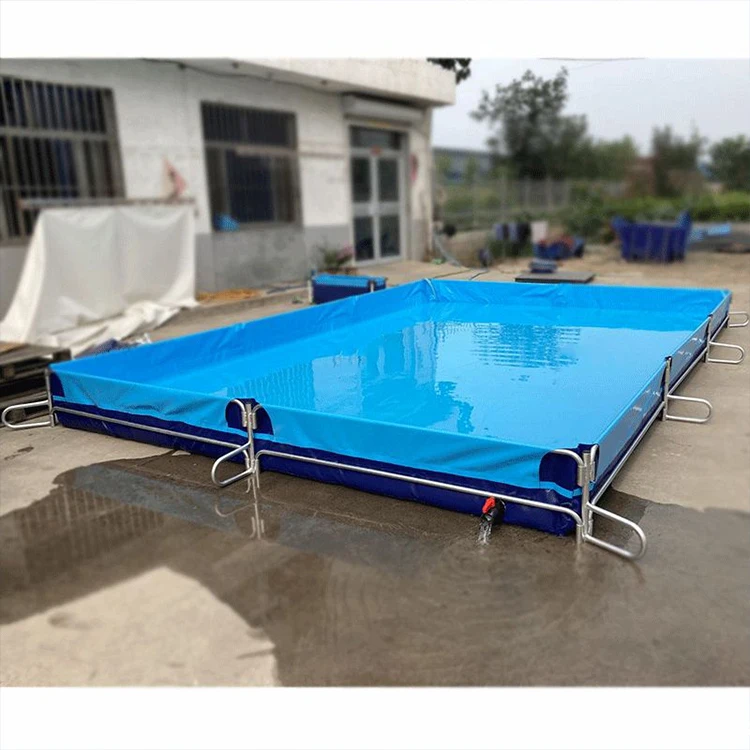
Description
Proven Process Control — nearly 30 years focused on coated fabric production with dedicated QA/QC at every stage, ensuring roll-to-roll consistency critical for bulk pond liner supply.
Technical Specifications
| Parameter | Value |
|---|---|
| Product Type | PVC Tarpaulin Fish Pond Liner |
| Material | PVC Coated Tarpaulin |
| Shape Options | Circular, Rectangular |
| Feature | Foldable |
| Application | Fish Pond, Fish Tank |
| Coating Material | PVC |
| Waterproof Rating | (grade not stated in source) |
| UV Treatment | Available — confirm the treatment level required for your climate zone |
| Flame Retardant Grade | Available in flame retardant grades — confirm the grade required for your market |
| Weight (GSM) | (not stated in source — specify required grade at inquiry) |
| Base Fabric Denier | (not stated in source — specify at inquiry) |
| Total Thickness | (not stated in source — specify at inquiry) |
| Custom Size Option | Available |
| Eyelet & Hem Options | (not stated in source — specify at inquiry) |
| Manufacturer Certification | ISO, CE |
Application Suitability
| Application | Exposure & Requirement |
|---|---|
| Large-scale aquaculture pond lining | Permanent water contact, soil chemistry exposure, puncture risk from substrate |
| Fish hatchery and breeding tanks | Repeated filling and draining, water pressure on walls and welded seams |
| Portable fish rearing ponds | Fold-and-deploy cycles, abrasion during transport and setup |
| Agricultural water containment | UV exposure outdoors, mechanical damage from equipment and tools |
| Distributor bulk stocking | Roll-to-roll consistency for resale, container loading efficiency |
Why Batch Colour Variation Destroys a Multi-Pond Installation
Consistent colour and weight across every roll in a single shipment is the difference between a professional aquaculture site and one that looks pieced together from leftover stock.
When an aquaculture operator lines multiple ponds from one PVC tarpaulin fish pond liner order, any roll-to-roll variation becomes immediately visible once the liners are installed side by side. A lighter roll next to a darker one signals inconsistent coating weight to any visiting buyer or inspector. Beyond aesthetics, colour shift often indicates variation in PVC coating thickness, which directly affects the water containment integrity of the finished pond [NEED_CITE: coating weight consistency and its relationship to visual uniformity in PVC tarpaulin]. Sourcing from a supplier with dedicated in-process quality checks at each production stage reduces this risk before the container is sealed.
Roll Width Selection and Cutting Efficiency for Pond Layouts
Choosing the correct roll width for your pond dimensions minimises off-cuts and reduces the number of welded seams required on site. For circular ponds, a wider PVC tarpaulin fish pond liner roll allows the entire basin to be cut from a single sheet, eliminating the weakest point in any pond liner — the seam. Rectangular ponds benefit from roll widths that match the longer dimension, reducing transverse joins that must bear water pressure.
Welded Seam Integrity Under Continuous Water Pressure
The seams on a pond liner carry the full hydrostatic load once the pond is filled. Heat-welded joins in PVC coated tarpaulin must achieve adhesion strength equal to or exceeding the base fabric itself. A weld that fails before the fabric does typically indicates insufficient heat input or incorrect pressure during fabrication [NEED_CITE: heat welding parameters for PVC coated polyester fabrics]. For deep ponds or high-volume tanks, specifying reinforced hems and overlap welding at stress points provides an additional margin against seam failure under load.
Understanding What GSM Actually Means for Pond Liner Performance
Grams per square metre describes total fabric weight, but it does not isolate how much of that weight comes from the PVC coating versus the polyester base fabric. Two pond liner rolls rated at the same GSM can perform very differently if one carries a heavier coating over a lighter base weave. The base fabric denier and thread count determine tensile and tear strength, while the coating weight governs waterproofing and chemical resistance. Requesting a material specification sheet that breaks down base fabric and coating weight separately gives a far more accurate picture of how the liner will perform under water pressure and handling stress. Surface finish — whether glossy or matte — also affects how easily algae and biofilm release during pond cleaning cycles between production seasons.
The Hidden Cost of Under-Specifying Your Pond Liner Fabric
Operators who select pond liner grade based on price alone often face higher total cost when the fabric fails prematurely. A lighter-weight liner may save on initial material cost but will show punctures from substrate stones, tearing at eyelet points during installation, and UV degradation after a single season of outdoor exposure. Colour variation across rolls forces partial re-orders to replace visibly mismatched sections, delaying stocking schedules and disrupting aquaculture production cycles [NEED_CITE: total cost of ownership for aquaculture pond liner replacement]. The cost of a single production cycle lost to liner failure far exceeds the price difference between a correctly specified grade and the cheapest available option.
Why Aquaculture Operators Source Pond Liner Fabric Here
Three full production lines and 36 sets of professional equipment support bulk capacity, ensuring your multi-container pond liner order ships on schedule without splitting across vessels. A 10-person R&D team handles custom width, length, and cut-to-size requirements, developing samples within days so you can verify material before committing to full production volume. Dedicated QA/QC inspects every roll before dispatch, with 100% pre-shipment inspection records provided — not just claimed. Roll packing lists detail count and weight per container for straightforward receiving verification at your port. Material specification sheets accompany each shipment, stating GSM, base fabric, and coating details per roll for your own incoming quality check.
Documentation & Verification
- Material specification sheet stating GSM, base fabric and coating weight per roll
- Pre-shipment inspection record with 100% roll-by-roll check before dispatch
- Roll packing list detailing count and weight for container loading confirmation
- Test reports for UV and flame retardant grades where applicable to your specification
- Certificate of origin and customs documentation for international shipment clearance
- ISO and CE certificates covering the manufacturing facility and production process
Fabrication, Handling & Storage
- Heat-weld PVC pond liner seams at manufacturer-recommended temperature to match coating adhesion strength
- Reinforce eyelet and hem points on heavy-grade rolls where tie-down and lifting loads concentrate
- Store rolls upright on pallets to prevent flat-spot deformation of the PVC coating surface
- Allow folded pond liners to acclimatise before unfolding in cold conditions to avoid coating crack risk
- Clean PVC coated surfaces with mild detergent only — solvents may degrade the plasticiser in the coating
- Plan cutting layout from roll width before fabrication to minimise seam count and material waste
Requesting a Quotation for Your Pond Liner Project
Provide your pond dimensions, required liner shape, and total site area to receive a roll-width and length recommendation that minimises waste. Specify the UV treatment level and any flame retardant grade your local regulations require so the correct formulation is quoted from the start. Confirm whether you need full rolls for your own fabrication or cut-to-size panels with finished hems and eyelets ready for installation.
Frequently Asked Questions
Q: How do I verify the GSM of pond liner rolls when they arrive?
A: Request the material specification sheet before shipment, which states GSM, base fabric, and coating weight for each roll. On arrival, cut a measured sample from the roll end and weigh it against the stated specification. Any discrepancy should be reported immediately with photographic evidence before the rolls are cut or deployed on site.
Q: How is colour consistency maintained across multiple rolls in one order?
A: Production runs for a single order are scheduled together using the same PVC coating batch and colour master. In-process quality checks compare each roll against the approved reference sample before it leaves the production line. Pre-shipment inspection records confirm colour consistency across the full order before container loading.
Q: Should I choose wider rolls or more narrow rolls for my pond layout?
A: Wider rolls reduce the number of welded seams required, which lowers the risk of seam failure under water pressure. However, wider rolls are heavier to handle on site. Share your pond dimensions and available lifting equipment so the most practical roll width can be recommended for your circular or rectangular layout.
Q: Can I order custom cut-to-size pond liners or only full rolls?
A: Both options are available. Full rolls suit operators with their own fabrication capability who prefer to cut and weld on site. Cut-to-size panels with finished hems and eyelets are produced for operators who want liner sections ready for immediate installation, reducing on-site labour and equipment requirements.
Q: What documentation ships with a bulk pond liner order?
A: Each shipment includes a material specification sheet per roll, pre-shipment inspection record, roll packing list with count and weight, certificate of origin, and ISO and CE certificates. Where UV or flame retardant treatment is specified, the corresponding test report is included for compliance verification at your destination.