Description
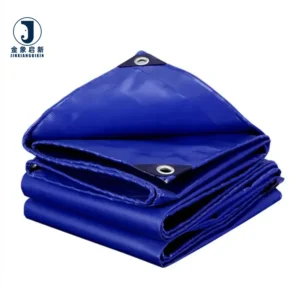
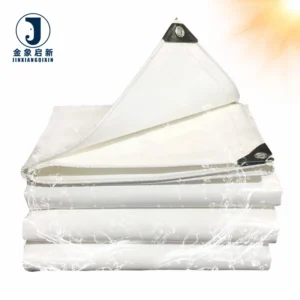
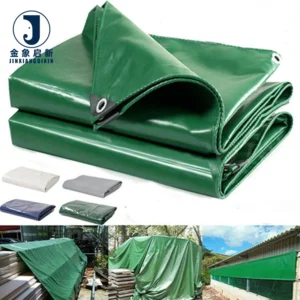
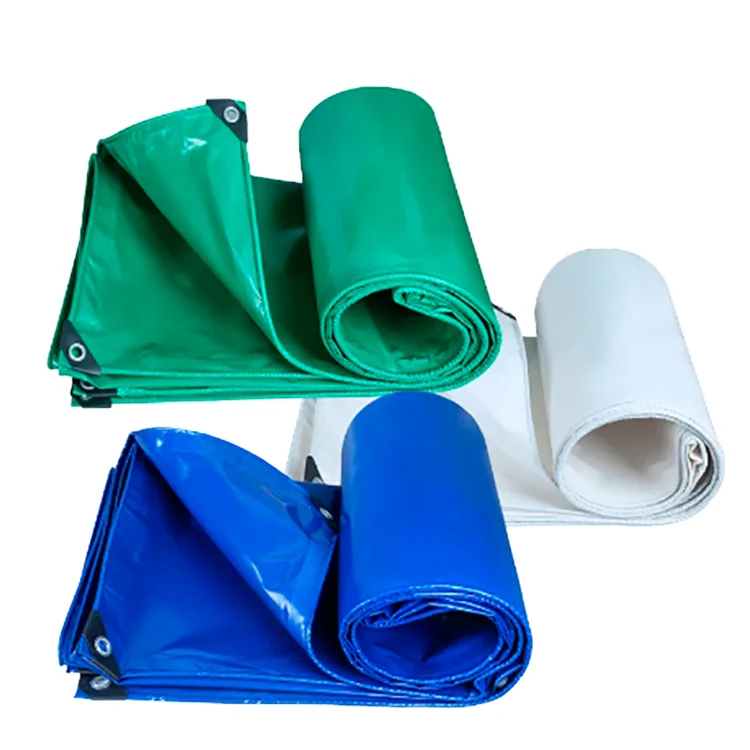
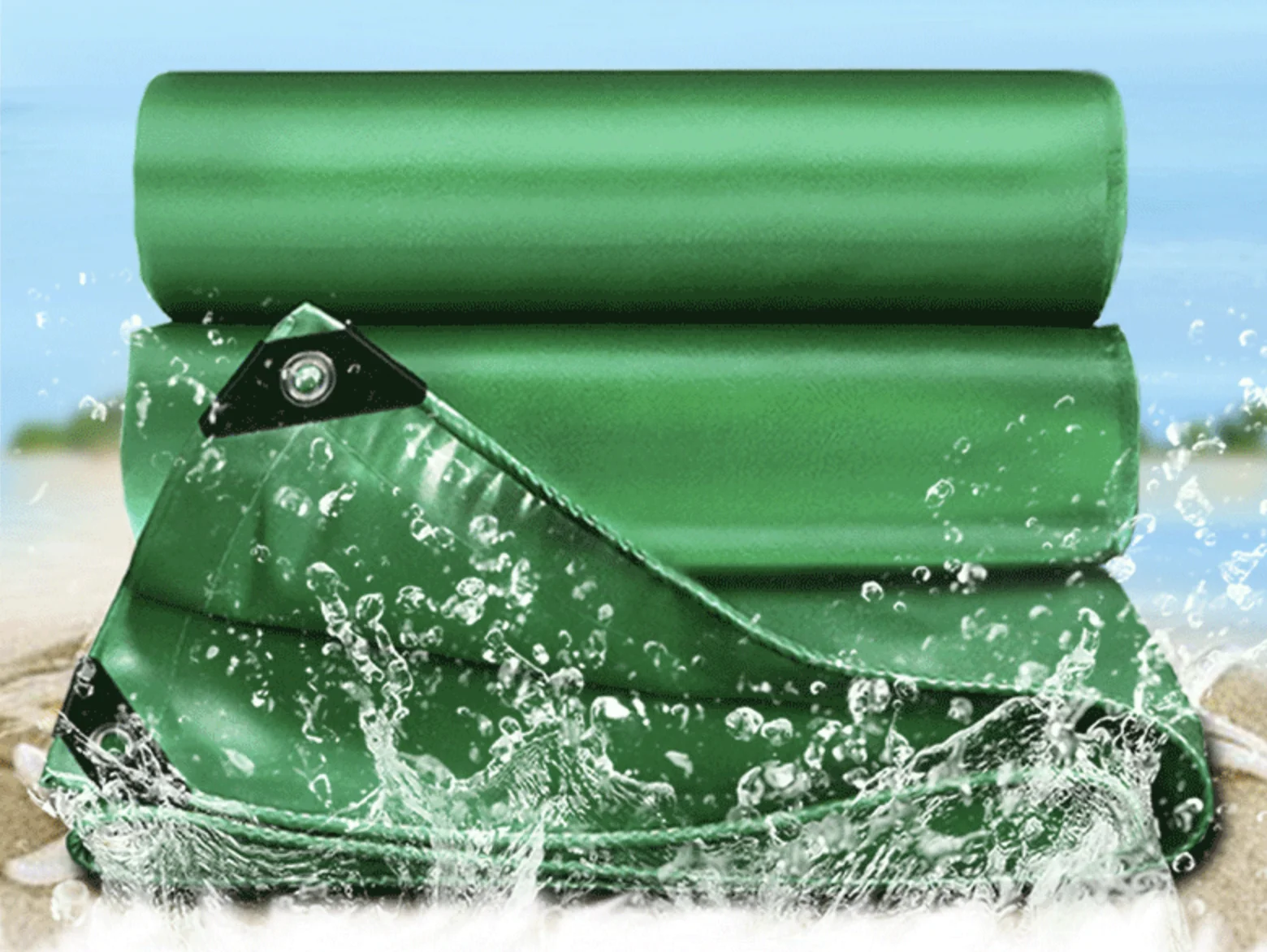
Batch-Controlled Coating — Every roll of PVC knife-coated tarpaulin undergoes weight and colour verification before dispatch, ensuring fabricators receive material that matches the approved sample from the first metre to the last.
Technical Specifications
| Parameter | Value |
|---|---|
| Product Type | PVC Coated Tarpaulin Fabric |
| Coating Material | PVC |
| Coating Method | Knife-coated |
| Base Fabric Style | Plain / tricot woven |
| Weight (GSM) | 500GSM |
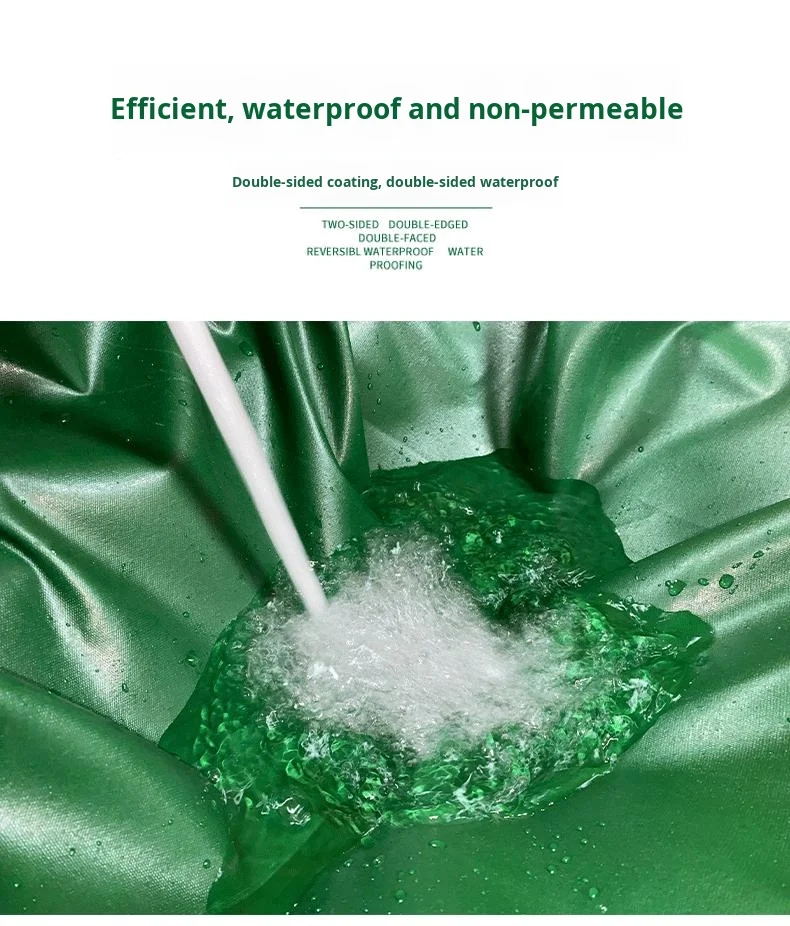
| Waterproof Rating | Anti-permeable ≥ 20KPa |
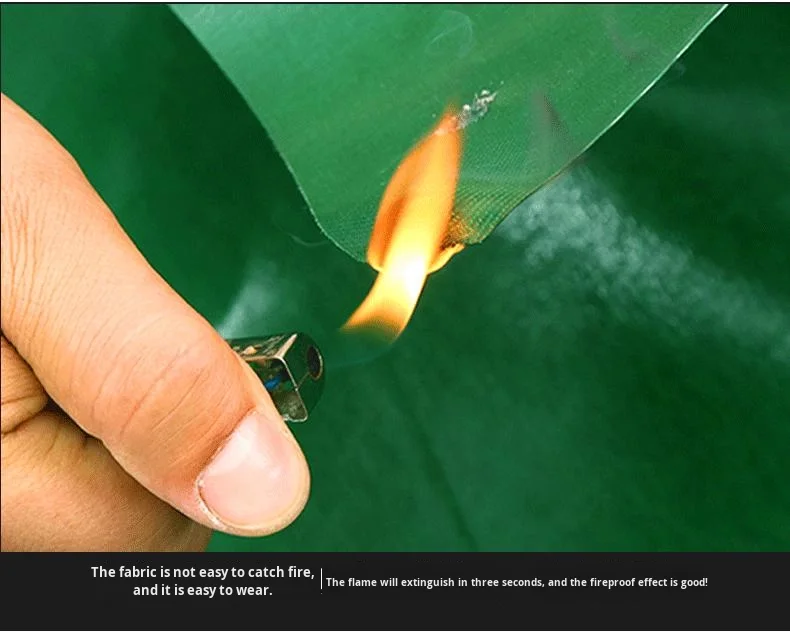
| Flame Retardant Grade | Flame retardant ≤ 10 seconds (confirm applicable standard at inquiry) |
| Low-Temperature Flexibility | Not fractured at -30°C |
| Corrosion Resistance | Acid, alkali and brine resistant |
| Anti-Mildew Treatment | Applied |
| UV Treatment | Anti-UV (confirm test basis at inquiry) |
| Finish | Wrinkle resistant |
| Standards | ISO 9001, CE |
Application Suitability
| Application | Exposure & Requirement |
|---|---|
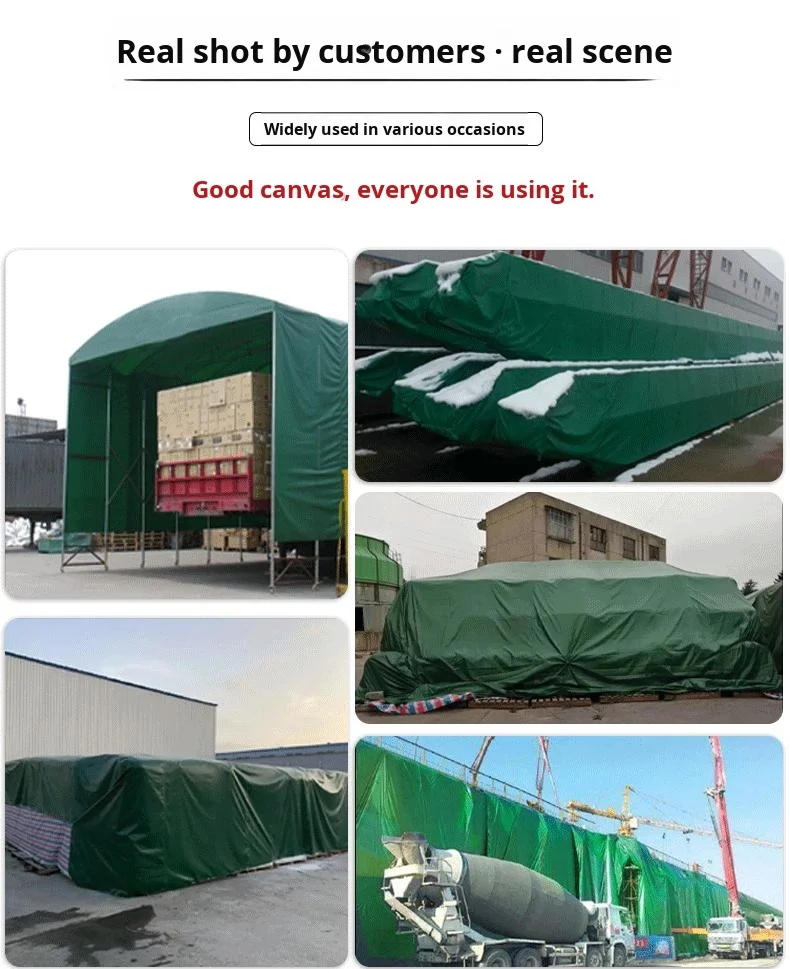
| Tent and canopy fabrication | Extended outdoor exposure, wind loading, repeated assembly and teardown |
| Awning manufacturing | Tensioned installation, solar UV, rain pooling, colour consistency across panels |
| Marquee and event structure covers | Large-panel spans requiring dimensional stability, wide-width rolls to reduce seams |
| Truck tarpaulin side curtains | Constant flexing, road debris abrasion, tie-down reinforcement points |
| Tarpaulin roll import and distribution | Container loading efficiency, batch-to-batch consistency for downstream resale |
Why Colour Drift Between Rolls Costs More Than the Fabric Itself
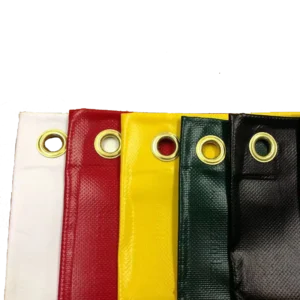
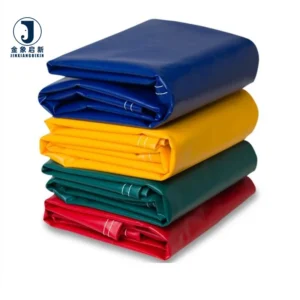
Batch-controlled coating runs keep shade variation within tolerance across every roll in your order, so adjacent panels match once installed.
When a container arrives and two rolls show a visible tint difference when unrolled side by side, the fabricator faces a choice: rework the cut plan to keep mismatched panels apart, or ship a finished awning where the customer sees the shift immediately [NEED_CITE: colour tolerance standards for coated fabric rolls per ISO 105 series]. This is not a material defect in the traditional sense — both rolls pass tensile and waterproof tests — but it is a rejection-level issue for any end product where panels meet in the customer’s sight line. The PVC knife coated tarpaulin roll wholesale buyer absorbing this loss has already paid for freight, customs and cutting time on material that cannot be used as planned. Sourcing from a mill that controls pigment dosing per batch eliminates the problem before the first roll leaves the line.
Roll-to-Roll Consistency as the Primary Procurement Metric
For fabricators cutting dozens of tent and awning panels per production run, the variance between rolls matters more than the absolute specification of any single sample. A PVC knife coated tarpaulin roll wholesale order that delivers tight GSM control, matched colour references and identical coating adhesion across every roll allows the shop floor to run without pausing to segregate or re-sort incoming stock. This consistency is achieved through controlled knife gap settings and inline weight sampling during coating, not through post-production sorting.
Width and Length Planning for Large-Panel Fabrication
Awning and marquee makers cutting panels that span several metres benefit from ordering rolls in the widest available stock width to eliminate mid-panel seams. Knife-coated PVC fabric holds a clean welded seam, but every seam adds labour time and a potential failure point under tension. When specifying a PVC knife coated tarpaulin roll wholesale purchase, stating the target panel dimensions at inquiry allows the mill to recommend a roll width that minimises offcut waste while keeping the order within standard stock parameters [NEED_CITE: welded seam strength versus base fabric tensile in PVC coated textiles].
How 500GSM and Knife Coating Shape End-Product Performance
The 500GSM weight grade sits in the mid-range for coated tarpaulins, balancing handling weight against structural adequacy for tensioned structures. Knife coating forces PVC paste into the base fabric weave under blade pressure, producing higher coating adhesion and lower air permeability than dip or spray methods. This matters for awning fabricators: a knife-coated membrane resists delamination when the panel flexes repeatedly under wind gusts. The plain woven base fabric provides dimensional stability in both warp and weft directions, preventing the bias stretch that causes sagging in large unsupported spans. Low-temperature flexibility down to -30°C means the material remains pliable for winter installations without risking surface cracking when folded or tensioned in cold conditions. Waterproof performance rated at anti-permeable ≥ 20KPa confirms the coating is continuous with no pinholes, a baseline requirement for any overhead canopy or tent roof.
The Hidden Cost of Accepting Unverified Roll Stock
A shipment of PVC tarpaulin rolls that arrives lighter than the quoted GSM forces the fabricator into an impossible position: the material is already on the shop floor, freight is paid, and the production schedule is committed. Cutting and welding proceeds, but the finished panels carry less margin of safety against tearing at tie-down points or splitting along welded seams under load [NEED_CITE: relationship between coating weight deviation and seam peel strength]. Similarly, flame retardant grades stated on a quotation without a matching test report create compliance risk when the finished tent or awning must pass a local fire inspection. The cost of a failed inspection — re-fabrication, delayed project handover, and potential contract penalties — far exceeds the price difference of sourcing verified material upfront.
What Thirty Years of Coated Fabric Focus Delivers for Roll Buyers
Three full production lines running knife-coated PVC tarpaulin allow bulk orders to ship within reliable lead times without sacrificing batch control. A dedicated 10-person R&D team handles custom width, colour matching and sample development, sending approval samples within days rather than weeks. Quality control checkpoints at every stage — base fabric inspection, coating weight sampling, surface finish review, and 100% pre-shipment roll inspection — catch deviations before they reach the packing station. The coating process itself is tuned for adhesion and weight uniformity, not just throughput, because roll buyers who experience shade drift or GSM shortfall on the first order do not place a second one.
Documentation & Verification
- Material specification sheet stating exact GSM, base fabric construction and coating weight for each roll batch
- 100% pre-shipment inspection record with per-roll weight verification against the quoted 500GSM
- Roll packing list detailing net weight, individual roll count, and container loading arrangement
- Test report for flame retardant grade supplied per batch — confirm required standard at inquiry
- UV treatment test report available upon request with applicable test method stated
- Certificate of origin and customs documentation included with every export shipment
Fabrication, Handling & Storage
- Hot-air weld temperature and speed should be calibrated to the knife-coated PVC surface before full production runs begin
- Store rolls horizontally on padded racks to prevent flat-spot deformation on the 500GSM material
- Unroll and allow the fabric to relax at ambient temperature before cutting, especially after cold-weather transit
- Cut panels with a minimum seam allowance to account for the overlap needed in heat-welded joins
- Clean finished awning panels with mild detergent only — solvent-based cleaners can soften the PVC coating surface
- Plan nesting layouts on the widest available stock width to reduce offcuts and seam count on large canopy panels
What to Include in Your Roll Stock Inquiry
State the end-use application — tent, awning, canopy or truck side curtain — along with the exposure conditions the finished product will face, so the correct treatment package can be confirmed. Specify target roll width, roll length and annual volume to receive accurate tier pricing and lead time guidance. If your market requires a particular flame retardant or UV test standard, name it at inquiry so the matching test report is prepared before production starts. Request a colour reference sample if batch-to-batch shade consistency is critical for your product line.
Frequently Asked Questions
Q: How is GSM verified per roll and what does pre-shipment inspection cover?
A: Every roll is weighed and measured against the stated 500GSM before packing. The inspection record logs actual weight per roll, surface condition, coating adhesion spot checks and colour consistency against the approved reference. This report ships with the container so you can cross-check on arrival.
Q: How do you ensure colour consistency across rolls in one order?
A: Pigment batches are mixed for the full order volume in a single run, and inline colour checks are performed during coating. This eliminates the shade drift that occurs when rolls are pulled from different production dates. A signed colour reference sample is retained for any future repeat orders.
Q: What stock widths and roll lengths are available, and what are the minimums for custom sizes?
A: Standard stock widths cover the range commonly used for tent and awning fabrication. Custom widths and roll lengths are available with minimum order quantities that vary by specification. State your target panel dimensions at inquiry to receive the most material-efficient roll configuration.
Q: How are rolls packed and loaded for container shipment?
A: Each roll is wrapped in protective film and packed horizontally to prevent surface damage. The packing list details roll count, net weight and the container loading plan. Loading is supervised to maximise container utilisation while keeping rolls secure during transit.
Q: What flame retardant test data is supplied with the roll?
A: Flame retardant test results are provided per production batch, with the applicable test standard stated on the report. Because fire classification requirements vary by market — some jurisdictions require specific standards — confirm the grade and test method needed for your destination country at the inquiry stage.