Description
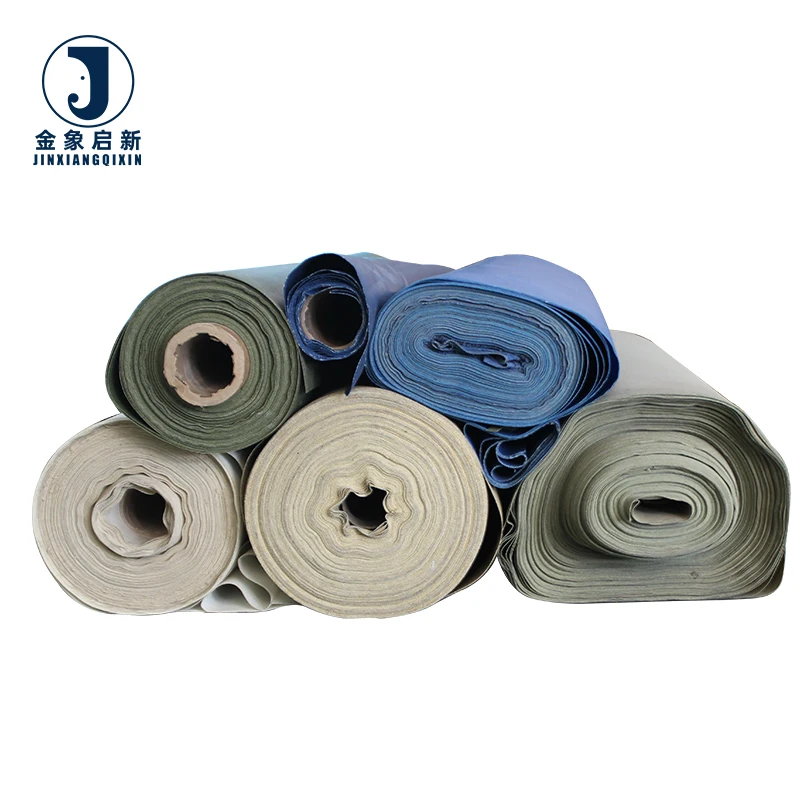
Batch-Verified Roll Stock — Every PVC coated tarpaulin roll ships with a pre-shipment inspection record confirming the quoted GSM and colour reference before container loading.
Technical Specifications
| Parameter | Value |
|---|---|
| Product Type | PVC Coated Tarpaulin |
| Base Fabric | 100% high toughness polyester yarn |
| Coating Method | Lamination technology and hot melt coating technology |
| Weight (Medium-duty) | 400-500 g/m² |
| Thickness (Medium-duty) | 0.35-0.45 mm |
| Base Fabric Denier (Medium-duty) | 500D |
| Tensile Strength (Medium-duty) | Longitude 1500-2000 / Latitude 1200-1800 N/5cm |
| Weight (Heavy-duty) | 700-1000 g/m² |
| Thickness (Heavy-duty) | 0.70-1.0 mm |
| Base Fabric Denier (Heavy-duty) | 1000D |
| Tensile Strength (Heavy-duty) | Meridian 2000-2500 / Latitude 1800-2200 N/5cm |
| Weight (Super Heavy) | 1100-1500 g/m² |
| Thickness (Super Heavy) | 1.2-1.5 mm |
| Base Fabric Denier (Super Heavy) | 500D-2000D |
| Tensile Strength (Super Heavy) | Warp 2500-3000 / Weft 2200-2800 N/5cm |
| Waterproof | Yes |
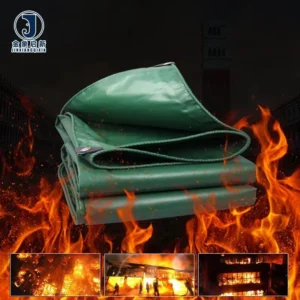
| Flame Retardant | Available in flame retardant grades — confirm the grade required for your market |
| UV Treatment | UV resistant treatment available — verify test basis for specific market requirements |
| Anti-Static | Anti-static treatment available — confirm certification requirements for your application |
| Cold Resistant | Cold resistant cracking |
| Anti-Mildew | Mold proof |
| Welding Tear Strength | Excellent |
| Color Fastness | High color fastness |
| Certifications | ISO, CE |
Application Suitability
| Application | Exposure & Requirement |
|---|---|
| Truck tarpaulin and side curtain | Constant flexing, road abrasion, UV exposure, high-speed wind load |
| Trailer load cover | Weather exposure, tie-down tension, puncture risk from cargo edges |
| Industrial pipe canopy | Outdoor weathering, tensioned structural load, welding seam integrity |
| Tensioned structural fabric | Sustained tensile stress, wind uplift, long-term UV degradation resistance |
| Farm equipment cover | Moisture ingress, chemical exposure from fertilizers, mildew risk |
| Bulk material cover (hay bales) | Moisture barrier, UV exposure, repeated handling abrasion |
Why Batch Consistency in PVC Coated Tarpaulin Rolls Defines Your Fabrication Yield
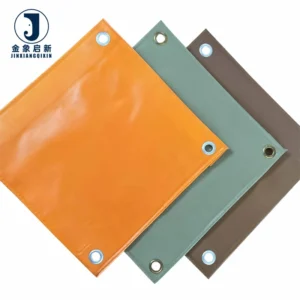
Colour drift between rolls in a single container turns a profitable order into a rework problem.
When you buy PVC coated tarpaulin roll stock by the container, the assumption is that every roll matches. In practice, I have seen fabricators cut panels from three different rolls for a single truck side curtain, only to find visible shade variation once the panels are welded side by side on the trailer frame. [NEED_CITE: colour consistency control methods for PVC coated fabrics during production]. The issue is rarely the base fabric — it is the coating bath temperature, pigment dispersion rate, and calendering pressure that shift between production runs. For wholesale buyers ordering multiple rolls of the same specification, batch-to-batch GSM verification and colour reference control are not optional extras; they determine whether your finished product ships or sits in your workshop waiting for replacement panels.
Roll Width Options and Container Loading Efficiency
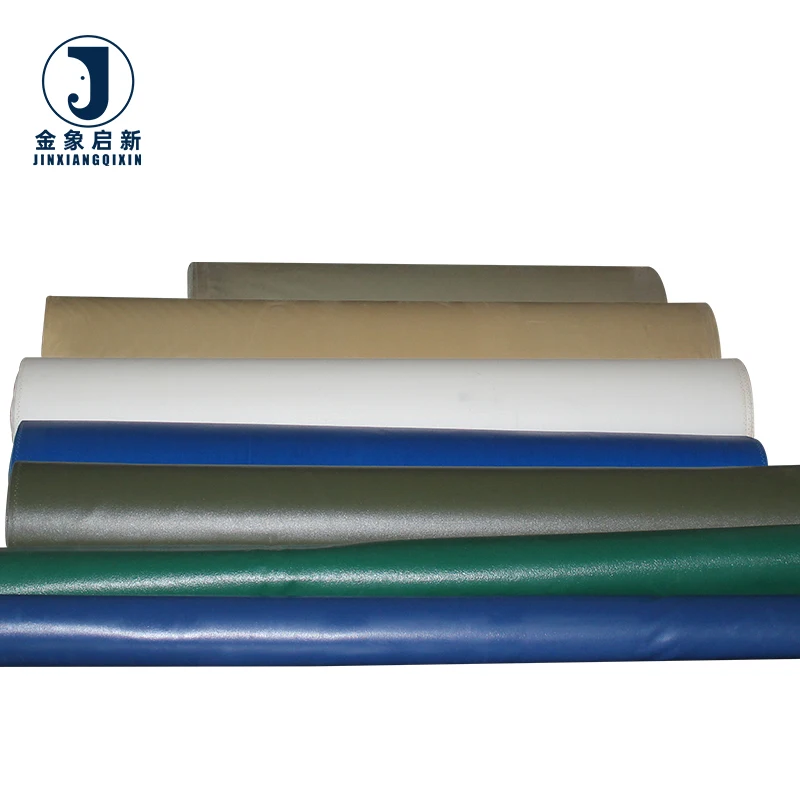
When sourcing PVC coated tarpaulin fabric in bulk, the roll width you specify directly dictates how many linear meters fit in a standard container and how much waste your fabrication team generates per cut. Narrow rolls may suit specific trailer curtain widths but create more weld seams on larger covers, while wider rolls reduce seams but require heavier handling equipment at your shop. Our stock grades ship across multiple width options, allowing you to match roll dimensions to your cutting table capacity and minimize off-cuts. Planning container loading by roll count and total weight ensures you maximize freight efficiency on each shipment of PVC coated tarpaulin roll stock.
Coating Weight Control Across Production Runs
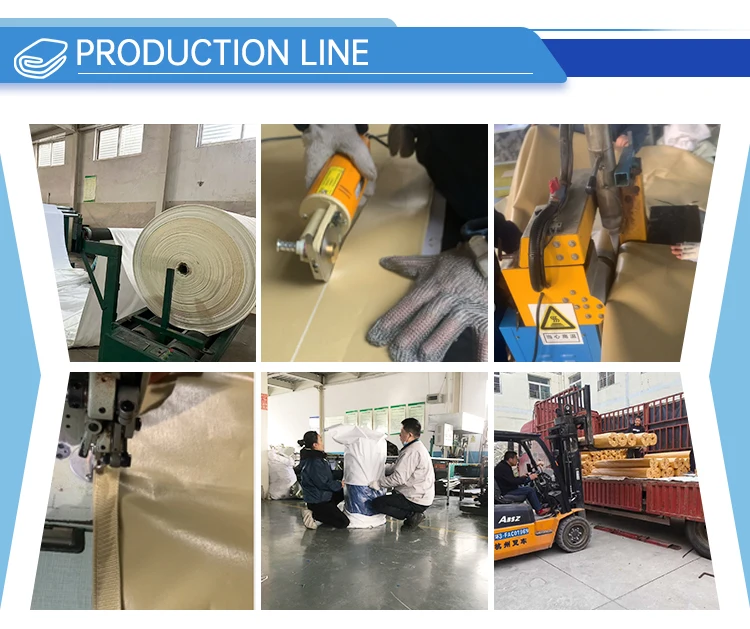
Hot melt coating technology and lamination processes require continuous monitoring of coating bath viscosity and roller pressure to maintain uniform PVC deposition across the polyester base fabric. A deviation in coating weight affects not only the GSM reading but also the heat-seal behaviour at welded seams, where inconsistent thickness causes uneven melting and weak bond lines. [NEED_CITE: relationship between coating uniformity and weld strength in PVC tarpaulins]. Our production lines use in-process QA checkpoints to catch coating weight drift before a full roll is wound, ensuring that the GSM stated on your quotation matches the material arriving at your dock. This level of control matters most when you are ordering bulk volumes where a single out-of-spec roll can disrupt an entire fabrication schedule.
Reading Beyond the GSM Number on the Quotation
A 900 g/m² roll with a 1000D base fabric behaves differently from a 900 g/m² roll built on a lighter denier yarn with more coating weight to reach the same number. The base fabric denier and weave density determine the tensile load the fabric carries before the coating is even applied — the PVC layer contributes waterproofing and surface protection but cannot compensate for an under-spec base yarn when a truck curtain flexes under highway wind load. Similarly, hot melt coating versus lamination technology affects peel strength at the coating-to-fabric interface, which determines whether delamination appears at the weld line or at stress points during the product’s service life. When evaluating roll stock, request the base fabric denier, knit density, and coating method alongside the GSM to compare materials on a meaningful basis. [NEED_CITE: ISO 1421 tensile and tear test methods for coated fabrics].
The Hidden Cost of Specifying Roll Stock on Price Per Kilogram Alone
Choosing wholesale PVC coated tarpaulin based solely on the lowest price per kilogram often means accepting lighter base fabric with extra coating filler to hit the target GSM, resulting in a material that passes the weight check but tears easily at fabrication stress points. Rolls with inconsistent coating thickness produce weld seams that fail during the first flex cycle on a moving trailer, long before the fabric body shows any wear. [NEED_CITE: common failure modes in PVC tarpaulin weld seams under cyclic loading]. Colour variation across rolls in a single bulk order forces fabricators to sort and match panels manually, adding labour cost and delaying shipment. These downstream costs frequently exceed the savings from the initial roll purchase, making pre-shipment inspection documentation and batch-consistent production practices essential for buyers who fabricate at scale.
Why Volume Buyers Source Roll Stock Here
Our three full production lines and 36 sets of professional equipment provide the capacity to fulfil container-load orders of PVC coated tarpaulin roll stock without splitting your order across multiple production windows, reducing the risk of batch variation. A dedicated 10-person R&D team handles custom width, colour matching, and pattern printing development, producing samples within days so you can confirm the specification before committing to bulk production. Every roll undergoes 100% inspection before shipment against your confirmed material specification sheet, with pre-shipment records documenting GSM, colour reference, and coating integrity. Nearly 30 years of focused coated fabric production means our process control over coating weight and adhesion is built on accumulated production data, not trial runs on your order. Dedicated QA/QC at every production stage catches deviations before the roll reaches your container, not after.
Documentation & Verification
- Material specification sheet listing GSM, base fabric denier, coating weight, and colour reference for each roll batch
- Pre-shipment inspection record with 100% inspection results before dispatch
- Roll packing list detailing roll count, individual roll weight, and container loading plan
- ISO and CE certificates included with each shipment documentation set
- Test reports for UV and flame-retardant grades supplied where applicable to the specified treatment
Fabrication, Handling & Storage
- Hot melt coated surfaces require matched heat-seal temperature settings — verify weld parameters against the specific GSM grade before production runs
- Store rolls horizontally on padded racks to prevent coating crease marks that become visible after fabrication
- Allow cold-stored rolls to reach workshop temperature before unrolling to avoid coating micro-cracking on medium-duty grades
- Use sharp rotary blades for cutting heavy-duty 700-1000 g/m² grades to prevent frayed edges that compromise weld seam quality
- Clean PVC surfaces with mild detergent only — solvent-based cleaners can degrade the coating finish on lamination-technology products
What to Include in Your Roll Stock Inquiry
To receive an accurate quotation with lead time and container loading details, provide your target GSM grade range, required roll widths, annual volume estimate, and destination market. Specify whether you need UV treatment, flame retardant certification, or anti-static properties, along with any applicable regional compliance standards your end customers require. If you need custom colour matching or pattern printing, include your Pantone or RAL reference and whether sample approval is required before bulk production. Indicate whether you are ordering raw roll stock for in-house fabrication or require cut-to-size panels with finished edges.
Frequently Asked Questions
Q: How is GSM verified on arrival and what documentation supports the quoted weight?
A: Every roll ships with a pre-shipment inspection record that documents the measured GSM against your quotation specification. The material specification sheet included in your documentation package lists the base fabric denier, coating weight, and target GSM for the batch. You can cross-reference these documents with your own incoming inspection to confirm the weight matches before releasing the rolls to your fabrication floor.
Q: How do you control colour consistency across rolls within the same bulk order?
A: We schedule bulk orders within a single continuous production run where possible, maintaining constant coating bath conditions and pigment dispersion rates throughout. In-process QA checkpoints monitor colour reference at regular intervals during production. The pre-shipment inspection record documents the colour consistency check, and any roll falling outside the confirmed tolerance is removed before packing.
Q: What roll widths and lengths are available, and how does that affect container loading?
A: Roll widths are available across multiple options to suit different fabrication table capacities and cutting layouts. Your inquiry should specify the width that minimizes off-cuts for your standard panel sizes. We provide a container loading plan with roll count and total weight so you can optimize freight costs and plan your receiving schedule around confirmed container utilization.
Q: What is the lead time and minimum order for custom width or colour runs?
A: Lead times vary based on the specification complexity and current production schedule. Custom widths and colours require a sample development phase before bulk commitment, typically completed within days for standard treatments. The minimum order depends on the specific grade and treatment combination requested — include your annual volume estimate in your inquiry so we can align production scheduling with your restocking requirements.
Q: How are rolls packed for ocean freight to prevent coating damage during transit?
A: Rolls are packed with protective wrapping to prevent surface abrasion and coating damage during loading and transit. The roll packing list details individual roll weights and container positioning. Horizontal or vertical loading orientation depends on the roll diameter and container type — we confirm the packing method that best protects your specific grade during the shipping duration.