Description
Production Line Capacity — Three dedicated coating lines maintain roll-to-roll GSM and colour consistency across full container loads of laminated canvas tarpaulin.
Technical Specifications
| Parameter | Value |
|---|---|
| Product Type | PVC Laminated Canvas Tarpaulin |
| Base Fabric | Polyester-cotton industrial textile, 8-12 strand fine cotton yarn |
| Weight | 600gsm |
| Thickness | 0.5mm / 0.6mm / 0.7mm |
| Coating Method | PVC lamination |
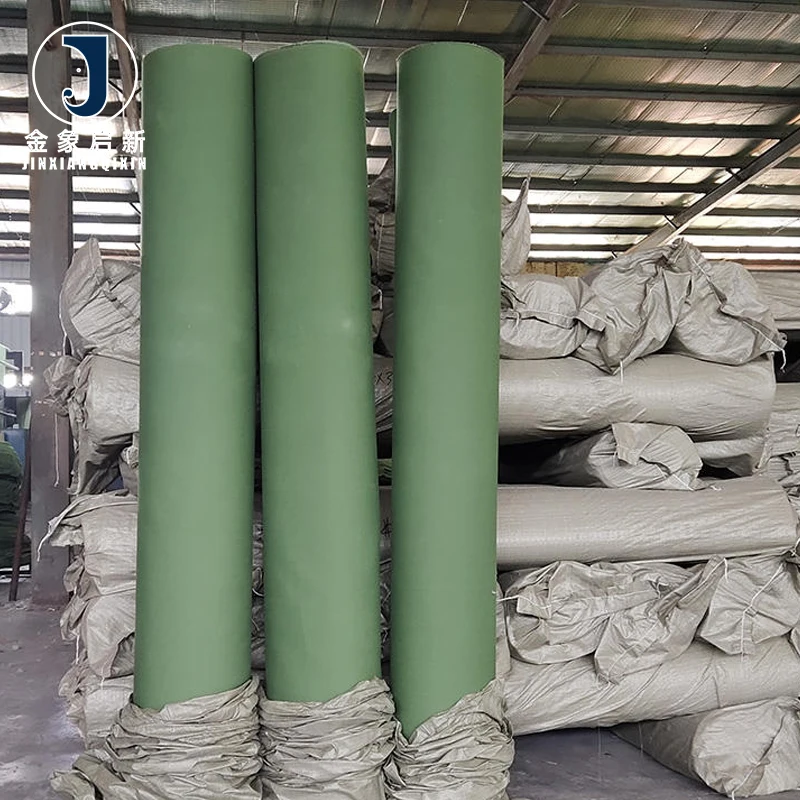
| Roll Width | 2m |
| Roll Length | 100m |
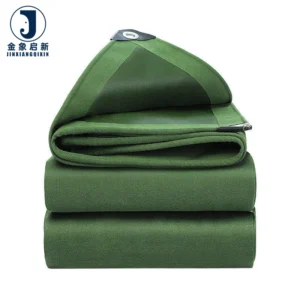
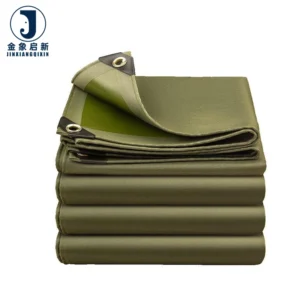
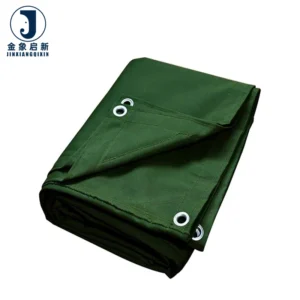
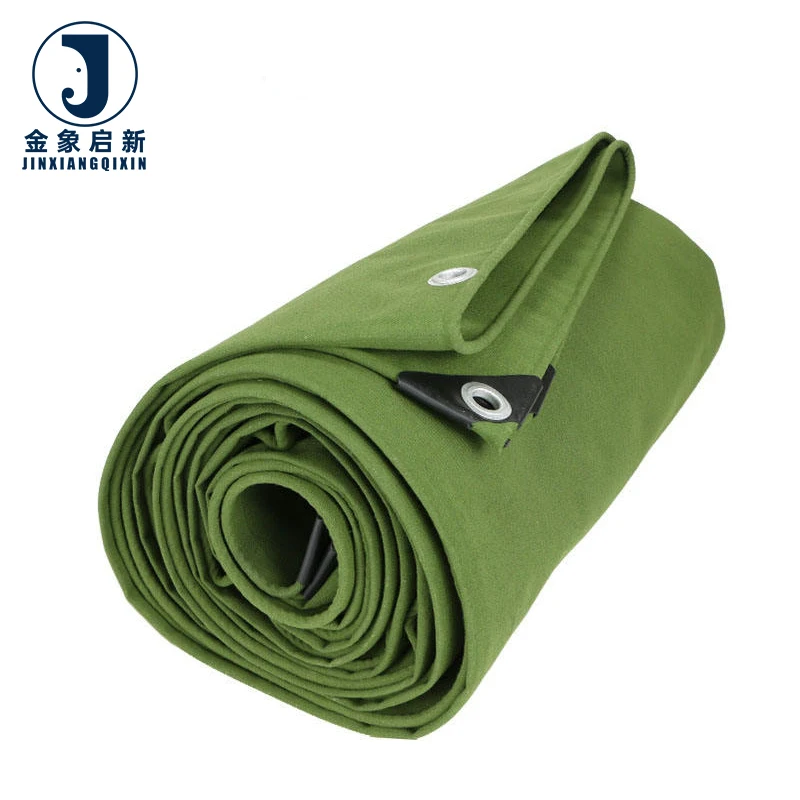
| Color | Army green camouflage / Custom options available |
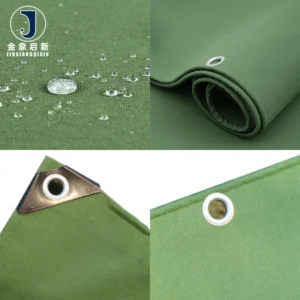
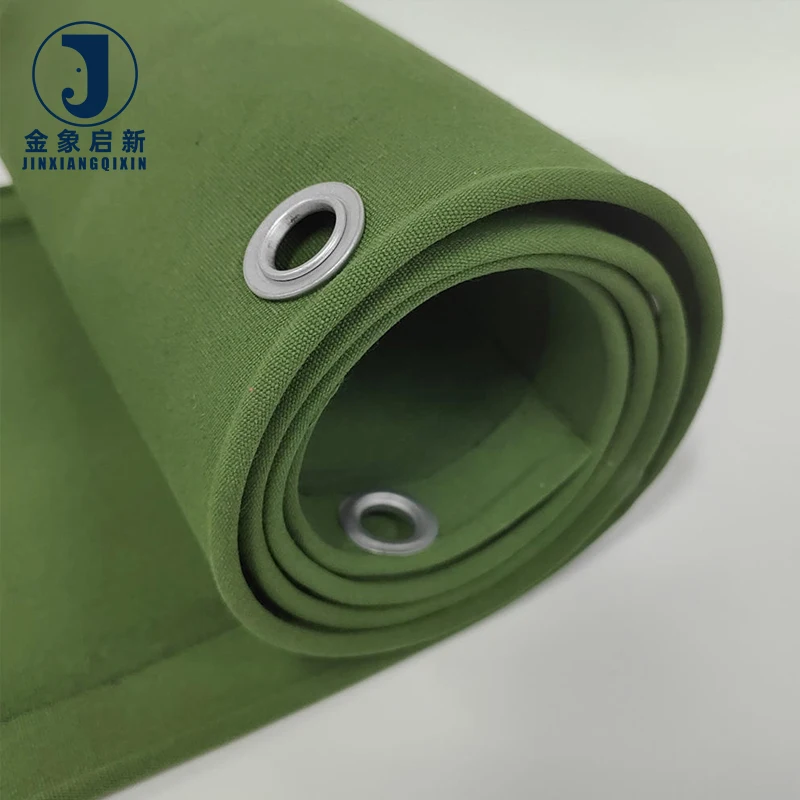
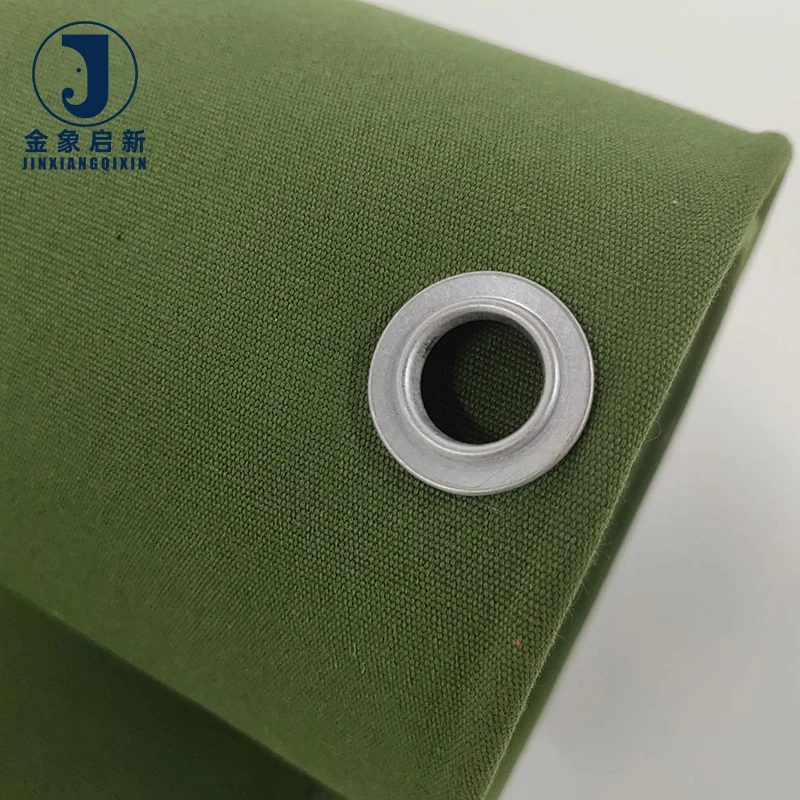
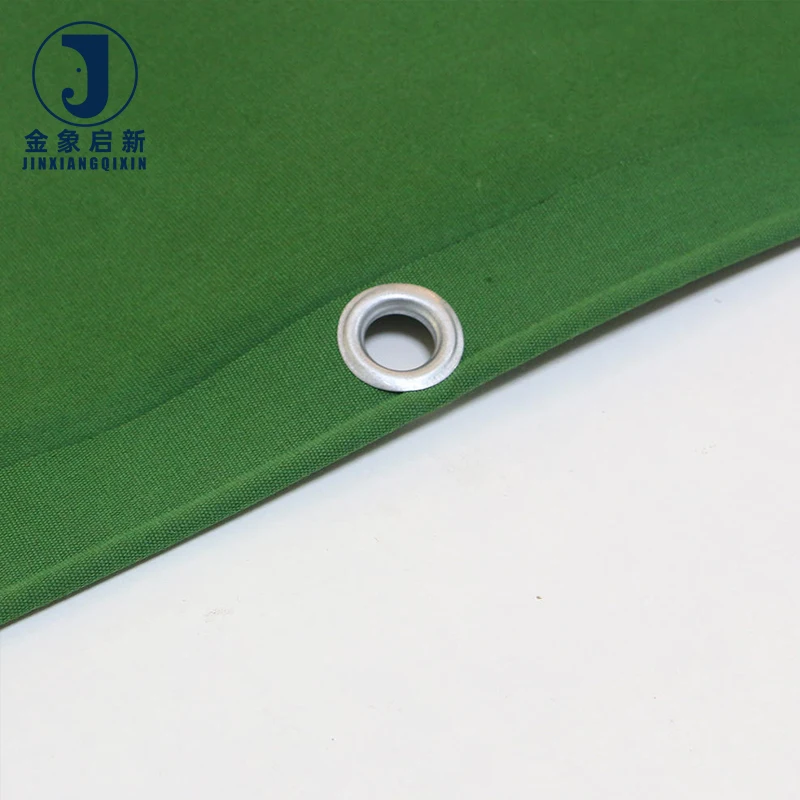
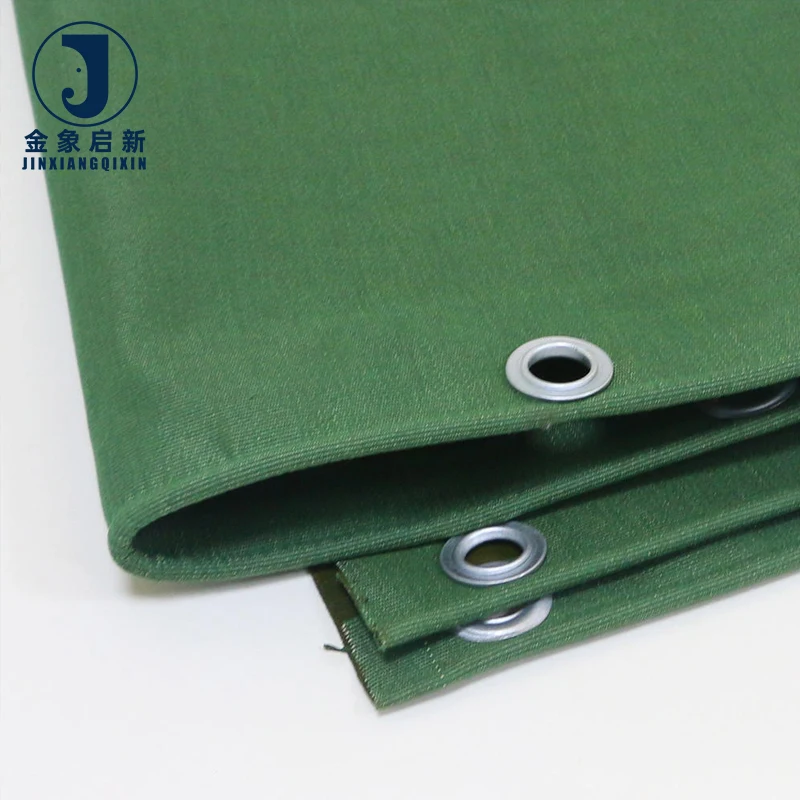
| Eyelets | Rust-proof aluminum, spaced every 1m at corners and hem |
| Edge Reinforcement | Folded and sewn with poly rope |
| Service Life | Suited to extended outdoor exposure (confirm environment-specific rating) |
| UV Treatment | Available — confirm the treatment level required for your market |
| Flame Retardant | Available in flame retardant grades — confirm the grade required for your market |
| Waterproof | Fully waterproof laminated construction (hydrostatic test standard available on request) |
| Certifications | CE, ISO |
Application Suitability
| Application | Exposure & Requirement |
|---|---|
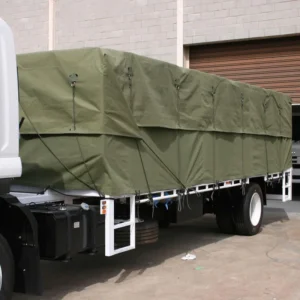
| Truck side curtain and load cover | Constant flexing, road abrasion, wind loading, tie-down stress at eyelets |
| Construction site equipment and asphalt cover | UV exposure, dust, mechanical puncture risk, weather cycling |
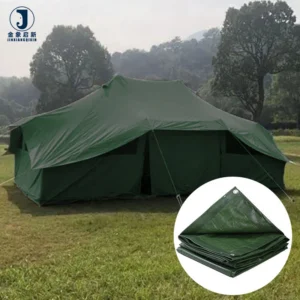
| Tent and temporary structure fabric | Tensile load at ridge and corner points, sustained outdoor weathering |
| Regional tarpaulin distribution | Roll-to-roll consistency, efficient container loading, custom cut capability |
Why Batch Consistency Matters More Than Quoted GSM
A 600gsm label only protects you if every roll actually weighs 600gsm when it arrives.
Buyers of PVC Laminated Canvas Tarpaulin roll wholesale stock regularly face a gap between quotation and delivery. The stated weight does not match the roll on the scale, colour shifts between production batches once two rolls are unrolled side by side, and seams split under load before the fabric itself shows wear. These are not edge cases — they are recurring friction points in coated fabric procurement that erode trust between supplier and distributor [NEED_CITE: common tarpaulin procurement failures in bulk roll supply].
Roll-to-Roll Consistency Under Production Control
Every roll of PVC Laminated Canvas Tarpaulin leaving the production line passes through a weight check against the stated 600gsm specification. This is not a spot-check sampling exercise — it is a roll-by-roll verification that ensures the material you receive matches the material you paid for. For wholesale buyers filling container loads, this discipline prevents the situation where a portion of the shipment arrives below the agreed weight, forcing you to absorb the loss or dispute it after the fact.
Colour Uniformity Across Multi-Roll Orders
When army green camouflage rolls are installed as adjacent truck covers or tent panels, even a slight hue variation becomes immediately visible. The coating formulation and lamination process are controlled per production batch so that rolls within a single order carry the same colour reference. If your application requires a specific shade outside the stock range, custom colour matching is available with sample approval before the full run proceeds [NEED_CITE: colour consistency standards in coated textile batch production].
Reading the 600gsm Weight in Context
The 600gsm figure reflects the combined weight of the polyester-cotton base fabric and the PVC lamination layer, not the base fabric alone. A high GSM achieved primarily through heavy coating with a lighter base will behave differently under tensile load than the same GSM achieved with a denser yarn structure. The 8-12 strand fine cotton yarn in the base textile contributes to tear propagation resistance — when a puncture occurs, the weave structure limits how far the damage spreads before the lamination holds the surrounding area intact.
The PVC lamination method bonds the coating to the base fabric under heat and pressure, producing a surface that is fully waterproof and resistant to surface abrasion. Compared to knife-coated fabrics, laminated construction offers a cost advantage at this weight class while maintaining reliable peel strength between the coating and the base [NEED_CITE: ISO 1421 tensile and tear test methods for coated fabrics].
The 0.5mm to 0.7mm thickness range correlates to the lamination weight applied to each side of the base. Thicker lamination provides additional puncture resistance but increases roll weight and reduces flexibility during fabrication — the optimal point depends on whether the end use involves frequent folding or static covering.
The Real Cost of Skipping Roll Inspection Before Shipment
When a container of canvas tarpaulin rolls arrives at a distribution warehouse and the GSM is found to be below specification on weighing, the buyer faces a choice: accept substandard material into inventory or initiate a claim that delays fulfilment to their own customers. Either path costs money and credibility. Colour inconsistency discovered after cutting and installation means partial replacement, site revisits, and dissatisfied end users who attribute the failure to the distributor, not the mill [NEED_CITE: coated fabric quality dispute resolution in international trade].
Why Buyers Source This Fabric Here
Three full production lines and 36 sets of professional equipment support bulk roll output with reliable dispatch scheduling, so container loads ship on time even during high-demand periods.
A 10-person R&D team handles custom colour matching, cut-to-size specifications, and sample development within days, allowing you to approve the exact material before committing to the full order volume.
Dedicated QA/QC inspection at every production stage, with 100% roll-by-roll checking before dispatch, catches GSM deviation and visual defects before they reach the container.
Nearly three decades of focused experience in coated fabric manufacturing translates to process control over lamination weight, coating adhesion, and edge finishing that newer operations have not yet developed.
Documentation & Verification
- Material specification sheet confirming 600gsm weight, polyester-cotton base, and PVC lamination method per roll
- Pre-shipment inspection record with roll-by-roll weight check and visual assessment
- Roll packing list detailing count, weight, and dimensions for container loading verification
- Certificate of origin and full customs documentation for international wholesale shipments
- UV and flame retardant test reports provided where the specified grade requires certification
Fabrication, Handling & Storage
- Weld seams at 600gsm using hot air or wedge welding; test peel strength on sample before full production run
- Rust-proof aluminum eyelets at 1m intervals require poly rope reinforcement inside the hem to distribute tie-down load
- Store 2m × 100m rolls upright on pallets to prevent edge crushing and permanent creasing of the laminated surface
- Cut and sew in ambient conditions; avoid fabrication below freezing where PVC lamination becomes stiff
- Clean with mild detergent only; solvent-based cleaners may degrade the PVC lamination bond over repeated use
How to Specify Your Order
Provide your target market’s compliance requirements, including any fire classification or UV treatment standards that apply at the point of installation. Specify whether you need full 2m × 100m rolls for your own fabrication line, or custom cut sizes with eyelets and hem reinforcement finished to your drawing. If colour matching is required, send a physical reference or Pantone code so that a sample roll can be produced and approved before the bulk run commences.
Frequently Asked Questions
Q: How is GSM verified per roll and what inspection records are provided at shipment?
A: Each 600gsm roll is individually weighed before dispatch and recorded on the pre-shipment inspection report. This document ships with the consignment, listing the actual measured weight per roll alongside the specification, so you can verify on receipt without relying on the supplier’s word alone.
Q: How do you control colour consistency across multiple rolls in a single order?
A: Rolls within one order are produced from the same coating batch using a single colour formulation. A reference sample is retained and compared against the production output during the 100% inspection stage. If you require matching to a previous order, provide the prior batch reference for cross-check.
Q: What roll widths and lengths are available, and how does that affect container loading?
A: Standard roll stock is 2m wide by 100m long. This dimension is chosen to maximise container utilisation by roll count and total weight. Custom widths and lengths are available for orders meeting the minimum threshold — confirm your required dimensions for a loading plan calculation.
Q: What are the MOQ and lead times for custom colour or custom cut sizes?
A: Custom colour runs require a minimum volume sufficient for a dedicated coating batch to ensure uniformity. Custom cut sizes with finished eyelets and hems carry a separate minimum based on fabrication setup. Submit your quantity and specifications for a specific lead time quotation.
Q: What documentation is included for customs clearance on international roll shipments?
A: Each shipment includes a commercial invoice, packing list with roll-level detail, certificate of origin, and CE and ISO certificates. Additional documentation such as fumigation certificates or specific import compliance forms can be arranged — specify your destination country’s requirements at the order stage.