Description
Batch Consistency Guaranteed — every roll of PVC Coated Tarpaulin Roll undergoes 100% pre-shipment inspection to confirm coating weight and colour against the quoted specification before it leaves the line.
Technical Specifications
| Parameter | Value |
|---|---|
| Product Type | PVC Coated Tarpaulin Roll |
| Weight (GSM) | 250gsm–1500gsm |
| Base Fabric Denier | 200DX300D / 500DX500D / 840DX840D / 1000DX1000D |
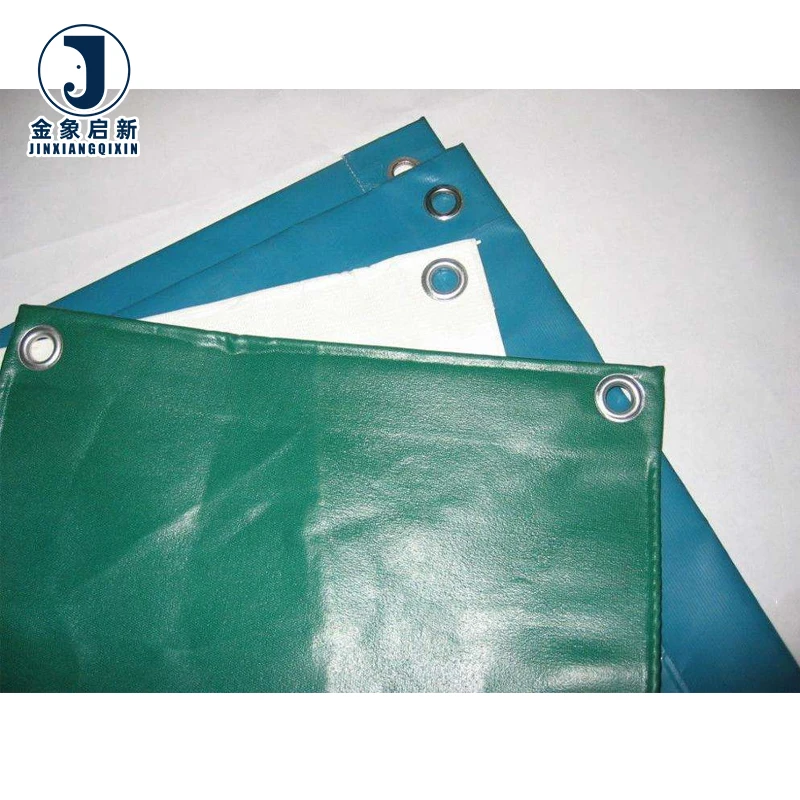
| Coating Material | PVC |
| Surface Finish | Glossy or matte |
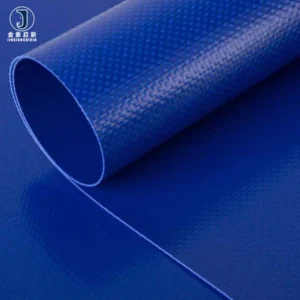
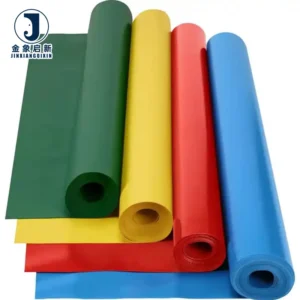
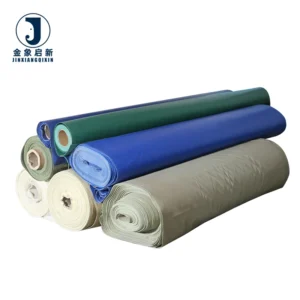
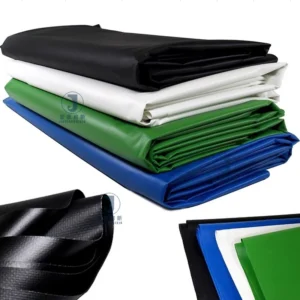
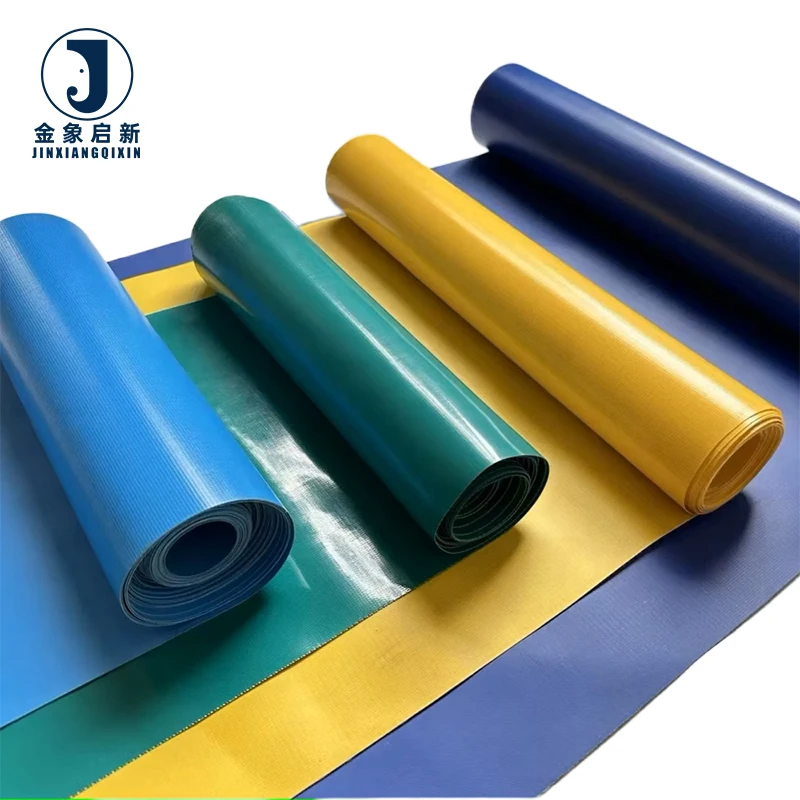
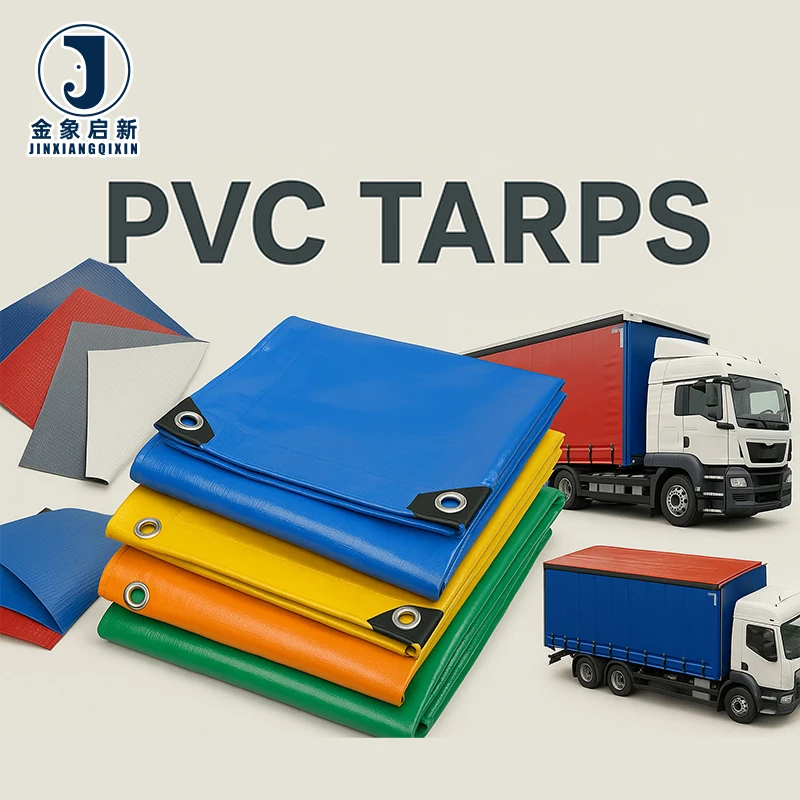
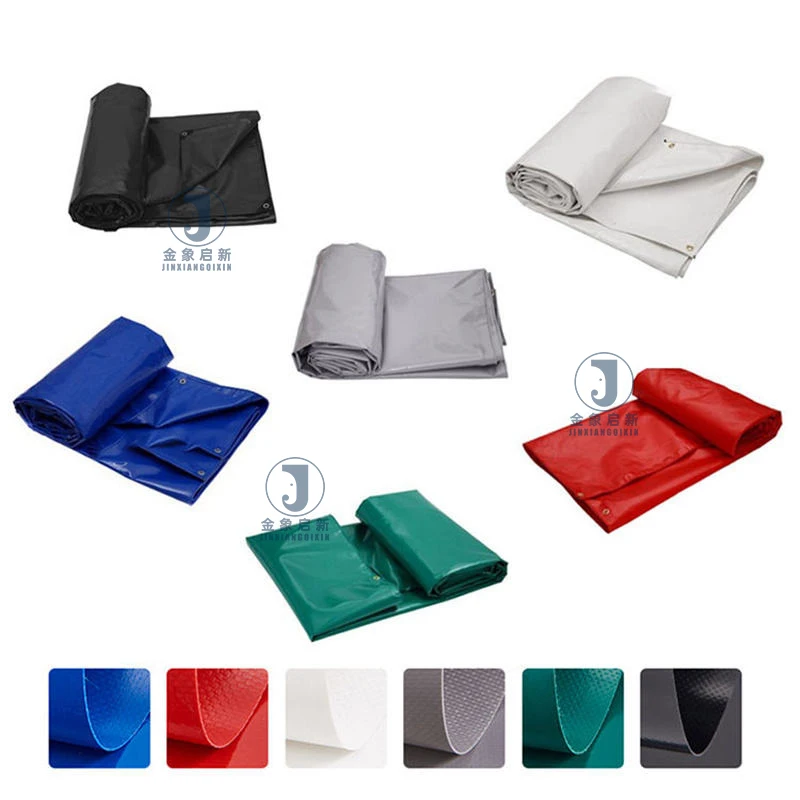
| Color Options | Blue, yellow, black, green, white, or custom |
| Temperature Range | -15°C to 70°C |
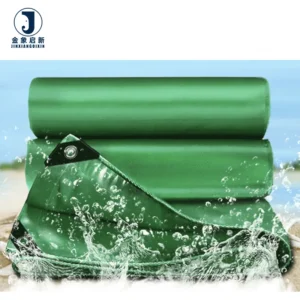
| Waterproof | Yes |
| Flame Retardant | FR treated (grade not stated in source — confirm the grade required for your market) |
| UV Treatment | Customized (test basis not stated in source — request test report for your region) |
| Anti-Mildew | Anti-fungal treated |
| Key Features | Waterproof, rain-resistant, tear-resistant, flexible, abrasion-resistant, strong adhesion |
Application Suitability
| Application | Exposure & Requirement |
|---|---|
| Tarpaulin distribution & import | Consistent GSM and colour across container-load volumes for reliable downstream resale |
| Tent, awning & inflatable fabrication | Roll-to-roll batch uniformity so cut panels match when sewn or welded side by side |
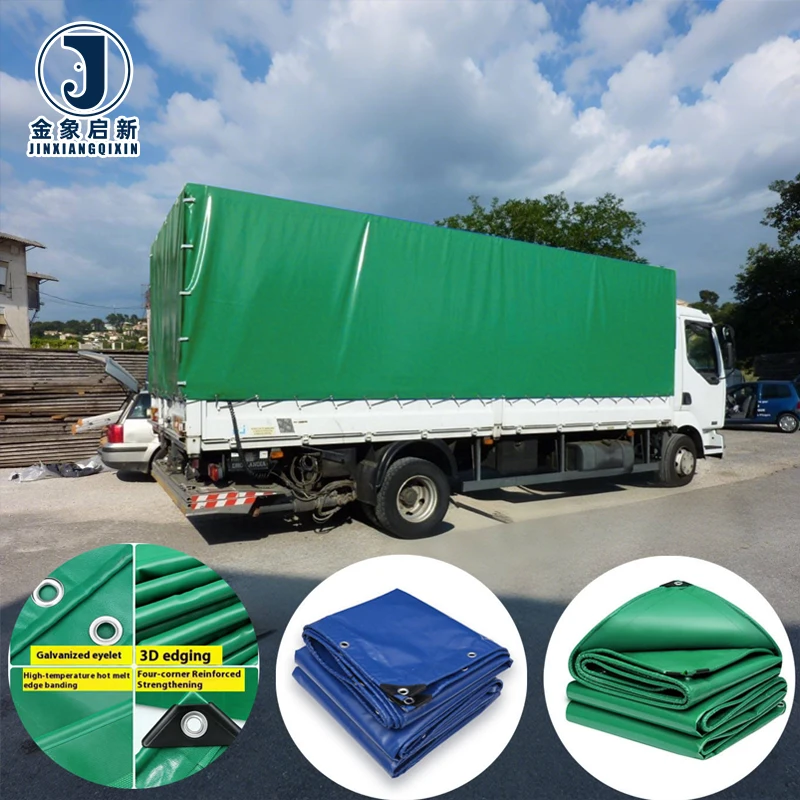
| Truck cover manufacturing | Bulk roll stock cut to model-specific dimensions with verified denier and coating weight |
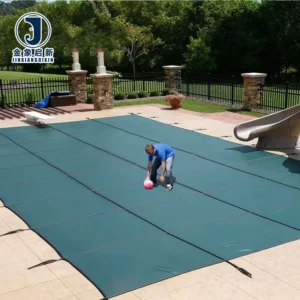
| Outdoor general-purpose covers | Waterproof coated construction with anti-fungal treatment for sustained damp exposure |
| Logistics & transport fleets | Abrasion resistance at tie-down and flex points, repeated road and weather exposure |
Why Roll-to-Roll Colour Drift Costs More Than the Fabric Itself
Colour variation between rolls in the same order is the fastest way to lose a downstream client.
When a distributor sells PVC Coated Tarpaulin Roll wholesale to tent makers or truck cover fabricators, the end user cuts panels from multiple rolls and installs them side by side. A visible shade difference across a single truck curtain or event canopy is treated as a full-order defect, not a partial claim. The financial hit extends far beyond the roll price — return freight, re-cutting labour, and the reputational cost of a delayed project all compound the original material loss [NEED_CITE: batch colour consistency standards in coated fabric procurement].
This problem rarely originates at the dye stage. It typically traces back to inconsistent coating weight from one roll to the next, or to temperature drift across the coating line that shifts pigment dispersion mid-run. Buyers who only verify GSM on the first sample roll and skip in-process checks on the production batch expose themselves to exactly this failure.
Colour and Weight Control Across Every Roll in the Shipment
Consistency across a container load of PVC Coated Tarpaulin Roll stock depends on process discipline at the coating head, not on post-production sorting. Each roll is measured for coating weight during production, and the reading is logged against the target GSM before the roll moves to winding. This in-process verification catches drift early enough to adjust the coating gap or line speed, preventing an entire batch from falling outside tolerance.
For wholesale buyers ordering multiple rolls in a single colour, this control eliminates the scenario where roll number three and roll number fourteen produce visibly different panels after cutting.
Denier and GSM Selection for Volume Buyers
Stocking the correct denier and weight combination matters more at container scale than at sample scale. A tent fabricator running 500DX500D at a mid-range GSM for event canopies needs the same construction across every roll so that weld temperatures and stitch tension remain constant on the factory floor. A truck cover builder pulling 1000DX1000D in a heavier grade for side curtains needs verified tensile behaviour roll after roll so that reinforcement patches and eyelet spacing do not need recalculation [NEED_CITE: relationship between base fabric denier and tear propagation in PVC coated textiles].
How Base Fabric and Coating Weight Interact
GSM alone does not define strength. The base fabric denier — whether 200DX300D for lighter applications or 1000DX1000D for heavy-duty use — determines the tensile and tear skeleton of the material. The PVC coating adds weight, waterproofing, and surface protection, but a heavy coating on a low-denier base can produce a stiff fabric that cracks at fold lines rather than a genuinely stronger one.
Surface finish affects fabrication and end use. A glossy surface sheds dirt more readily and accepts heat-transfer branding, while a matte finish reduces glare and is often preferred for event and architectural applications where visual reflection matters. The temperature range of -15°C to 70°C sets the operational boundary: below the lower limit, PVC stiffens and becomes vulnerable to impact cracking; above the upper limit, the coating softens and may mark under compression.
The Hidden Cost of Specifying on Price Per Kilogram Alone
When buyers select PVC Coated Tarpaulin Roll based on the lowest cost per kilogram, the first consequence is usually coating weight shortfall. A material quoted at a specific GSM but delivered lighter will feel thinner on the cutting table and will underperform at flex points once fabricated. The failure does not appear on day one — it shows up months later as cracking along welded seams or as premature coating delamination where the fabric folds repeatedly under load [NEED_CITE: coating adhesion failure modes in PVC tarpaulin under cyclic flexing].
A second consequence is inconsistent treatment. Flame retardant and UV claims without supporting test reports become liabilities the moment a building inspector, port authority, or site safety officer asks for documentation. Rolls that cannot produce a grade certificate are rolls that get rejected at the project gate, regardless of how well the fabric itself performs physically.
Why Buyers Source PVC Coated Tarpaulin Roll Stock Here
Three full production lines and 36 sets of professional equipment support bulk roll output with maintained coating consistency, meaning container-load orders do not force a trade-off between volume and batch uniformity.
A 10-person R&D team develops samples for custom widths, colours, and print specifications within days, allowing distributors to confirm appearance and handling before committing to a production run.
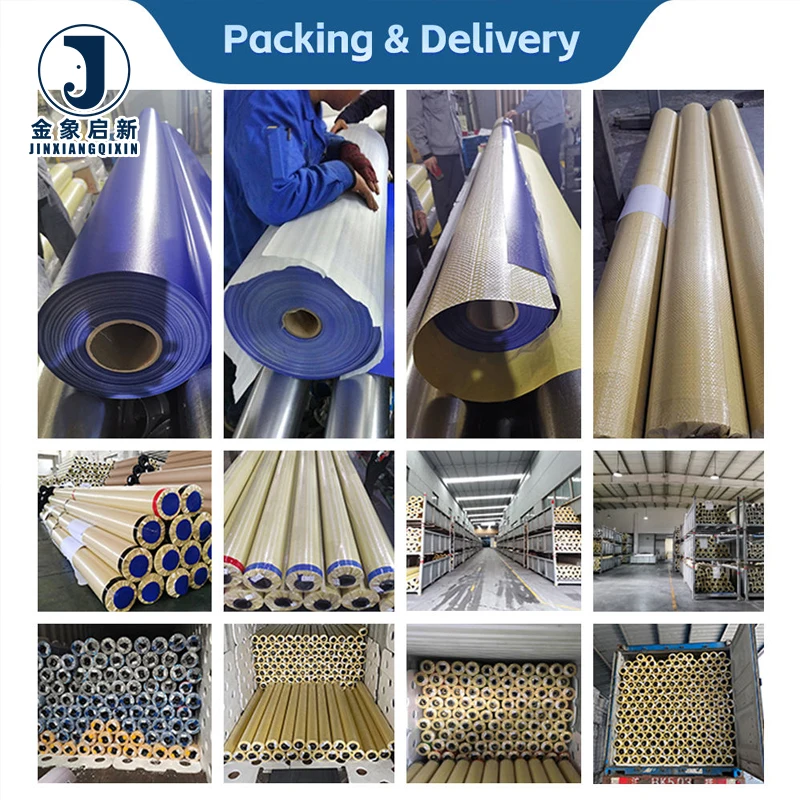
Dedicated QA/QC runs at every production stage with 100% inspection before shipment, catching coating weight deviation and surface defects before rolls are packed for export.
Deep process control over coating weight and adhesion, built across nearly 30 years of focused coated fabric production, translates into rolls that behave predictably on the fabrication floor.
ISO and CE certified production provides the compliance foundation that importers need for customs clearance and buyer audits across North America, Europe, and Asia.
Documentation & Verification
- Material specification sheet stating GSM, base fabric denier, coating material, and colour reference for each roll
- Pre-shipment inspection record confirming 100% QA coverage before container loading
- Roll packing list with individual roll count, net weight, and dimensions for customs processing
- UV and flame retardant test reports supplied for treated grades where applicable
- Certificate of origin and customs documentation aligned to the destination market
- ISO and CE certificates available on request for buyer audit and compliance filing
Fabrication, Handling & Storage
- Heat welding parameters should be tested against the specific GSM and glossy or matte finish before production runs begin
- Store rolls upright on a flat surface to prevent permanent creasing across the PVC coating layer
- Allow rolls to acclimatise to workshop temperature before unrolling, especially when ambient conditions approach -15°C
- Cut panels from multiple rolls should be laid out and checked for shade match before final welding or stitching
- Use compatible PVC adhesive for field repairs on the coated surface rather than generic solvent-based glues
- Plan cutting layout to maximise yield from the ordered roll width and minimise offcuts at seams
What to Include in Your Enquiry
Specify the denier, GSM range, and surface finish you need, along with the roll width and total linear metres per colour. If your market requires flame retardant or UV treatment, state the grade or test standard your end users demand so the correct documentation ships with the container. Confirm whether you need plain rolls or custom printing, and whether samples should be dispatched for fabrication trials before the full order enters production.
Frequently Asked Questions
Q: How is GSM verified on every roll before shipment?
A: Each roll is weighed and measured during the pre-shipment inspection process. The actual coating weight is recorded against the quoted GSM, and the inspection log travels with the shipment documentation. This gives you a verifiable record that the PVC Coated Tarpaulin Roll you received matches the specification you ordered, roll by roll.
Q: How do you control colour consistency across multiple rolls in one order?
A: Colour is monitored at the coating stage through in-process checks that track pigment dispersion and coating weight simultaneously. Any drift detected during production triggers a line adjustment before subsequent rolls are coated, keeping shade variation within acceptable limits across the entire batch for your container load.
Q: What widths and roll lengths are available for bulk ordering?
A: Standard and custom widths are available, with roll lengths set to suit container loading efficiency. The R&D team confirms the optimal roll length for your chosen GSM and denier combination so that net weight and cubic volume align with standard container capacity, minimising freight cost per square metre.
Q: What documentation accompanies a container shipment of roll stock?
A: Every shipment includes a material specification sheet, pre-shipment inspection record, roll packing list with individual weights, and certificate of origin. For flame retardant or UV treated grades, the corresponding test reports are included. ISO and CE certificates are available on request for customs and buyer compliance audits.
Q: What is the minimum order for custom colour or width rolls?
A: Minimum order quantities for custom specifications depend on the chosen denier, GSM, and colour. The sales team provides the exact threshold once your specification is confirmed, along with a sample development timeline so you can validate the material before the full production run begins.