Description
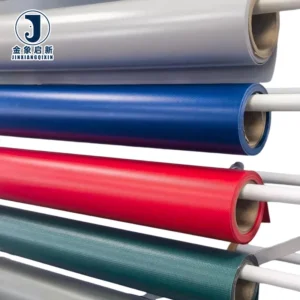
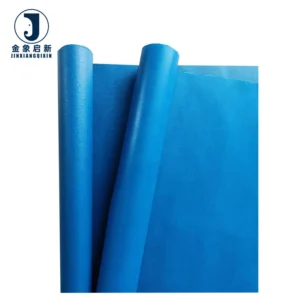
Consistent roll-to-roll quality — dedicated QA at every coating stage targets batch uniformity so your farm cover converters receive the same color and weight in every roll.
Technical Specifications
| Parameter | Value |
|---|---|
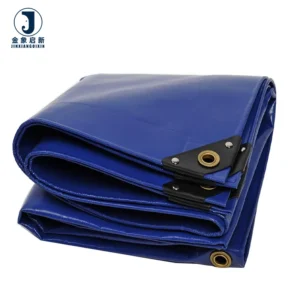
| Product Type | PVC Coated Tarpaulin Roll |
| Coating Material | PVC |
| Base Fabric | Warp Knitted Polyester |
| Waterproof | Yes |
| Anti-Static | Available (certification details on request) |
| Tear Resistance | Tear resistant construction |
| Style | Plain woven |
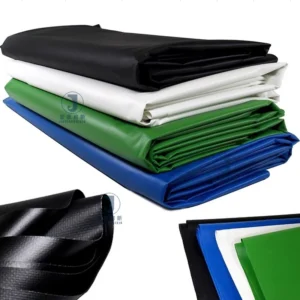
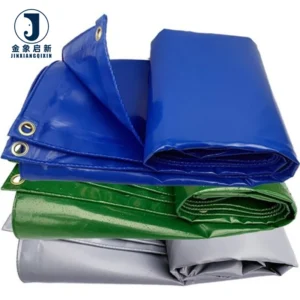
| Color | Customizable colors available |
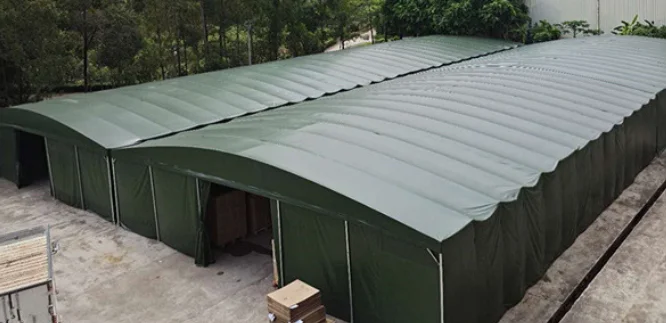
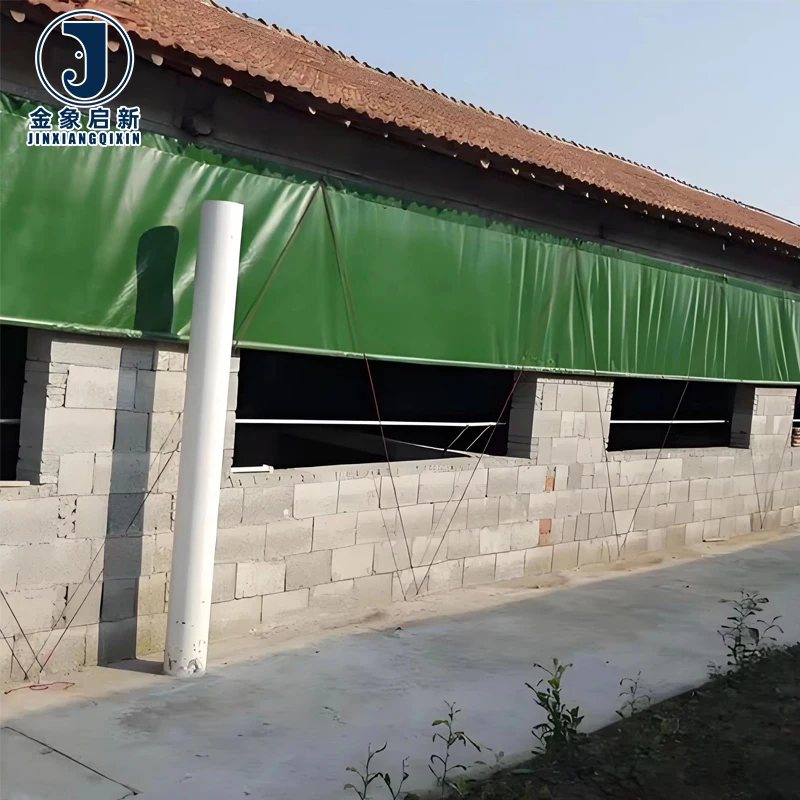
| Application | Poultry farm covers, livestock enclosures, agricultural shelters |
Application Suitability
| Application | Exposure & Requirement |
|---|---|
| Poultry and broiler farm covers | Constant humidity, ammonia exposure, frequent washdown, wind load on large unsupported spans |
| Pig and sheep shelter enclosures | Abrasion from animal contact, UV exposure on roof panels, rain and dust ingress prevention |
| Agricultural tent and temporary structure | Seasonal deployment, repeated folding and unfolding, wind stress at attachment points |
| Wholesale distribution to converters | Consistent roll dimensions and weight for automated cutting and welding lines |
Why Color Drift Between Rolls Wastes Your Entire Batch
Matched color across every roll in a container load, verified before dispatch.
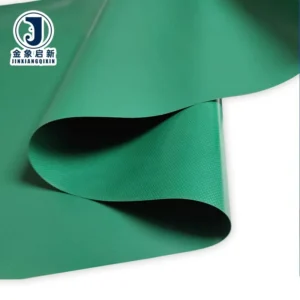
When a converter orders ten rolls of green PVC coated tarpaulin roll stock for a poultry farm project and roll three arrives visibly lighter than roll seven, the installed panels look mismatched against the structure. [NEED_CITE: color consistency testing methods for coated textile batches per ISO 105 series] The farm owner rejects the installation, the converter absorbs the replacement cost, and the project timeline extends by weeks. Batch color variation is one of the most common complaints in agricultural fabric procurement, and it only becomes visible after the rolls are cut and hung side by side.
Roll Stock Availability for Farm Cover Projects
Sourcing PVC Coated Tarpaulin Roll in volume for agricultural applications requires a supplier who understands that farm enclosures are not generic tarpaulin projects. Poultry shelters demand specific width ranges to minimize welded seams across long roof runs, and livestock pens need fabric that tolerates repeated contact with animals without surface abrasion. Our roll stock program supports custom width and length specifications produced to project dimensions, reducing off-cuts and fabrication waste at your workshop.
Batch Matching and Volume Consistency
Every roll within a single order passes through coating weight verification and color comparison before packing. For distributors stocking agricultural-grade PVC coated tarpaulin roll fabric, this means your warehouse inventory cuts uniformly and your customers receive the same material characteristics whether they order one roll or a full container. [NEED_CITE: coating weight measurement techniques per ISO 2286 for roll-to-roll consistency] Consistent GSM and coating adhesion across the batch also ensures your heat welding parameters stay stable from the first panel to the last.
How Warp Knitted Base Fabric Affects Tear Behavior
The warp knitted polyester base fabric provides the structural backbone of this PVC Coated Tarpaulin Roll. Unlike plain woven constructions where a single yarn break can propagate into a long tear, the interlocking loop structure of warp knitting distributes load across multiple yarn paths. This matters directly in livestock shelters where animals push against the fabric — a puncture from a sharp edge stays localized rather than running the length of the panel. The PVC coating locks the knit structure in place and adds waterproofing, but the base fabric determines how the material behaves when mechanically stressed beyond normal service loads.
What Happens When Coating Weight Does Not Match the Quotation
A common failure pattern in agricultural tarpaulin procurement begins when the quoted GSM is not verified on arrival. Lighter coating weight reduces waterproofing reliability and makes the fabric more susceptible to abrasion from wind-blown debris on exposed farm structures. [NEED_CITE: relationship between coating weight and service life in agricultural textile applications] For converters welding panels together, inconsistent coating thickness also causes uneven heat absorption during welding — some seams fuse properly while adjacent ones delaminate under the first wind storm. This is why pre-shipment weight verification per roll matters before the container leaves the factory.
Why Procurement Teams Choose This Source
Three full production lines and dedicated equipment capacity support bulk roll orders with reliable scheduling, so your container ships on the agreed date rather than sliding through repeated delays. The ten-person R&D team handles custom color matching and sample development within days, letting you confirm material appearance and hand feel before committing to a production run. Every roll undergoes inspection at the coating stage and again before packing, with a documented record provided so your receiving team can verify quality without destructive testing.
Documentation & Verification
- Material specification sheet stating base fabric type, coating material, and color reference per batch
- Pre-shipment inspection record confirming coating weight and color match before dispatch
- Roll packing list with exact roll count, dimensions, and gross weight for container loading
- Certificate of origin and customs documentation included with every shipment
- ISO and CE certificates available for compliance and import clearance
Fabrication, Handling & Storage
- Heat welding parameters should be tested on a sample cut from the actual roll batch before full production
- Store rolls upright on pallets to prevent flat spots that cause tracking issues on unwinding equipment
- Allow PVC coated tarpaulin roll material to reach ambient temperature before unrolling in cold conditions
- Use compatible PVC-based adhesives for patch repairs to maintain coating bond integrity
- Plan panel layout to place welded seams away from high-abrasion contact zones in livestock pens
What to Include in Your Inquiry
Provide the target width and roll length you need, along with the color reference or RAL code for your project. Let us know the application environment — poultry, pig, or mixed livestock — so we can confirm whether the standard construction suits your exposure conditions. If you require anti-static certification for a specific market regulation, state the standard your end customer expects so we can match the documentation.
Frequently Asked Questions
Q: What widths and roll lengths are available for farm-grade PVC tarpaulin stock?
A: Rolls are produced to your project-specific width and length requirements. Standard widths cover common agricultural panel dimensions, and custom widths reduce seam count on large shelter roofs. Provide your cutting layout and we will recommend the most material-efficient roll size for your fabrication line.
Q: How is batch color consistency maintained across multiple rolls in one order?
A: Every roll in a batch is compared against the approved color standard at the coating stage and again during final inspection. Rolls that drift outside the tolerance band are separated and do not ship with your order. A color reference is documented on the material specification sheet included with your shipment.
Q: Do you supply anti-static certified PVC fabric for livestock shelters?
A: Anti-static formulation is available for this PVC Coated Tarpaulin Roll product line. Certification details and test standards depend on your target market requirements. Specify the standard your end customer or local regulation requires so we can confirm availability and provide matching documentation.
Q: What is the minimum order for custom width or color rolls?
A: Minimum order quantities vary depending on the custom specification and color requested. Standard stock colors typically have lower minimums than bespoke color matches. Provide your target volume and specification so we can confirm the production minimum and lead time for your project.
Q: How do you verify coating weight before shipment?
A: Each roll is sampled and weighed during pre-shipment inspection to confirm the coating weight matches the material specification sheet. The inspection record accompanies your shipment documentation, giving your receiving team a verified reference without requiring destructive testing on arrival.