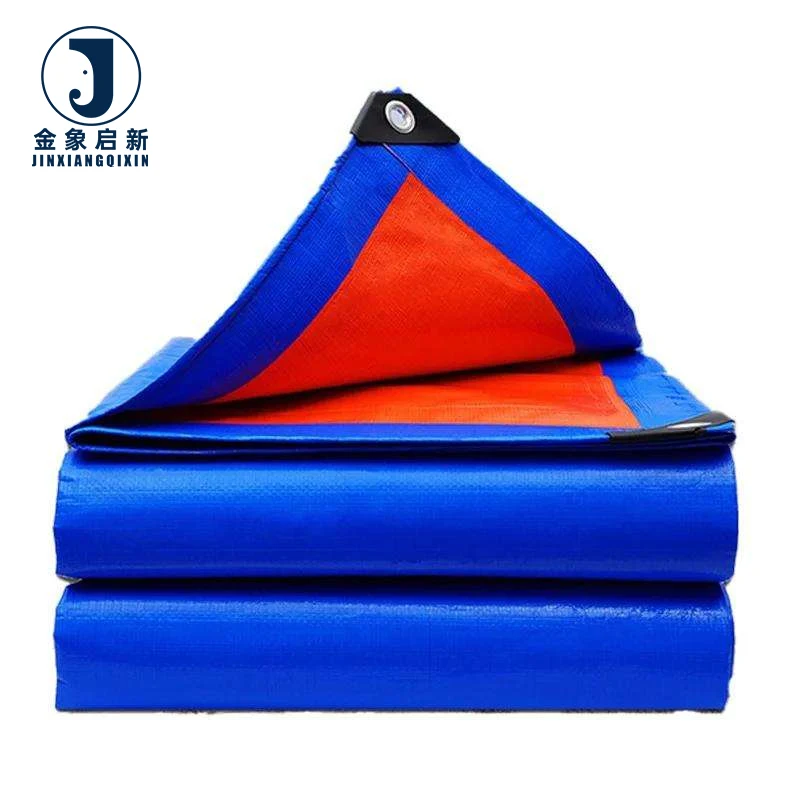
Description
Roll-to-Roll Consistency — Every PE tarpaulin roll is inspected against the quoted GSM and colour reference before it leaves the production line, ensuring batch uniformity across full container loads.
Technical Specifications
| Parameter | Value |
|---|---|
| Product Type | PE Tarpaulin |
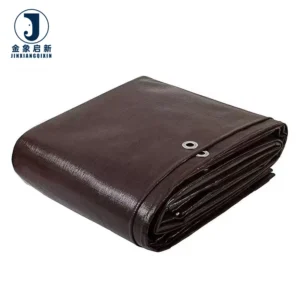
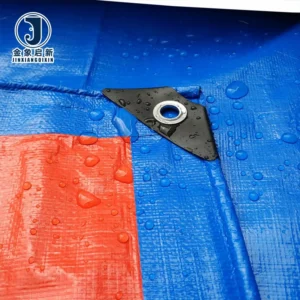
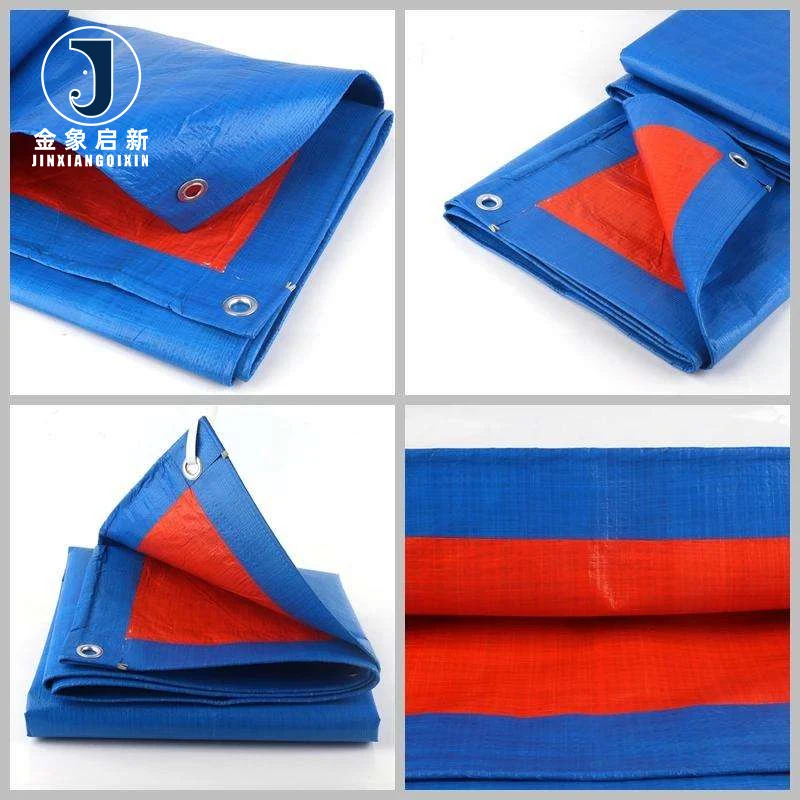
| Material | HDPE woven fabric cross weaving, laminated both sides with LDPE |
| Construction | 3-layer or 5-layer lamination |
| Weight Range | 40 g/m² – 500 g/m² (confirm specific grade required) |
| Lightweight Grade | 80–110 g/m², 0.18–0.22 mm thickness, 8×8 mesh count |
| Medium-Duty Grade | 120–150 g/m², 0.22–0.28 mm thickness, 10×10 mesh count |
| Heavy-Duty Grade | 160–240 g/m², 0.30–0.35 mm thickness, 12×12 mesh count |
| Tensile Strength (Lightweight) | Meridian 300–500 N/5cm, Latitude 250–450 N/5cm |
| Tensile Strength (Medium-Duty) | Meridian 500–800 N/5cm, Latitude 400–700 N/5cm |
| Tensile Strength (Heavy-Duty) | Meridian 900–1200 N/5cm, Latitude 700–1000 N/5cm |
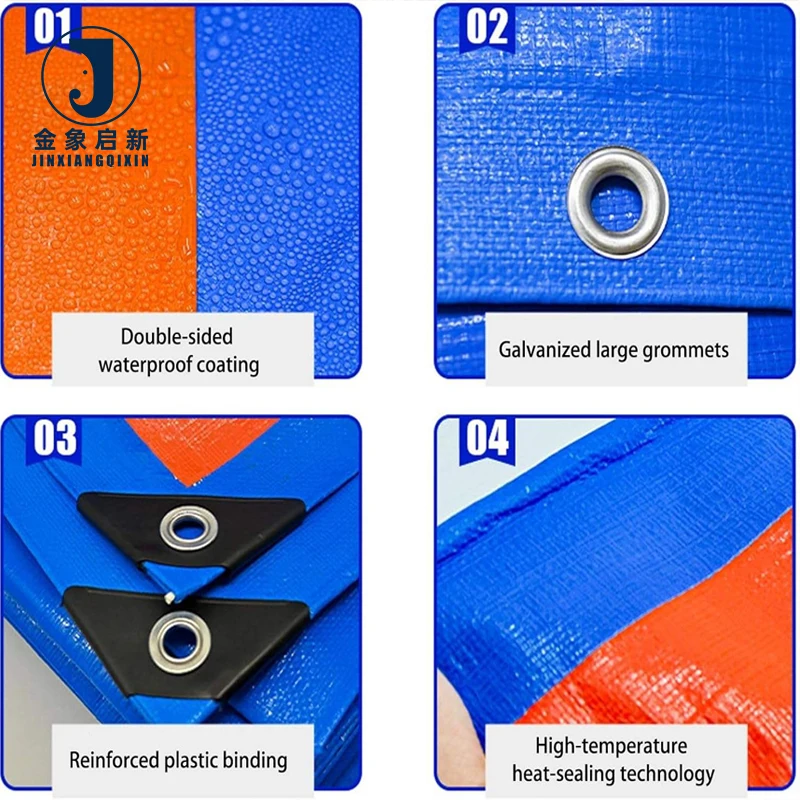
| Grommet Spacing | 39.4 inches center to center |
| Surface | Double waterproof surfaces |
| UV Treatment | Available in UV-resistant grades — confirm the treatment level required for your market |
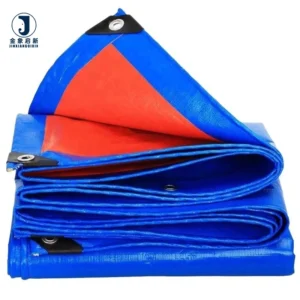
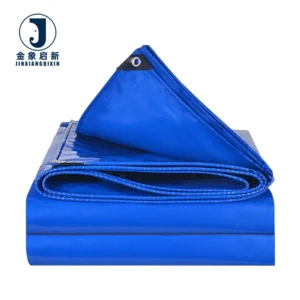
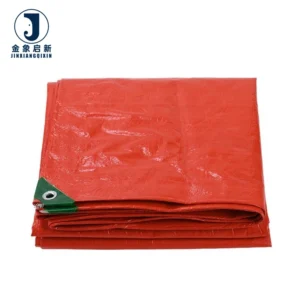
| Edge Reinforcement | Reinforced rustproof grommets, reinforced corners |
| Color | Custom color per order |
| Size | Custom size per order |
| Certification | ISO, CE |
Application Suitability
| Application | Exposure & Requirement |
|---|---|
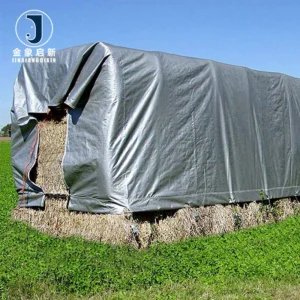
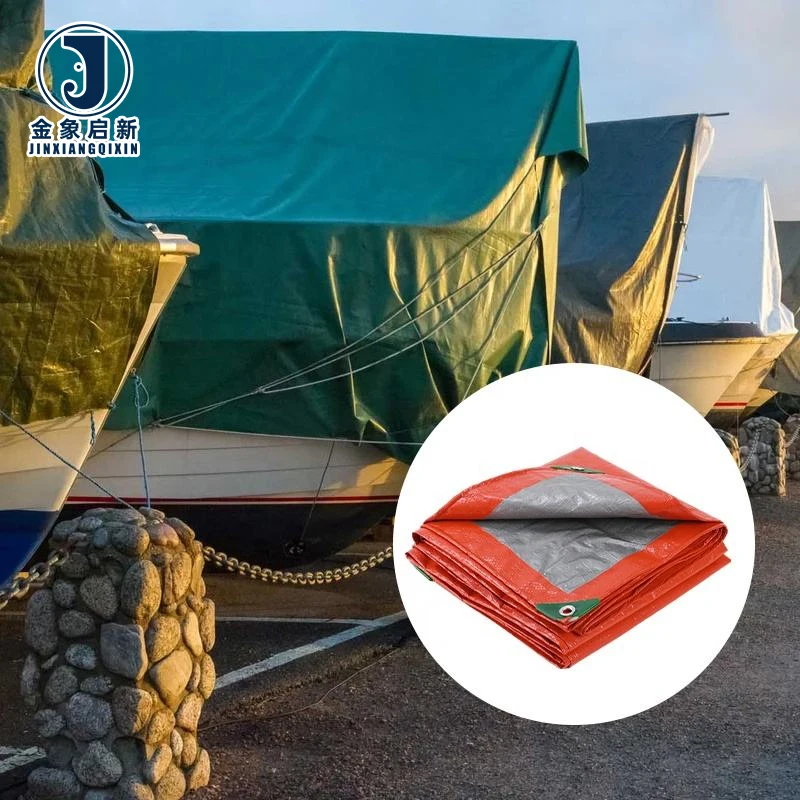
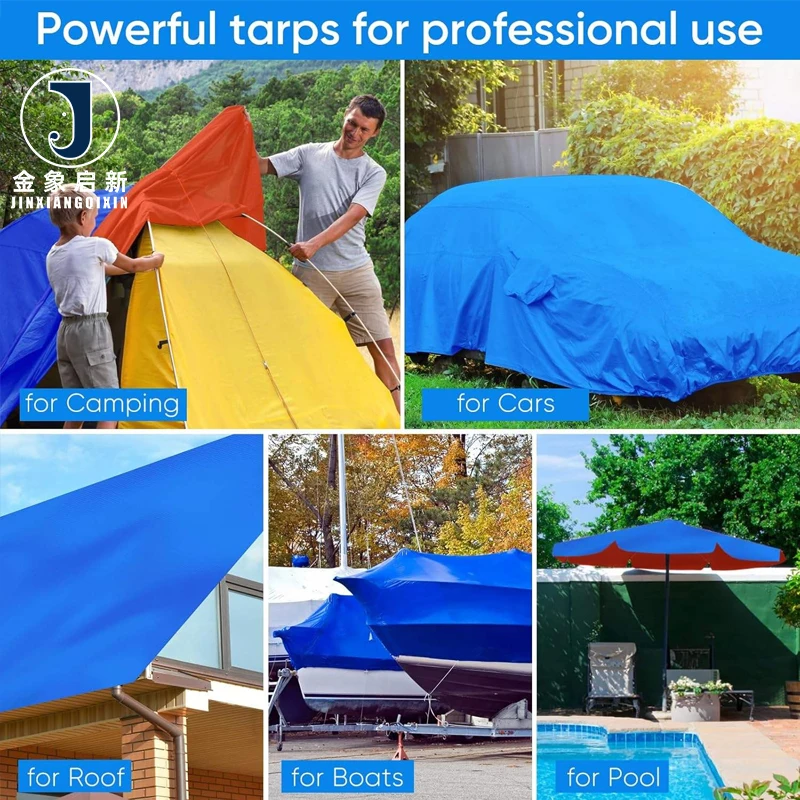
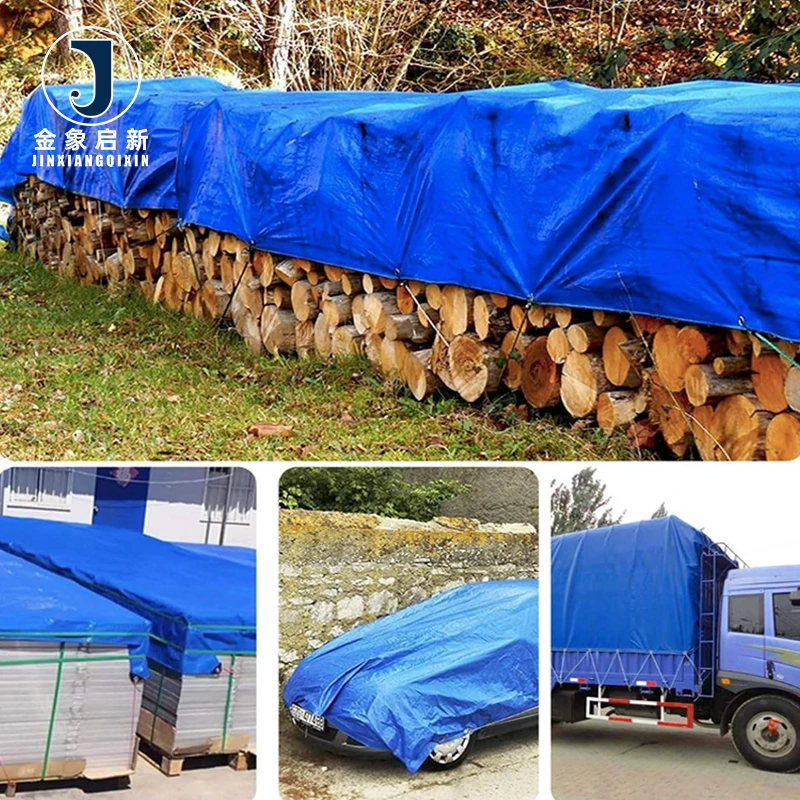
| Agricultural crop and stockpile covers | Prolonged sun exposure, moisture, wind uplift — requires UV-stabilised grades with reliable waterproof surfaces |
| Warehouse and industrial storage covers | Dust ingress, mechanical handling contact, stacking abrasion — benefits from medium-to-heavy-duty GSM with reinforced edges |
| Pond and reservoir liners (rolled supply) | Continuous water contact, soil chemistry, puncture from substrate — demands heavy-duty grades with intact lamination layers |
| Truck and transport tarpaulins (converter supply) | Road vibration, flex fatigue at tie-down points, weather exposure — requires verified tensile strength and grommet reinforcement |
| Temporary event and construction site covers | Short-term weather protection, repeated folding and deployment — suited to lightweight-to-medium grades with consistent batch colour |
Why Roll-to-Roll Weight Variability Costs Distributors More Than They Realise
A single underweight roll in a container erodes buyer trust across the entire shipment.
When a PE tarpaulin roll stock aftermarket supplier quotes a specific GSM but delivers rolls that fall short on arrival, the distributor absorbs the cost — either by honouring the specification to their own customer or by processing claims and replacements. The problem compounds when rolls from the same container are cut and hung side by side, revealing visible colour drift that no end user will accept. This is not a defect found on inspection; it is a defect found by the customer, at the worst possible moment. [NEED_CITE:]
Volume Availability Across the Full Weight Range
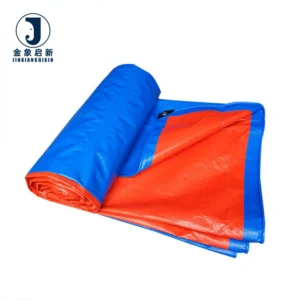
PE Tarpaulin roll stock is supplied across lightweight, medium-duty and heavy-duty grades to cover the full spectrum of wholesale and distribution demand. Stocking multiple GSM tiers from a single production source simplifies container consolidation and reduces the administrative burden of coordinating several suppliers. Each grade is produced on dedicated lamination lines, which allows concurrent runs of different weights within the same shipment window without cross-contamination of specifications.
Batch Colour Control as a Supply Chain Requirement
Colour consistency across rolls is not a cosmetic preference — it is a commercial requirement for distributors who supply fabrication shops, event hire companies and agricultural cooperatives. When a converter cuts sheets from three different rolls to make a single truck cover, any shade variation between panels becomes immediately visible to the end customer. Our QA process tracks colour reference at each stage of the production run, and pre-shipment inspection records document the findings before the container is sealed. [NEED_CITE:]
Understanding How Mesh Count and Lamination Layers Define Performance
The relationship between mesh count and lamination construction determines how the fabric behaves under tension and puncture loads. An 8×8 mesh at 80–110 g/m² provides adequate cover for temporary agricultural use but will not sustain the repeated tie-down stress of a truck tarpaulin. The jump to 12×12 mesh at 160–240 g/m² increases the yarn intersection points per square inch, distributing concentrated loads across a wider fabric area. Meanwhile, 5-layer lamination (two fabric plies with three coating layers) significantly improves puncture resistance compared to standard 3-layer construction, which is critical for pond liner applications where substrate irregularities press against the membrane. Choosing the wrong combination — a heavy coating over a loose mesh — produces a roll that feels substantial on the scale but tears easily at the yarn level. [NEED_CITE:]
The Hidden Cost of Accepting Unverified Material Documentation
When a container arrives and the roll labels state a GSM that the scale does not confirm, the distributor faces an immediate dilemma: ship the product anyway and risk customer complaints, or hold the stock and absorb dead inventory. Either outcome carries a cost that does not appear on the original purchase order. Similarly, when UV treatment is claimed but no test basis accompanies the shipment, outdoor covers fail prematurely and the warranty claim lands on the distributor, not the factory. These are not theoretical scenarios — they are the standard friction points that importers manage across every sourcing relationship. [NEED_CITE:]
What This Supply Relationship Delivers
Three full production lines with 36 sets of professional equipment provide the throughput capacity to fill container-load orders on schedule, even during peak demand periods. The 10-person R&D team develops samples within days for custom width, colour or treatment requirements, removing the long sampling delays that typically slow down new product introductions. Dedicated QA and QC at every production stage — from base fabric weaving through coating and final slitting — means that roll-to-roll consistency is a controlled output, not a sampling lottery. Nearly three decades of focused PE tarpaulin production experience translates into stable process parameters that reduce the variance buyers typically encounter across different production batches. Full documentation packages including material specification sheets, roll packing lists and customs support documents ship with every order, reducing clearance delays at destination ports.
Documentation & Verification
- Material specification sheet stating GSM, base fabric mesh count and LDPE coating weight per roll grade
- Pre-shipment inspection record confirming measured weight against quoted specification for every roll
- Roll packing list with individual roll dimensions, weight and container loading position
- UV and treatment test reports provided for grades where specific performance levels are claimed
- Certificate of origin and customs documentation prepared for international container shipments
- Colour reference documentation linked to production batch for traceability across reorder cycles
Fabrication, Handling & Storage
- Heat sealing temperature should be matched to the specific LDPE coating thickness — test on a sample section from each new roll grade before full production runs
- Store PE tarpaulin rolls upright on pallets in shaded conditions to prevent compression marks that transfer through the lamination layers
- Grommet installation at 39.4-inch spacing requires reinforced hem folding to prevent pull-through on lightweight grades below 110 g/m²
- Avoid dragging heavy-duty rolls across concrete floors during warehouse handling to protect the outer LDPE surface from scoring
- Unroll and allow custom-width stock to relax for several hours before cutting to relieve winding tension and ensure flat sheet dimensions
- Clean with mild detergent and soft brush only — solvent-based cleaners degrade the LDPE lamination surface
Requesting a Quotation
To receive an accurate quotation with lead time and container loading details, provide the target GSM grade, required roll width and length, and annual volume estimate. If your market requires specific UV or treatment levels, state the performance standard or regional compliance requirement so the correct grade can be matched. Colour specifications should include a Pantone or RAL reference to ensure the first sample matches your production expectations. Confirm whether you need rolls supplied as-is or with grommets and hem reinforcement applied at the factory.
Frequently Asked Questions
Q: What GSM grades are kept in stock and which require production lead time?
A: Standard lightweight, medium-duty and heavy-duty grades within the 80–240 g/m² range are typically available for faster dispatch. Custom GSM values, widths or colours outside standard parameters require production scheduling. Contact us with your specific grade and volume to confirm availability and expected lead time for your order.
Q: How do you guarantee colour consistency across multiple rolls in one order?
A: Every production run references a specific colour standard, and QA checks are performed at multiple stages during coating and lamination. Pre-shipment inspection records document the colour assessment before dispatch. If your application demands tight shade matching across rolls, state this requirement at the inquiry stage so the appropriate control level is applied.
Q: What is the minimum order quantity for custom width or custom colour rolls?
A: Custom widths and colours outside the standard range are supported with defined minimums that vary depending on the grade and lamination configuration. Provide your target specification and container volume at the inquiry stage, and the applicable minimum and lead time will be confirmed in the quotation.
Q: Can you provide a container loading plan with roll count and weight breakdown?
A: Yes, a container loading plan is prepared for each shipment detailing the number of rolls, individual and total weight, and stacking arrangement. This supports logistics planning and customs documentation at the destination port. Request this at the quotation stage to include it in your shipping preparation.
Q: What documentation ships with each order?
A: Each shipment includes a material specification sheet, pre-shipment inspection record, roll packing list, certificate of origin and relevant customs support documents. Where UV or other treatment levels are specified, corresponding test documentation is included. Confirm your documentation requirements during the order process to ensure full compliance with your import regulations.