Description
Consistent Roll-to-Roll Weight — Every PE tarpaulin roll leaves our facility with a pre-shipment inspection record verifying GSM, density, and coating weight against the material specification sheet.
Technical Specifications
| Parameter | Value |
|---|---|
| Product Type | PE Tarpaulin |
| Material | HDPE weaving with LDPE lamination on both sides |
| GSM Range | 50 g/m² – 300 g/m² |
| Total Thickness | 0.2–0.4 mm / 8–16 mil / Custom |
| Weave Density Options | 6×6, 6×7, 7×7, 7×8, 8×8, 9×9, 8×10, 10×10, 12×12, 14×14, 14×16 |
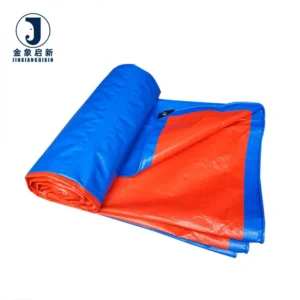
| Roll Width Options | 6 ft, 8 ft, 10 ft, 12 ft / 2 m, 4 m, 6 m |
| Roll Length Options | 100 yards, 100 meters, or custom |
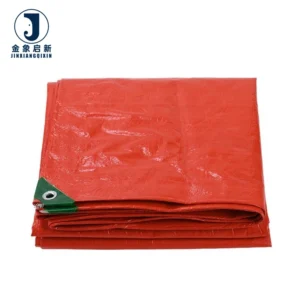
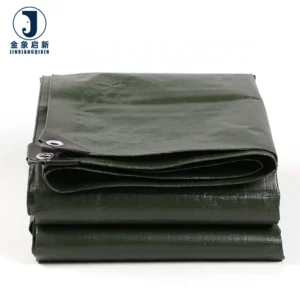
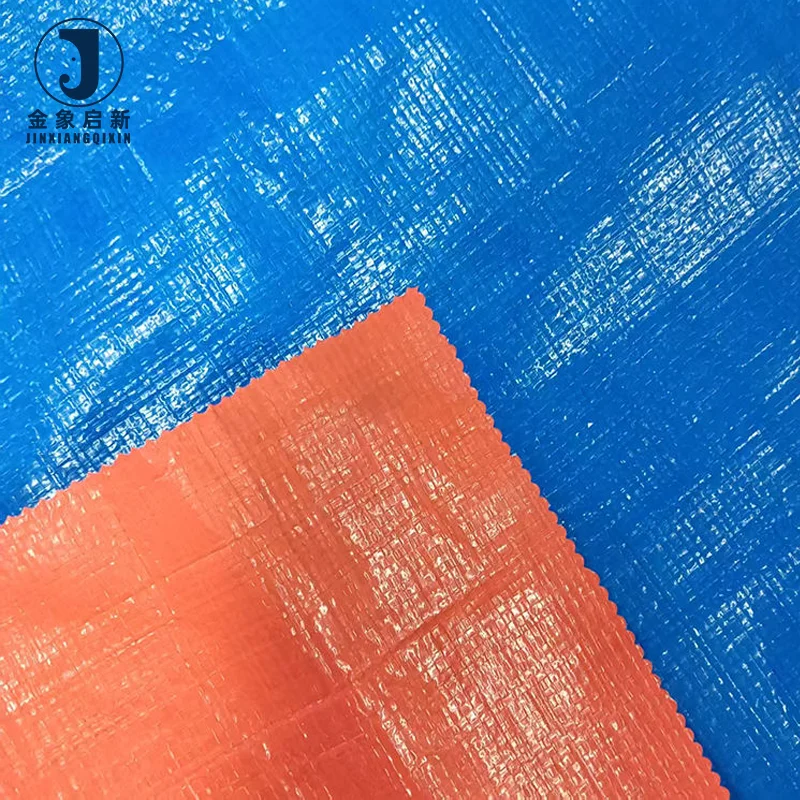
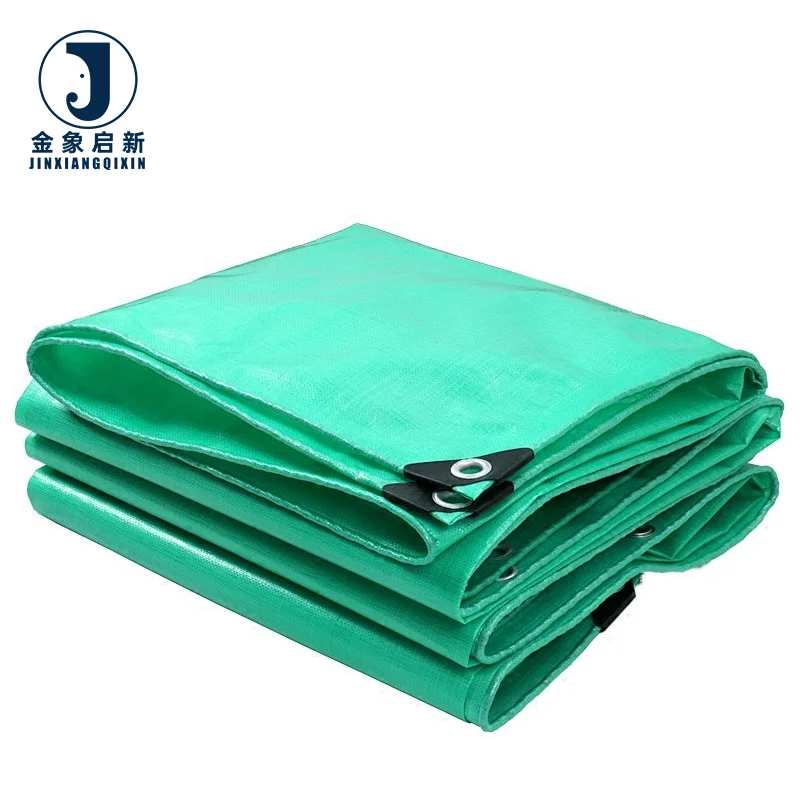
| Color Options | Blue, Blue/Orange, Green, Grey, Black, Clear, Grey/Green, Orange, or custom |
| Hem Reinforcement | PP rope on all four edges |
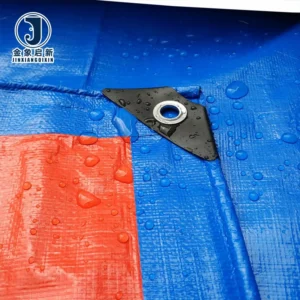
| Eyelets | Galvanized, spaced every 3 ft or 1 meter |
| Corners | Reinforced plastic |
| UV Treatment | Available — confirm grade and test basis for your market |
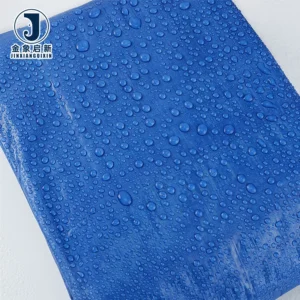
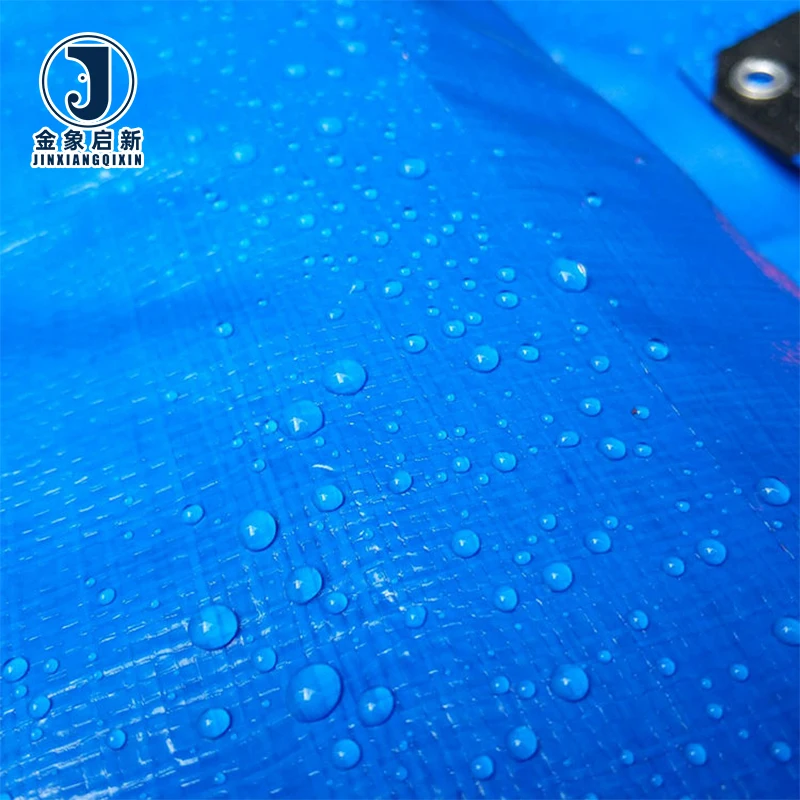
| Key Features | Waterproof, washable, tear resistant, weather proof, mildew proof, anti-aging |
| Container Loading (20’GP) | By Roll 17 Tons / By Bale 12 Tons / By Carton 9 Tons |
| Container Loading (40’HQ) | By Bale 28 Tons / By Carton 20 Tons |
| Printing | Customized option available |
Application Suitability
| Application | Exposure & Requirement |
|---|---|
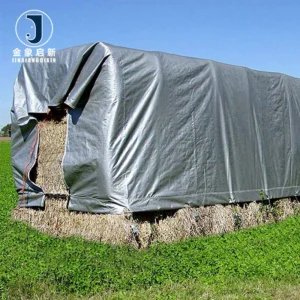
| Agricultural crop and hay covers | Prolonged sun exposure, moisture, repeated handling and folding |
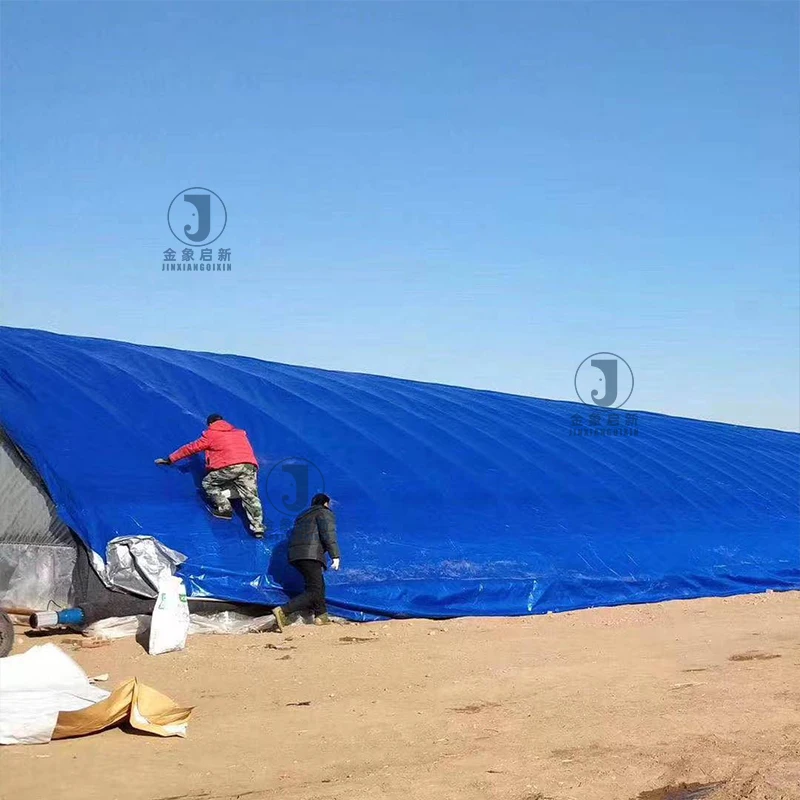
| Construction site material wraps | Abrasion from scaffolding, wind loading, dust and debris |
| Pond and reservoir lining | Permanent water contact, soil chemistry, puncture from substrate |
| Truck and container tarps | Road vibration, UV exposure, tie-down stress at eyelet points |
| Timber and lumber stockpile covers | Moisture ingress prevention, fungal growth resistance, weight of stacked loads |
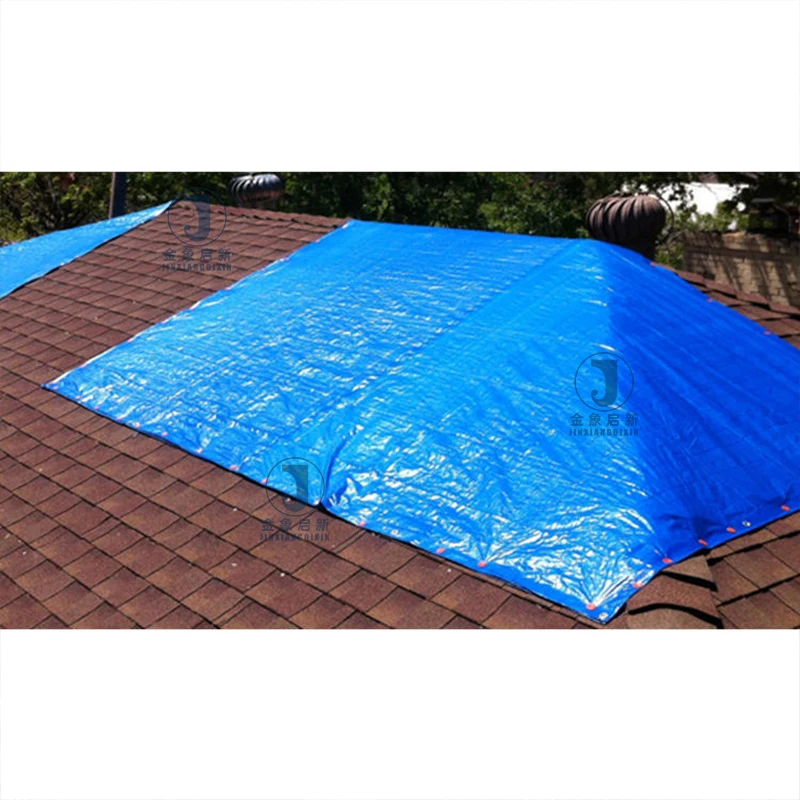
| Garden furniture and pool covers | Seasonal UV, rain pooling, mildew in humid climates |
Why Bulk Buyers Lose Money on Unverified GSM in PE Tarpaulin Roll Stock Wholesale Orders
We verify every roll against the quoted GSM before it leaves the factory floor.
Importers ordering container loads of PE tarpaulin often discover on arrival that the material is lighter than agreed. A quoted 90 g/m² roll may weigh closer to 80 g/m², reducing tensile performance and shortening service life. Across a 20-foot container, that shortfall compounds into a significant material deficit [NEED_CITE: pre-shipment GSM verification methods for woven tarpaulin].
Weave Density and GSM Mapping for Predictable Performance
Selecting PE tarpaulin roll stock wholesale requires understanding how weave density maps to weight. A 6×6 weave typically sits in the 50–60 g/m² band, suited to light-duty, short-term covers. Moving to an 8×8 or 9×9 weave raises the range to 80–90 g/m², adding tear resistance for agricultural and construction wraps. At the top end, a 14×16 weave reaches 250–300 g/m², delivering the density needed for heavy-duty truck tarps and industrial stockpile covers.
Color Consistency Across Multi-Roll Shipments
When a distributor installs tarps side by side, visible colour variation between rolls signals poor batch control. Our production runs hold colour reference per order, with in-process QA checkpoints comparing each roll against the approved sample. For PE tarpaulin roll stock wholesale buyers stocking multiple colours for regional resale, this consistency prevents customer complaints and returns tied to mismatched batches [NEED_CITE: colour consistency standards for laminated PE fabrics].
Reading the Specs Beyond GSM Alone
GSM tells you how much material is present, but weave density determines how that weight is distributed. A 100 g/m² fabric woven at 10×10 distributes yarns evenly in both directions, balancing warp and weft strength. A fabric achieving the same GSM through heavier yarns at a looser weave may resist tension in one direction but tear more easily in the other. The double-side LDPE lamination over an HDPE woven base locks the weave in place, improving peel resistance at the coating-to-fabric interface and contributing to overall dimensional stability during fabrication and field use.
The Hidden Cost of Skipping Pre-Shipment Inspection
When rolls arrive underweight, the consequences extend beyond a single defective batch. Distributors who ship lighter-than-quoted tarps to their own customers face returns, margin erosion, and reputational damage. Construction contractors relying on a specified GSM for wind-load calculations may see tarp failure during storms [NEED_CITE: tensile and tear test methods for coated fabrics per ISO 1421]. Agricultural operators covering high-value crops risk moisture damage when a thinner laminate allows water penetration. These failures are preventable with documented verification at every production stage.
Why Sourcing PE Tarpaulin Here Reduces Procurement Risk
Three full production lines and 36 sets of professional equipment support bulk volume with reliable scheduling, so container-load orders ship on time. A dedicated 10-person R&D team handles custom width, colour matching, and pattern printing, developing samples within days rather than weeks. QA checkpoints at every production stage — from base fabric weaving through lamination and finishing — catch deviations before they reach the packing area. Roll packing on hard paper tubes wrapped in tarpaulin sheet protects edges and surfaces during ocean freight. Every shipment includes a packing list, certificate of origin, and customs documentation, reducing clearance delays at the port of entry.
Documentation & Verification
- Material specification sheet stating GSM, weave density, base fabric, and LDPE coating reference
- Pre-shipment inspection record confirming weight and density per roll before dispatch
- UV treatment and mildew resistance test report provided where applicable
- Roll packing list with roll count, individual weights, and container loading plan
- Certificate of origin and customs support documents included with every shipment
Fabrication, Handling & Storage
- Heat-seal at moderate temperatures suited to LDPE lamination; test peel strength on offcuts before full production runs.
- Galvanized eyelets at 3 ft or 1 m intervals distribute tie-down load; add extra reinforcement at high-stress corners.
- Store rolls upright on hard paper tubes to prevent flat spots and edge creasing on the HDPE woven base.
- Unroll in warm conditions; cold-stored PE tarpaulin becomes stiff and may crack if folded sharply at low temperatures.
- Clean with mild detergent and water; avoid solvents that degrade the LDPE lamination surface.
- Plan cutting layouts around standard 2 m, 4 m, and 6 m roll widths to minimize offcuts and seam joints.
Specify Your Roll Stock Requirements
Share your target GSM band, weave density preference, and the roll widths and lengths your operation runs most efficiently. Let us know your annual volume and whether you need finished cut sizes alongside roll stock. If your market requires UV treatment or specific mildew resistance, state the test basis your customers expect so we can confirm the correct grade before sampling begins.
Frequently Asked Questions
Q: How do you verify GSM matches the quotation on arrival?
A: Every roll undergoes in-process weight checks during production, and a final pre-shipment inspection records the actual GSM against the material specification sheet. You receive this inspection record before dispatch, allowing you to compare the documented weight with your physical verification when the container arrives at your warehouse.
Q: What is the minimum order for custom width, color, or printing?
A: Custom width and colour runs require a minimum that covers the loom setup and lamination line changeover. For pattern printing, the minimum depends on the number of colours in the design and the repeat length. We confirm the exact minimum once your specification is reviewed, and samples are developed within days for your approval before bulk production.
Q: How many tons fit in a 20ft or 40ft container?
A: A 20-foot general-purpose container holds approximately 17 tons by roll, 12 tons by bale, or 9 tons by carton. A 40-foot high-cube container accommodates around 28 tons by bale or 20 tons by carton. Packing format selection depends on whether you are stocking rolls for slitting or distributing finished cut sizes to end users.
Q: Can I get a sample before placing a bulk roll order?
A: Yes. We produce samples in your requested GSM, weave density, colour, and width within days. The sample allows you to verify hand feel, lamination adhesion, and colour accuracy before committing to container-load quantities. Sample approval becomes the production reference for batch consistency across your entire order.
Q: How do you ensure color consistency across rolls in the same order?
A: Each production run references an approved colour sample held at the lamination line. In-process QA staff compare rolls against this reference at multiple checkpoints. Rolls that drift outside the accepted tolerance are pulled before packing. This process ensures that when your customers install tarps side by side, no visible colour variation appears across the batch.