Description
Batch-to-Batch Consistency — Every roll of PE tarpaulin roll is inspected against its quoted GSM before dispatch, ensuring the wholesale shipment arriving at your warehouse matches the material specification sheet you approved.
Technical Specifications
| Parameter | Value |
|---|---|
| Product Type | PE Tarpaulin |
| Material | HDPE weaving with LDPE lamination on both sides |
| Weight (GSM) | 80-110 (lightweight) / 120-150 (medium) / 160-240 (heavy-duty) |
| Total Thickness | 0.18-0.22 mm (lightweight) / 0.22-0.28 mm (medium) / 0.30-0.35 mm (heavy-duty) |
| Mesh Count | 8×8 / 10×10 / 12×12 |
| Tensile Strength (N/5cm) | Meridian 300-1200 / Latitude 250-1000 (varies by grade) |
| Roll Width Options | 6 ft, 8 ft, 10 ft, 12 ft, 2 m, 4 m, 6 m |
| Roll Length Options | 100 yards, 100 meters, or custom |
| Color Options | Blue, Blue/Orange, Green, Grey, Black, Clear, Grey/Green, Orange, or custom |
| Key Features | Waterproof, UV treated, mildew proof, anti-aging, washable, tear resistant |
Application Suitability
| Application | Exposure & Requirement |
|---|---|
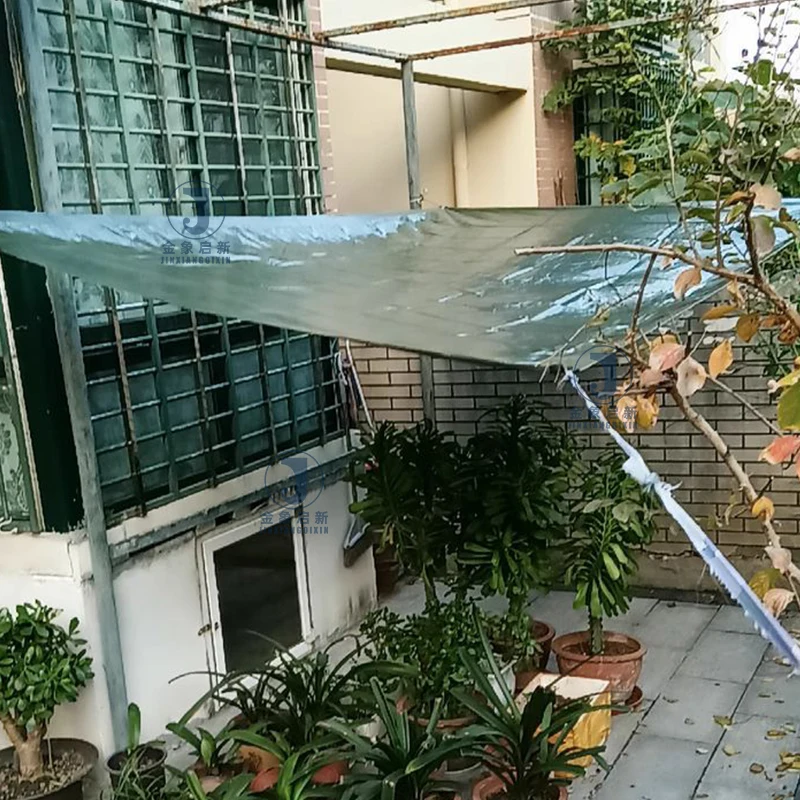
| Agricultural sunshade for poultry farms | Prolonged UV exposure, wind loading, need for light diffusion and ventilation |
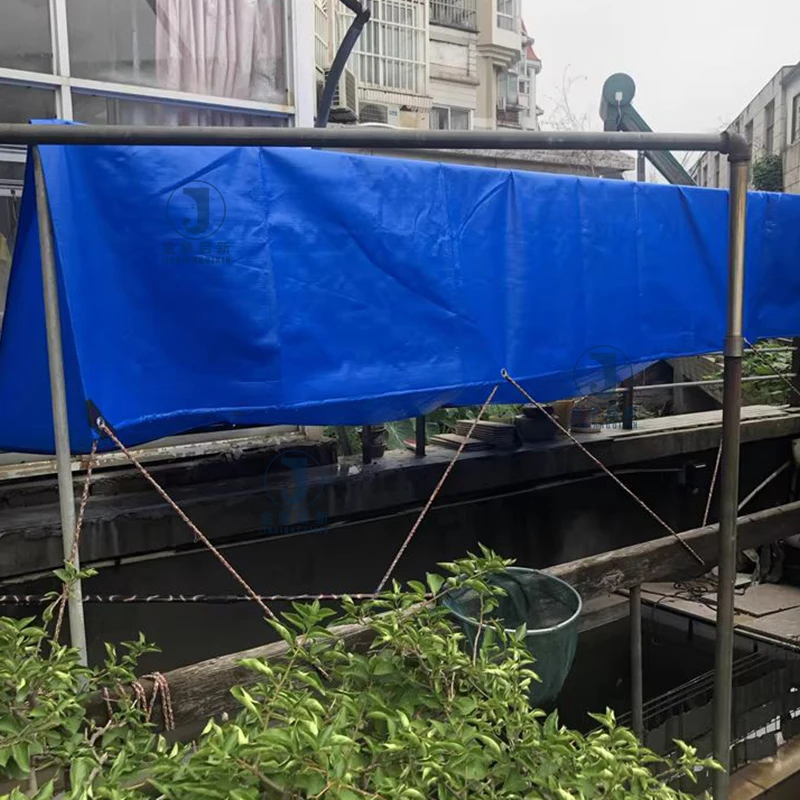
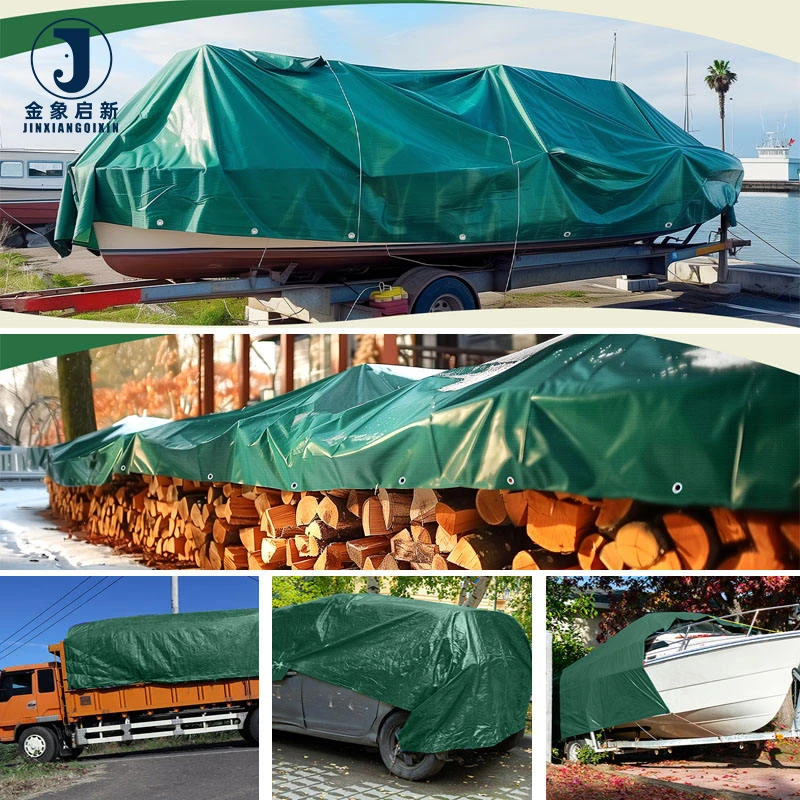
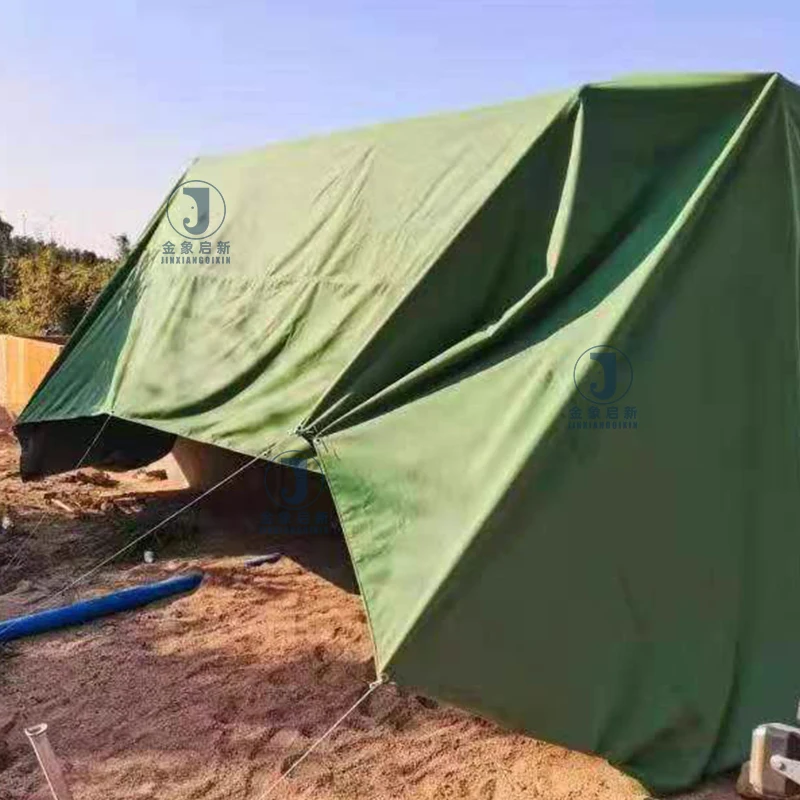
| Warehouse and stockpile covering | Rain ingress prevention, dust control, repeated removal and reinstallation |
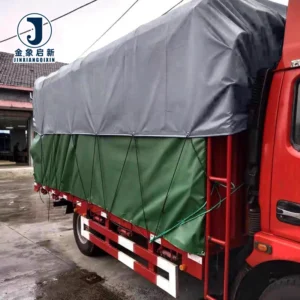
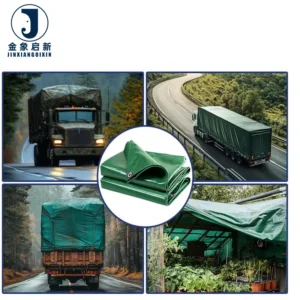
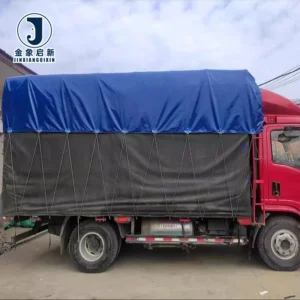
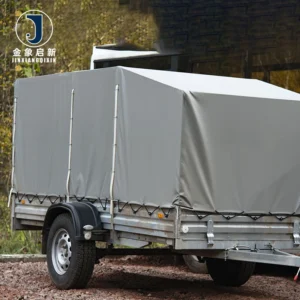
| Truck and trailer load covering | Road abrasion, flexing at tie-down points, high-speed wind uplift |
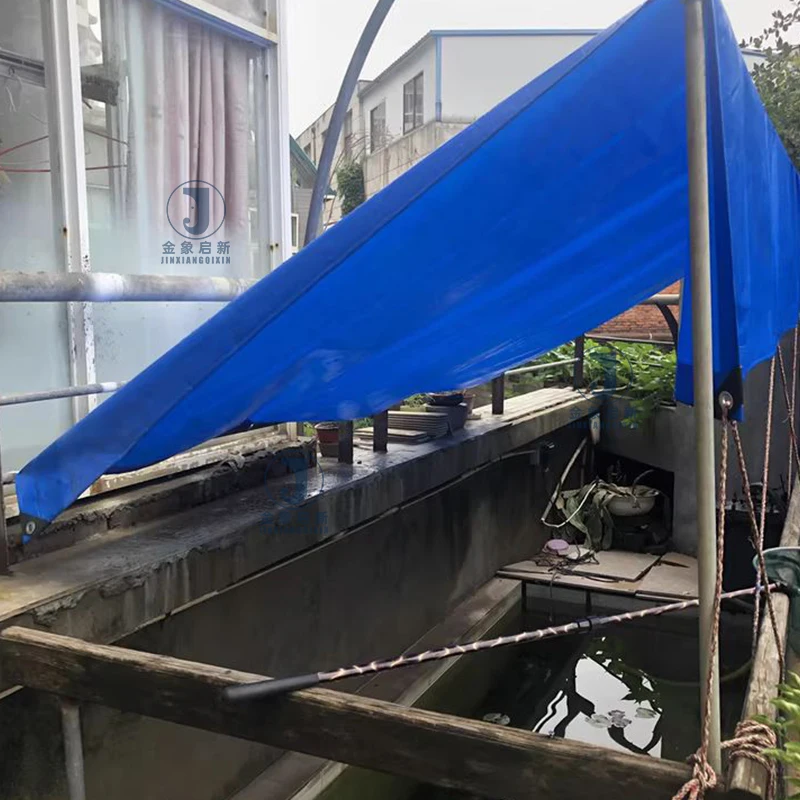
| Pond and reservoir lining | Permanent water contact, soil chemistry, puncture from subgrade |
| Tarpaulin redistribution by importers | Roll-to-roll colour match, consistent GSM, container-efficient packing |
Why Wholesale Buyers Get Burned on Roll Stock GSM Claims
A quoted GSM only matters if the roll on the scale matches the roll on the certificate.
Sourcing PE tarpaulin roll wholesale from multiple suppliers often reveals a pattern: the specification sheet states one weight, but the material arriving in the container feels noticeably lighter. This shortfall is not always deliberate — coating weight can drift across production runs when lamination temperature or line speed varies. The result is a fabric that tears more easily at the hem, flexes beyond its design limit at eyelet points, and fails prematurely under UV load. Buyers who distribute to end users absorb the complaints, while the root cause traces back to undocumented process variation at the mill [NEED_CITE: coating weight control and GSM verification methods for PE laminated fabrics].
Stock Availability and Container Loading Efficiency
Distributors ordering PE tarpaulin roll in volume need widths and lengths that map directly to container capacity. This product family ships in roll widths from 2 m to 6 m, with standard lengths of 100 yards or 100 meters. Narrower widths load efficiently into 20-foot containers for markets with smaller downstream cutting operations, while 4 m and 6 m rolls suit buyers who fabricate large-format covers and want to minimise transverse welds. Custom roll lengths are available for buyers who calculate linear meterage against specific cutting patterns to reduce off-cut waste.
Colour and Grade Consistency Across a Multi-Roll Shipment
When a wholesale order spans several hundred rolls, even slight colour drift between production batches becomes visible once the tarpaulins are deployed side by side at a job site. Maintaining colour match across PE tarpaulin roll batches requires controlled pigment dosing at the LDPE lamination stage and consistent base fabric sourcing between runs [NEED_CITE: colour consistency standards for laminated PE fabrics in bulk production]. Each production run is matched against an approved colour reference before lamination begins, and rolls from different batches within the same order are flagged during pre-shipment inspection if visual comparison shows deviation beyond the agreed tolerance.
Reading the Specification Sheet: What GSM, Mesh Count and Thickness Actually Mean Together
GSM alone does not determine how a PE tarpaulin performs in the field. A lightweight 80-110 GSM roll with an 8×8 mesh count provides adequate coverage for short-term agricultural shading, where the primary load is wind catch rather than mechanical abrasion. Moving to a medium 120-150 GSM grade at 10×10 mesh increases the HDPE yarn density in both warp and weft, which directly improves tensile strength and resistance to tear propagation — critical when the fabric is pulled tight across a truck load with ratchet straps. The heavy-duty 160-240 GSM option at 12×12 mesh adds further yarn count and lamination thickness, producing a stiffer roll that holds its shape under high wind but requires more effort to fold and handle on site. Thickness readings across these grades range from 0.18 mm to 0.35 mm, and the relationship between thickness and mesh count determines how well the LDPE coating penetrates the weave — incomplete penetration leaves pathways for water ingress at the yarn crossover points.
The Hidden Cost of Specifying the Wrong Grade for Your Market
A distributor who orders lightweight rolls for a market where end users expect heavy-duty performance faces returns and margin erosion. The fabric arrives within specification but fails to meet the durability assumptions of the local buyer base. Conversely, overspecifying — sending heavy-duty 12×12 mesh rolls to agricultural buyers who only need seasonal sunshade — ties up capital in unnecessary material cost and adds weight that increases freight expense per container. Selecting the correct grade requires understanding not just the quoted GSM, but the mesh count, lamination weight and tensile profile that correspond to the actual end-use conditions [NEED_CITE: relationship between mesh count and tear propagation in HDPE woven fabrics].
Why Sourcing PE Tarpaulin Roll Stock Here Reduces Procurement Risk
Three full production lines and 36 sets of professional equipment support high-volume roll output with on-time dispatch, so wholesale orders do not queue behind custom fabrication jobs. A 10-person R&D team develops samples within days for buyers requesting specific widths, colours or GSM grades not held in standard stock. Dedicated QA/QC inspection at every production stage — from base fabric weaving through LDPE lamination to final rolling — catches coating weight drift and colour variance before rolls reach the packing stage. Nearly 30 years of focused coated fabric production provides process depth that stabilises batch-to-batch output across large wholesale orders. ISO and CE certification supports customs clearance and regulatory documentation in importing markets.
Documentation & Verification
- Material specification sheet stating exact GSM, base fabric mesh count and LDPE coating weight per roll batch
- Pre-shipment inspection record confirming 100% roll inspection against quoted weight and colour reference
- Roll packing list detailing roll count, net weight and container loading plan for shipment planning
- Certificate of origin and customs documentation prepared for cross-border PE tarpaulin roll wholesale trade
- UV treatment and anti-aging test basis available — confirm the test standard required for your destination market
Fabrication, Handling & Storage
- Heat-seal HDPE woven edges at moderate temperature to prevent LDPE delamination at hem lines
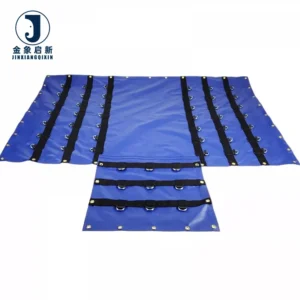
- Install galvanized eyelets at 1 m intervals through the PP rope reinforced hem to distribute tie-down loads
- Store rolls upright on pallets in dry conditions to prevent compression flattening of the woven base fabric
- Unroll in ambient temperature above freezing to avoid creasing the LDPE lamination surface
- Cut with industrial shears along the weave direction to maintain mesh alignment at fabricated edges
- Clean with mild detergent — avoid solvents that degrade the LDPE coating bond
Preparing Your Roll Stock Inquiry
Specify the GSM grade range your downstream market requires, the roll widths that match your cutting patterns, and your annual volume to receive a quotation structured around container-load pricing tiers. Indicate whether you need rolls only or finished tarpaulins with PP rope hems and galvanized eyelets at standard or custom spacing. Provide your destination market so that applicable documentation and any required UV or flame-retardant test basis can be included in the shipment package.
Frequently Asked Questions
Q: Can you guarantee the GSM stated on the quotation matches what arrives?
A: Every PE tarpaulin roll is weighed and inspected against the quoted GSM during pre-shipment inspection. A material specification sheet accompanies each shipment documenting the verified weight, base fabric mesh count and coating details per production batch.
Q: What widths and roll lengths are available for bulk ordering?
A: Standard widths include 6 ft, 8 ft, 10 ft, 12 ft, 2 m, 4 m and 6 m. Roll lengths ship at 100 yards or 100 meters as standard. Custom widths and lengths are available with sample approval before full production.
Q: How is batch-to-batch colour consistency maintained across large orders?
A: Pigment dosing is controlled at the LDPE lamination stage, and each production run is compared against an approved colour reference. Rolls from different batches within the same order are cross-checked during 100% pre-shipment inspection.
Q: What eyelet spacing and hem reinforcement options are available on finished tarpaulins?
A: Finished tarpaulins feature PP rope reinforced hems on all four edges with galvanized eyelets at every 3 ft or 1 m interval. Reinforced plastic corners are standard. Custom spacing is available for specific fabrication requirements.
Q: How are rolls packed and loaded for container shipping?
A: Each roll is individually wrapped and listed on a packing sheet detailing roll count, net weight and container loading configuration. This documentation supports efficient unloading and inventory reconciliation upon arrival.