Description
Batch Consistency Across Rolls — three full production lines with in-process QA and 100% pre-shipment inspection hold colour and weight uniformity for every PE tarpaulin roll in your container.
Technical Specifications
| Parameter | Value |
|---|---|
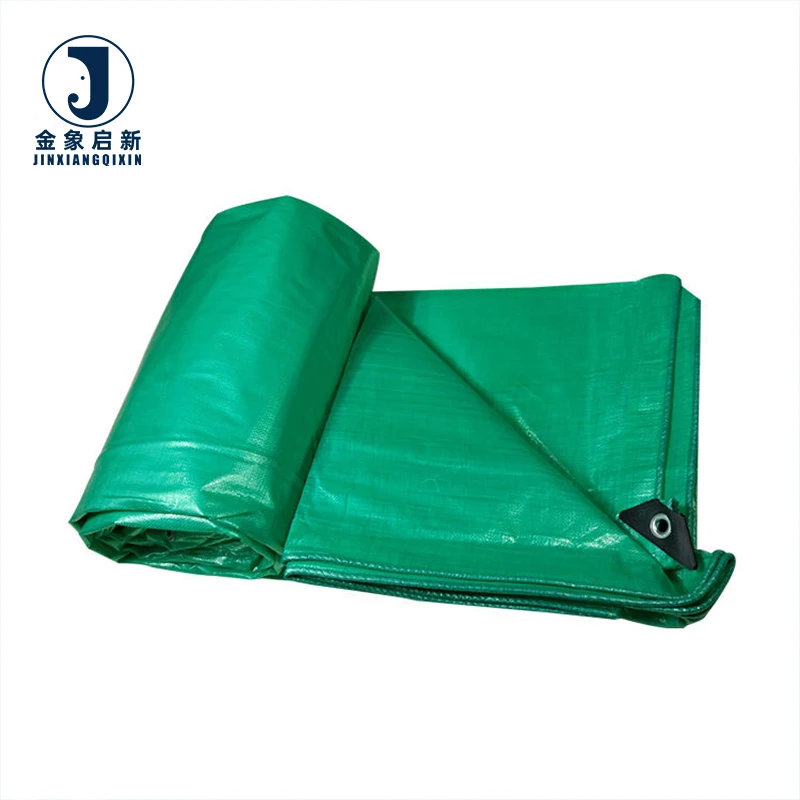
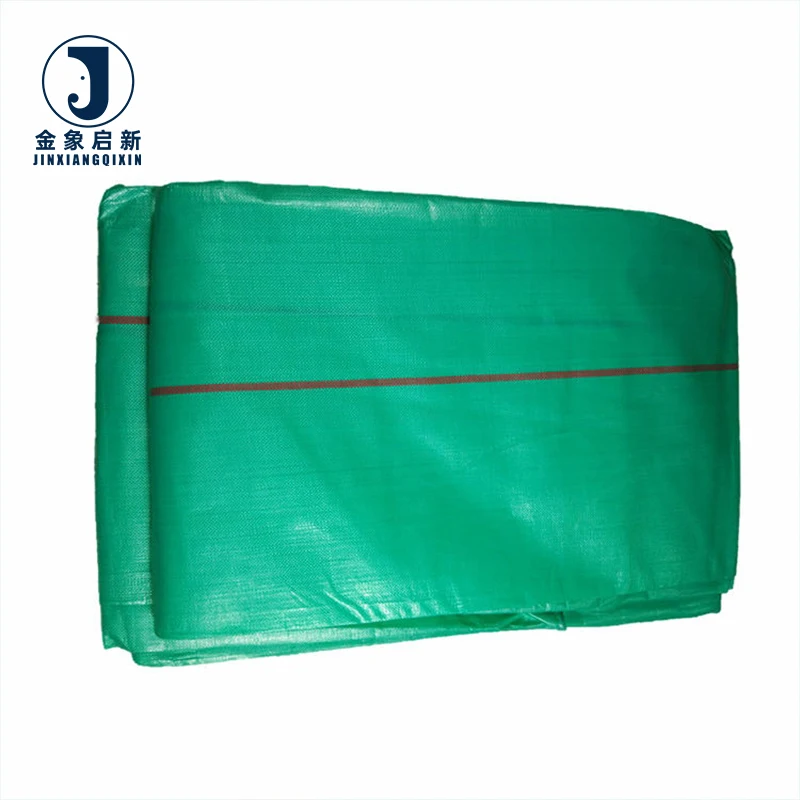
| Product Type | PE Tarpaulin Roll / Finished PE Tarpaulin |
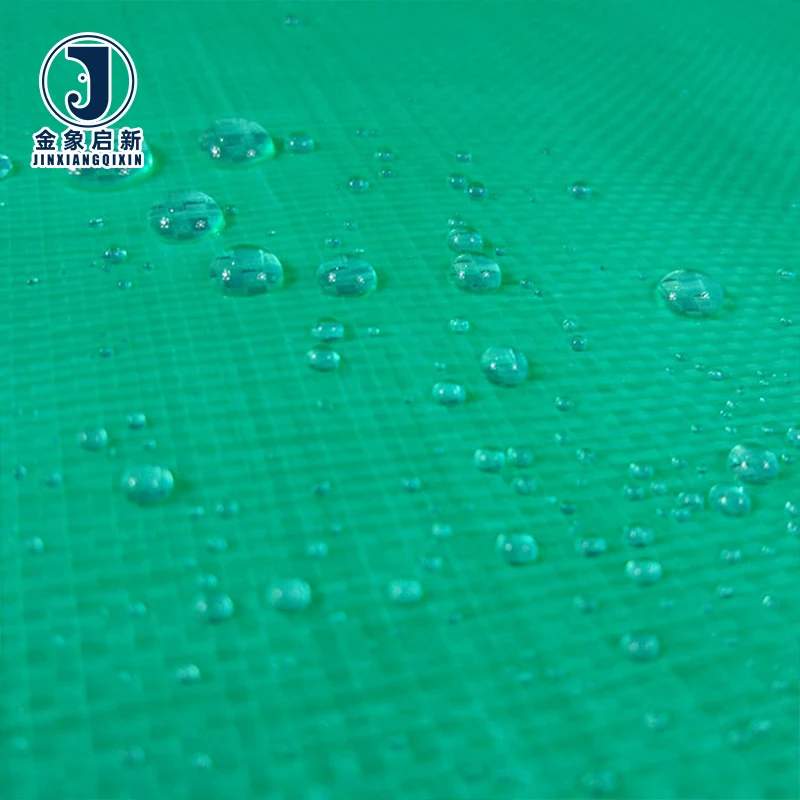
| Material | HDPE weaving with LDPE lamination on both sides |
| Weight (GSM) | 50gr/m2 ~ 220gr/m2 available — confirm the grade for this item |
| Total Thickness | 0.2–0.4 mm / 8–16 mil / Custom |
| Mesh Count Options | 6×6, 6×7, 7×7, 7×8, 8×8, 9×9, 8×10, 10×10, 12×12, 14×14, 14×16 |
| Roll Width Options | 6ft, 8ft, 10ft, 12ft, 2m, 4m, 6m |
| Roll Length Options | 100 yards, 100 meters, or custom |
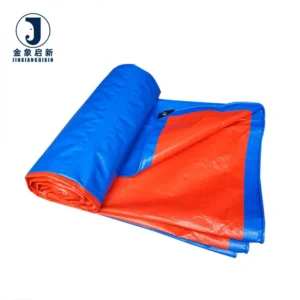
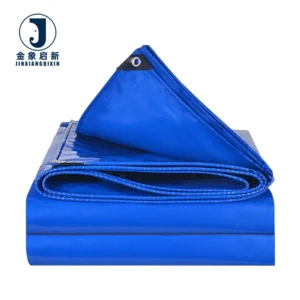
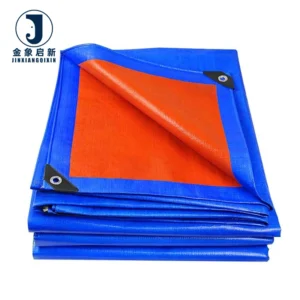
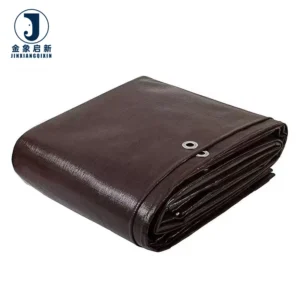
| Colour Options | Blue, Blue/Orange, Green, Grey, Black, Clear, Grey/Green, Orange, or custom |
| Waterproof | Yes |
| UV Treatment | Available (test basis not stated — confirm requirement) |
| Anti-Mildew | Mildew proof and anti-aging claimed (test basis not stated) |
| Tear Resistance | Tear resistant (test basis not stated) |
| Flame Retardant Grade | Not stated — confirm the grade required for your market |
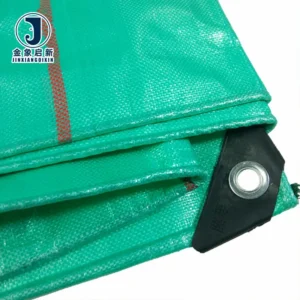
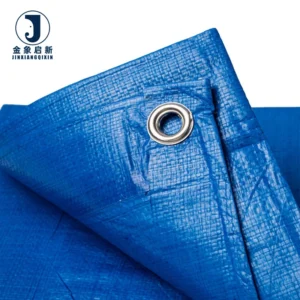
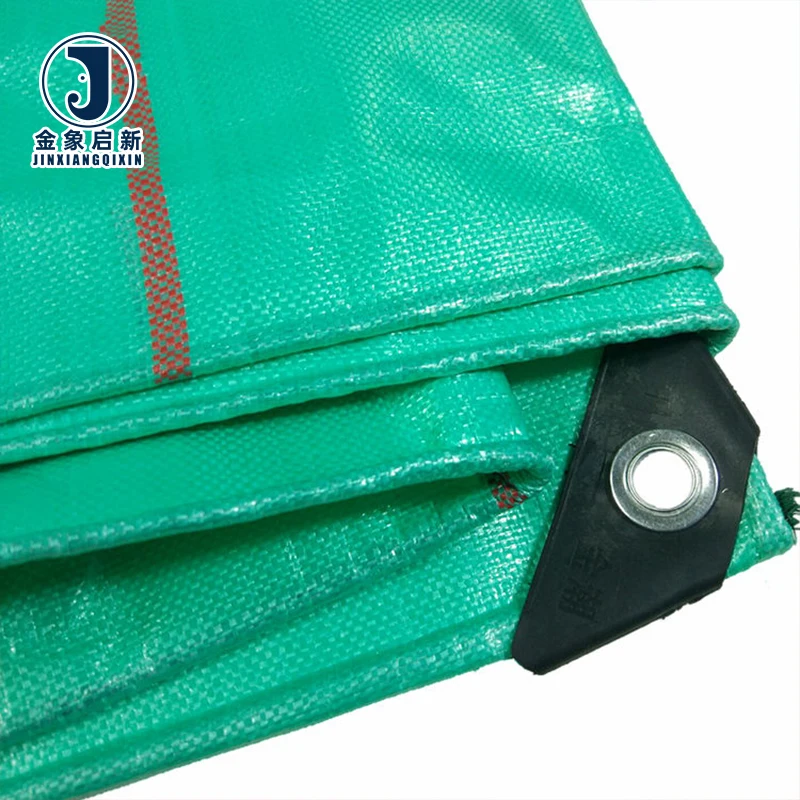
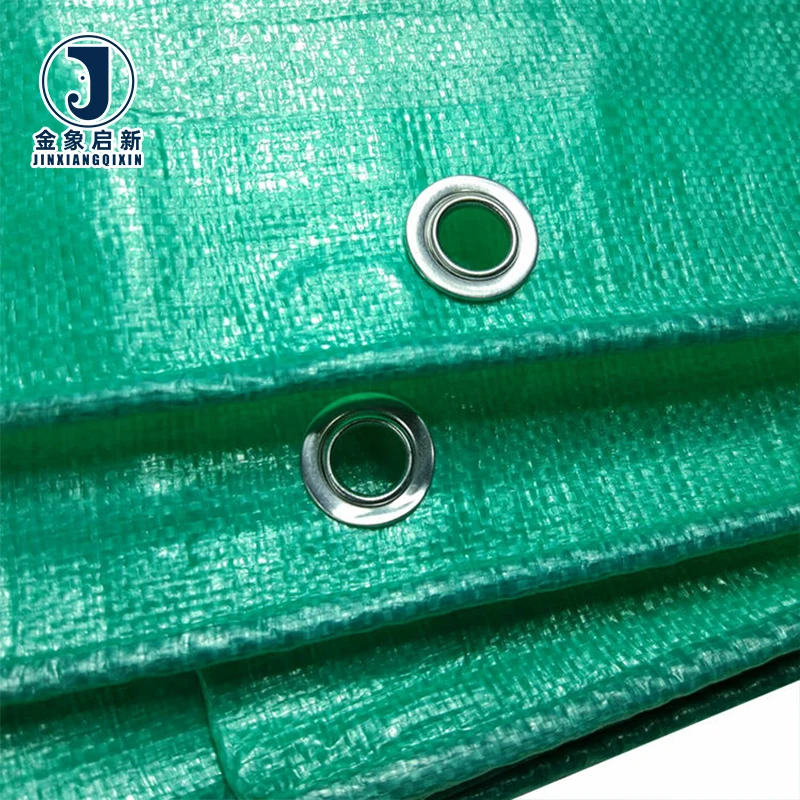
| Finished Hem | All four edges reinforced with PP rope in hem |
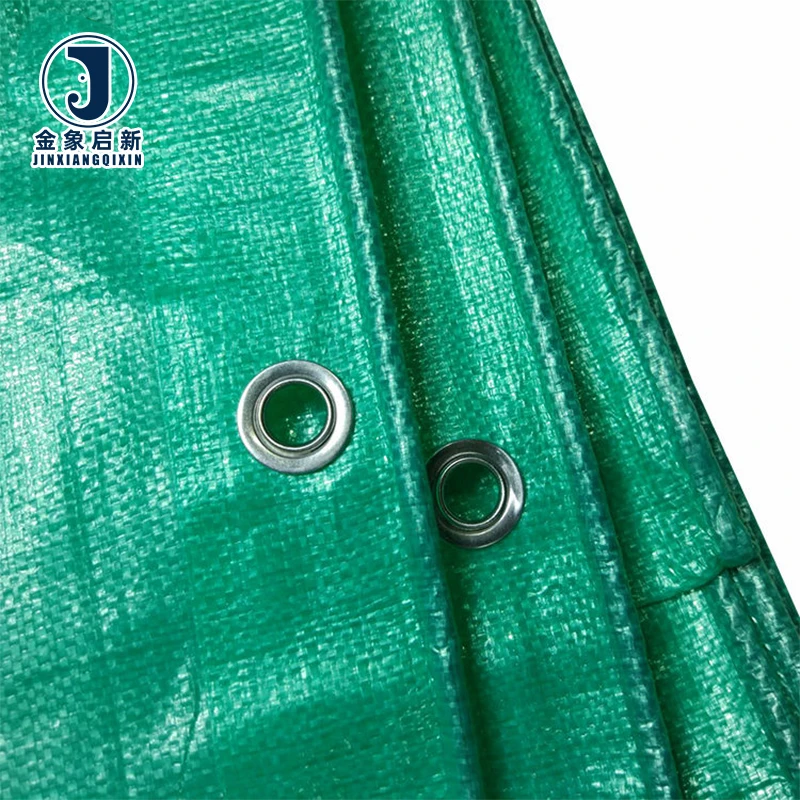
| Eyelet Spacing | Galvanized eyelets every 3ft or 1 meter interval |
| Corners | Reinforced plastic corners |
| Printing | Custom printing available |
| Container Loading (20’GP) | By Roll 17 Tons, By Bale 12 Tons, By Carton 9 Tons |
| Container Loading (40’HQ) | By Bale 28 Tons, By Carton 20 Tons |
| Standards | ISO, CE |
Application Suitability
| Application | Exposure & Requirement |
|---|---|
| Tarpaulin distribution and resale | Roll-to-roll colour and weight consistency, standard widths for retail cutting, OEM branding |
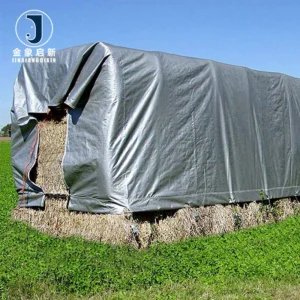
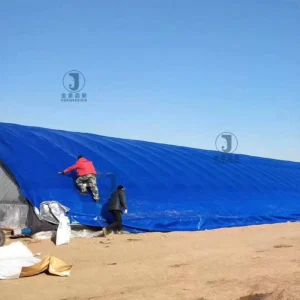
| Agricultural stockpile and crop covers | Continuous sun and rain exposure, resistance to mildew, lightweight handling for seasonal deployment |
| Construction site material protection | Abrasion from scaffold contact, wind uplift resistance, UV stability across multi-month projects |
| Truck and trailer load covering | Road grime, tie-down strap pressure at eyelets, repeated folding and unfolding at flex points |
| Pond and reservoir lining | Permanent water contact, soil chemistry, puncture risk from substrate |
Why Roll-to-Roll Colour Consistency Matters More Than Price Per Ton
Colour shift between rolls is the failure your customer sees first — and the one that triggers a full container rejection.
When a distributor installs three PE tarpaulin roll panels side by side on a job site and the blue tones read differently under daylight, the material is functionally sound but commercially unsaleable. This problem originates upstream: inconsistent masterbatch dosing during the LDPE lamination stage, uneven cooling across the extrusion line, or substitution of base resin between production runs. Buyers who specify colour by name rather than by Pantone or RAL reference leave room for interpretation that widens with every roll produced. [NEED_CITE: colour measurement standards for coated fabrics and laminates]
How We Control Colour Across a Bulk PE Tarpaulin Roll Shipment
Every PE tarpaulin roll order begins with a confirmed colour reference — either a standard option from our range or a custom match developed against your physical swatch or Pantone code. Masterbatch is batch-locked at the compounding stage so that the same pigment formulation runs through the entire production campaign without mid-run substitution.
Holding Weight and Thickness Within Tolerance on Every Roll
GSM and thickness drift occur when line speed and extrusion temperature are not held constant across long production runs. Our QA protocol samples at defined intervals through each roll of PE tarpaulin wholesale stock, recording weight per square metre and checking against the agreed specification before the roll is cleared for packing. Rolls that fall outside the agreed band are segregated rather than mixed into the shipment. [NEED_CITE: tolerance standards for coated fabric weight per unit area]
Reading the Mesh Count Against the Application
Mesh count — the number of HDPE warp and weft yarns per unit area — determines how the load distributes across the woven base before the LDPE coating carries any stress. A 6×6 weave at 50gr/m2 serves light-duty covers where flexibility and low cost matter more than tear propagation resistance. Moving to a 14×16 mesh at 220gr/m2 increases the yarn intersection points substantially, which arrests tear extension and provides a stiffer substrate for finished tarpaulins that must hold eyelet tension under strap load. Choosing the correct mesh count for the application prevents over-specifying on weight alone.
Specification Decisions That Determine Field Performance
The relationship between GSM and durability is not linear: a 90gr/m2 fabric woven at 10×10 mesh can outperform a 120gr/m2 fabric woven at 7×7 in tear resistance because the tighter weave distributes point loads across more yarn intersections. The LDPE lamination weight on each side must also balance — excessive coating thickness on a light base fabric creates a stiff panel that cracks at fold lines rather than flexing.
Thickness in the 0.2–0.4 mm range covers the span from flexible agricultural sheeting to heavier construction-grade panels. Below this range, puncture resistance drops sharply for applications where the tarpaulin contacts rough substrate. Roll width selection — from 2 m to 6 m — directly affects fabrication waste: a 4 m roll width cuts two standard 2 m panels with zero offcut, while narrower rolls force a welded seam that becomes the first failure point under load. [NEED_CITE: relationship between weave density and tear propagation in HDPE woven fabrics]
The Hidden Cost of Accepting Undocumented Material Claims
A roll that arrives lighter than the quoted GSM does not just short you on material — it signals that process control was loose enough to allow drift on one measurable parameter, which means adhesion strength, coating uniformity, and UV additive concentration may have drifted on parameters you cannot measure without lab testing. Flame retardant and anti-static grades that ship without a test report leave the installer liable when a site audit demands documentation. Batch inconsistency in colour or weight forces the distributor to absorb return costs, re-sort inventory, and explain failures to end customers who see only the visible defect.
Why Volume Buyers Source PE Tarpaulin Roll Stock From This Line
Three full production lines and 36 sets of professional equipment mean your order runs on dedicated capacity rather than competing for slot time on a single line shared across product families. The 10-person R&D team develops custom colour matches, OEM printing layouts, and non-standard widths in-house, returning samples for approval before the production run is committed. Dedicated QA and QC checkpoints at each production stage — weaving, lamination, slitting, and packing — catch defects before they reach the container. Nearly 30 years of continuous coated fabric production underpins process knowledge that is difficult to replicate on newer lines. Every roll undergoes 100% inspection before shipment, with results recorded against your order specification.
Documentation & Verification
- Material specification sheet confirming GSM, mesh count, and coating type for each roll grade
- Pre-shipment inspection record verifying weight and colour against agreed reference before dispatch
- Roll packing list with container loading plan by roll, bale, or carton configuration
- Certificate of origin prepared to match your import documentation requirements
- UV and flame retardant test reports provided where the specified grade has been tested
Fabrication, Handling & Storage
- Heat-seal temperature must match the LDPE lamination grade — test on a sample offcut from the same roll batch before full production
- Galvanized eyelets at 3ft or 1m intervals require reinforced plastic corners at stress points to prevent tear-out under strap tension
- Store PE tarpaulin rolls upright on a flat surface to prevent permanent creasing at the core
- Unfold finished panels at ambient temperature — cold LDPE lamination becomes brittle and may crack at fold lines
- PP rope hem reinforcement distributes tie-down load across the full edge rather than concentrating force at individual eyelets
- Clean with mild detergent and soft brush; avoid solvent-based cleaners that degrade the LDPE surface
What to Include With Your Enquiry
Provide the application, the environmental exposure conditions, and your target market’s compliance requirements so we can recommend the correct mesh count and treatment grade. Specify whether you need roll stock or finished cut sizes with eyelets, and confirm your preferred container loading method — by roll, bale, or carton — so the quotation reflects accurate freight density.
Frequently Asked Questions
Q: How is GSM verified on arrival and what documentation accompanies each roll grade?
A: Each roll grade ships with a material specification sheet stating the agreed GSM, base fabric mesh count, and coating type. Our 100% pre-shipment inspection records the measured weight per square metre before dispatch, and this inspection record accompanies the shipment. On arrival, you can cross-check with a calibrated scale and a measured sample cut.
Q: How do you control colour consistency roll-to-roll across a bulk order?
A: Colour is locked at the masterbatch compounding stage so the same pigment formulation runs through the entire production campaign without substitution. In-line sampling during lamination checks for shade drift, and any roll outside the agreed tolerance is segregated before packing. We confirm your colour reference — Pantone, RAL, or physical swatch — before production starts.
Q: What are the container loading options by roll, bale, and carton for 20ft and 40ft containers?
A: A 20ft container holds approximately 17 tons by roll, 12 tons by bale, or 9 tons by carton. A 40ft high-cube container accommodates around 28 tons by bale or 20 tons by carton. Your choice depends on whether you prioritise freight density or protection during transit — we confirm the loading plan before booking.
Q: What custom width, length, and colour options are available, and what are the minimums?
A: Standard roll widths run from 2m to 6m with imperial equivalents, and lengths of 100 yards or 100 metres. Custom widths, lengths, and colours are available with a sample approval step before the production run. Send your target dimensions, colour reference, and estimated volume so we can confirm lead time and minimum order for your specification.
Q: What eyelet spacing, hem reinforcement, and corner options are offered on finished tarpaulins?
A: Finished PE tarpaulins feature all four edges reinforced with PP rope in the hem, galvanized eyelets punched at 3ft or 1 metre intervals, and reinforced plastic corners at each corner point. Custom eyelet spacing or additional reinforcement at mid-panel tie-down points can be specified for high-wind applications.