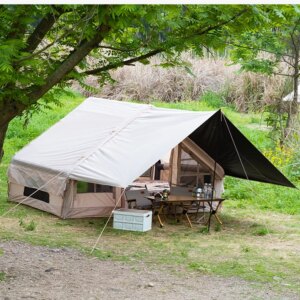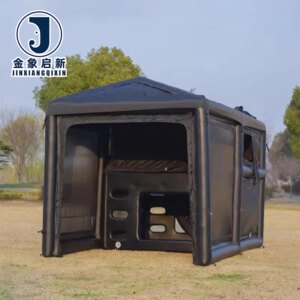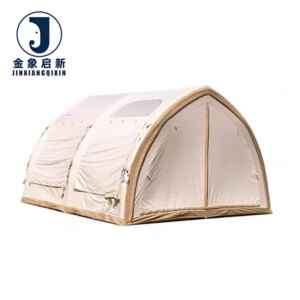
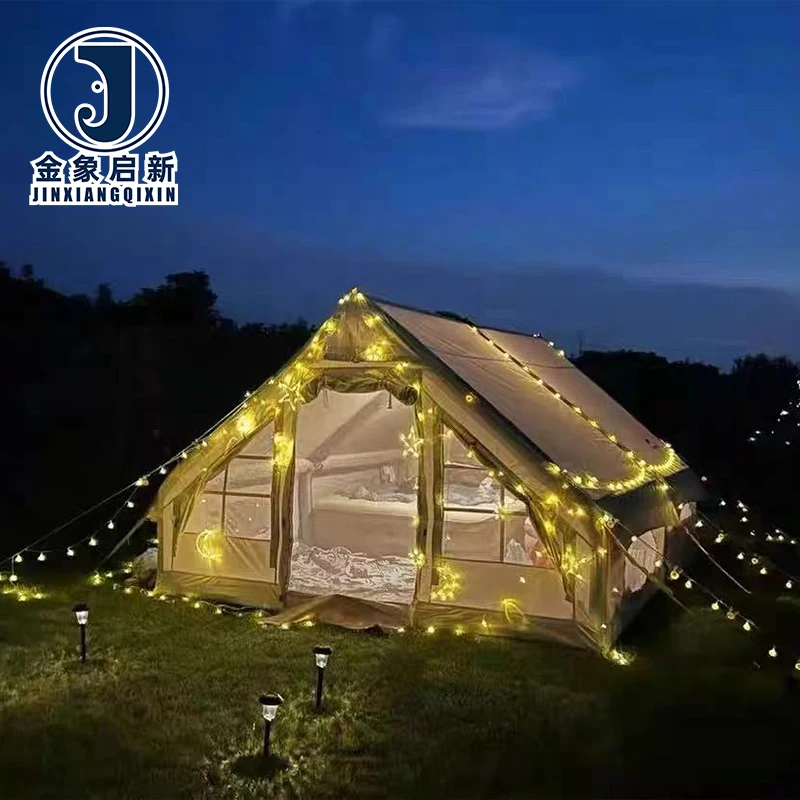
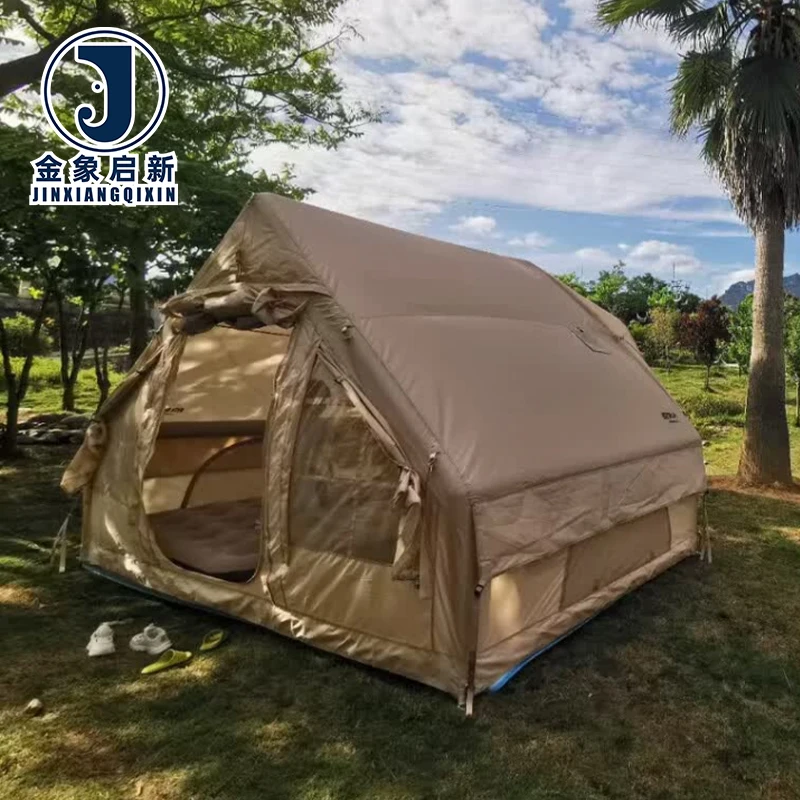
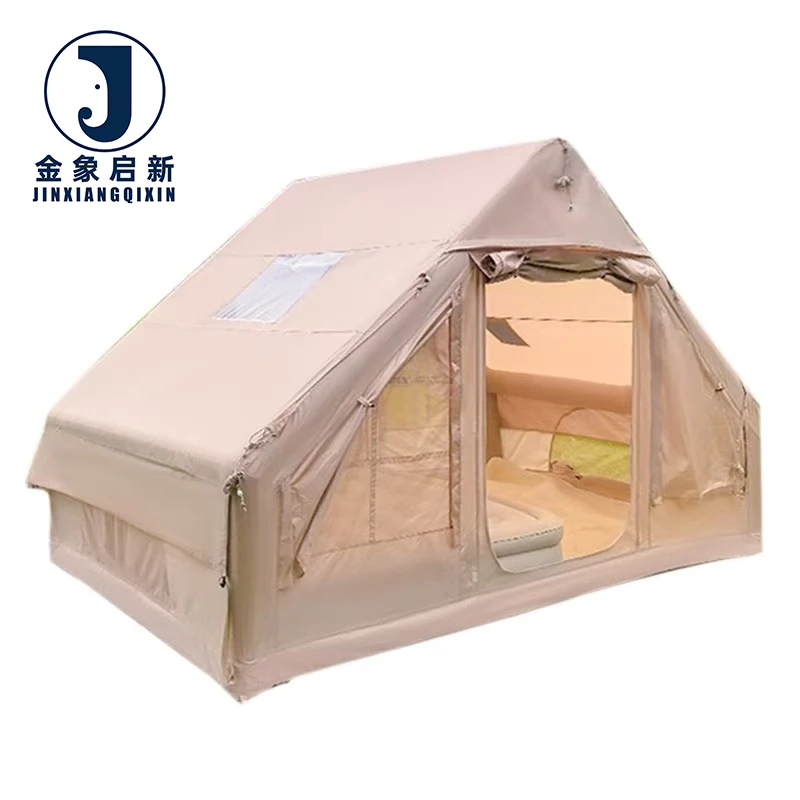
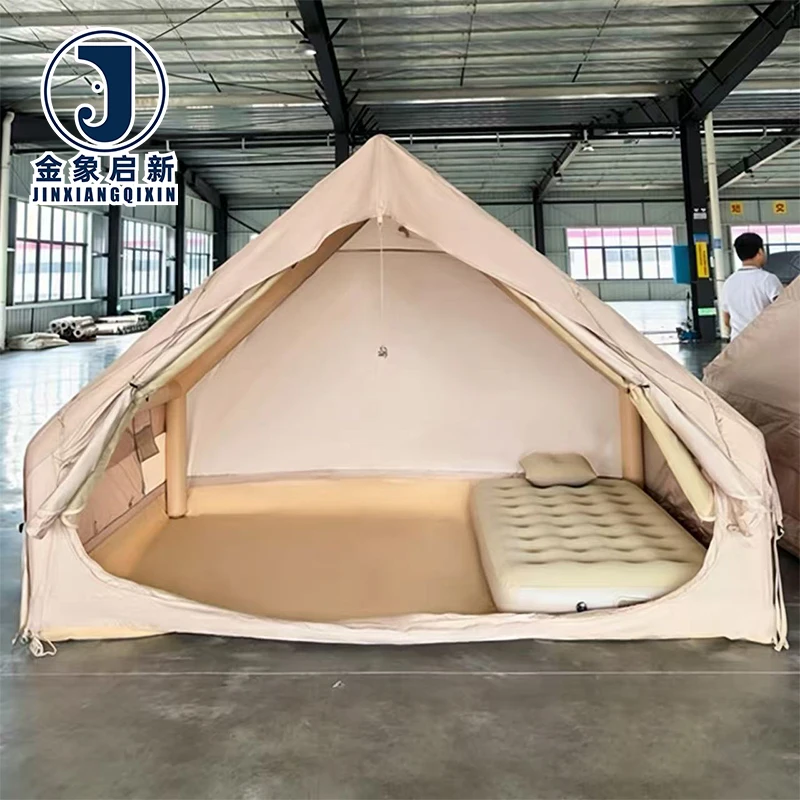
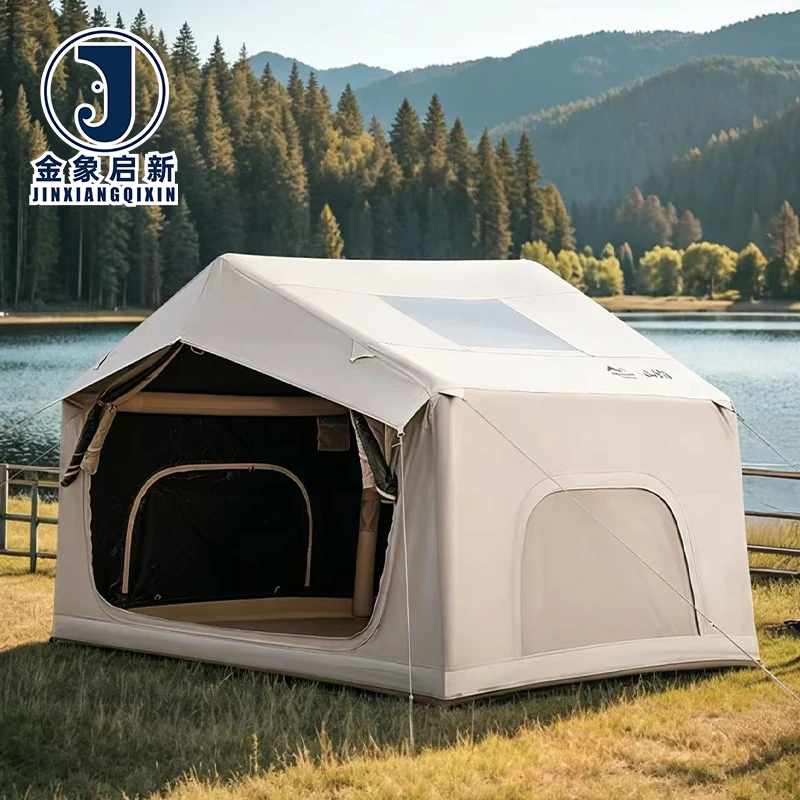
Description
Roll-Stock Consistency — batch-to-batch GSM and colour verified per roll on 3 full production lines before container loading.
Technical Specifications
| Parameter | Value |
|---|---|
| Product Type | Inflatable Tent |
| Core Material | PVC Tarpaulin |
| Capacity | 6-8 Person |
| Waterproof Rating | 10,000mm hydrostatic head |
| UV Resistance | 72-hour accelerated aging test passed |
| Flame Spread Index | <25 (standard not stated) |
| Static Decay | <2 seconds (standard not stated) |
| Air Pressure Retention | ≤5% loss in 24 hours |
| Seam Strength | minimum 35N/cm (test standard not stated) |
| Thickness Tolerance | ±0.1mm |
| Zipper Durability | 500 cycles |
| Opening Mechanism | Quick Automatic Opening (5,000+ cycles) |
| Structure | Single Layer, Extended Design |
| Customization | OEM & ODM (sample customization, pattern printing, material selection, product design) |
| Standards | ISO9001, ISO14001, ISO45001, CE |
Application Suitability
| Application | Exposure & Requirement |
|---|---|
| Commercial camping equipment manufacturing | High-volume roll cutting, batch colour matching for retail display |
| Rental fleet operators | Repeated inflation cycles, abrasion from ground contact, transport folding |
| Adventure tourism semi-permanent installations | Extended outdoor exposure, wind load on membrane, seasonal temperature shifts |
| Outdoor gear wholesale distribution | Container loading by roll count, shelf-ready colour consistency across cartons |
Why Roll-to-Roll Colour Matters More Than Stated GSM on Inflatable Tent Fabric Orders
Visible colour drift between rolls forces tent fabricators to sort, reject, or blend — eroding margin on every container.
When you buy inflatable tent fabric roll stock in volume, the shade that arrives in roll 47 must match roll 3 exactly, because tents from the same production run often sit side by side at trade shows or on retail floors. A slight hue shift that passes inspection under factory fluorescent tubes becomes obvious in daylight once the fabric is inflated and displayed. Sourcing teams who have managed multiple suppliers know that colour variance is the most frequent reason for partial shipment rejection [NEED_CITE: colour tolerance standards for coated fabric batches per ISO 105 series]. Our QA framework inspects every roll under standardized lighting against the approved reference before it is cleared for packing.
Batch Consistency Across the Full Inflatable Tent Fabric Roll Run
Maintaining uniform colour and thickness across a multi-roll production run requires process control at the coating stage, not just a final visual check. Each roll of inflatable tent fabric roll stock is measured against the ±0.1mm thickness tolerance, and any deviation triggers a line adjustment before the next roll is wound. This means the inflatable tent fabric you cut on day one of your production schedule behaves identically to the fabric you cut on day thirty — same heat-weld response, same seam peel strength, same drape.
Container Loading Planned by Roll Count and Weight
Wholesale inflatable tent fabric buyers need to know exactly how many rolls fit a 20ft or 40ft container and what the total weight will be, because freight cost per kilogram directly affects landed margin. We plan every full-container shipment with a detailed roll packing list that accounts for roll diameter, width, and individual roll weight, so you confirm the loading plan before the container is booked. No guesswork, no short-loaded containers, no unexpected LCL charges at the port of origin.
Reading the Specs That Actually Affect Your Cutting Floor
Waterproof performance at 10,000mm hydrostatic head means the coated PVC tarpaulin substrate resists water penetration even under sustained hydrostatic pressure, which is relevant when tent floors sit on wet ground during multi-day rain events. Seam strength at a minimum 35N/cm tells you the heat-welded joints can withstand the internal air pressure of an inflated structure without delaminating at the bond line — a critical factor because inflatable tent seams carry continuous stress unlike stitched panels that only load under tension. The quick automatic opening mechanism rated to 5,000+ cycles is relevant for rental fleet operators whose equipment is inflated and deflated repeatedly across seasons. Air pressure retention within 5% loss over 24 hours reduces the need for supplementary pump topping during overnight use [NEED_CITE: air retention test methods for inflatable membrane structures].
The Hidden Cost of Unverified Thickness Tolerance
When thickness tolerance is not controlled roll to roll, your heat-weld settings that produced perfect seams on the first roll will scorch or under-bond on a roll that runs 0.15mm thicker or thinner. Operators compensate by adjusting weld temperature and dwell time for every new roll, which slows throughput and increases scrap at the start of each run. Inconsistent thickness also affects cutting die alignment on automated CNC tables, producing panels that are marginally oversize or undersize and generating fit issues during final assembly. We hold ±0.1mm across the entire roll width so your weld parameters stay fixed from the first roll to the last [NEED_CITE: thermal welding parameter sensitivity to coated fabric thickness variation].
Why Fabricators Choose This Roll Stock for Production Runs
Three full production lines and 36 sets of processing equipment give us the capacity to fulfil full-container inflatable tent fabric orders without splitting your batch across multiple production windows — which is where colour and thickness drift most often occurs. A 10-person R&D team handles custom width requests, pattern printing layouts, and material selection for new tent product lines, with pre-production samples developed before your bulk run starts. Dedicated QA inspection at every production stage means the roll you receive has passed coating weight verification, colour matching under standardized light, and thickness measurement — not just a random sample check. OEM and ODM customization covers sample development, pattern printing, and full product design support, so the inflatable tent fabric you receive matches the specification you approved, not a generic stock grade.
Documentation & Verification
- Material specification sheet listing GSM, base fabric construction, and coating weight per roll
- Pre-shipment inspection record with roll-by-roll colour and thickness check results
- Roll packing list detailing individual roll weight, dimensions, and container loading plan
- Test report for UV and flame-retardant grades — batch-specific documentation provided upon request
- Certificate of origin and customs documentation for destination country clearance
Fabrication, Handling & Storage
- Heat-weld parameters should be established on sample panels from the received roll before full production cutting begins
- Store rolls vertically on pallets in a climate-controlled area to prevent flat spots that cause tracking issues on automated cutting tables
- Single layer PVC tarpaulin construction allows standard hot-air or high-frequency welding without adjusting for multiple coating interfaces
- Unroll and allow fabric to acclimatize to workshop temperature before cutting to minimize dimensional drift from cold-transport contraction
- Clean surfaces with neutral pH agents only — aggressive solvents can compromise the coating bond at welded seam zones
What to Include in Your Inquiry
Share your target tent dimensions, annual volume, and required roll width so we can calculate container loading efficiency and recommend the most cost-effective roll length. Specify the fire-retardant or anti-static grade your destination market requires so we can confirm test documentation availability before production begins. If you are developing a new tent line, request a pre-production sample roll to validate weld settings and cutting patterns before committing to a full container order.
Frequently Asked Questions
Q: How is roll-to-roll colour consistency verified before shipment on bulk inflatable tent fabric orders?
A: Every roll is inspected under standardized lighting against the approved colour reference before packing. Rolls that fall outside tolerance are flagged and excluded from your shipment. A colour consistency check record is included in the pre-shipment inspection documentation so you can verify compliance before the container leaves the factory.
Q: What custom width and roll length options are available, and what are the minimums?
A: Custom width and roll length are available to reduce cutting waste on your production floor. Minimums depend on the specific width and colour requested. Our R&D team reviews your cutting layout to recommend the most efficient roll dimensions and confirms feasibility with a pre-production sample before bulk manufacturing starts.
Q: How is GSM verified on arrival — do you support third-party inspection of roll stock?
A: Each roll is weighed and measured against the stated GSM before dispatch, with results recorded on the packing list. We welcome third-party inspection at our facility prior to container loading. Independent GSM verification can be arranged through SGS or equivalent agencies at the buyer’s request.
Q: What fire-retardant and anti-static certifications accompany the fabric, and are they batch-specific?
A: Fire-retardant and anti-static grades are available — confirm the specific grade required for your target market compliance. Test documentation is provided for the applicable standard. Batch-specific test reports can be issued upon request to ensure the certification matches the exact production run shipped to your facility.
Q: How do you plan container loading by roll count and weight for full-container orders?
A: We prepare a detailed roll packing list showing individual roll diameter, weight, and dimensions before booking the container. This lets you confirm the loading plan and total freight weight in advance. Both 20ft and 40ft container configurations are calculated to maximize roll count while staying within weight limits.