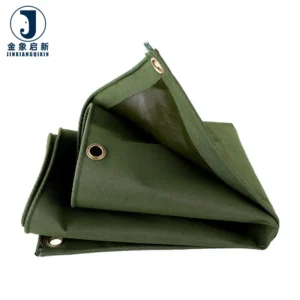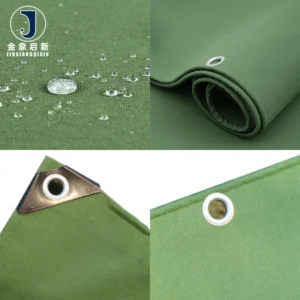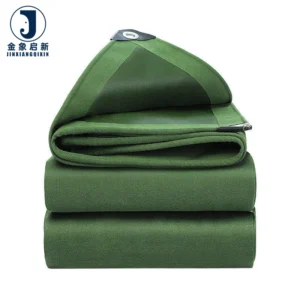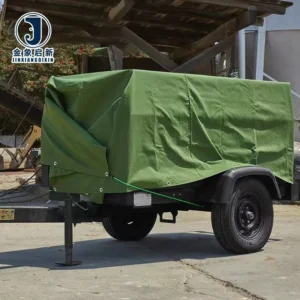
Description
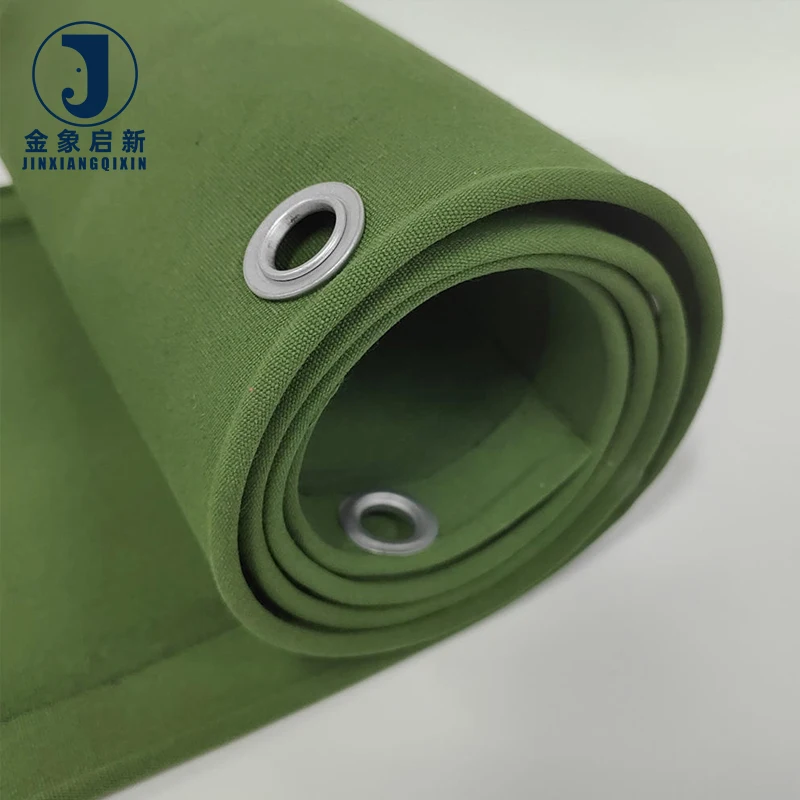
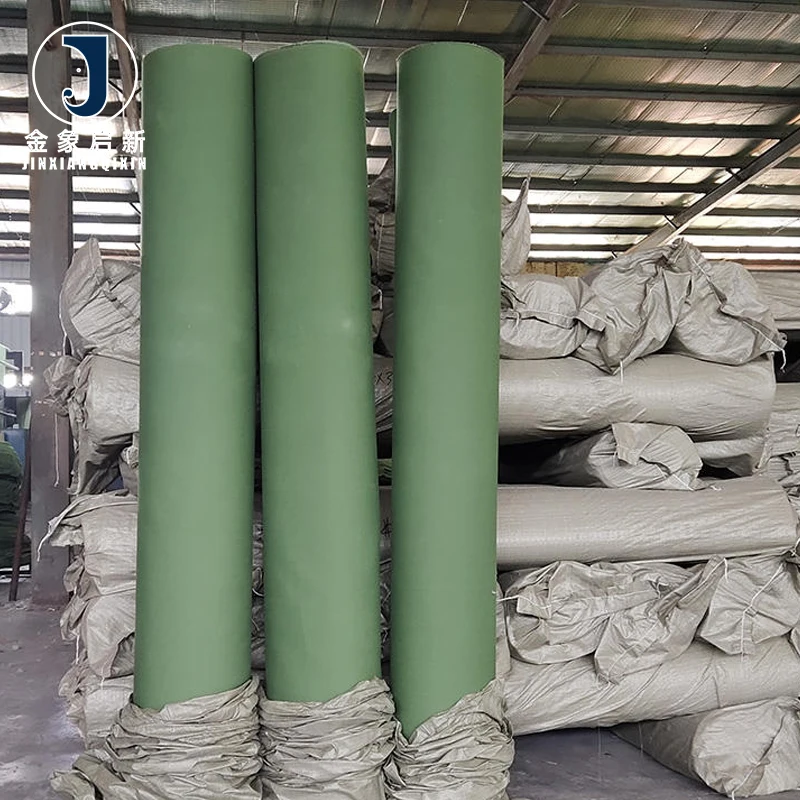
Roll-to-Roll Consistency — Every roll of Heavy Duty Canvas Tarpaulin leaves our facility with verified weight and colour uniformity, backed by 100% pre-shipment inspection across three dedicated production lines.
Technical Specifications
| Parameter | Value |
|---|---|
| Product Type | Canvas Tarpaulin |
| Material | Polyester cotton industrial textile with 8-12 strands of fine cotton yarn |
| Weight | 600gsm |
| Total Thickness | 0.5mm / 0.6mm / 0.7mm |
| Roll Width | 2m |
| Roll Length | 100m |
| Colour Options | Army Green Camouflage / Custom |
| Service Life Expectancy | Suited to extended outdoor exposure |
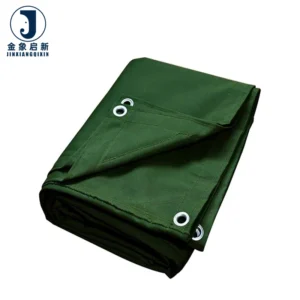
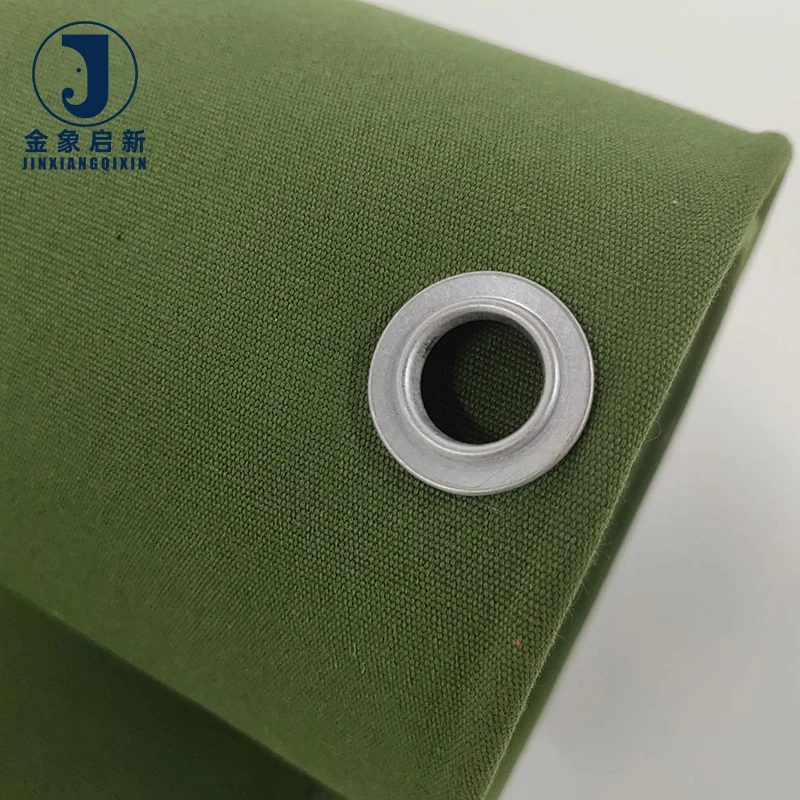
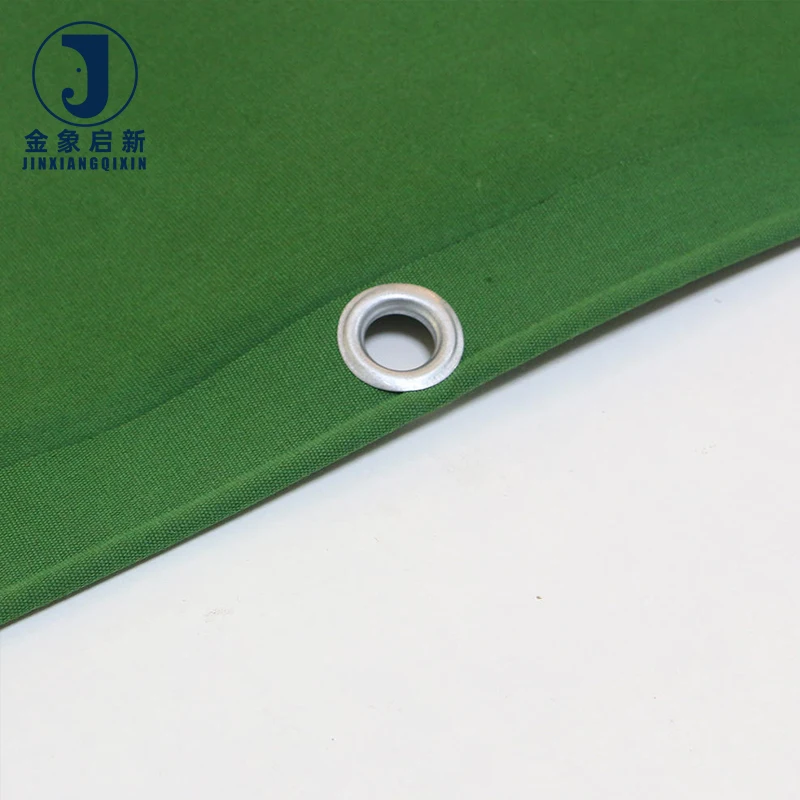
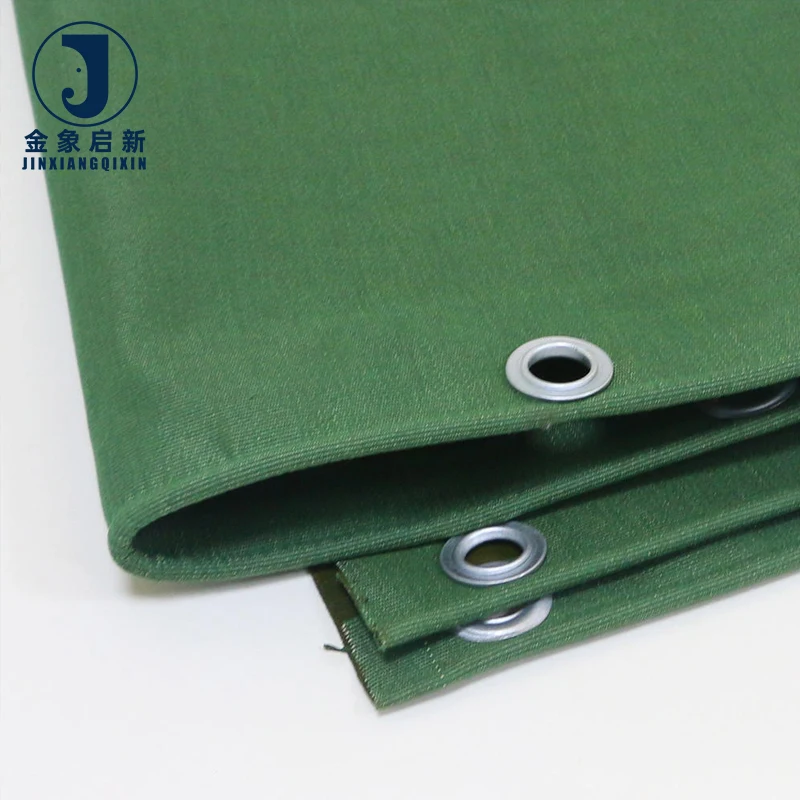
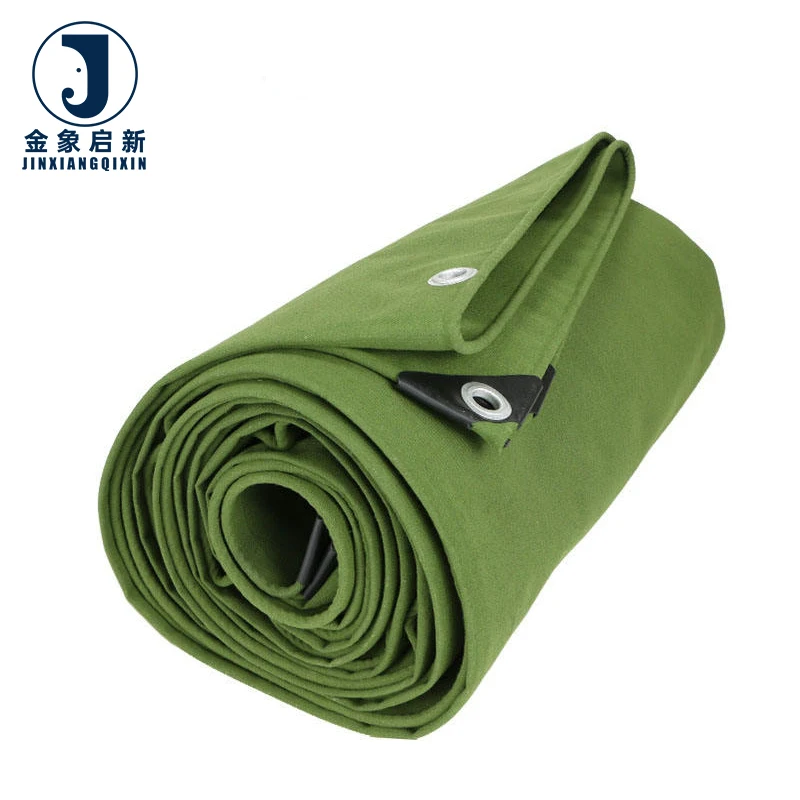
| Eyelet & Hem | Rust-proof aluminum holes every 1 meter at corners and hem; folded and sewn seams with poly rope reinforcement |
| Welding & Seaming | Welded and sewn construction |
| Certifications | CE, ISO |
Application Suitability
| Application | Exposure & Requirement |
|---|---|
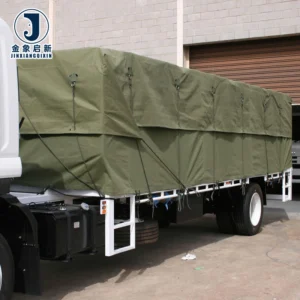
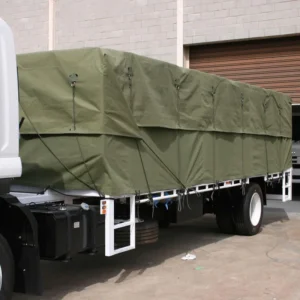
| Truck and trailer side covers | Constant flexing at load points, road debris abrasion, weather and UV exposure during transit |
| Construction site and equipment covers | Prolonged outdoor storage, wind loading, dust and moisture ingress prevention |
| Open-air stockpile protection | Rain, sun, and temperature fluctuation across seasons |
| Tent and temporary structure fabric | Tension loading at frame contact points, repeated assembly and teardown |
| Asphalt and hot material cover | Elevated surface temperature, chemical contact with bitumen residues |
| Engine hood and vehicle cover | Abrasion from vibration, oil and grease contact, outdoor parking exposure |
Why Quoted GSM Does Not Always Match What Arrives on the Dock
The gap between quotation weight and delivered weight is where margin evaporates for wholesale buyers.
When a roll of PVC Laminated Canvas Tarpaulin arrives lighter than the specification sheet promised, the buyer absorbs the loss — either by honouring the sale at reduced margin or by rejecting the shipment and delaying their own commitments [NEED_CITE: GSM verification methods for coated fabrics on receipt]. This discrepancy typically surfaces only when the buyer invests in cut-and-weigh checks after delivery, by which point the container has cleared customs and leverage is gone. Our 100% pre-shipment inspection protocol verifies GSM on every roll before it enters the packing list, ensuring the weight stated on the quotation is the weight that crosses the border.
How Batch Consistency Protects Wholesale Credibility
For tarpaulin distributors and importers, selling on PVC Laminated Canvas Tarpaulin roll stock means your customers expect the same colour, weight, and hand feel every time they reorder. A visible shade shift between two rolls from the same container erodes trust faster than any price advantage can build it. Colour consistency requires controlled pigment dosing at the coating stage and verified base fabric whiteness before lamination begins. We manage both variables in-process rather than relying on post-production sorting.
Container Loading Optimisation for Roll Stock Buyers
Buying by the roll demands attention to how those rolls occupy container space. A 2m width at 100m length per roll creates predictable dimensions that simplify loading plans and landed-cost calculations. Consistent roll diameter across the batch means tighter stacking without crush damage to inner layers [NEED_CITE: coated fabric roll packing standards for ocean freight]. Container-ready bulk packaging prevents transit shift and ensures each roll arrives in saleable condition, whether destined for warehouse inventory or direct cross-dock to end users.
Understanding Weight, Base Fabric, and Coating as a System
The 600gsm weight of this Canvas Tarpaulin is a combined result of the polyester cotton base fabric and the PVC lamination coating applied to it. Grams per square metre alone does not determine tensile or tear performance — the 8-12 strand fine cotton yarn construction in the base textile provides the structural skeleton that resists tearing under load. A heavier coating adds puncture resistance and waterproofing but cannot compensate for a loosely woven base. The three available thickness options (0.5mm, 0.6mm, 0.7mm) reflect different coating build levels over the same base fabric, allowing buyers to select based on the abrasion and flex demands of their market without changing the underlying tensile characteristics. PVC lamination, as opposed to knife-over-roll coating, bonds the film to the textile under heat and pressure, producing strong peel resistance at the weld line — critical when fabricators heat-seal seams for finished truck covers or tent panels.
The Hidden Cost of Colour Drift Across a Single Order
When rolls within the same shipment show visible colour variation once unrolled side by side, the entire batch can become unsaleable as matched sets. For fleet operators ordering truck cover fabric, mismatched panels on adjacent trailers signal poor sourcing to their own clients. This problem originates at the pigment dispersion stage, where insufficient mixing time or inconsistent carrier resin ratios produce shade bands that only become apparent under natural daylight [NEED_CITE: colour fastness and batch consistency standards for industrial coated textiles]. Correcting after lamination is not feasible — the roll is either accepted at a discount or rejected outright, both outcomes destroying the cost-per-metre advantage of buying in volume.
Why Sourcing Roll Stock Here Reduces Procurement Risk
Three full production lines running 36 sets of professional equipment provide the capacity to fulfil container-volume orders without splitting production across incompatible batches. A dedicated ten-person R&D team develops custom colour and width samples within days, allowing wholesale buyers to confirm shade and hand feel before committing to a full order. Every roll passes through QA/QC checkpoints at coating, lamination, winding, and packing stages — not just a final random sample. Material specification sheets accompany each shipment with stated GSM, base fabric reference, and coating type, giving buyers documentation that matches the physical product. Roll packing lists detail count, weight, and dimensions per roll, supporting accurate customs declaration and inventory intake.
Documentation & Verification
- Material specification sheet stating 600gsm weight, polyester cotton base fabric, and PVC lamination coating type
- Pre-shipment inspection record confirming GSM and colour reference on every roll before dispatch
- Roll packing list with individual roll count, weight, and dimensions for container loading plans
- Certificate of origin and customs documentation prepared per destination country requirements
- CE and ISO certification copies included with commercial shipping documents
Fabrication, Handling & Storage
- Weld seams at 600gsm weight using hot air or wedge welding; verify peel strength on test strips before full production runs
- Rust-proof aluminum eyelets spaced every 1 meter distribute tie-down load across the reinforced poly rope hem
- Store 2m rolls upright on pallets in covered, ventilated space to prevent flat-spotting and edge crush
- Avoid dragging cut panels across abrasive surfaces — the PVC lamination coating shows scuff marks on the army green camouflage finish
- Clean with mild soap and water; solvent-based cleaners may soften the PVC surface layer
What to Include When Requesting a Quotation
Specify the application environment — whether the fabric will cover static stockpiles, flexing truck loads, or tensioned tent structures — so we can recommend the appropriate thickness from our available range. Confirm whether you need full 2m x 100m rolls or custom cut-to-size panels, and indicate your annual volume to support batch reservation. If your market requires a specific colour match or custom shade beyond army green camouflage, provide a Pantone or physical swatch reference for sample development before bulk production.
Frequently Asked Questions
Q: Can I receive a sample roll before committing to a full container order?
A: Yes. We develop sample rolls within days for custom requirements including colour, width, and thickness selection. Buyers typically request a sample to verify GSM, hand feel, and colour accuracy under their own lighting conditions before approving bulk production. Sample costs are structured to support evaluation without inflating the testing phase.
Q: How is roll-to-roll colour consistency maintained across a single bulk order?
A: Colour consistency is controlled at the pigment dispersion and coating stage through verified dosing ratios and in-line checks. Each roll is compared against the approved colour reference before winding. Our QA/QC protocol at every production stage ensures that rolls packed in the same container match visually when unrolled side by side at the destination.
Q: What roll widths and lengths are available for container loading optimisation?
A: Standard roll stock is produced at 2m width and 100m length, dimensions that align with standard container loading configurations. Custom widths are available subject to production line setup and minimum order quantities. We provide container loading plans by roll count and total weight to support your logistics planning and landed-cost calculations.
Q: How are rolls packed to survive ocean freight without damage?
A: Each 2m roll is wound on a core, wrapped in protective film, and packed to prevent crushing and edge damage during transit. Roll packing lists detail the position and count per container, supporting efficient unloading and warehouse intake. Consistent roll diameter across the batch allows tight stacking without pressure deformation on inner layers.
Q: What is the minimum order quantity for custom colour or width orders?
A: Minimum order quantities vary depending on whether the customisation involves colour matching, non-standard width, or both. Custom colours require a production run sufficient to justify pigment setup and line cleaning between batches. Contact us with your target specification and volume, and we will confirm the applicable minimum alongside lead time and sample availability.