Description
Consistent Roll-to-Roll Quality — Dedicated QA/QC inspection at every production stage ensures each roll of PVC truck cover material meets the same weight, colour, and coating standard before it leaves the line.
Technical Specifications
| Parameter | Value |
|---|---|
| Product Type | PVC Tarpaulin Truck Cover |
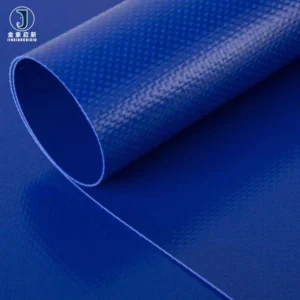
| Material | PVC coated high-strength polyester mesh fabric |
| Coating Method | Laminated technology & Hot-melt Coating technology |
| Weight (GSM) | 350gsm / 420gsm / 500gsm / 550gsm / 600gsm / 750gsm (available by grade) |
| Total Thickness | 0.32mm / 0.35mm / 0.4mm / 0.45mm / 0.5mm / 0.65mm (grade dependent) |
| Colour | Blue / Red / Yellow / Light blue / Grey (Customized) |
| Key Features | Waterproof, Anti-Mildew, Cold Crack Resistant, UV treated material, Anti-Static treatment (standard not stated), flame retardant mentioned as a feature option (grade not stated) |
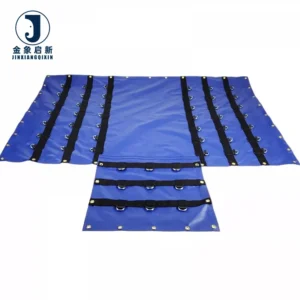
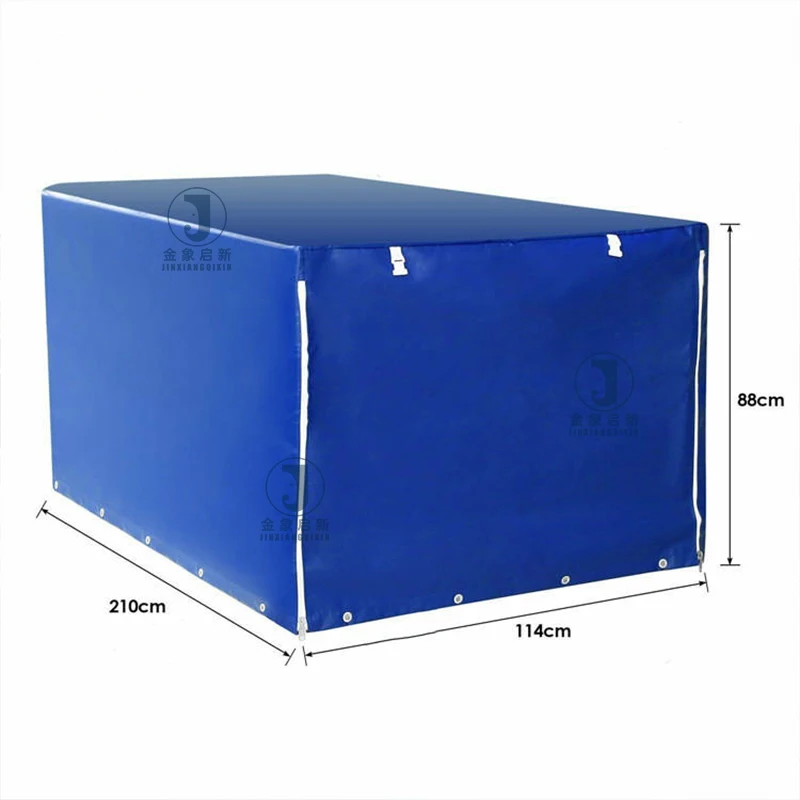
| Hem & Closure Options | Eyelets, zipper, velcro as option; Hot welded hem at the bottom |
| Printing | Custom printing of brand accepted |
| Standards | ISO, CE |
Application Suitability
| Application | Exposure & Requirement |
|---|---|
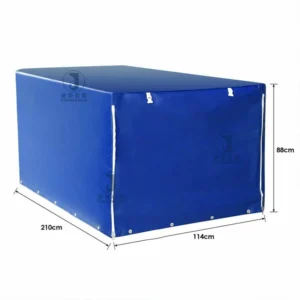
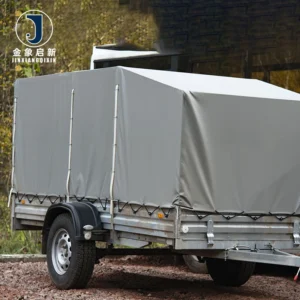
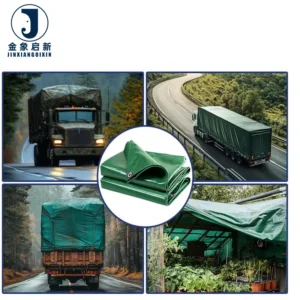
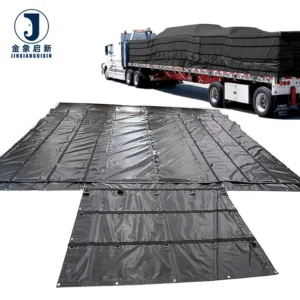
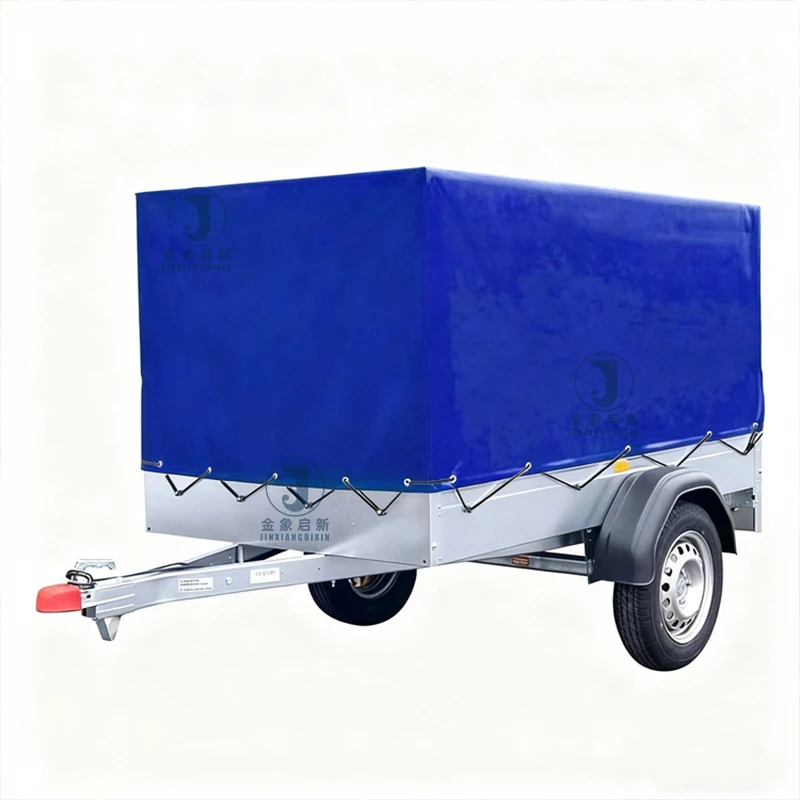
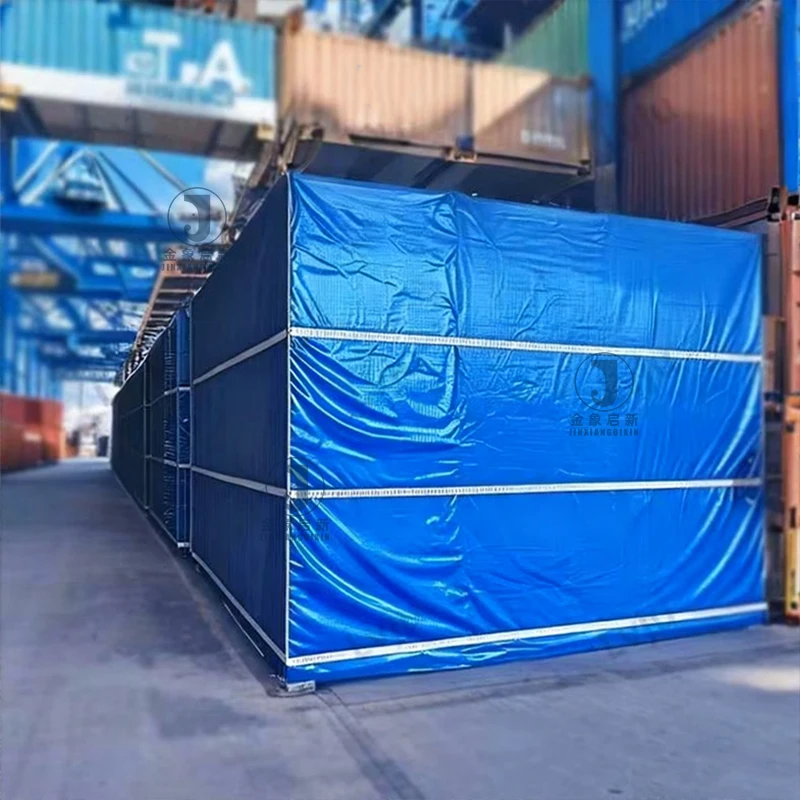
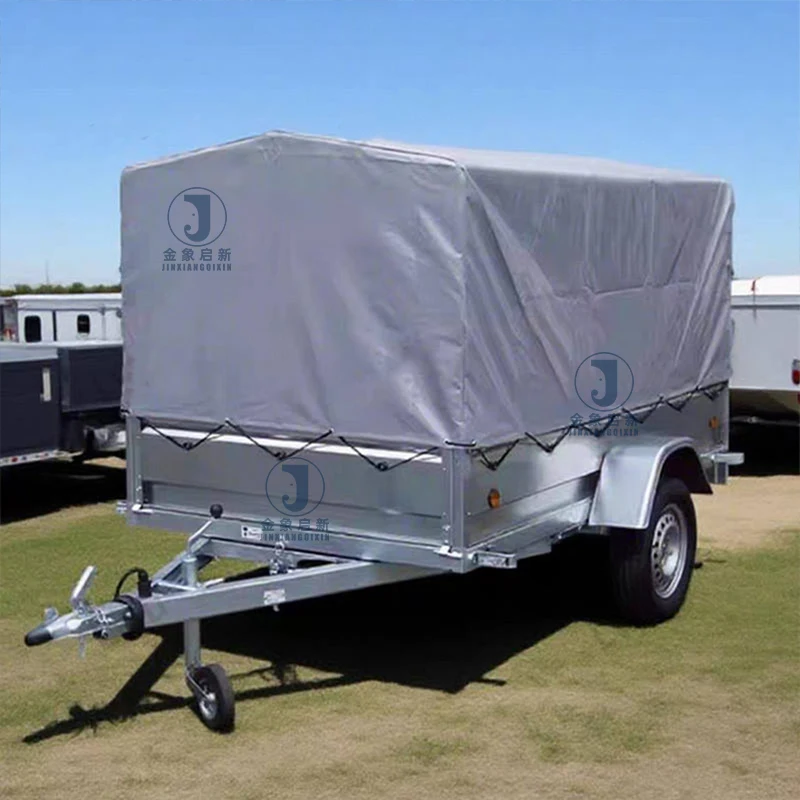
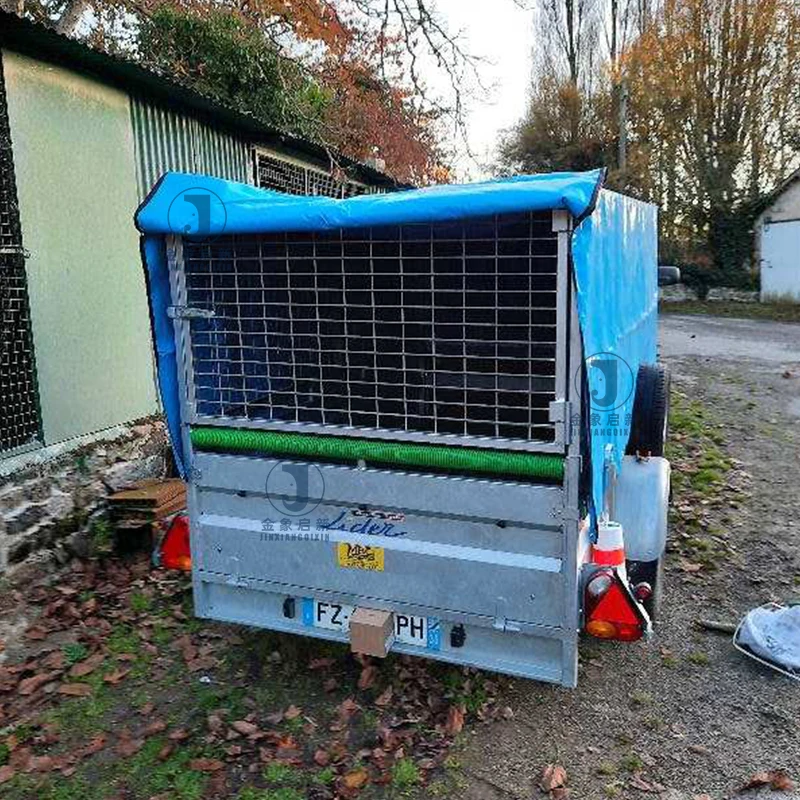
| Open trailer and flatbed cover | Road debris abrasion, wind flex at high speed, rain and UV exposure, frequent tie-down tension |
| Side curtain fabric for curtain-siders | Constant vertical flex cycles, friction at track runners, colour matching across adjacent panels |
| Cargo ship deck cover | Salt spray, prolonged sun exposure, standing water, heavy handling by dock workers |
| Truck and trailer fleet branding | Consistent colour across multiple vehicles, surface suitable for printed logos, long-term UV exposure |
Why Roll-to-Roll Colour Consistency Matters More Than the Swatch Sample
A sample approved on a Tuesday can arrive looking different from the rolls that follow — batch-controlled coating is the only real safeguard.
Fleet operators who install PVC truck cover panels side by side on adjacent trailers quickly spot even minor shade variation. When one roll sits a half-tone off the next, the entire fleet presentation suffers, and the buyer absorbs the rework cost. The problem rarely shows up at the sample stage because a single cut is inherently uniform. The variance emerges when multiple rolls from different production runs land on the same dock [NEED_CITE: colour measurement tolerances for PVC coated fabrics across production batches]. For wholesale buyers stocking multiple grades, inconsistent colour across rolls also complicates inventory matching when fulfilment requires cutting from several sources to complete a single order.
Stock Grades and Availability for Volume Buyers
Wholesale buyers need PVC truck cover roll stock in predictable grades so they can quote downstream customers without waiting for custom runs. This range covers 350gsm through 750gsm, allowing distributors to stock a lightweight option for temporary transit protection and a heavy-grade option for permanent trailer side curtains within the same product family. Availability across standard widths means container loads can be planned by roll count rather than by special-order lead time.
Batch Consistency Across Container Loads
When a 20-foot container arrives carrying PVC truck cover rolls for multiple customers, each buyer expects their portion to match the approved reference. Colour drift between the rolls at the door end and those at the rear can create disputes that delay payment. Production runs controlled by batch — not just by colour name — keep the Delta-E reading within an acceptable window across every roll in that shipment [NEED_CITE: acceptable colour deviation standards for coated fabric in fleet applications].
How GSM, Base Fabric, and Coating Weight Interact
GSM tells you the total weight per square metre but nothing about how that weight is distributed between the polyester mesh and the PVC coating. A 550gsm fabric with a dense base weave will outperform a 600gsm fabric loaded with coating filler when it comes to tear propagation at the weld line. Hot-melt coating technology drives the PVC into the mesh interstices rather than simply laying it on top, which improves adhesion strength and reduces delamination risk during hot welding of hems and seams. For buyers evaluating PVC truck cover options, requesting a specification sheet that breaks out base fabric denier from total GSM provides a clearer picture of how the material will behave under trailer tension.
What Happens When the Wrong Grade Gets Specified
Selecting a lighter grade to save on roll cost often surfaces as premature failure at the stress points — eyelets pulling through, hems separating at the weld, or cracking in cold weather transit. Anti-Static treatment and UV treated material are listed as features, but confirming the applicable test standard for your destination market avoids compliance failures at the point of installation [NEED_CITE: anti-static testing requirements for transport cover fabrics in mining and aviation sectors]. A fleet that operates in sub-zero corridors also needs cold crack resistance verified at the relevant temperature, not simply listed as a feature. The cost of replacing a failed truck cover mid-route — cargo exposure, load rejection, and redelivery — far exceeds the savings on a lighter roll.
Why Sourcing PVC Truck Cover Here Makes Sense
Three full production lines and 36 sets of professional equipment support bulk roll orders without the extended delays that smaller shops face when custom widths or colours are requested. A dedicated 10-person R&D team handles sample development, pattern printing layouts, and custom sizing within days rather than weeks. Every roll undergoes 100% pre-shipment inspection against the stated GSM, colour reference, and coating integrity before packing. Material specification sheets, test reports for applicable treatments, and roll packing lists are issued per shipment, not buried in a generic download. Near 30 years of focused coated fabric production means the process controls around coating weight and adhesion are established practice, not trial runs.
Documentation & Verification
- Material specification sheet listing exact GSM, base fabric construction, and coating method for each grade ordered
- Pre-shipment inspection record confirming roll-to-roll weight and colour consistency
- Roll packing list with roll count, individual weight, and container loading plan
- Test report for UV treated material and flame retardant option where grade is confirmed
- ISO and CE certificates covering the production facility
- Certificate of origin and customs documentation for export shipments
Fabrication, Handling & Storage
- Hot welded hems at the bottom require compatible heat settings matched to the chosen GSM grade to avoid burning through lighter 350gsm stock
- Eyelets and velcro closures must be positioned away from the primary flex zone to prevent premature pull-through on 0.32mm and 0.35mm thickness options
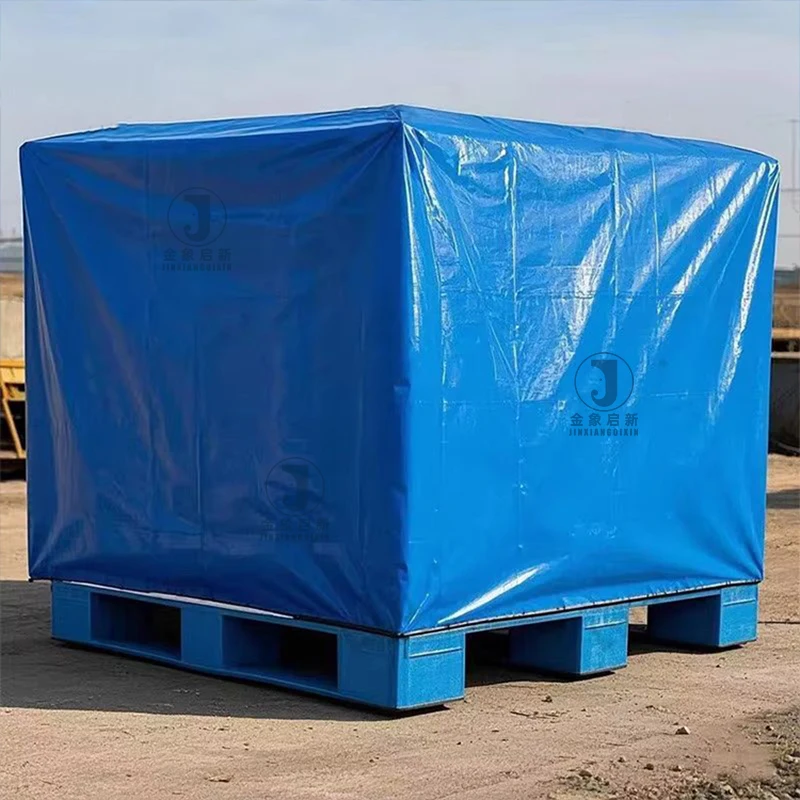
- Rolls stored flat on pallets in dry conditions prevent permanent creasing, especially on heavier 750gsm grades that resist re-flattening once set
- Cold crack resistant formulation allows winter transport, but rolls should be unrolled and acclimatised before fabrication in low-temperature workshops
- Printed brand graphics require surface preparation verification on glossy finish options to ensure ink adhesion through weather exposure
What We Need From You to Quote Accurately
Specify the target GSM grade, roll width, and colour reference so the quotation reflects your exact requirement rather than a general range. If your market mandates a specific flame retardant or anti-static standard, include the regulation reference so the correct treatment level is applied and documented. Confirm whether you need PVC truck cover rolls supplied as stock or finished to custom sizes with eyelets and closures installed. If fleet branding is required, share the print artwork and colour codes early so a production sample can be developed before the full run.
Frequently Asked Questions
Q: How do I verify the GSM of each roll matches what was quoted?
A: Every roll is weighed and recorded during pre-shipment inspection. The inspection report states the actual weight per square metre against the quoted grade. On arrival, buyers can perform a spot check by cutting a known-dimension sample and weighing it. We supply the specification sheet so your receiving team has the reference value to compare against.
Q: Can you maintain colour consistency across multiple rolls in one order?
A: Rolls within a single production batch are coated from the same mixed compound, which minimises shade variation. For large orders requiring multiple batches, we keep retained reference samples from the first batch and match subsequent runs against them. The pre-shipment inspection record documents the visual and measured consistency check.
Q: What is the MOQ for custom width, colour, or printed rolls?
A: Custom specifications carry minimums that depend on the chosen GSM grade and the production line setup required. Standard widths and stock colours have lower thresholds than fully custom Pantone matches or printed branding. Share your target roll count and specification so we can confirm the applicable minimum for your order.
Q: How are rolls packed and protected for container shipping?
A: Each roll is wound on a core, wrapped in protective film, and packed on pallets with the roll count, weight, and grade clearly labelled. A container loading plan is provided before dispatch showing how the rolls are positioned to prevent crushing and moisture exposure during transit.
Q: Is hot welding or stitching recommended for hems and seams?
A: Hot welded hems are standard at the bottom edge because welding fuses the PVC layers without creating needle holes that compromise waterproofing. For high-stress junctions on heavier grades, stitching with sealed thread followed by a welded tape overlay provides redundancy. The optimal method depends on the GSM and the flex profile of the final cover.