Description
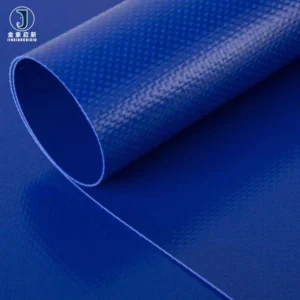
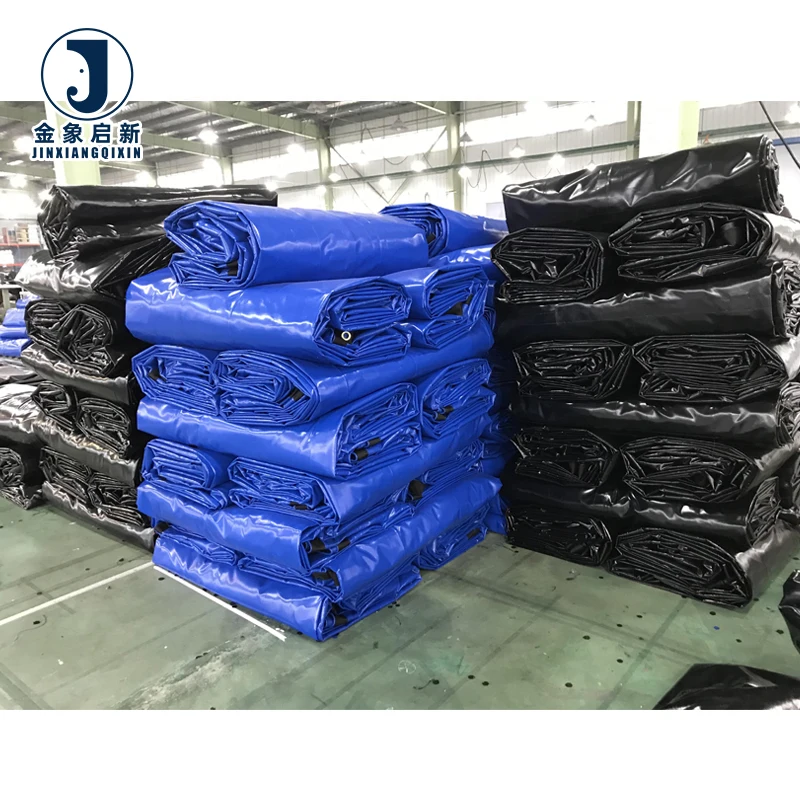
Bulk Roll Consistency — Every roll of PVC truck cover for flatbed trailer production is weighed and measured against the stated GSM before leaving the facility, ensuring batch-to-batch uniformity across fleet orders.
Technical Specifications
| Parameter | Value |
|---|---|
| Product Type | PVC Truck Cover |
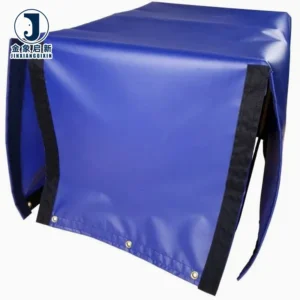
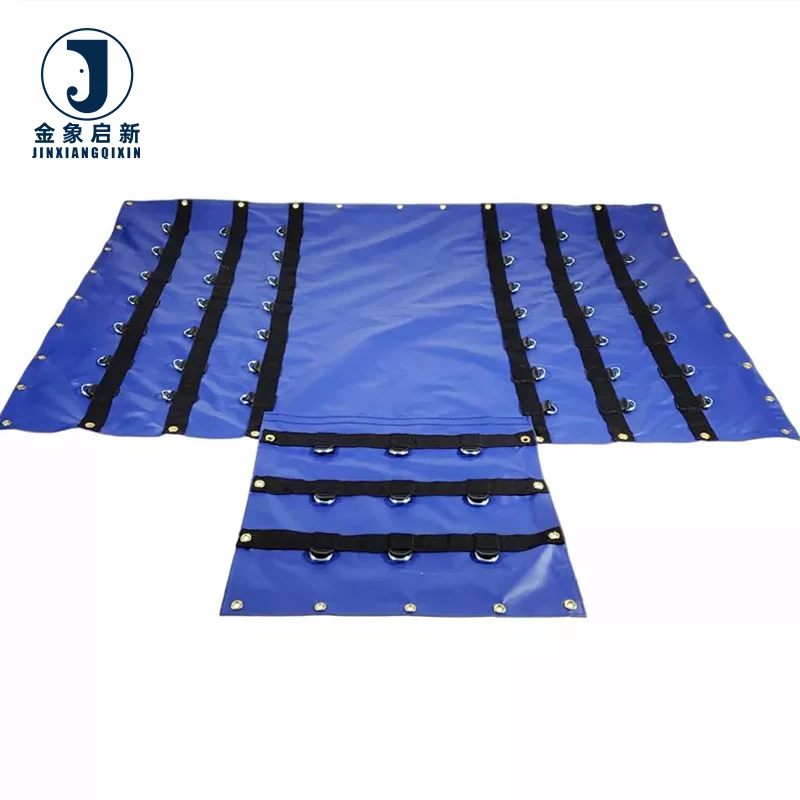
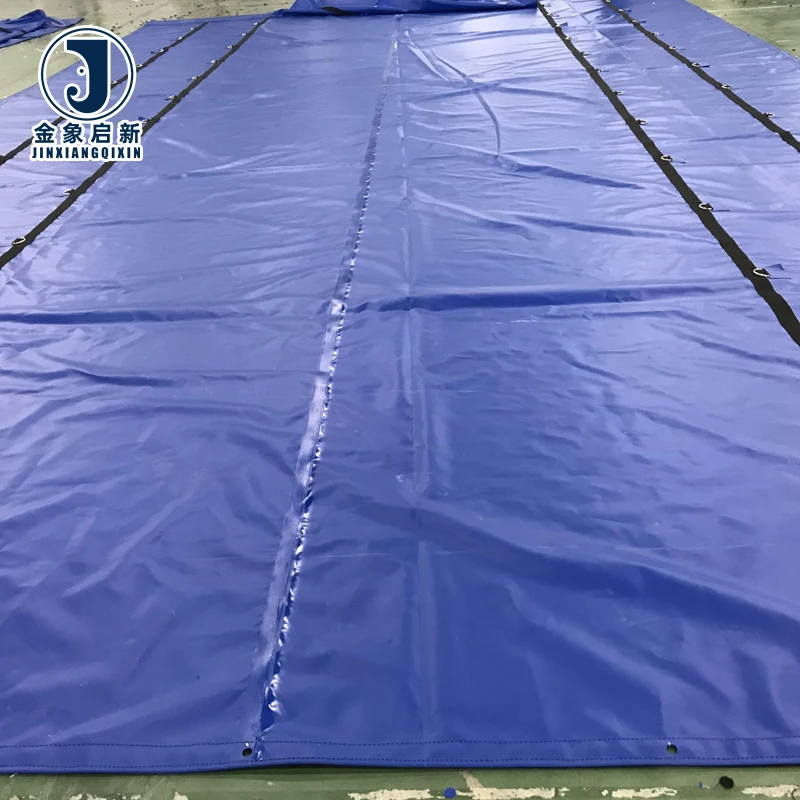
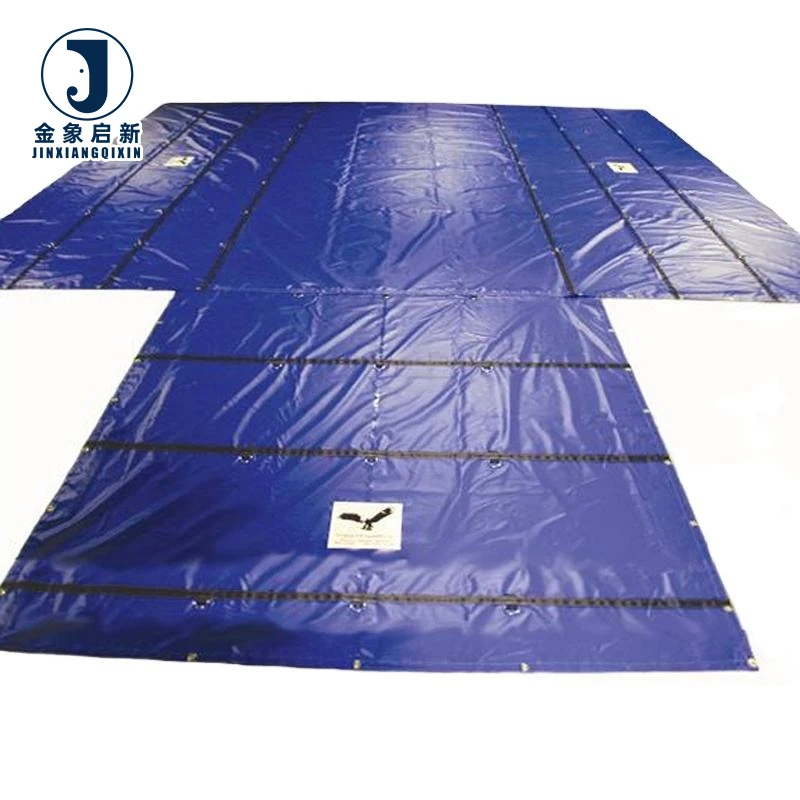
| Dimensions | 24′ X 27′ with 8ft. Drop |
| Base Fabric Denier | 1000D × 1000D (heavy-duty) / 500D (medium) |
| Mesh Count | 20 × 20 / 18 × 18 |
| Weight | 610 gsm (18 oz) / 16 oz / 14 oz — confirm grade |
| Total Thickness | 0.35–0.45 mm (medium) / 0.70–1.0 mm (heavy-duty) / 1.2–1.5 mm (super heavy) |
| Coating Material | PVC |
| Color Options | Black / Blue |
| Temperature Range | -35 to 70 °C |
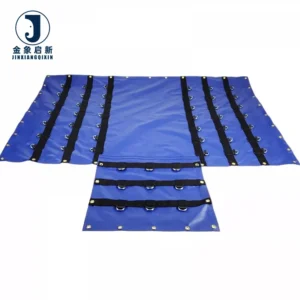
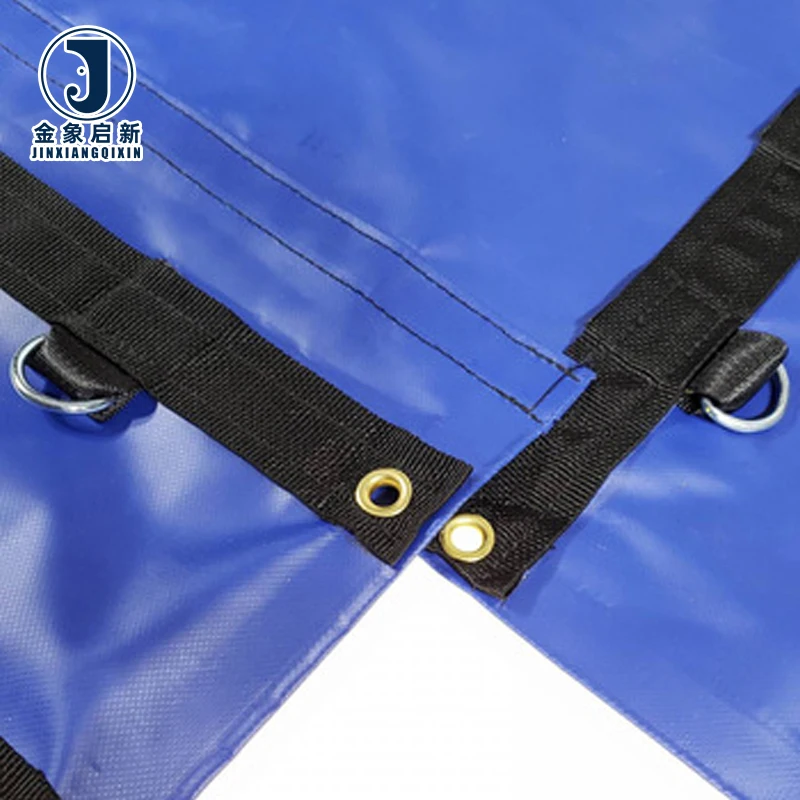
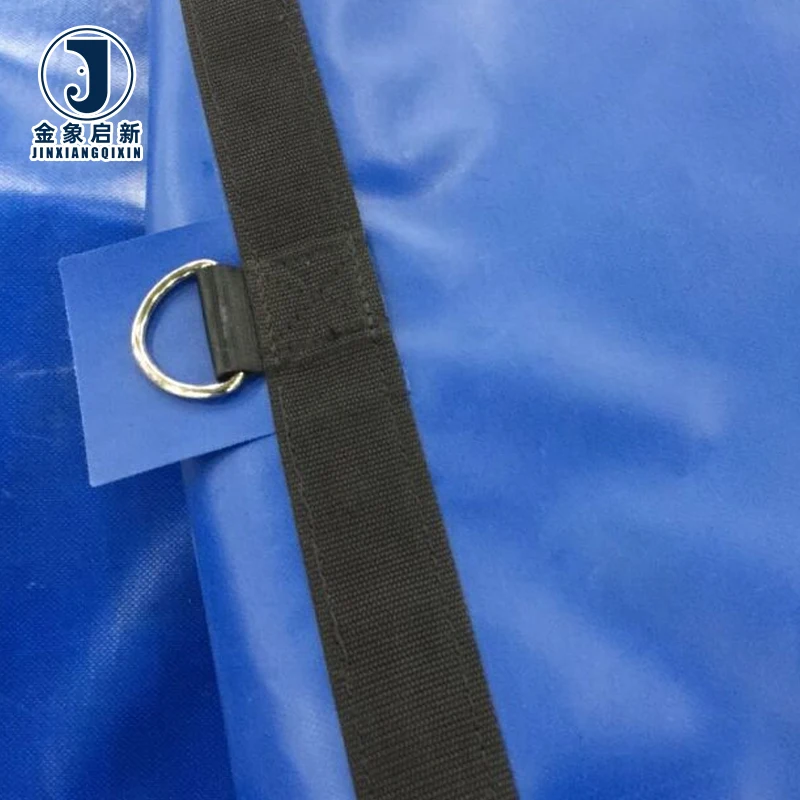
| D-Ring Configuration | 3 Rows |
| Tensile Strength (Medium) | Longitude 1500–2000 / Latitude 1200–1800 N/5cm |
| Tensile Strength (Heavy-Duty) | Meridian 2000–2500 / Latitude 1800–2200 N/5cm |
| Tensile Strength (Super Heavy) | Warp 2500–3000 / Weft 2200–2800 N/5cm (test standard not stated) |
| Flame Retardant | Available in flame retardant grades — confirm the grade required for your market |
| Anti-UV | Available with UV treatment — test basis to be confirmed per order |
| Finish | Acid-resistant |
| Hem & Reinforcement | 3 rows of D-rings; tail wing on 6′ and 8′ drops; tail flaps on 4′ drops |
| Printing Option | Custom branding available |
| Certifications | ISO, CE |
Application Suitability
| Application | Exposure & Requirement |
|---|---|
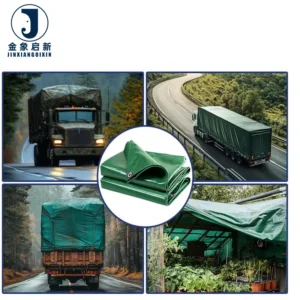
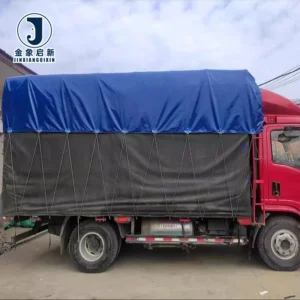
| Flatbed trailer — stacked lumber | Highway-speed wind load, rain ingress at seams, tie-down abrasion at D-rings, road debris impact |
| Flatbed trailer — wall panels and building materials | UV exposure during multi-day transit, surface scratching from panel edges, moisture penetration at load ends |
| Long-haul logistics — high-profile cargo | Sustained vibration and flex at load peaks, temperature cycling from -35 to 70 °C, repeated tarp deployment |
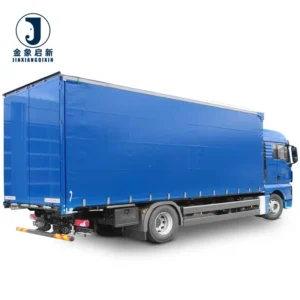
| Regional transport — mixed flatbed loads | Frequent removal and re-fitting, tail flap wear from drag on loading docks, colour consistency across fleet |
Why Buying Tarps by Roll Count Demands More Than a Price Per Kilogram
Weight verification at the roll level — not the quotation level — is the only way to confirm what you actually received.
When wholesale buyers order PVC truck cover for flatbed trailer fleets by the container, the quoted GSM is often the figure that gets invoiced rather than the figure that gets shipped. Rolls arrive lighter than agreed, and the shortfall only becomes visible once tarps are cut and deployed side by side on adjacent trailers. The cost of discovering this at the depot, after customs clearance and inland freight have already been paid, far exceeds the price difference that motivated the lighter material in the first place. [NEED_CITE: pre-shipment weight verification protocols for coated fabric rolls]
Roll-to-Roll Consistency Across Container Loads
When a fleet operator orders twenty PVC truck cover tarps for mixed trailer configurations, the expectation is that every unit arrives with the same hand feel, the same colour depth, and the same flexibility at -35 °C. Achieving that consistency depends on coating weight control at every stage of the production line, not just a final spot check. Each roll in this product family is produced on lines equipped to maintain GSM within tight tolerances, reducing the variation that causes visible colour shifts when two tarps are installed on neighbouring trailers.
Stocking Common Sizes for Regional Distributors
Distributors serving flatbed operators need reliable stock depth in the sizes that move fastest — 24′ × 27′ with 8ft drop being a high-turn configuration for lumber and panel hauls. This product family supports bulk ordering with container loading calculated by roll count and weight, so distributors can plan inventory turns without tying up capital in slow-moving variants. The availability of 14 oz, 16 oz, and 610 gsm (18 oz) grades allows stocking across price points while maintaining the same dimensional footprint. [NEED_CITE: coated fabric roll packing and container loading methods]
How Base Fabric and Coating Weight Interact to Define Real Performance
GSM alone does not tell a buyer how a tarp will perform under load. A 610 gsm fabric built on a 1000D × 1000D base with 20 × 20 mesh count will resist tear propagation differently than a 610 gsm fabric on a lighter base with heavier coating. The base fabric carries the structural load — tensile and tear strength follow the denier and weave density — while the PVC coating provides waterproofing, chemical resistance, and the surface that accepts heat-welded seams. When specification sheets list only GSM, buyers cannot distinguish between a coating-heavy roll that welds easily but tears at the base and a balanced construction that holds up at D-ring stress points. The 0.70–1.0 mm total thickness range in the heavy-duty variant reflects a construction where coating and base are matched for long-haul flex resistance.
The Hidden Cost of Specifying on Quoted Weight Alone
When a roll arrives underweight, the consequences cascade through the supply chain. D-rings pull through thinner fabric at tie-down points. Welded seams separate under load flex because the coating layer is too thin to maintain adhesion at the joint. A fleet that ordered matching blue tarps receives units that look different beside each other, prompting complaints from the end operator. None of these failures show up on the commercial invoice — they show up on the roadside, in the rain, with a load exposed. [NEED_CITE: seam adhesion failure modes in PVC coated tarpaulins under cyclic flex loading]
What Bulk Buyers Can Verify Before Accepting Shipment
This product line ships with a pre-shipment inspection record that documents actual GSM readings per roll, not just the batch average. The material specification sheet states the base fabric denier, coating weight, and colour reference for traceability. D-ring pull tests and seam weld inspections are conducted at high-flex points — the areas where flatbed tarps fail first. For buyers ordering container loads, colour consistency is checked across rolls before packing, reducing the risk of visible mismatch at the installation site.
Documentation & Verification
- Material specification sheet stating base fabric denier, coating weight, and colour reference for each roll
- Pre-shipment inspection record confirming GSM matches the quoted grade across the entire order
- ISO and CE certificates supporting product compliance documentation
- Roll packing list with individual roll weights and dimensions for container loading planning
- Certificate of origin and customs documentation for cross-border wholesale shipments
- Test reports for UV and flame retardant treatment where applicable to the specified grade
Fabrication, Handling & Storage
- Heat-weld seams at recommended temperature for the specified PVC coating thickness to maintain adhesion at D-ring stress rows
- Store rolls upright on pallets to prevent flat-spot deformation on the 0.70–1.0 mm heavy-duty grade
- Allow cold-stored rolls to acclimate to ambient temperature before unrolling to avoid coating cracking below -35 °C
- Use compatible PVC adhesive for field repairs on the acid-resistant coating surface
- Plan cutting layout to maximise yield from roll width and minimise offcuts on custom size orders
- Reinforce eyelet and D-ring attachment zones with additional PVC patches at high-tension tie-down points
Before You Place a Bulk Order
Provide the trailer models in your fleet so that roll dimensions and cut sizes can be matched to each configuration rather than supplied as generic stock. Specify which weight grade — 14 oz, 16 oz, or 610 gsm (18 oz) — suits each application, along with the colour and any printing requirements for fleet branding. Confirm whether you need finished tarps with D-rings and tail flaps installed, or roll stock for your own fabrication line.
Frequently Asked Questions
Q: How do I verify that the GSM on the rolls I receive matches what was quoted?
A: Every shipment includes a pre-shipment inspection record with individual roll weight readings taken before packing. You can cross-check these against your purchase order and conduct your own scale verification on arrival. Rolls that do not meet the stated GSM are flagged during the inspection process and replaced before dispatch.
Q: Can I order multiple weight grades in the same container shipment?
A: Yes, this product family supports mixed-grade loading. You can combine 14 oz, 16 oz, and 610 gsm (18 oz) rolls in a single container, with packing lists itemised by grade and dimension for easy warehouse sorting on arrival.
Q: What is the difference between the medium, heavy-duty, and super heavy constructions?
A: The medium variant uses a 500D base at 0.35–0.45 mm for lighter-duty coverage, the heavy-duty variant uses a 1000D × 1000D base at 0.70–1.0 mm for sustained highway exposure, and the super heavy variant reaches 1.2–1.5 mm for maximum abrasion and tear resistance in demanding transport environments.
Q: How do you handle colour consistency when I order fifty tarps in the same blue?
A: Colour matching is verified across all rolls in the production batch before packing. The material specification sheet includes a colour reference, and any roll that deviates from the approved shade is removed from the shipment to prevent visible mismatch when tarps are deployed on adjacent trailers.
Q: Do you supply roll stock or only finished tarps with D-rings and tail flaps?
A: Both options are available. You can order roll stock by width and length for your own cutting and fabrication, or request finished PVC truck cover units with 3 rows of D-rings and tail wing or tail flap configurations already installed to your trailer specifications.