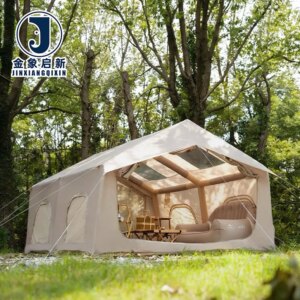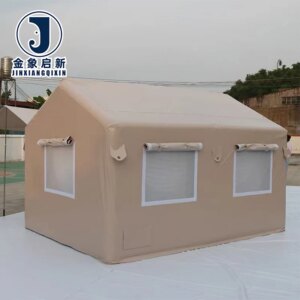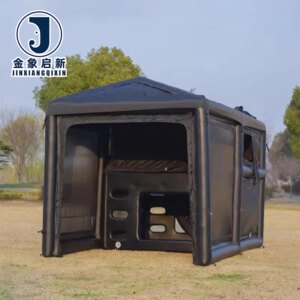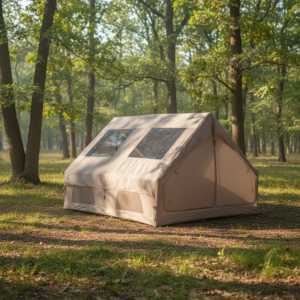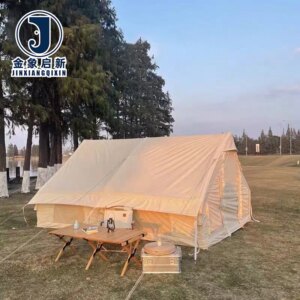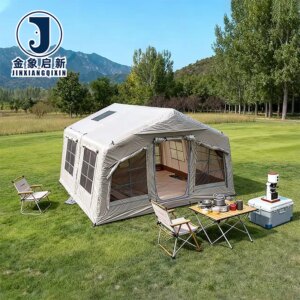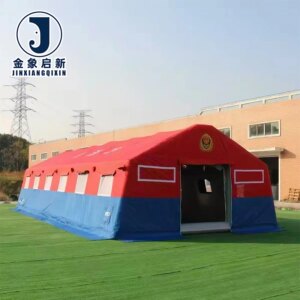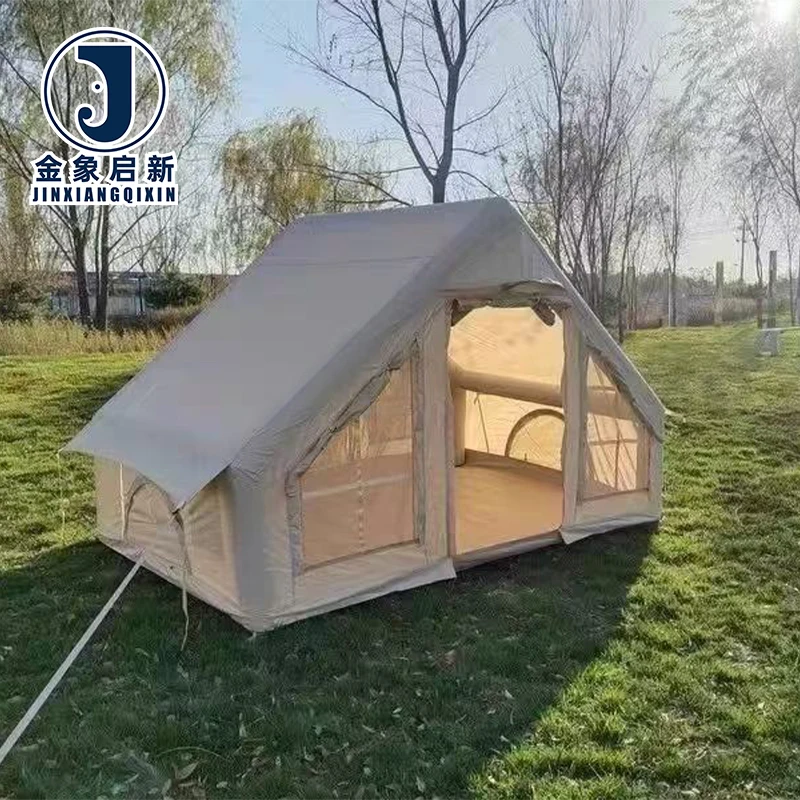
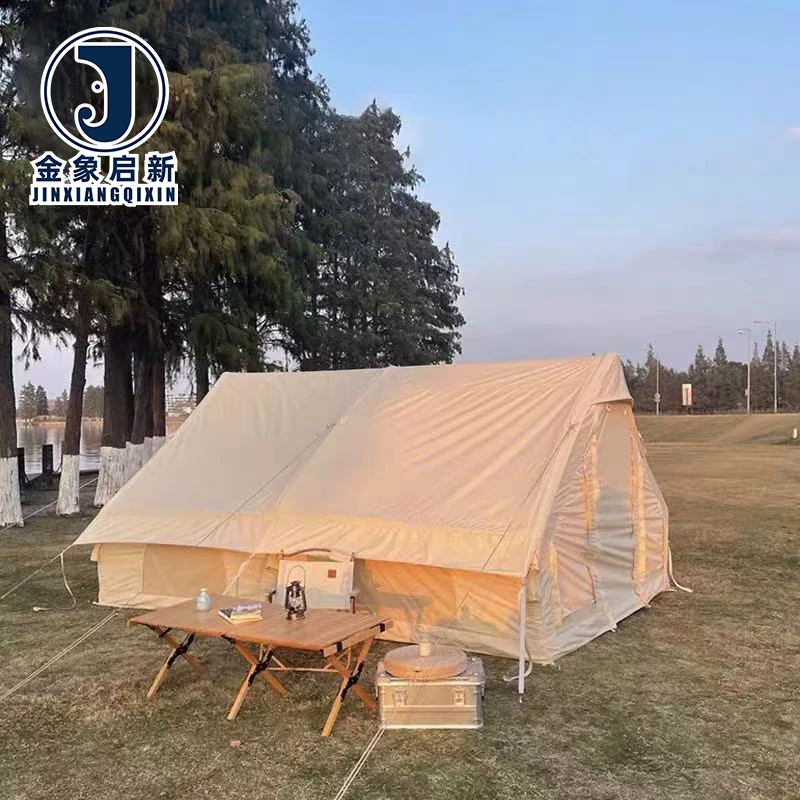
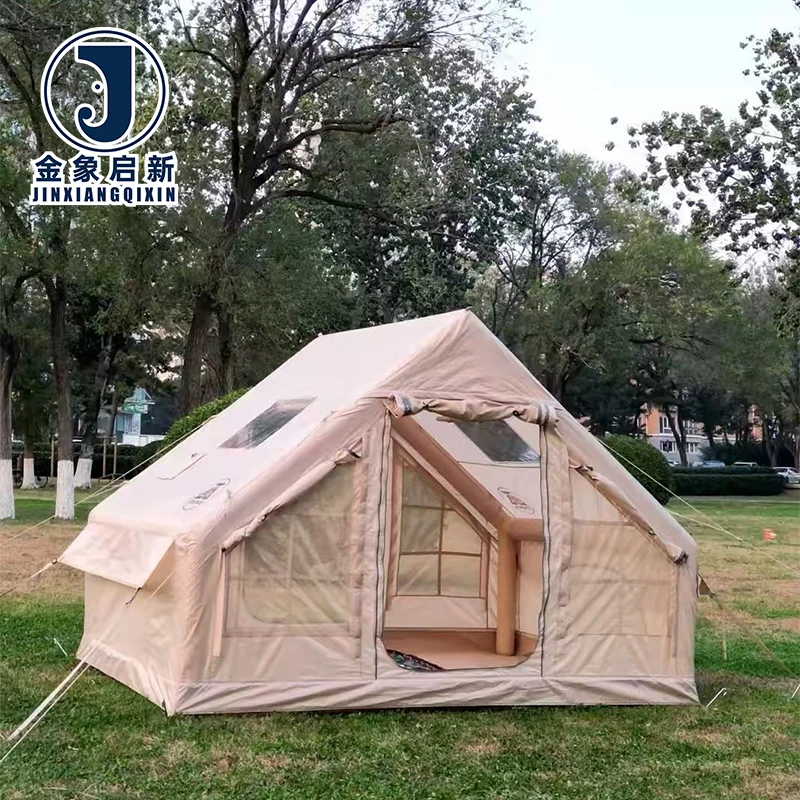
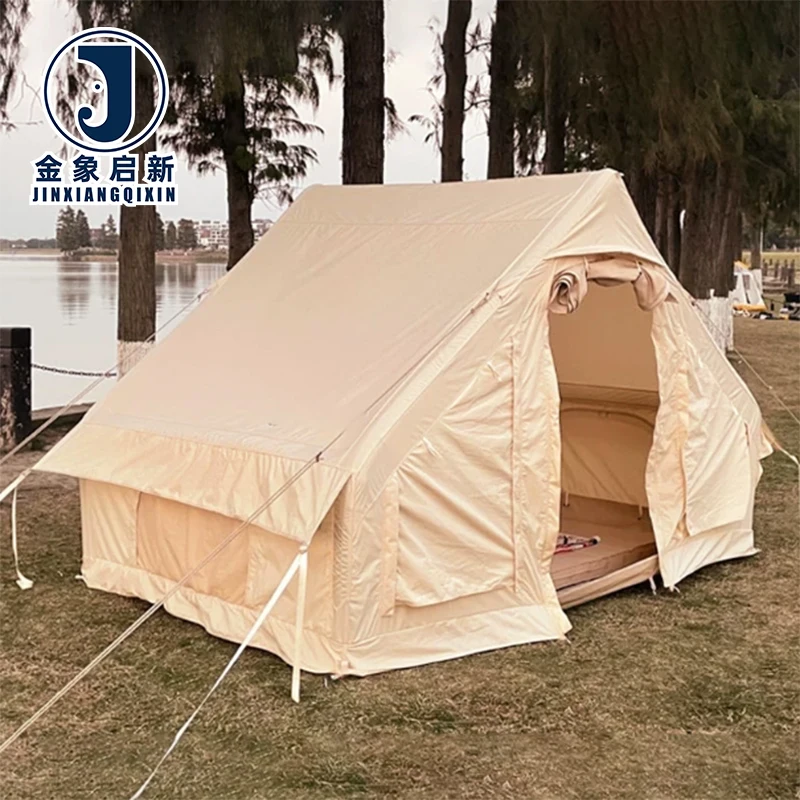
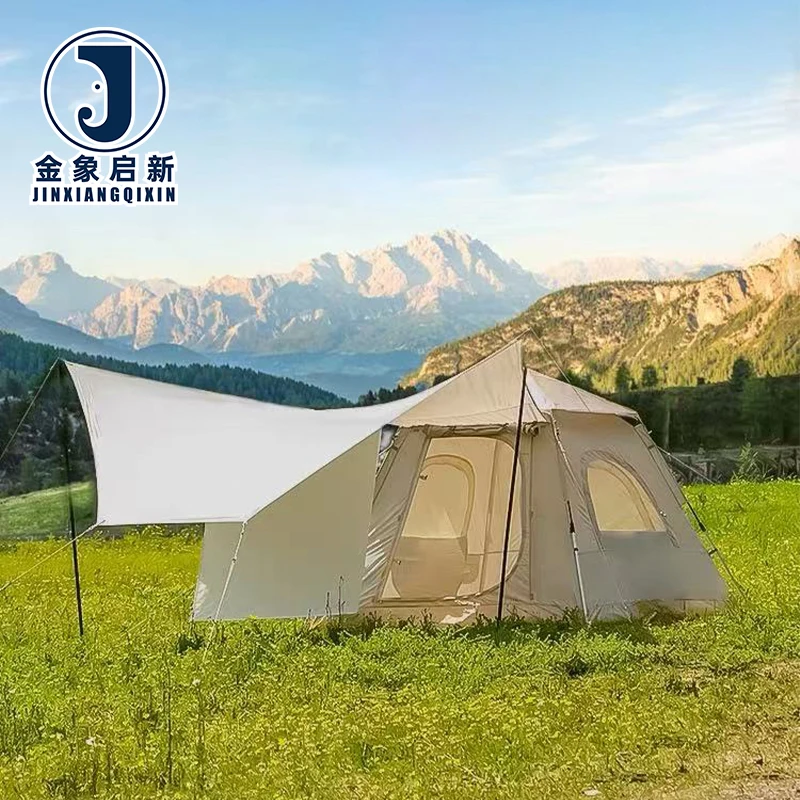
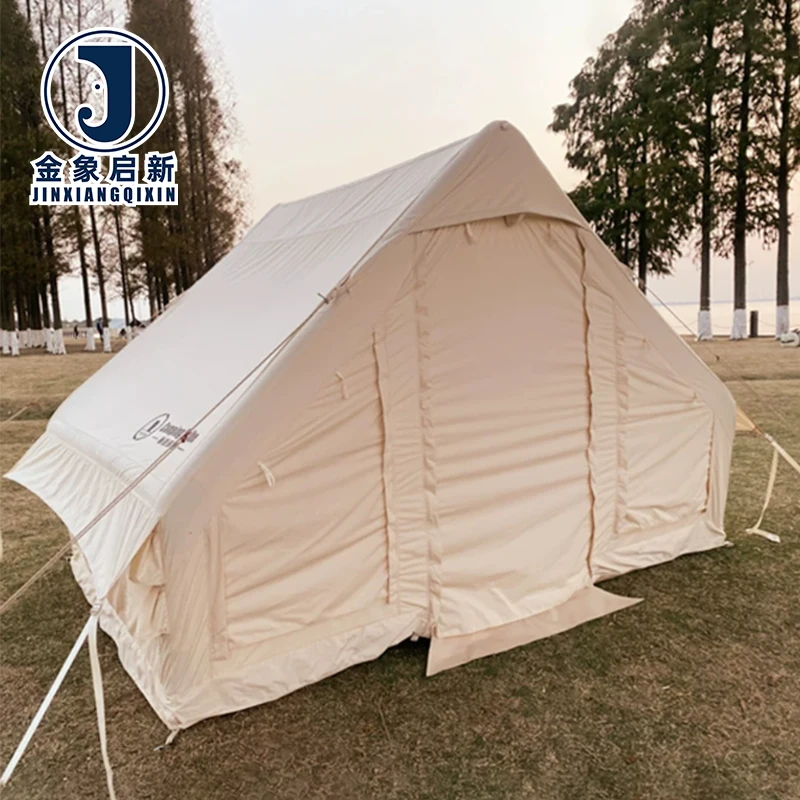
Description
Deep Process Control Over Coating Weight and Adhesion — Every roll of PVC inflatable tent fabric undergoes strict in-process QA to ensure coating consistency before it reaches the welding table.
Technical Specifications
| Parameter | Value |
|---|---|
| Product Type | Inflatable Tent |
| Core Material | PVC Tarpaulin |
| Waterproof | Yes |
| UV-resistant | Available — confirm UV test basis required for your market |
| Tear-resistant | Available — confirm tear test standard required for your application |
| Fire-retardant | Available in flame retardant grades — confirm the grade required for your market |
| Anti-static | Available in anti-static grades — confirm the standard required for your site |
| Feature | Quick automatic opening |
| Season Rating | All-season / Four-season |
| Customization | OEM & ODM, size adjustments, pattern printing, material thickness variations |
| Certifications | ISO9001, ISO14001, ISO45001, CE |
Application Suitability
| Application | Exposure & Requirement |
|---|---|
| Emergency disaster relief shelters | Rapid deployment under severe weather, moisture ingress prevention, repeated inflation cycles |
| Temporary storage facilities | Constant UV exposure, wind loading, abrasion from stored goods contact |
| Construction site accommodations | Dust, debris impact, flame risk from nearby hot work, static discharge in dry environments |
| Emergency response centers | Fast setup under time pressure, all-season thermal performance, compliance with site safety audits |
| Outdoor operations requiring rapid deployment | Transport abrasion, rough ground contact, repeated pack-and-deploy cycles |
What "Fire-Retardant Inflatable Shelter" Means Without a Verified Grade
A fire-retardant claim without a documented grade is a compliance gap waiting to surface during your next site audit.
Procurement teams ordering PVC inflatable tent fabric for industrial or disaster-response use often receive material described simply as "fire-retardant" with no reference to a recognised test standard. When the shelter arrives on a construction site or mining operation, the safety officer asks for the certificate — and the supply chain stalls. This is not a paperwork issue; it is a specification failure that delays deployment and exposes the buyer to liability. [NEED_CITE: fire classification standards for temporary structures in industrial zones]
The same pattern repeats with anti-static requirements. Inflatable shelters deployed near fuel handling, aviation maintenance, or underground mining zones need documented surface resistance data, not a generic claim. A PVC Inflatable Tent manufacturer that cannot supply batch-specific test results leaves the buyer carrying the verification burden.
How Quick-Deploy Inflatable Shelters Change the Procurement Conversation
Traditional temporary shelters require pole assemblies, rope tensioning, and ground anchoring that demand trained crews and extended setup windows. Inflatable tent structures replace the rigid frame with air-beam channels integrated into the PVC tarpaulin envelope, allowing a single operator with a pump to achieve full structural form in minutes. For disaster relief staging and emergency response, this speed advantage compounds across multiple units deployed in a single operational period.
The fabric itself must tolerate the internal pressure of the air beams without delamination at the coating-to-base-fabric interface. Coating adhesion becomes as critical as tensile strength, because the air-beam channels concentrate stress along bonded seams that flex continuously during inflation and deflation cycles.
Material Thickness and the Trade-Off Between Weight and Deployability
Thicker PVC tarpaulin offers greater puncture resistance and structural rigidity once inflated, but it also increases packed weight and reduces the speed at which the shelter can be transported to a remote site. OEM and ODM customization allows buyers to specify material thickness variations that match the intended deployment scenario — a disaster relief organisation airlifting shelters into inaccessible terrain will prioritise a lighter grade than a construction firm establishing semi-permanent site accommodation.
Pattern printing and branding can be applied during the coating stage or post-production, but the surface finish — glossy or matte — influences ink adhesion and long-term legibility. Buyers specifying custom inflatable shelter fabric with printed identification should confirm print method compatibility with the selected surface treatment. [NEED_CITE: coating surface energy and ink adhesion on PVC tarpaulin]
Reading the Specification Sheet Beyond the Weight Figure
GSM alone does not define how a PVC inflatable tent fabric will perform under inflation pressure or wind load. The base fabric denier and weave density determine tensile and tear behaviour, while the coating weight and method govern waterproofing, weld integrity, and surface durability. A lighter base fabric with a heavier coating may match the same GSM as a denser weave with less coating, yet the two will behave very differently when an air-beam channel is heat-welded into the panel.
Coating method matters for fabrication. Knife-coated PVC typically delivers higher peel strength at welded seams compared to laminated construction, which is significant for inflatable structures where the air-beam channels are formed by welding. Fire-retardant and anti-static treatments are integrated into the coating compound, and their effectiveness depends on uniform dispersion — something verified only through batch-specific testing, not a blanket product description. The all-season rating of this inflatable tent material reflects its formulation for both low-temperature flexibility and high-temperature dimensional stability, but the actual deployment temperature range should be confirmed against the specific grade ordered.
The Hidden Cost of Specifying on Claim Rather Than Certificate
When a batch of inflatable tent fabric arrives on site without supporting test documentation for its stated flame-retardant or anti-static properties, the buyer faces a choice: deploy without compliance and accept the risk, or halt operations until independent testing is arranged. Both paths carry cost — the first in liability exposure, the second in project delay. [NEED_CITE: consequences of non-certified temporary structures on regulated industrial sites]
Colour variation between rolls in a single order creates a visible defect once multiple shelter units are installed side by side at a disaster relief camp or construction compound. This is not cosmetic — it signals inconsistent coating formulation across the batch, which may extend to functional properties like UV stability and flame response. Buyers sourcing custom inflatable shelter fabric should request roll-to-roll colour reference data alongside the material specification sheet before approving production.
Welded seam failure at the air-beam channel is the most common structural fault in inflatable shelters. The failure almost always traces back to a mismatch between the welding temperature, the coating compound, and the base fabric weight — parameters that must be calibrated for each specific material grade, not assumed from a generic product category.
Why Procurement Teams Source This Inflatable Tent Material Here
Three full production lines and 36 sets of processing equipment support bulk volume with consistent coating weight control across every roll. The 9,180 square metre facility is configured for PVC tarpaulin coating, not general-purpose textile finishing, which means process parameters are optimised for the specific compound families used in inflatable structures.
A 10-technician R&D team handles material selection, thickness adjustment, and sample development for custom inflatable shelter requirements — from pattern printing proofs to air-beam channel weld trials. Samples are developed within days, allowing buyers to verify fabrication behaviour before committing to a production run.
Dedicated QA and QC staff operate at every production stage with 100 percent pre-shipment inspection. Each roll is checked for coating adhesion, surface consistency, and dimensional accuracy against the specification sheet, reducing the likelihood of surprises at the receiving dock.
Documentation & Verification
- Material specification sheet confirming PVC grade, coating weight, and colour reference for each batch
- Fire-retardant and anti-static test results matched to the specific production run
- ISO9001, ISO14001, ISO45001, and CE certificates aligned with destination import requirements
- Pre-shipment inspection record covering coating adhesion and dimensional accuracy
- Roll packing list with individual roll identification for traceability
Fabrication, Handling & Storage
- Heat-weld air-beam channels at temperatures calibrated to the specific PVC coating grade to avoid delamination
- Store rolls upright on pallets to prevent flat-spot creasing that weakens the coating at fold lines
- Use compatible PVC adhesive for field repairs on the coated surface rather than general-purpose bonding agents
- Allow cold-stored rolls to reach ambient temperature before unrolling to prevent coating micro-cracking
- Cut panels with allowance for weld seam overlap to maintain structural integrity of the inflatable envelope
Requesting a Specification Match for Your Deployment
To move from general enquiry to a production-ready specification, share your intended deployment scenario, the environmental exposure conditions the shelter will face, and any fire-retardant or anti-static standards mandated by your site operator or regulatory authority. If you require custom sizing, pattern printing, or material thickness adjustment, indicate the target dimensions and quantity so that a sample can be prepared for your fabrication team to evaluate. Specify whether you need finished inflatable tent units or roll stock for your own welding and assembly line.
Frequently Asked Questions
Q: What fire-retardant grade does the inflatable tent fabric carry, and does it meet my region’s safety standards?
A: The fabric is available in multiple flame-retardant grades, but the specific grade must be matched to your local regulatory requirement. When you enquire, state the standard your site mandates so the correct test report can be supplied with your batch documentation.
Q: What UV test data supports the tent’s resistance to prolonged sunlight exposure?
A: UV-resistant treatment is available, and the test basis should be confirmed against your deployment climate. Request the UV test method reference during the specification stage so the data aligns with your expected outdoor exposure duration and regional solar intensity.
Q: What are the minimum order quantities for custom-sized inflatable tents with printed branding?
A: Minimum quantities depend on the degree of customisation — standard sizes in stock colours carry lower thresholds than fully custom dimensions with pattern printing. Share your size, colour, and print requirements early so an accurate minimum and lead time can be quoted.
Q: Does the anti-static treatment come with a surface resistance test report suitable for site audits?
A: Anti-static grades are available, and a batch-specific surface resistance report can be provided when the requirement is stated at enquiry stage. Confirm the test method your site auditor requires so the documentation matches the compliance framework in use.