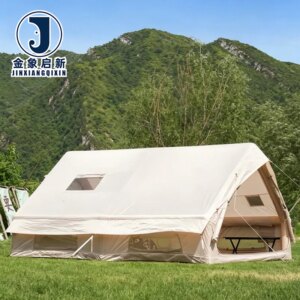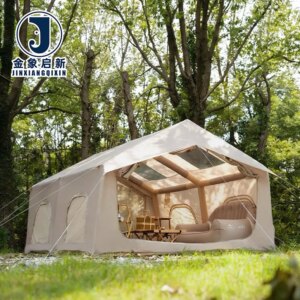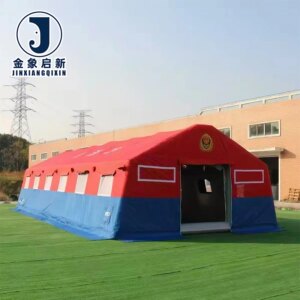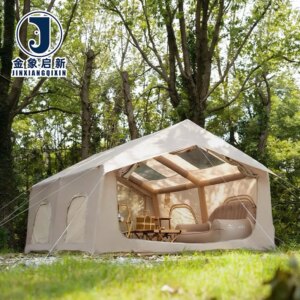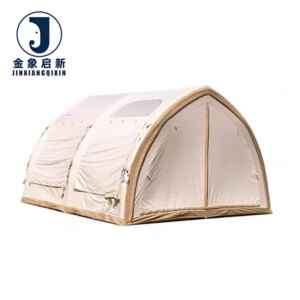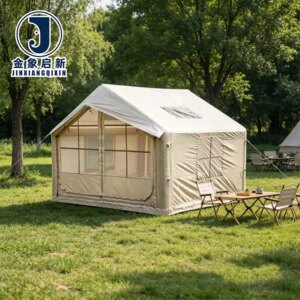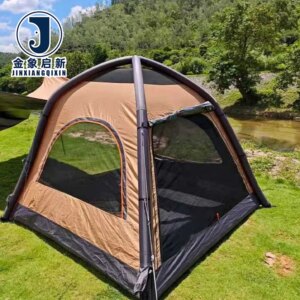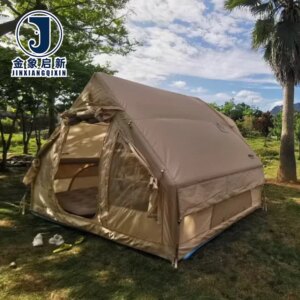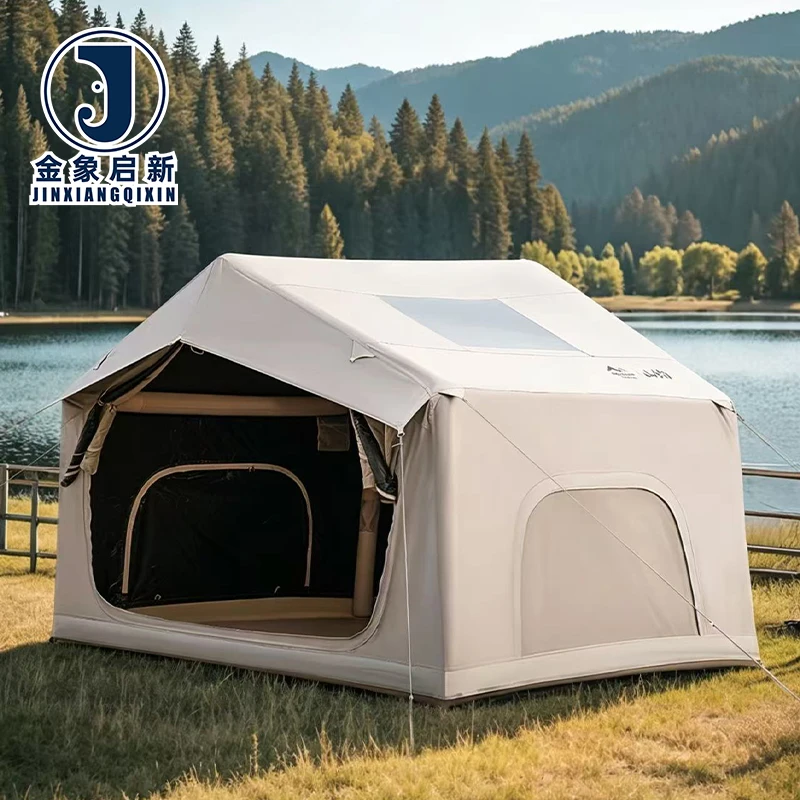
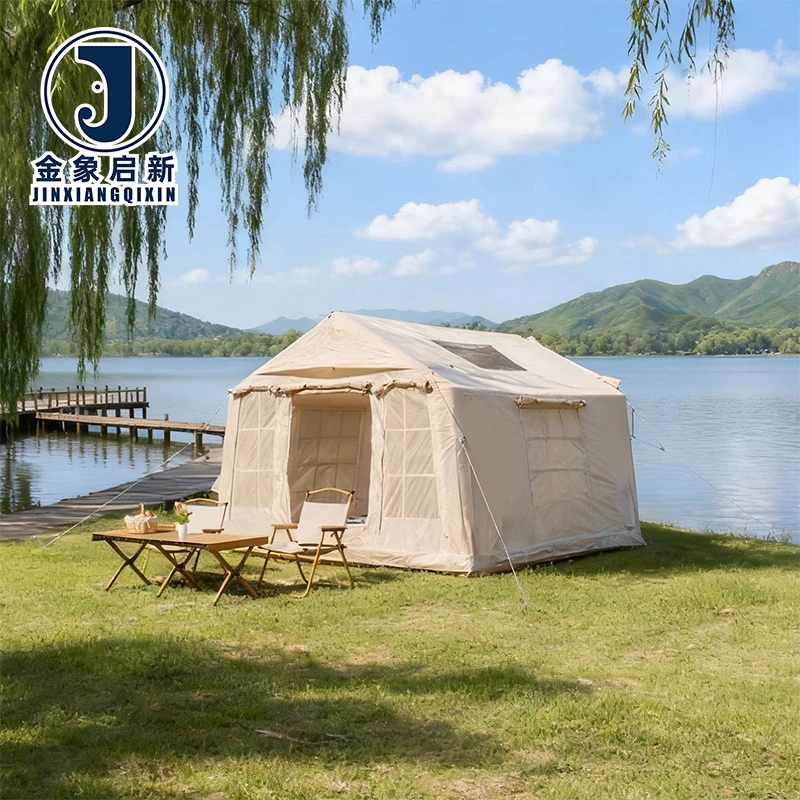
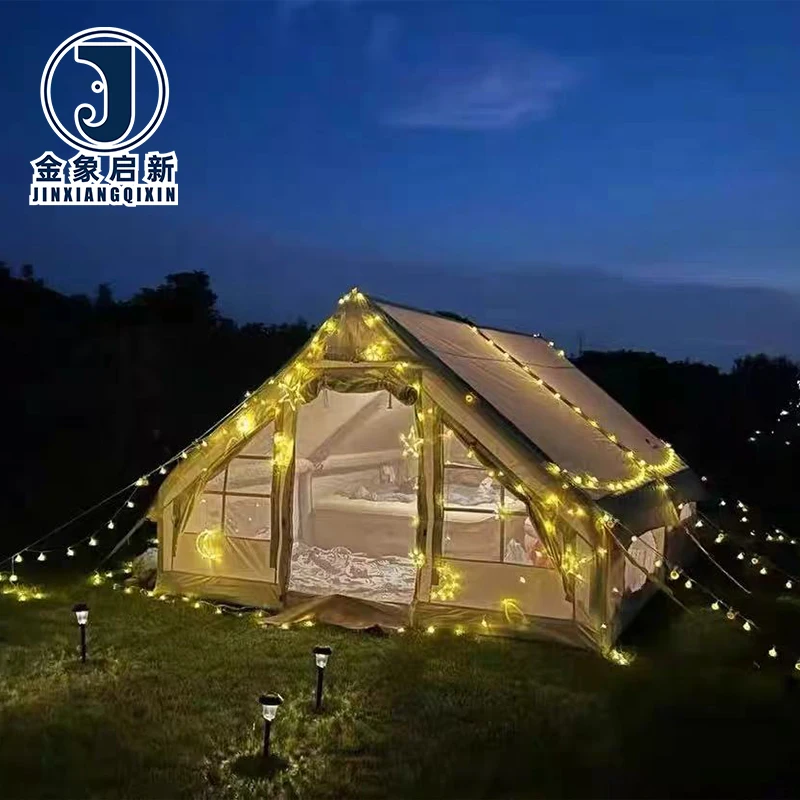
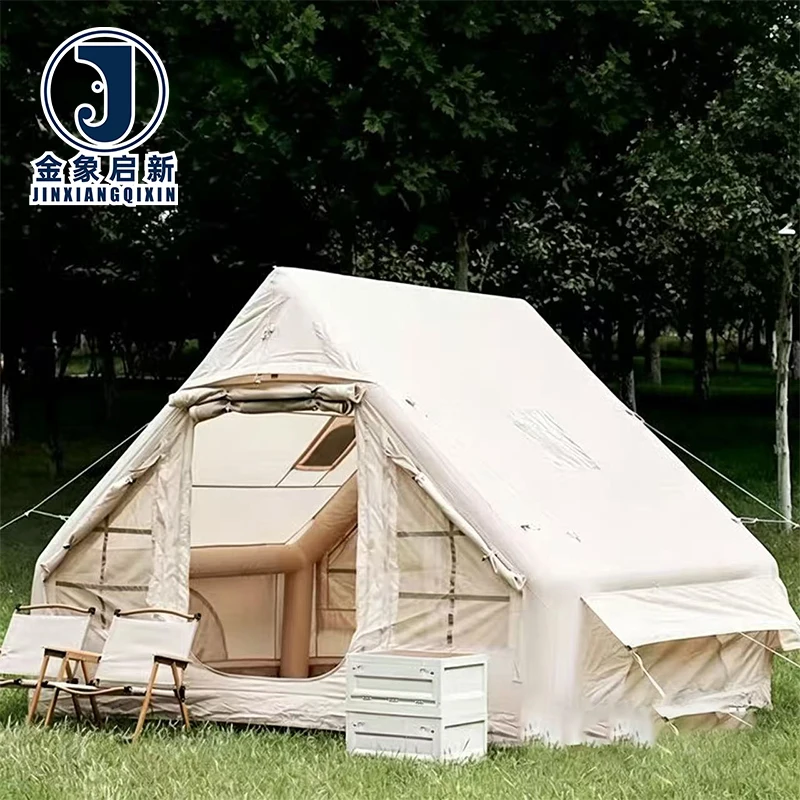
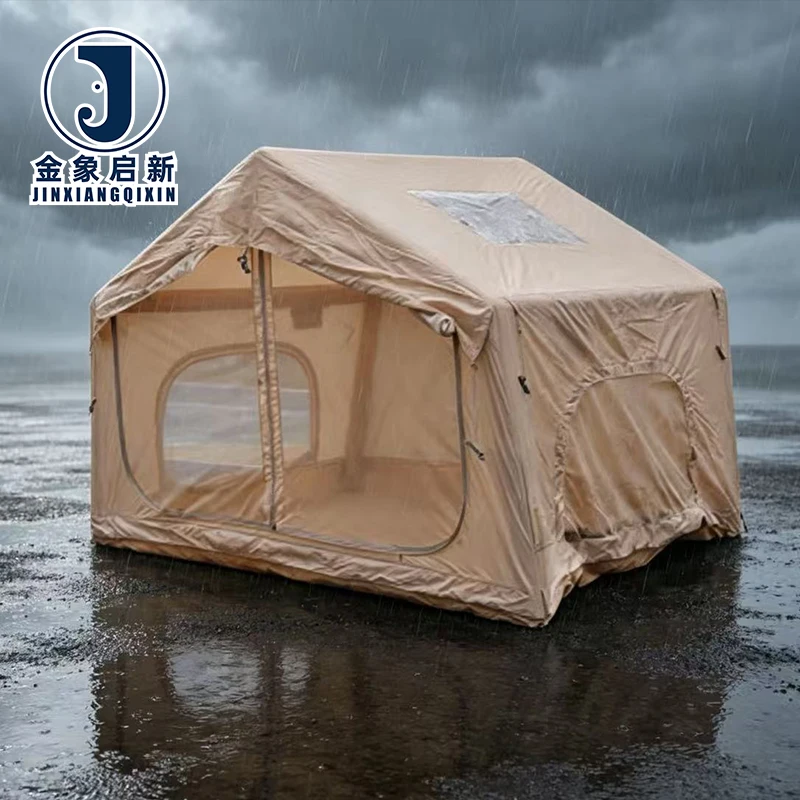
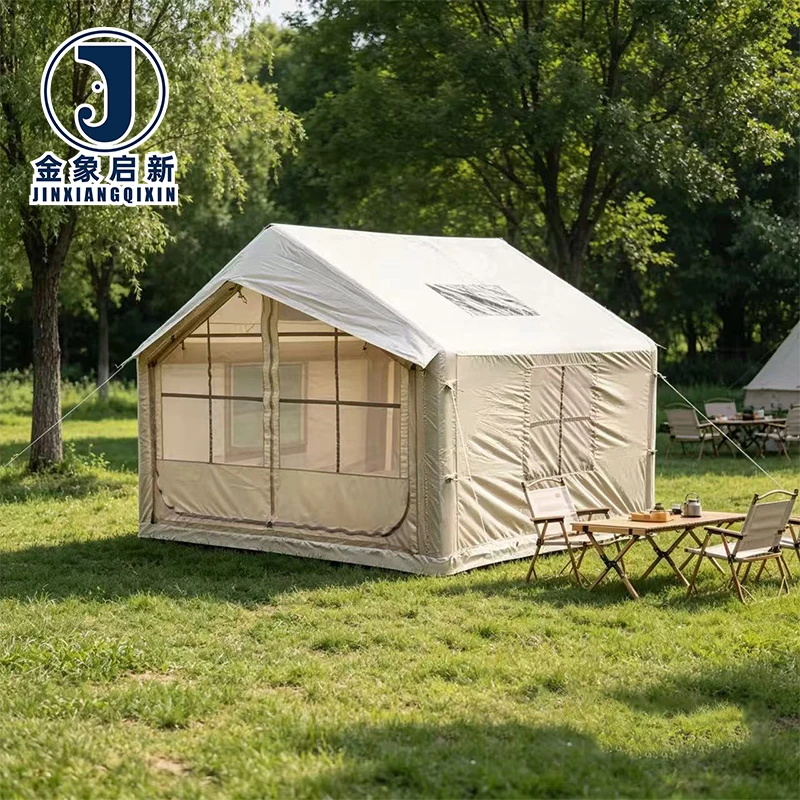
Description
Proven Coating Consistency — every roll of PVC tarpaulin for inflatable tent structures is checked for coating weight and adhesion at multiple in-process stages before winding.
Technical Specifications
| Parameter | Value |
|---|---|
| Product Type | Inflatable Tent |
| Core Material | PVC Tarpaulin |
| Fabric Thickness Range | 0.3mm–0.8mm (available grades — confirm required thickness) |
| Hydrostatic Head | ≥10,000mm (test basis not stated — verify against manufacturer catalog) |
| Fire-retardant Standard | EN 13501-1 Class B (verify against manufacturer catalog) |
| Key Features | Waterproof, UV-resistant, Tear-resistant, Fire-retardant, Anti-static |
| Deployment Mechanism | Quick automatic opening, inflatable structure |
| Deployment Cycle Test | 1,000+ cycles (verify against manufacturer catalog) |
| Pressure Retention | ≤5% loss over 24 hours (verify against manufacturer catalog) |
| Welding Inspection Interval | 50cm ultrasonic checks |
| Customization Service | OEM & ODM — sample customization, pattern printing, custom dimensions, color matching, logo printing, valve system modifications |
| Sample Lead Time | 7–10 business days |
| Production Lead Time | 15–20 days for standard orders |
| Certifications | ISO 9001, ISO 14001, ISO 45001, CE |
Application Suitability
| Application | Exposure & Requirement |
|---|---|
| Commercial glamping sites | Continuous outdoor weathering, guest turnover, rapid deploy-and-stow cycles |
| Outdoor hospitality venues | Repeated inflation/deflation, seasonal UV exposure, fire code compliance for public accommodation |
| Modular temporary accommodation | Transport and repositioning stress, multi-season reuse, structural air retention |
| Outdoor gear brand integration | Branded product line consistency, retail-ready finish, OEM specification matching |
Why Colour Drift Across Tent Units Undermines an Entire Glamping Site
Batch-specific inspection eliminates visible mismatch once tents stand side by side.
Glamping operators ordering multiple inflatable tent units for a single site often discover colour variation only after deployment. Two tents from the same shipment sit adjacent on the field and the difference is obvious to guests [NEED_CITE: colour tolerance standards for coated textiles in batch production]. The problem is not the fabric itself but the lack of lot-level colour control during coating runs. When the Inflatable Tent Fabric wholesale order arrives with inconsistent tone across rolls, the operator faces re-sorting, selective deployment, or in the worst case a partial return that delays the entire seasonal opening.
Roll-to-Roll Consistency for Multi-Unit Glamping Deployment
Commercial glamping sites require Inflatable Tent Fabric wholesale supply where every roll performs identically. Coating weight, colour reference, and surface finish must remain constant from the first tent cut to the last. Our production workflow assigns batch-specific tracking to each coating run, so operators outfitting twenty-unit sites receive material that photographs uniformly across the entire property.
Pressure Retention That Holds Through Guest Turnover
An inflatable camping tent must retain internal pressure through temperature swings between day and night. The PVC tarpaulin structure relies on heat-welded seams to hold air without continuous compressor load. Ultrasonic welding integrity checks at set intervals confirm bond strength before each unit leaves the line [NEED_CITE: ultrasonic testing methods for thermoplastic weld seams on coated fabric]. Pressure retention testing then verifies that no micro-leak exists in the valve or seam network.
How Fabric Thickness Choices Affect Tent Durability and Weight
The available thickness range from 0.3mm to 0.8mm covers distinct use profiles within the inflatable glamping tent category. Thinner grades reduce packed weight and speed inflation, suiting seasonal pop-up hospitality setups that deploy and store frequently. Heavier grades increase puncture resistance and structural rigidity, matching permanent or semi-permanent installations that remain inflated for weeks. The base fabric denier and weave density interact with coating thickness to determine overall tear propagation behaviour — a heavier coating on a loose weave may add weight without proportional tear improvement. Coating adhesion method also matters: knife-over-roll coating builds a thicker film with stronger base penetration, supporting the repeated flex cycles an inflatable structure endures. Surface finish — glossy or matte — influences both cleaning ease between guest stays and the adhesion of printed branding.
What Happens When Weld Integrity Is Not Verified Before Dispatch
Welded seams on inflatable structures carry the entire air-retention load. A seam that passes visual inspection may still harbour a micro-channel that bleeds pressure gradually [NEED_CITE: failure analysis of heat-welded PVC tarpaulin seams under cyclic pressure]. Guests arrive to find a partially collapsed tent. The operator traces the leak, patches it, then discovers a second failure point on the next seam. Without systematic ultrasonic checks along the full weld length, these defects surface only in the field where repair costs multiply.
Why Procurement Verification Matters for Inflatable Tent Bulk Orders
Dedicated QA staff inspect each unit through full-process checkpoints, not just final visual checks. Thickness tolerance is held within ±0.1mm, and tensile strength verification runs against the stated specification. Pre-shipment water immersion testing confirms waterproof integrity on every finished tent before packing. Prototype samples are developed within 7–10 business days so buyers can evaluate deployment behaviour, colour match, and valve performance before committing to an Inflatable Glamping Tent bulk order. The R&D team of 10 technicians supports custom dimension work, valve system modifications, and pattern printing aligned to the buyer’s brand guidelines.
Documentation & Verification
- Material specification sheet confirming PVC tarpaulin GSM, base fabric denier, and coating weight per roll
- Fire-retardant test report referencing EN 13501-1 Class B grade for each production batch
- Batch-specific quality inspection record with welding test results and pressure retention data
- Pre-shipment inspection log covering water immersion and deployment cycle verification
- Certificate of origin and customs documentation package for international dispatch
Fabrication, Handling & Storage
- Heat-weld at temperatures matched to the selected PVC tarpaulin thickness grade to avoid coating burn-through
- Store rolls vertically on padded racks to prevent flat-spot creasing across the coating surface
- Allow cold-stored inflatable tent fabric to reach ambient temperature before unrolling to avoid coating crack
- Clean deployed tent surfaces with mild detergent compatible with PVC tarpaulin coating chemistry
- Repair field punctures with PVC-compatible adhesive patches matching the original coating weight
- Plan cut patterns around standard roll widths to minimise seam count in finished inflatable structures
What We Need to Prepare Your Quotation
Share your target deployment environment, expected seasonal exposure conditions, and the fire-retardant grade your local regulations require for commercial accommodation structures. Let us know the unit dimensions, preferred fabric thickness, and whether you need finished tents or PVC tarpaulin roll stock for your own fabrication line. If colour matching or printed branding is part of the brief, provide Pantone references so we can develop a prototype sample for your approval.
Frequently Asked Questions
Q: How is batch-to-batch colour consistency controlled across bulk inflatable tent orders?
A: Each coating run is assigned a batch reference tied to the colour formulation record. In-process checks compare the wet and dry coat against the approved reference standard under controlled lighting. The inspection report supplied with each shipment documents the batch lot number and colour measurement data, so operators can trace every tent unit back to its specific production run.
Q: What fire-retardant grade does the tent fabric carry, and does it meet commercial venue regulations?
A: The fabric is available with EN 13501-1 Class B fire-retardant treatment. Commercial glamping operators should confirm with their local authority whether this classification satisfies their jurisdiction’s requirements for temporary accommodation. We supply the corresponding test report with each shipment and can discuss alternative grades if your market mandates a different standard.
Q: What customization options are available for dimensions, fabric thickness, and valve systems?
A: OEM and ODM services cover custom tent dimensions, fabric thickness selection within the available range, colour matching to brand references, logo and pattern printing, and valve system modifications. Prototype samples are developed within 7–10 business days for buyer evaluation before the Inflatable Glamping Tent bulk production run begins.
Q: How is welding seam integrity verified, and what does pre-shipment inspection cover?
A: Ultrasonic checks run at 50cm intervals along every heat-welded seam to detect bond weaknesses. Pressure retention testing confirms air loss stays within acceptable limits over a 24-hour hold. Pre-shipment inspection then includes full water immersion testing and deployment cycle verification by dedicated QA staff before packing.
Q: What documentation accompanies each shipment for customs and site compliance?
A: Each dispatch includes a material specification sheet, fire-retardant test report, batch-specific quality inspection record, pre-shipment inspection log, certificate of origin, and packing list. ISO and CE certificates are available as part of the documentation package to support import clearance and on-site safety audits.