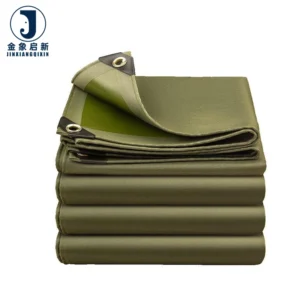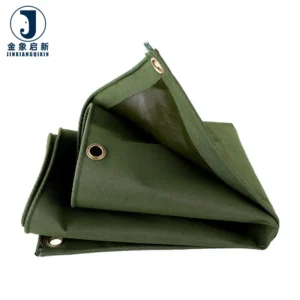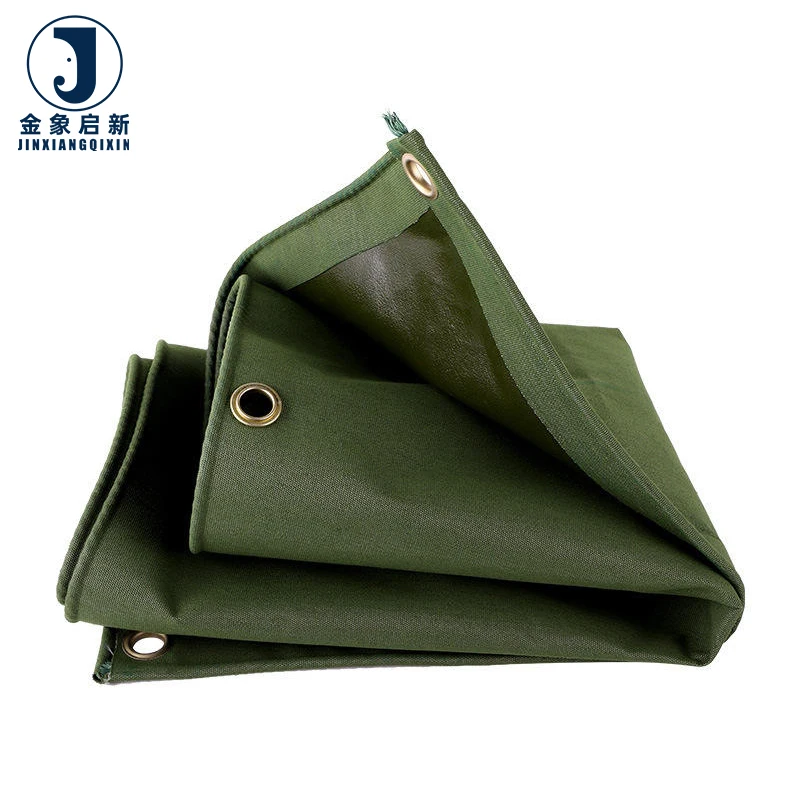
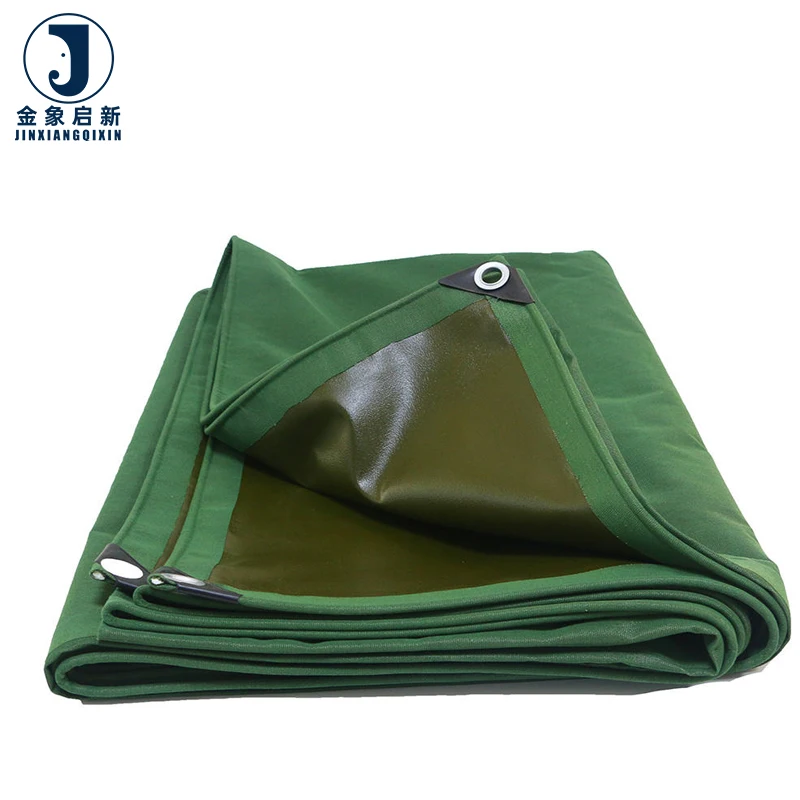
Description
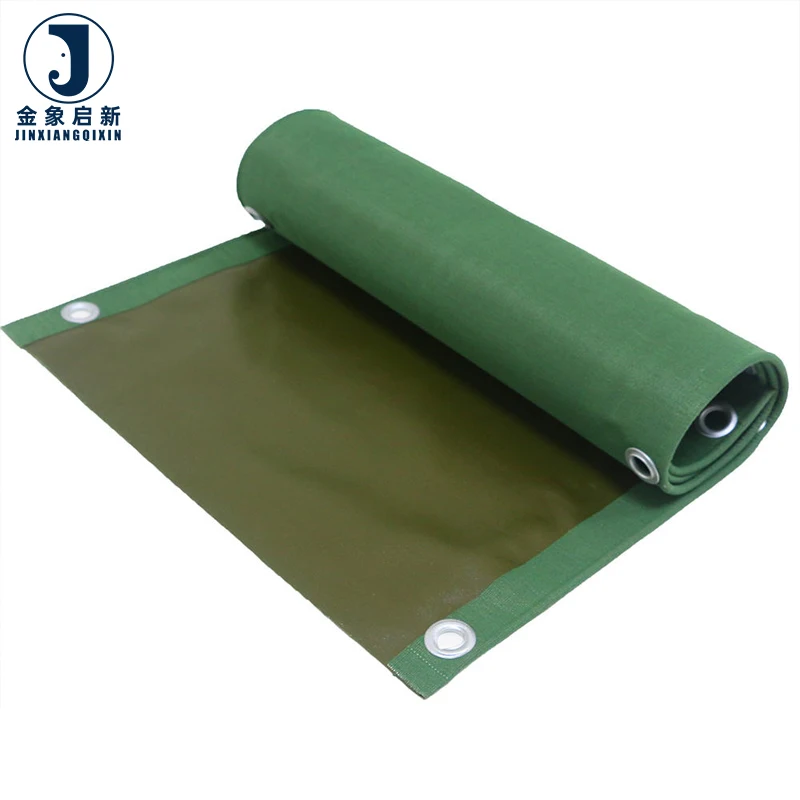
Consistent Roll Weight — every 600 GSM roll is weighed and recorded against the specification before it leaves the production floor, so bulk buyers receive documented verification rather than a quoted promise.
Technical Specifications
| Parameter | Value |
|---|---|
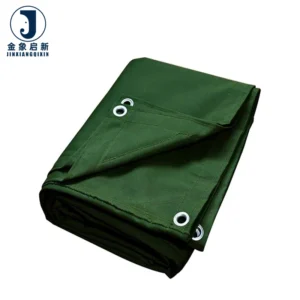
| Product Type | Canvas Tarpaulin |
| Weight | 600 GSM |
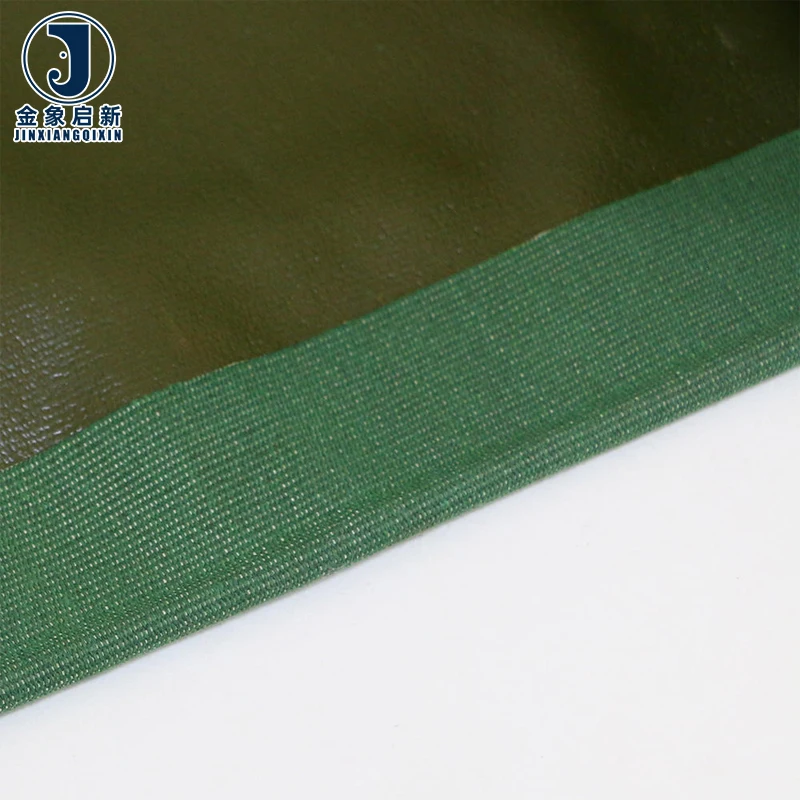
| Base Fabric | Woven Plain Canvas |
| Coating Method | Laminated |
| Water Resistance | Waterproof |
| UV Treatment | UV resistant (test basis not stated in source) |
| Flame Retardant | Flame retardant (grade not stated in source) |
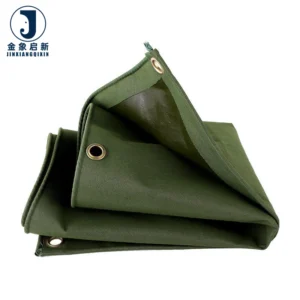
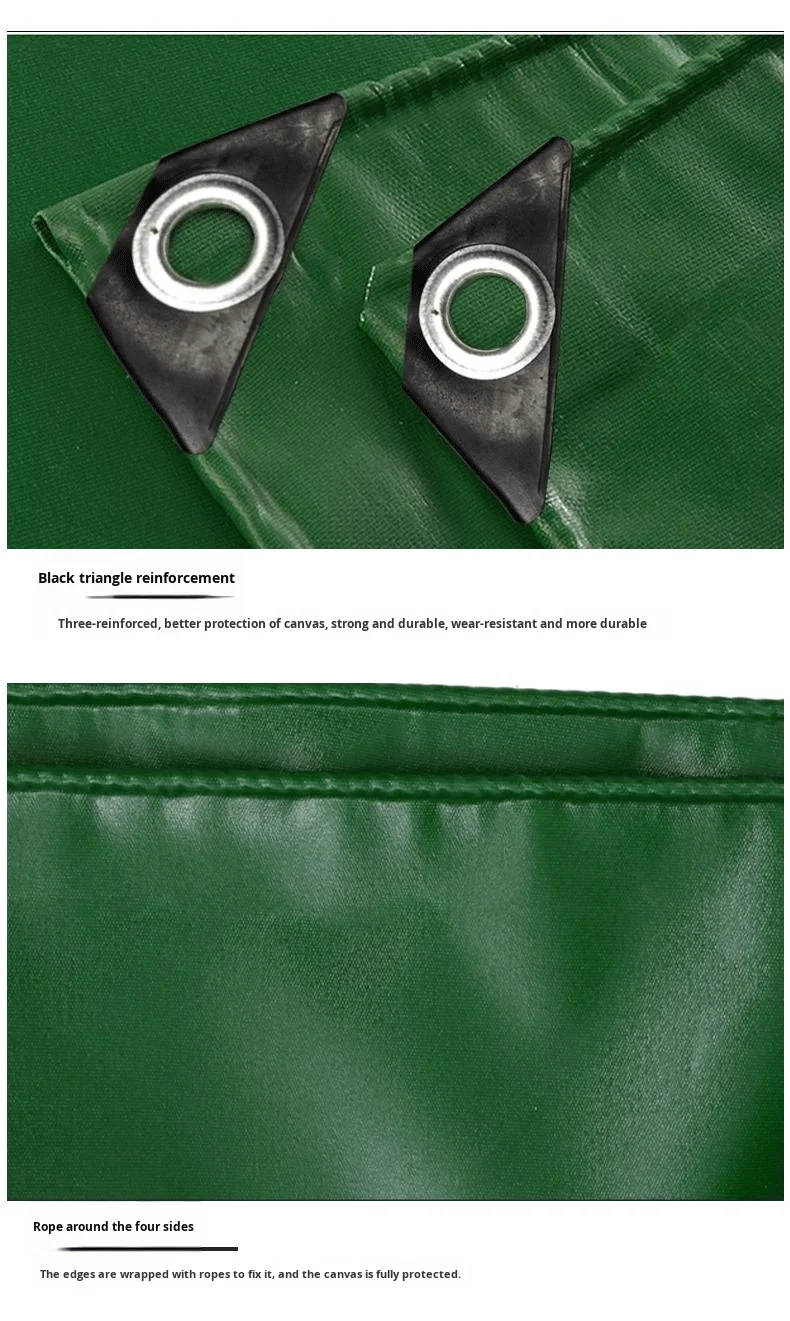
| Edge Reinforcement | Reinforced edges |
| Key Features | Waterproof, UV resistant, flame retardant, reinforced edges |
Application Suitability
| Application | Exposure & Requirement |
|---|---|
| Industrial equipment covering | Dust, moisture, mechanical abrasion; requires heavy-duty weight and dimensional stability |
| Construction site protection | Rain, wind-driven debris, UV exposure; needs waterproofing and tear resistance |
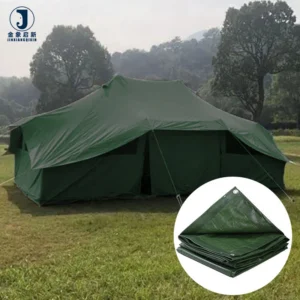
| Outdoor camping shelters | Continuous weather exposure, handling stress at anchor points; requires flexibility and reinforced edges |
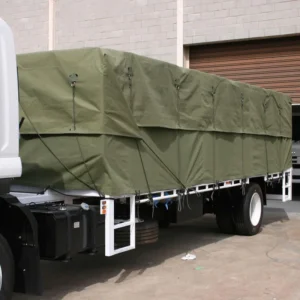
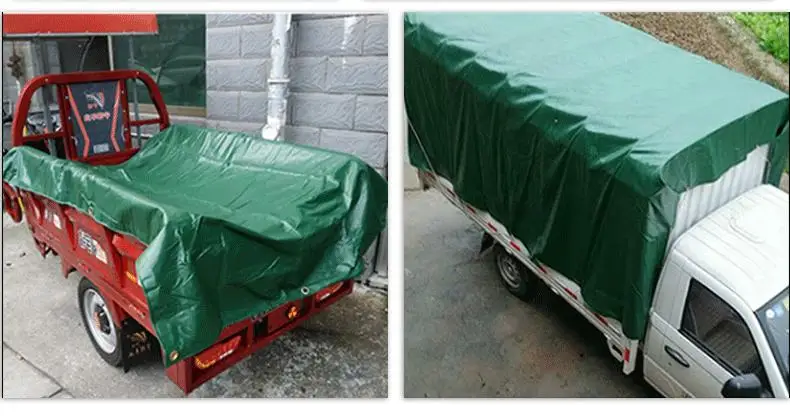
| Transport load covering | Road vibration, tie-down tension, weather during transit; demands high GSM and edge integrity |
Why Quoted GSM Matters More Than Price Per Roll
Verified weight on arrival determines whether the Canvas Laminated Tarpaulin roll wholesale order performs as specified or fails under load.
Buyers who purchase by the roll often receive material that measures lighter than the quotation stated. The deficit may be invisible until the fabric is cut, handled, or subjected to wind load, at which point the tarpaulin tears where a heavier grade would hold. This pattern recurs across industrial and construction applications where the fabric must absorb stress at seams and anchor points. [NEED_CITE: weight verification methods for coated technical textiles]
Roll Stock Consistency Across a Container Load
When distributors and importers order canvas tarpaulin by the container, colour and weight must remain uniform from the first roll to the last. A variation in coating thickness between batches shows immediately once two rolls are unrolled side by side on a fabrication table. The 600 GSM woven plain canvas laminated construction is produced with in-process QA checks at every stage, so the Canvas Laminated Tarpaulin roll wholesale buyer receives a batch where each roll matches the specification sheet.
Coating Adhesion and Fabrication Behaviour
Laminated canvas behaves differently under heat welding than knife-coated or calendered alternatives. The lamination bond between the woven plain canvas base and the coating layer must withstand the thermal cycle during seam joining. If adhesion is weak, the laminate separates before the weld cools, leaving a visible delamination line that becomes the first failure point in service. Fabricators cutting custom covers from roll stock need predictable weld behaviour to set machine parameters once and hold them across the entire production run. [NEED_CITE: lamination versus knife-coat adhesion in technical fabrics]
How GSM and Base Weave Interact Under Tension
A 600 GSM reading alone does not define how the fabric will perform when pulled at a tie-down point. The woven plain canvas base provides the tensile skeleton; the lamination adds water resistance and surface protection. If the base weave is loose, the coating fills the gaps but contributes little to tear propagation resistance. Conversely, a tightly woven base at the same GSM delivers higher tear strength because the yarns interlock and distribute load across multiple warp and weft crossings. Buyers evaluating canvas tarpaulin for construction or transport covering should request the base fabric denier and thread count alongside the weight figure to make an informed comparison.
When the Wrong Weight Grade Reaches the Site
A tarpaulin specified at 600 GSM but delivered at a lower effective weight will abrade faster at contact points, split at reinforced edges under tie-down tension, and lose waterproof integrity after fewer weather cycles. On a construction site, this means the material must be replaced before the project phase ends, adding procurement cost and schedule delay. For distributors reselling to end users, a weight discrepancy erodes customer trust and generates warranty claims that damage the supply chain relationship. [NEED_CITE: field failure patterns in underspecified tarpaulin grades]
Why Wholesale Buyers Source This Grade Here
Three full production lines support bulk roll output with scheduled dispatch dates, reducing the risk of container-loading delays. A dedicated 10-person R&D team handles custom width and colour development, producing samples within days for approval before the main run begins. One hundred percent pre-shipment inspection means each roll is weighed and visually checked, with results recorded against the order specification. The facility holds ISO and CE certification, giving importers the compliance documentation their customs brokers require. Nearly three decades of coated fabric production informs the process controls that keep coating weight and adhesion consistent across long production runs.
Documentation & Verification
- Material specification sheet stating 600 GSM, woven plain canvas base, and laminated coating method
- Pre-shipment inspection record with verified roll weight measured per batch
- Roll packing list detailing roll count, individual weight, and dimensions for container planning
- UV resistance test documentation available upon request for target market compliance
- Flame retardant grade report specifying the classification achieved and test standard applied
- Certificate of origin and customs documentation for cross-border shipment clearance
Fabrication, Handling & Storage
- Heat weld laminated canvas at moderate temperature to avoid coating delamination at the seam line
- Reinforce eyelet positions with additional canvas patches to distribute tie-down load across the 600 GSM base
- Store rolls upright on pallets to prevent edge compression that marks the coating surface
- Allow cold-stored rolls to reach ambient temperature before unrolling to prevent coating crack at low flex
- Use mild detergent and soft brush for cleaning to preserve the laminated surface without abrasion damage
- Plan cut patterns to maximise yield from the roll width and minimise off-cuts at reinforced edges
What to Include With Your Enquiry
Specify the end-use application and the environmental conditions the fabric will face, including UV exposure duration and any fire safety requirements in the destination market. State the roll width and length you need, the annual volume, and whether you require custom colour or printed branding. Indicate if you need fabricated cut sizes or raw roll stock only, and request a sample for weld and handling tests before committing to full production.
Frequently Asked Questions
Q: How do I verify the GSM on arrival matches the quoted 600 GSM specification?
A: Request the pre-shipment inspection record that documents the measured weight per roll. On receipt, cut a measured sample from each batch and weigh it on a calibrated scale. Compare the result against the specification sheet supplied with the shipment. Any discrepancy beyond acceptable tolerance should be raised with the supplier before fabrication begins, using the inspection record as the baseline reference.
Q: What roll width and length options are available for container loading optimisation?
A: Roll dimensions can be adjusted to maximise container utilisation and reduce freight cost per square metre. Provide your target container type and the fabricator’s table width so the production team can recommend the most efficient roll length and diameter. Custom widths require sample approval before the main run to confirm edge quality and coating consistency across the full width.
Q: Is batch-to-batch colour consistency guaranteed across roll stock orders?
A: Colour is controlled through in-process QA checks during coating and lamination, with reference samples held for each production run. For repeat orders, the retained sample from the original batch is used as the matching standard. Request a colour swatch from the current production batch before dispatch to confirm alignment with your inventory, especially when rolls from different shipments will be installed side by side.
Q: Does the flame retardant treatment meet the safety standards required in my market?
A: Flame retardant grades are available, but the specific classification depends on the test standard applicable in your destination market. State the required standard in your enquiry so the production team can confirm which grade applies and supply the corresponding test report. Do not assume compliance without reviewing the documentation that names the test method and achieved classification.
Q: What minimum order quantity and lead time apply to custom width or colour runs?
A: Custom specifications require a sample development phase before bulk production, with lead times depending on the complexity of the request and current production scheduling. Provide your target delivery date and volume so the team can confirm feasibility. Minimum quantities for custom runs are set based on the production line setup requirements and the coating batch size needed to maintain colour and weight consistency.